Guests at An Evening with Nordost in the main listening room

The Nordost story

Flat cables, conductors suspended in air, and a loom from the wall outward: made in Massachusetts since 1991, at Pearl since 2005.

Founded 1991 in Massachusetts; made in Holliston, Massachusetts since 2012 by Joe Reynolds · nordost.com

The history and technologies of Nordost of Holliston, Massachusetts, and what Pearl Audio keeps on the floor.

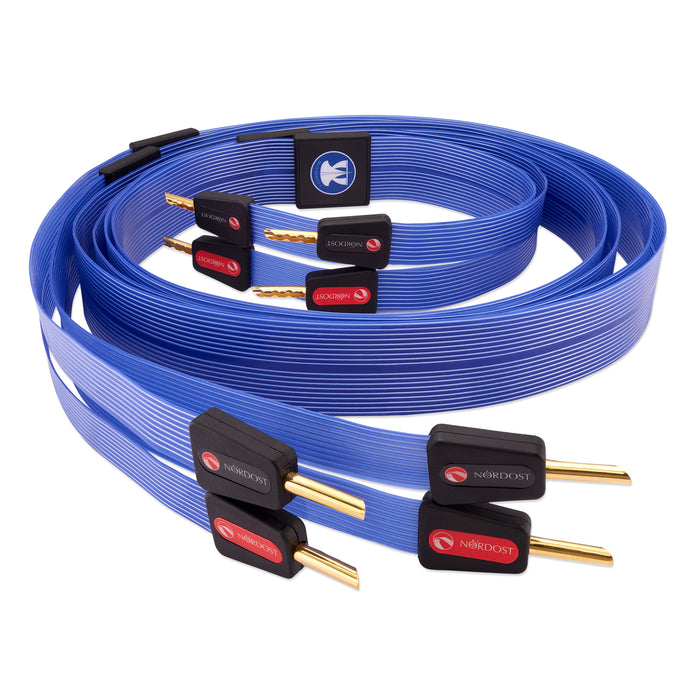
Nordost was founded in Massachusetts in 1991 by Joe Reynolds, and from the beginning its products have been designed, manufactured and assembled in the United States. The first was a speaker cable unlike anything in hi-fi: the Flatline, four flat copper conductors per run laid side by side in clear Teflon pressed flat, a design derived from one made for the aerospace industry. It ran under carpets and inside walls, it measured lower in capacitance than round cables, and when Art Dudley reviewed it in 1996 at about two hundred dollars a pair he found clarity, flow and dynamic ease and told his readers to investigate it without delay. Blue Heaven followed around 1993, at a price Nordost's own staff thought too high to sell, and the SPM Reference of the later 1990s brought the heavy silver plating over solid copper that has defined the company's conductors since.

Valhalla, in 2001, was the turn. Its conductors were eight-nines copper under 78 microns of silver, and each one was wound with a thread of FEP before its insulation was extruded over it, so that most of the conductor's surface touched air: Micro Mono-Filament, the patented construction on which every Nordost range above the entry level is now built. Stereophile measured its capacitance at 11.8 picofarads a foot. The Norse series, Heimdall, Frey and Tyr, brought the construction to lower prices around 2004, and in May 2007 Odin went the other way, with Dual Mono-Filament, two twisted threads raising the air fraction to about 85 percent, and Total Signal Control, a shield around each individual conductor; it cost from fourteen thousand dollars a pair. The names come from Norse mythology, Valhalla the hall of Odin's throne, and the ranges have kept them.

Magico loudspeakers with Burmester amplifiers and Nordost cabling in Pearl Audio's Small Room, 2025
Nordost cabling with Magico and Burmester in our Small Room, 2025. Photo: Pearl Audio.

Around the same time Nordost took on Quantum Resonant Technology, a Santa Monica company whose field-generating devices it first distributed and then, by 2009, largely owned; production moved to Massachusetts and QRT became Nordost's name for everything that is not a cable. The QBASE distribution blocks, with their passive star-earth topology, and the QVIBE plug-in of 2011 were the first; the Leif series of 2011 and Norse 2 of 2012 renewed the cables; and in 2012 the company moved into its own factory at 93 Bartzak Drive in Holliston, Massachusetts, where it builds its boards, circuits and Sort Kones and has developed its own soldering method. That September it released the first HDMI cable entirely designed, built and hand-terminated in the United States.

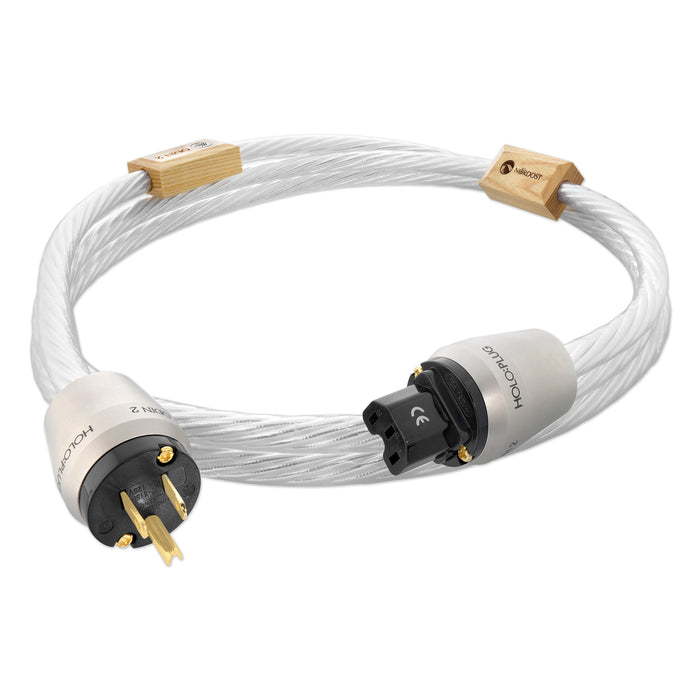
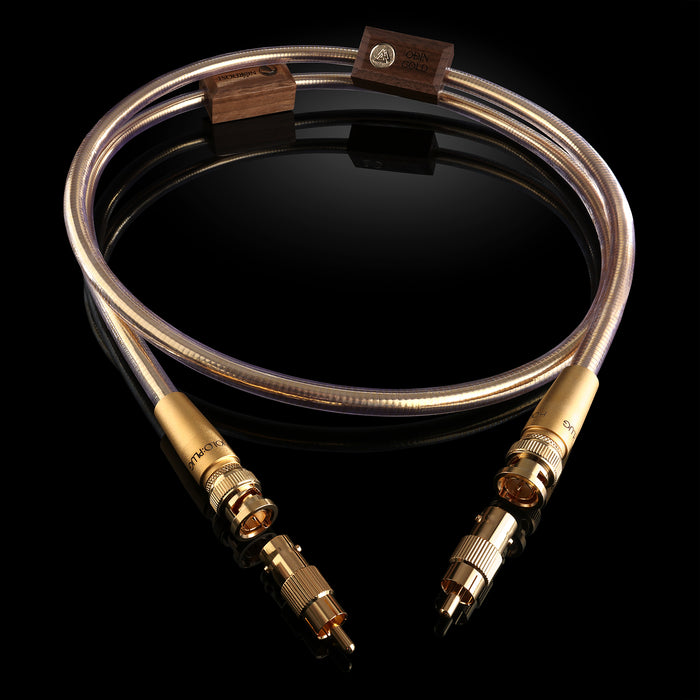
Valhalla 2 arrived in 2013 with silver thickened to 85 microns, Dual Mono-Filament throughout and the first HOLO:PLUG, Nordost's own patented low-mass connector designed so the cable's geometry continues into the plug; Brian Damkroger called them the best cables he had heard. Odin 2 followed in May 2015 after seven years of development, and Odin Gold in August 2021 replaced the silver with gold from conductor to connector. The QRT line grew around them: the Sort Füt and Sort Lift of 2015 to 2017, the QKORE ground units of 2017, the QPOINT resonance synchronizer and QSOURCE linear power supply of 2019, the QNET network switch of 2022, the QBASE Mark III, QSINE and QWAVE and the QBASE Reference of 2023, the QNET7 of 2025 and, at Vienna in June 2026, the QBASE Supreme Reference, wired internally with Odin 2.

Pearl Audio's Nordost case of Leif 3 and Norse cables, 2026
Our Nordost case of Leif 3 and Norse cables, burned in on the Vidar. Photo: Pearl Audio.

The current cable ranges are new. Leif 3, Blue Heaven 3 and Red Dawn 3 among them, was unveiled at Munich in May 2024 and became the company's most-reviewed products of 2025; Norse 3, Heimdall 3, Frey 3 and Tyr 3, was announced on October 13, 2026 and reaches dealers in November, with the Norse 3 speaker cables welded ultrasonically rather than soldered. In 2025 Nordost co-hosted 59 dealer events and demonstrated at 15 shows, and in September that year Paula Rotondo was named President, with Amy Hansen, at the company since 2012, taking over North American sales. Nordost remains privately held, a company that, in Joe Reynolds's words, is committed to making all of its products in the United States and wants to make everything locally so it can control the quality.

Three ideas run through all of it. The first is that the noise floor is the enemy, and that cables, grounding and power distribution are where it is set. The second is the loom: Nordost was the first company to argue for a single brand of cable through the whole system, power cords first, and its ranges are built so the same construction is available from Blue Heaven to Odin. The third is that the claims should be heard rather than believed, which is why Nordost supplies its dealers with the Vidar burn-in machine and sends its trainers to demonstrate. Pearl Audio has carried Nordost since 2005, runs the Vidar, hosted An Evening with Nordost in its main room in June 2026, and brings a case of burned-in cables to your home so the difference is heard in your own system.

Milestones

  1. 1991 Nordost founded; the Flatline Joe Reynolds founds Nordost in Massachusetts. The Flatline speaker cable, flat copper conductors in pressed Teflon derived from an aerospace design, is its first product; Art Dudley later tells readers to investigate it without delay.
  2. 1993 Blue Heaven The cable Nordost's own staff feared was too expensive to sell becomes its longest-running name. The SPM Reference of the later 1990s introduces heavy silver plating over solid copper.
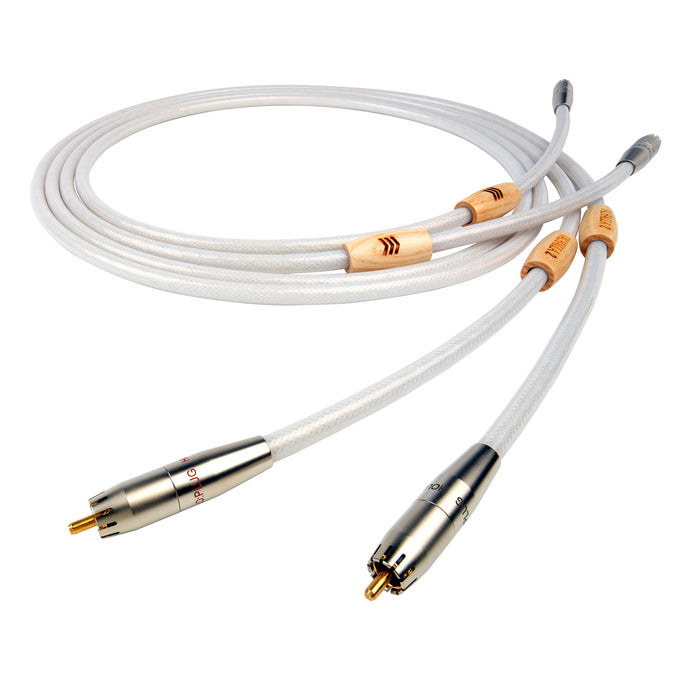
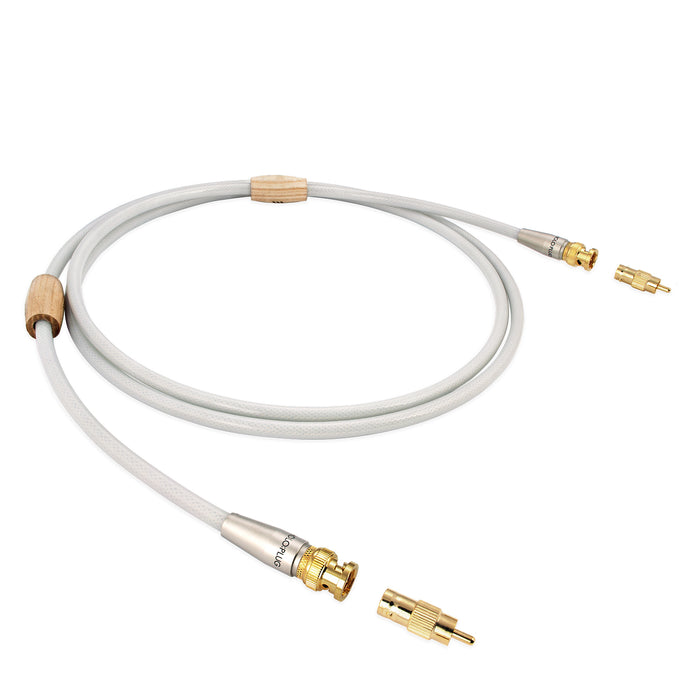
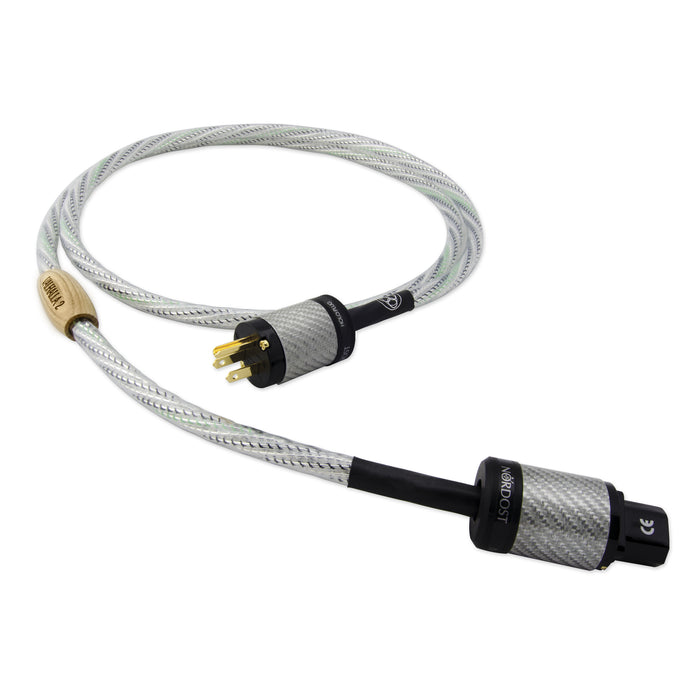
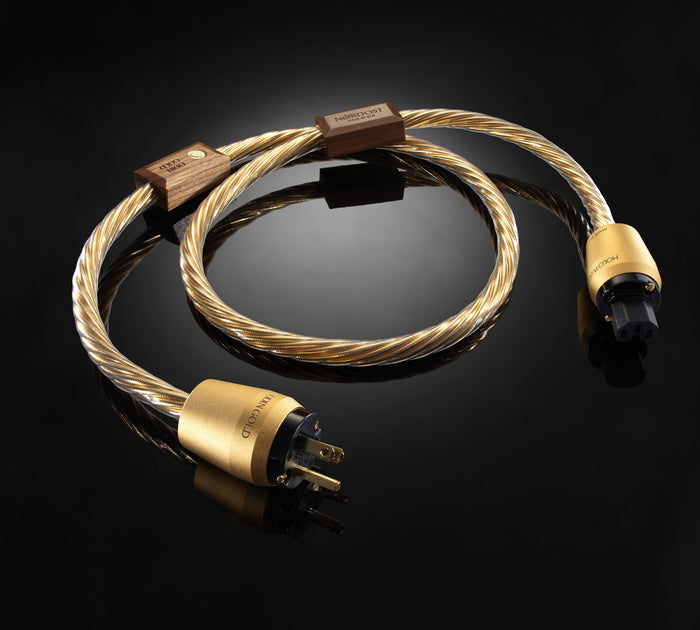
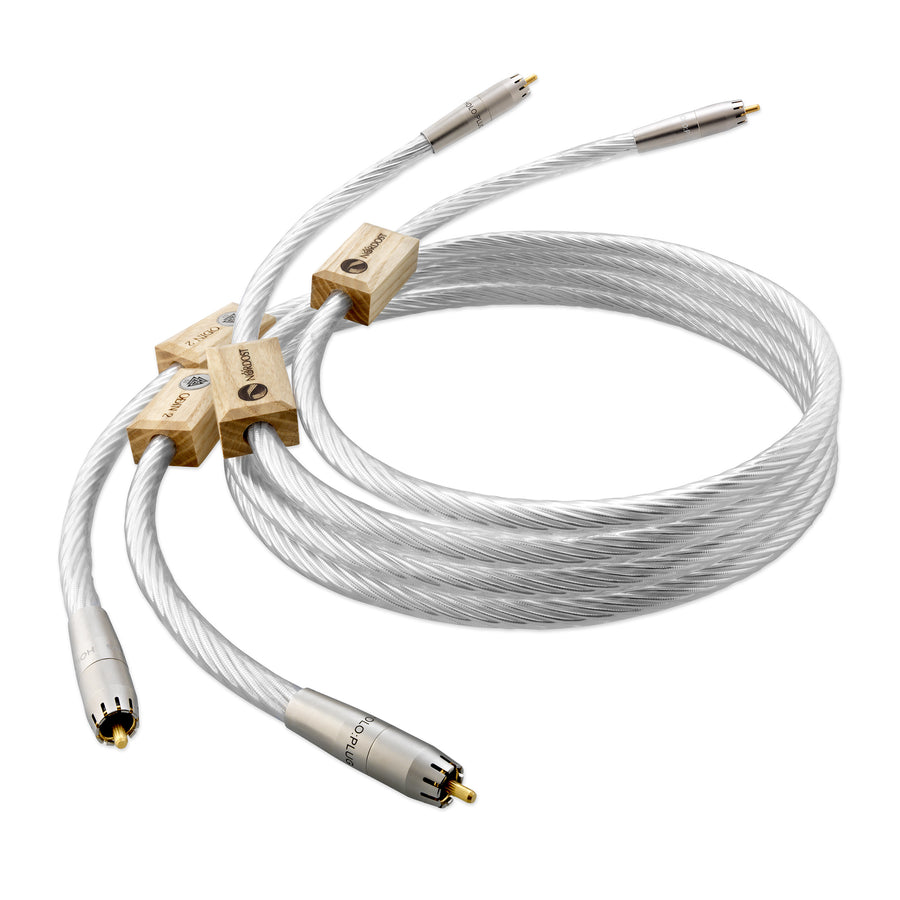
  3. 2001 Valhalla and Micro Mono-Filament Eight-nines copper, 78 micron silver and a thread of FEP wound around each conductor so most of its surface touches air: the construction every Nordost range above Leif is built on.Nordost Valhalla 2 Interconnect
  4. 2004 The Norse series Heimdall, Frey and Tyr bring Micro Mono-Filament to lower prices, with Valkyrja above them. The names, from Norse mythology, have stayed.
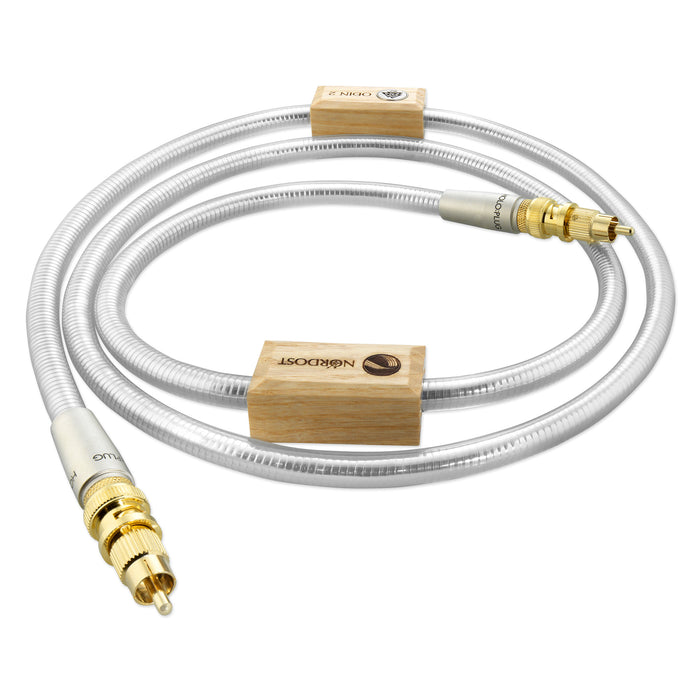
  5. 2007 Odin Dual Mono-Filament and Total Signal Control, a shield on every conductor, in a Supreme Reference range from fourteen thousand dollars a pair.Nordost Odin 2 Interconnect
  6. 2009 QRT becomes a Nordost brand Quantum Resonant Technology of Santa Monica, first distributed by Nordost, is largely owned by it; production moves to Massachusetts. The QBASE star-earth distribution blocks and the QVIBE plug-in of 2011 follow.Nordost QBASE QB8 Mark III
  7. 2011 Leif, and the Holliston factory The Leif series renews the entry level; Norse 2 follows in 2012. Nordost moves into its own factory on Bartzak Drive in Holliston, and in September 2012 ships the first HDMI cable entirely made in the United States.
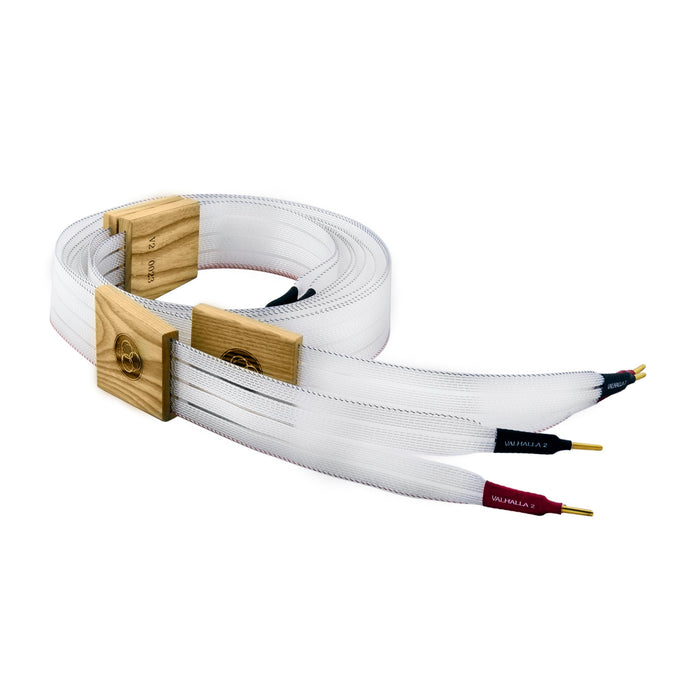
  8. 2013 Valhalla 2 and HOLO:PLUG The Reference range is rebuilt with 85 micron silver, Dual Mono-Filament throughout and Nordost's own patented connector. Stereophile calls them the best cables its reviewer has heard.Nordost Valhalla 2 Speaker Cable
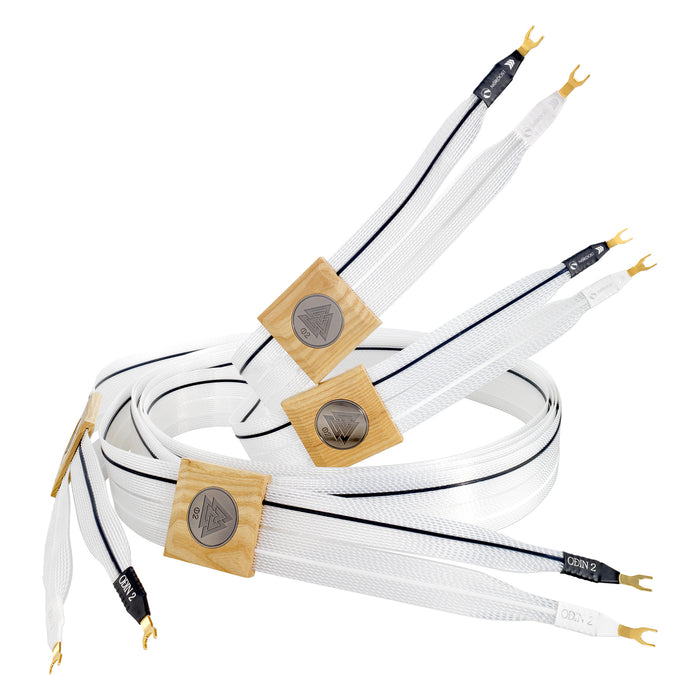
  9. 2015 Odin 2 Seven years in development, launched at Munich with HOLO:PLUG and heavier conductors. The Sort Füt and Sort Lift complete the Sort System over the next two years.Nordost Odin 2 Speaker Cable
  10. 2017 QKORE A manufactured clean earth for the whole system, launched at Munich; a hi-fi+ award that year and The Absolute Sound's Golden Ear in 2018.Nordost QKORE Ground Unit
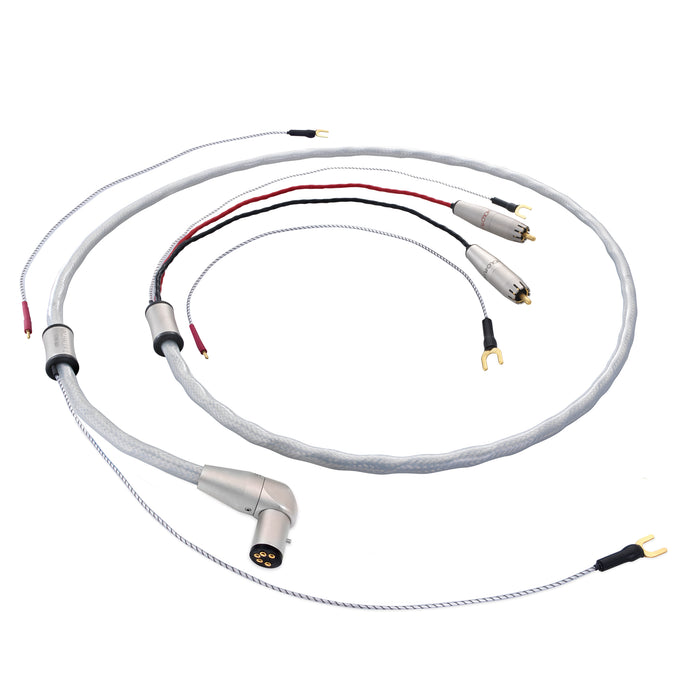
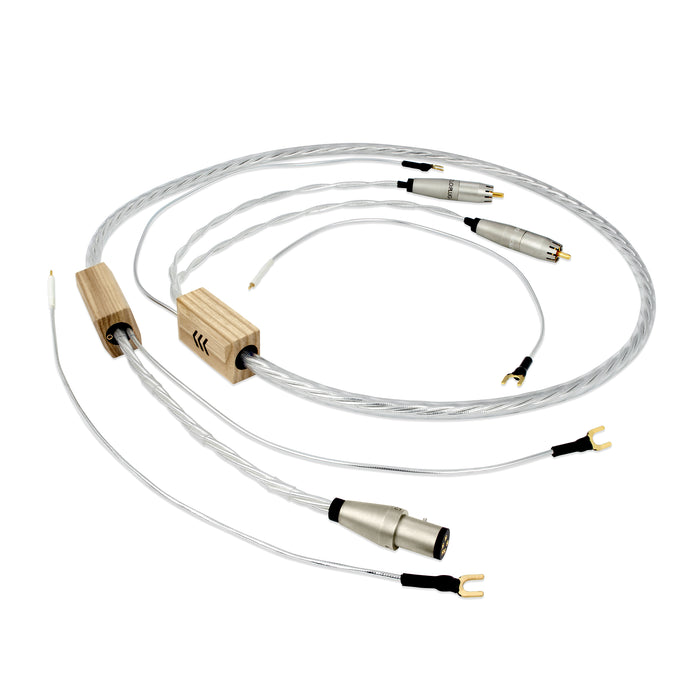
  11. 2019 QPOINT and QSOURCE The resonance synchronizer and the fanless linear power supply built to run it, shown at Munich with the Valhalla 2 Tonearm Cable +.Nordost QPOINT Resonance Synchronizer
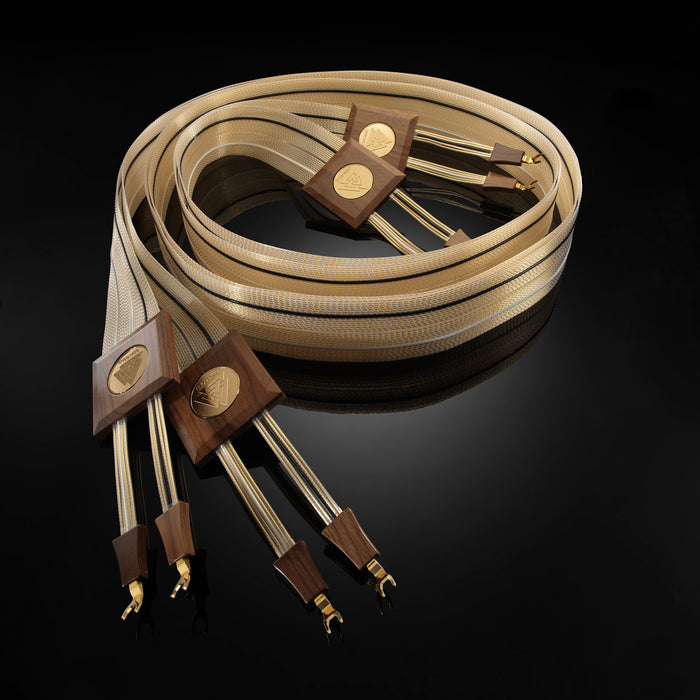
  12. 2021 Odin Gold Gold replaces silver from conductor to connector in a new Supreme Reference range, unveiled in Hong Kong in August.Nordost Odin Gold Speaker Cable
  13. 2022 QNET A five-port network switch designed from the ground up for audio, with six power supplies. The QBASE Mark III, QSINE, QWAVE and the QBASE Reference follow in 2023.Nordost QNET Network Switch
  14. 2024 Leif 3 Blue Heaven 3 and Red Dawn 3, with White Lightning 3 and Purple Flare 3, unveiled at Munich; Red Dawn 3 becomes Nordost's most-reviewed product of 2025.Nordost Red Dawn 3 Speaker Cable
  15. 2025 QNET7, and new leadership The seven-port switch with nine power supplies; Blue Heaven 3 digital, USB and Ethernet cables; Paula Rotondo named President in September. Nordost co-hosts 59 dealer events in the year.Nordost QNET7 Network Switch
  16. 2026 QBASE Supreme Reference and Norse 3 The Odin 2-wired distribution block debuts in Vienna in June; Heimdall 3, Frey 3 and Tyr 3 are announced on October 13 and reach dealers in November.Nordost Heimdall 3 Interconnect

Nordost at Pearl Audio

Pearl Audio has been an authorized Nordost dealer in Portland since 2005. Every system in our rooms is wired with Nordost, from Leif 3 to Odin, with the QBASE, QKORE and QNET7 behind them, and we run the Vidar burn-in machine so every cable we sell is conditioned before it is delivered. We bring our case of Leif 3 and Norse cables to your home and make the comparison in your system, power cords first; we hosted An Evening with Nordost in our main listening room in June 2026, and we install QBASE and QKORE grounding ourselves.

All Nordost at Pearl Audio

Signature technologies

The engineering behind Nordost

Nordost gives its technologies names because each one solves a specific problem. Here is what each does, where it came from, why it matters in a system, and what you may hear.

The conductor suspended in airSince 2001

Micro Mono-Filament and Dual Mono-Filament

Nordost's patented construction winds a thin FEP thread in a spiral around each conductor before the insulating tube is extruded over it, so most of the conductor's surface touches air rather than plastic. Air is the best practical dielectric, so capacitance and dielectric absorption fall and signal speed rises. Read the deep diveClose

What it does

Every insulator stores a little of the signal and gives it back late, which is what engineers mean by dielectric absorption, and the only insulator that does not is air. Nordost introduced Micro Mono-Filament with the original Valhalla in 2001: a single FEP monofilament wound around the conductor, with an extruded FEP tube over it, leaves about 80 percent of the conductor suspended in air. Dual Mono-Filament, introduced with Odin in 2007, twists two thinner filaments together and winds them in an open spiral, raising that to about 85 percent; Stereophile put the remaining contact at roughly 15 percent of the surface. In the current range Micro Mono-Filament is used on the Leif 3 power cords and digital cables, all the Norse 3 power cords and speaker cables, and the QKORE wire; Dual Mono-Filament on the Norse 3 interconnects, the Tyr 3 power cord, Valhalla 2 throughout, and Odin 2 and Odin Gold throughout. The Leif 3 interconnects and speaker cables are the exception, with plain FEP extrusion.

Why it matters in a system

Lower capacitance and less stored energy mean a cable that passes transients without smearing them, which is the quality Nordost owners describe as speed. It is also why the ranges sound related: the same construction, applied with more conductors and more filament as the price rises.

What you may hear

Art Dudley's summary of the idea was that the next best dielectric after nothing is good old-fashioned air; reviewers of Valhalla 2 and Odin 2 describe the result as transient speed and a lack of editorial character.

Where Nordost began, in 1991Since 1991

Extruded FEP and the flat speaker cable

Nordost's first product, the Flatline of 1991, laid flat copper conductors side by side in pressed Teflon, a construction derived from aerospace cable. The flat ribbon, with FEP extruded over each conductor to tight tolerances, is still how every Leif 3 and Norse 3 speaker cable is built. Read the deep diveClose

What it does

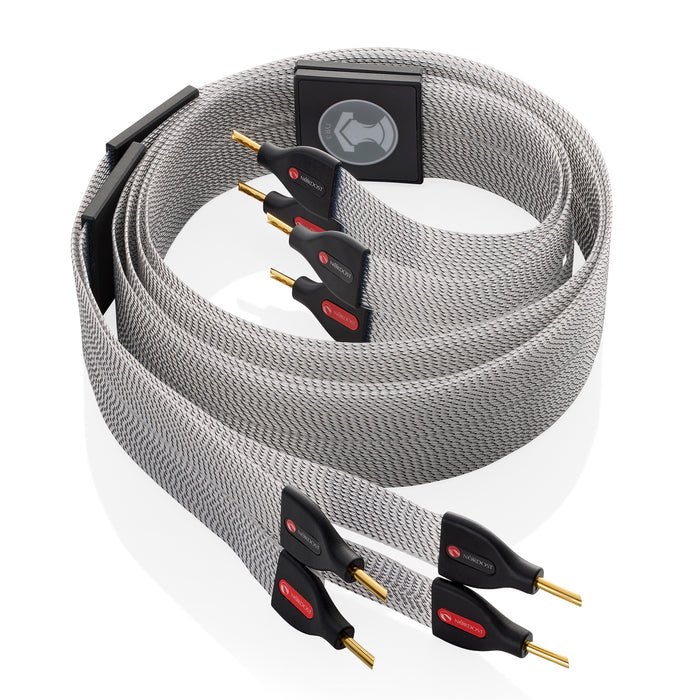
Nordost began in Massachusetts in 1991 with the Flatline speaker cable, four flat copper conductors per run separated by clear Teflon pressed flat; it fitted under carpets and in walls, and on the bench it showed lower capacitance than round cables. FEP, a Teflon-family fluoropolymer, has become the company's one insulator: it is extruded over each conductor by Nordost's own process, it does not degrade with age, and it is the material of the Mono-Filament threads as well. The flat geometry keeps the conductors precisely spaced in one plane, which Nordost credits with faster signal transfer, less interaction between conductors, reduced skin effect and consistent spacing from one cable to the next; the company says it is the only audio cable maker to achieve a flat geometry in its speaker cables. The Blue Heaven 3 speaker cable carries 18 conductors of 24 AWG, the Red Dawn 3 22, the Heimdall 3, Frey 3 and Tyr 3 18, 22 and 26 conductors of 22 AWG with Micro Mono-Filament. Valhalla 2 and Odin use round, hollow-core geometries in the same class-1.1 FEP.

Why it matters in a system

A speaker cable's capacitance and inductance are set by its geometry, and the flat ribbon gives Nordost low, repeatable figures: 7.0 picofarads and 0.18 microhenries per foot for the Blue Heaven 3. It is the reason a Nordost loom has a recognizable character from the Leif series upward.

What you may hear

Clarity, flow and dynamic ease, the words Art Dudley used for the Flatline in 1996 and that reviewers still reach for. Steve Dickinson wrote of the Red Dawn 3 that you are never left feeling the cable has edited the musical experience.

Six nines to eight ninesSince 1997

Silver-plated solid-core copper, and Odin Gold

Nordost conductors are solid, not stranded, oxygen-free copper with a heavy silver plating: 99.9999 percent pure in the Leif series, 99.99999 in Norse, 99.999999 in Valhalla 2 and Odin, with silver 60 to 85 microns thick. Odin Gold replaces the silver with gold from conductor to connector. Read the deep diveClose

What it does

A stranded cable is many small conductors rubbing against each other, each strand a tiny circuit; a solid core has none of that interaction and, held in Mono-Filament, none of the hot spots or carbonization Nordost attributes to strand contact. Silver is the best conductor there is, and high-frequency current travels on the surface of a conductor, so a thick silver layer puts the best metal where it is used: 60 microns on the first Heimdall, 78 on the original Valhalla and Odin 2, 85 on Valhalla 2. The copper beneath rises in purity with the range. Nordost first used heavy silver plating on the SPM Reference of the 1990s, and in 2021 Odin Gold took the idea to its end, with gold plating on the conductors, the shielding and the HOLO:PLUG connectors, and a tiered termination in the speaker cable that narrows 28 conductors of 20 AWG to eight of 14 AWG to match the mass of conductor and connector. The one exception to the solid-core rule is the Leif 3 power cords, which use stranded copper of 105 and 168 strands for flexibility at the wall.

Why it matters in a system

Conductor metal and plating are what separate the ranges once the construction is the same, and it is why the step from Frey 3 to Valhalla 2, which Marc Mickelson called audibly significant, is a step in copper and silver as much as in design.

What you may hear

Brian Damkroger in Stereophile called Valhalla 2 the best cables he had heard; Jacob Heilbrunn found Odin 2 took transient speed to a new level.

Why Nordost cables come in the lengths they doSince 2007

Mechanically tuned lengths and lay

Nordost treats a conductor as a mechanical object with resonances of its own. It cuts conductors to specific lengths, and sets their spacing and twist, by a formula it says minimizes microphony and high-frequency impedance resonance; the standard lengths follow from it, and the QBASE and QKORE housings are tuned the same way. Read the deep diveClose

What it does

The emphasis began with Odin in 2007 and ran down through the Leif and Norse ranges: Nordost analyzes the natural resonances of its conductors and uses a proprietary formula to set the length that performs best, and it says that cutting Norse 3 conductors to those lengths maximizes their performance and eliminates timing errors. The speaker cables specify mechanically tuned spacing, the power cords a tuned lay and length, and the QBASE distribution blocks and QKORE ground units are built in extruded aluminum housings described as mechanically tuned. Nordost publishes no measurements for the claim, and we present it as the company's method; what it means for an owner is that the standard lengths are not arbitrary and that custom lengths are cut to the same formula.

Why it matters in a system

A cable carries vibration as well as current, from the floor, the rack and the loudspeaker, and microphony in a cable is noise added to the music. Treating the cable's mechanics with the same care as its electrical values is of a piece with the Sort System footers and the rest of Nordost's attention to resonance.

What you may hear

Lower noise and a cleaner, quieter background, the effect Nordost owners report when a loom is completed and that Joe Reynolds summarized as getting the noise out of the system.

The cable's geometry carried into the plugSince 2013

HOLO:PLUG connectors

HOLO:PLUG is Nordost's own family of low-mass, gold-plated connectors, RCA, XLR, spade, banana, BNC, DIN and AC, designed and patented so that each cable's conductor arrangement continues into the plug rather than collapsing into a generic terminal. It is fitted to Valhalla 2, Odin 2 and Odin Gold. Read the deep diveClose

What it does

A connector is the one part of most cables its maker does not design, and the point where a carefully spaced set of conductors is soldered to whatever the plug provides. Nordost introduced HOLO:PLUG with Valhalla 2 in 2013, patent pending then and patented by the Odin 2 launch of 2015: connectors with 360-degree, low-eddy-current terminations, a rear grounding ring, a tight fit that wipes the contact as it is made, and a mass low enough that the plug does not hang on the socket. The RCA version has a dual-ring ground that Nordost describes as asymmetrically balanced, and the Odin Gold plugs are gold-plated throughout. The Norse 3 and Leif 3 ranges use gold-plated Neutrik Profi RCA and XLR connectors and Nordost's own Z-plug bananas and spades, with the Norse 3 speaker terminations welded ultrasonically rather than soldered.

Why it matters in a system

The connector is in series with everything, and a plug matched to the cable's geometry is why the Reference and Supreme Reference ranges keep their advantage all the way to the socket. Nordost's own description is the perfect marriage of electrical and mechanical tuning.

What you may hear

Alan Sircom's verdict on Odin 2 was that it does nothing to the sound of a system, and does that nothing better than almost every other cable.

Every conductor shielded on its ownSince 2007

Total Signal Control

In the Supreme Reference ranges, Odin 2 and Odin Gold, each conductor is shielded individually and spaced by its own tube, so the cable has complete shield coverage without the stiffness of an overall braid, and the shield continues into the HOLO:PLUG. Read the deep diveClose

What it does

Odin, announced in May 2007, introduced two things: Dual Mono-Filament and Total Signal Control. TSC gives each of the ten conductors in an Odin 2 interconnect its own shield and spacing tube, which Nordost says approximates the performance of a solid copper pipe without its rigidity and provides 100 percent coverage; the shields are carried through the connector, and Odin Gold plates them in gold. The Norse 3 and Leif 3 interconnects use conventional individually shielded twisted pairs with 97 percent braid coverage instead; Valhalla 2 uses two layers of silver-plated shielding. TSC is reserved for the top of the range, which is part of why Odin 2 took seven years to develop.

Why it matters in a system

Shielding is how a cable keeps the noise of the modern home, switching supplies, Wi-Fi, lighting, out of the signal, and a per-conductor shield does it without changing the cable's geometry or its flexibility. It is the difference between Valhalla 2 and Odin 2 that owners can feel in the hand as well as hear.

What you may hear

Marc Mickelson called Odin 2 the most sonically far-reaching and consequential cables he had used.

Power distribution without a filterSince 2009

QBASE star-earth distribution

A QBASE is a passive distribution block whose outlets are all grounded from one central point, with the ground impedance raised on every outlet except the one designated Primary Earth. It has no filtering and no active circuitry, which Nordost argues is what keeps the dynamics that conditioners compress. Read the deep diveClose

What it does

Most power conditioners reduce noise by putting a filter in series with the current the amplifier draws, and Nordost's position is that the filter costs bandwidth and dynamics, a compromise it refuses to make. The QBASE instead uses a star-earth topology: every outlet connects to the input from one central point, so the components share a single ground reference, and the impedance to ground is raised on all but the Primary Earth outlet, which the preamplifier or source usually takes, so ground noise drains through one path. The Mark III of 2023 added a dual-level circuit board that separates the ground from the line and neutral traces, enlarged traces, Mono-Filament internal wiring and a resistance sink to damp eddy currents, in a mechanically tuned extruded aluminum housing. The QBASE Reference of 2023 has ten outlets and a 20-amp input; the QBASE Supreme Reference of 2026 is wired internally with Odin 2 and uses 32-amp powerCON connectors. The QKORE ground units attach to the QBASE's ground post.

Why it matters in a system

Joe Reynolds's rule is that the most important cable in the system is the power cord, and Roy Gregory's that a star-grounded distribution block should be the next priority after it. The QBASE is the center of a Nordost loom: every power cord plugs into it, and every ground reference starts there.

What you may hear

The Absolute Sound's Neil Gader found the QBASE Mark III restorative; Positive Feedback called it as neutral as the day is long; the Mark III was a TAS Product of the Year for 2024.

A manufactured clean earthSince 2017

QKORE grounding

The QKORE ground units give a system an artificial clean earth: a passive circuit and Low-Voltage Attractor Plates of a proprietary alloy, built with Nordost's Mono-Filament wire, draw stray high-frequency noise and the magnetic fields generated by voltage to a manufactured ground point instead of letting them circulate between components. Read the deep diveClose

What it does

Launched at Munich in May 2017, the QKORE comes in three versions: the QKORE1 with one post for the primary side, the ground post of a QBASE; the QKORE3 with three posts for the components themselves, connected to an unused input or ground terminal with QKORE Wire; and the QKORE6 with both, including posts for monoblocks. It is entirely passive, sits on recesses for Sort Kones, and is never connected to a loudspeaker. Nordost's Michael Taylor described it to Stereophile as a resonant sink as well as an electrical-noise ground sink. Jason Victor Serinus found that the law of diminishing returns did not apply, that each addition was cumulative and anything but subtle; the QKORE won a hi-fi+ award in 2017, The Absolute Sound's Golden Ear in 2018 and a Positive Feedback Writers' Choice in 2020.

Why it matters in a system

Modern components leak high-frequency noise into their grounds, and the household earth is noisy itself; a clean reference that the system shares is one of the few upgrades that lowers the noise floor of every box at once. The QKORE3 on the sources and the QKORE1 on the QBASE is the combination we install most.

What you may hear

Quieter backgrounds and more low-level detail; Marc Mickelson wrote that he knew of no upgrade more profound and economical than adding a QKORE system.

A switch built for audioSince 2022

QNET and QNET7 network switches

The QNET is a five-port Ethernet switch designed from the ground up for audio, with six separate power supplies, a low-noise oscillator for its clock, two ports fixed at 100 megabits for audio devices and an aluminum housing that is both heat sink and shield. The QNET7 of 2025 adds seven ports including optical, nine supplies and eight boards. Read the deep diveClose

What it does

A streamer is only as quiet as the network feeding it, and an office switch is built for throughput, not noise. Nordost's QNET of 2022 is a Layer 2 switch with six dedicated power supplies so that no section contaminates another, an extremely low-noise, stable oscillator as the main clock, and ports 4 and 5 fixed at 100BASE-TX full duplex, the mode most audio devices prefer. The QNET7 of 2025 separates the design further: seven ports, including gigabit, an ultra-low-noise 100 megabit port and SFP optical, nine independent power supplies across eight boards. Both are powered from an external 9 volt supply, and the QSOURCE linear supply, with its internal QRT module, is the partner Nordost intends. We run the QNET7 ahead of the dCS, Linn and Aurender streamers in our rooms.

Why it matters in a system

Network noise reaches the DAC through its Ethernet port no matter how good the DAC is, and a switch that isolates, reclocks and powers each section separately is the cleanest fix. It is the first thing we change on a streaming system that sounds hard or flat.

What you may hear

Stereophile's Jason Victor Serinus gave the QNET what Nordost quotes as a standing ovation; Alan Sircom wrote that network audio had taken a leap forward in listenability; StereoNET gave it an Applause Award in 2024.

Quantum Resonant TechnologySince 2009

QRT: QPOINT, QSOURCE and the plug-ins

QRT began as a California company whose field-generating devices Nordost distributed and then absorbed as its own brand. Today it covers the QPOINT resonance synchronizer, the QSOURCE linear power supply, and the QSINE, QKOIL, QVIBE and QWAVE plug-ins that condition the mains from a spare outlet. Read the deep diveClose

What it does

Quantum Resonant Technology of Santa Monica made the QX2 and QX4 field stabilizers; by 2009 it was largely owned by Nordost, its production moved to Massachusetts, and QRT became the name for Nordost's power and resonance products. The QPOINT of 2019 is a 127 mm disc placed under or beside a component; Nordost says it emits a subtle field that brings the electromechanical resonances nearby into unison, with two modes that emphasize different musical characteristics, and it runs from 5 volts, ideally from the QSOURCE. The QSOURCE is a fanless linear power supply built for audio: four 5 volt outputs for QPOINTs, two variable outputs for streamers, switches and other small components, 75 dB of supply rejection and an internal QRT module. The plug-ins divide into passive field generators, the QSINE, which reshapes the mains sine wave, and the QKOIL, with a coil wound in Micro Mono-Filament, and active AC line harmonizers, the QVIBE of 2011 and the QWAVE of 2023, which inject pulsed frequencies clocked from the mains. Nordost publishes no measurements for these and describes them as a family best used together; we demonstrate them in and out of the circuit so you can judge.

Why it matters in a system

They address the noise that remains after the cables and the QBASE are in place, and they are the part of the Nordost system that owners can try at the lowest cost, a plug-in at a time, in a spare outlet of the QBASE.

What you may hear

Jacob Heilbrunn described the QPOINT's effect as a photo going from blurry to sharp; Neil Gader found backgrounds marked by a dead-calm silence with the plug-ins in place.

Mechanical diodes under the equipmentSince 2011

The Sort System

Sort Kones are three-piece cones, a post, a coupling ball and a base, that act as a one-way path for vibration: energy drains out of a component into the rack and is resisted on the way back up. Sort Füt does the same under loudspeakers and racks, and Sort Lift holds cables off the floor on a titanium spring. Read the deep diveClose

What it does

Nordost has machined its Sort Kones in Massachusetts since at least 2011. The post, ball and base are made in four combinations, aluminum with a steel ball, aluminum or bronze with a ceramic ball, and titanium with ceramic, 56 mm tall, and three or more go under a component, beneath its transformer, power supply or transport. The Sort Füt is a threaded aluminum and bronze foot with three ceramic balls, rated at 200 pounds each and adjustable over about 70 mm, for loudspeakers and racks, with Sort Kup and Sort Lock accessories. The Sort Lift lifts a cable 24 mm from the floor on FEP-coated titanium-alloy spring wire in an anodized aluminum base, a patent-pending floating spring design. All are described by Nordost as mechanical diodes.

Why it matters in a system

Vibration in a component is noise, in a transport, a tube or a transformer most of all, and draining it through a hard, one-way path is what distinguishes the Sort System from soft feet that store it. They are the mechanical counterpart of the cables' tuned lengths.

What you may hear

The Absolute Sound's reviewer found the Sort Füt the most impressive of the three and gave the system a qualified recommendation.

How the ranges are builtSince 2024

Leif, Norse, Valhalla and Odin

Nordost's cables come in four families named from Norse mythology, each built on the same principles with more conductors, purer copper, thicker silver and more Mono-Filament as the price rises: Leif 3 (Blue Heaven 3 and Red Dawn 3), Norse 3 (Heimdall 3, Frey 3 and Tyr 3), the Valhalla 2 Reference and the Odin 2 and Odin Gold Supreme Reference. Read the deep diveClose

What it does

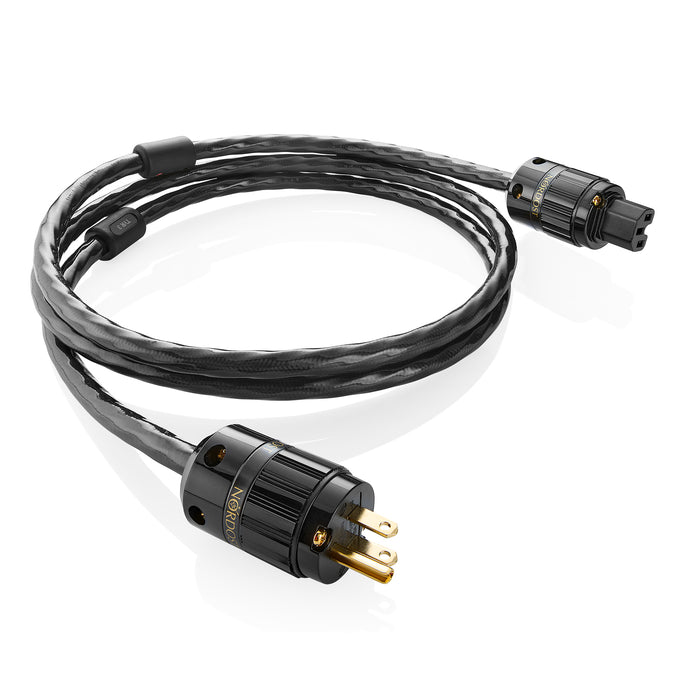
The Leif 3 series of 2024 is the entry: Blue Heaven 3 with 18 conductors of 24 AWG in its flat speaker cable and two shielded pairs in its interconnect, Red Dawn 3 with 22 and three, both in 99.9999 percent copper with FEP extrusion, and power cords of stranded copper in Micro Mono-Filament. Norse 3, announced in October 2026, steps to 99.99999 percent solid-core copper with Micro Mono-Filament in the speaker cables and power cords and Dual Mono-Filament in the interconnects: Heimdall 3 with 18 speaker conductors of 22 AWG, Frey 3 with 22, Tyr 3 with 26 and the only Norse 3 power cord in Dual Mono-Filament. The tonearm, digital, USB and Ethernet cables of the Norse range remain Heimdall 2. Valhalla 2, the Reference range since 2013, uses eight-nines copper with 85 micron silver, Dual Mono-Filament on every cable, round hollow-core speaker geometry and HOLO:PLUG connectors; Odin 2 adds Total Signal Control and heavier conductors, and Odin Gold replaces the silver with gold. Nordost's advice, and ours, is to buy within one range and complete the loom from the wall outward, power cords first.

Why it matters in a system

A single-brand loom is Nordost's founding argument: cables that share a construction add nothing different to each other, so the system sounds like the components rather than like a mixture of cables. The ranges exist so that the same approach is available from a few hundred dollars a cable to Odin.

What you may hear

Jay Garrett on the Blue Heaven 3 loom: a cable family less interested in flattering a system than in revealing what it is already capable of. Roy Gregory on the same loom: if its performance does not get your attention, its price differential should.

Burned in before you hear itSince 2005

The Vidar burn-in machine

A new Nordost cable needs burning in, and the way to do it is on the Vidar, the wideband burn-in machine Nordost supplies to its dealers: 168 hours for most cables, 336 for the Reference ranges. Pearl Audio runs one, and every cable we sell is burned in before it is delivered. Read the deep diveClose

What it does

Nordost's explanation is that extrusion traps gases and charges in the FEP, and that the Vidar, which drives a very wide band signal of varying amplitude through the cables, neutralizes those charges and conditions the surface of the conductors; the company recommends at least 168 hours for most cables, 336 for Valhalla 2 and Odin, and a repeat after a month of disuse or once a year, and it does not offer burn-in from the factory. Art Dudley, a skeptic about break-in in general, was surprised by the extent of the change in the first hours with a Nordost cable. The company's other principle is that its claims should be checked: Nordost's trainers travel to dealers to demonstrate, it co-hosted 59 events in 2025, and we hosted An Evening with Nordost in our main listening room in June 2026. Every cable we sell has been through the Vidar before it is delivered, and we keep a case of burned-in Leif 3 and Norse cables so a comparison, power cords first, is made on cables that are already settled.

Why it matters in a system

A cable auditioned raw tells you little. The Vidar and the case of burned-in cables remove that problem, and they are why we are confident recommending a loom before you have bought one.

What you may hear

What the comparison usually shows, in Joe Reynolds's order: the power cord first, then the interconnects, then the speaker cables.

Nordost at Pearl Audio

The Nordost range we represent

All 55 Nordost products

Search