
Linn · Glasgow · In production since 1972
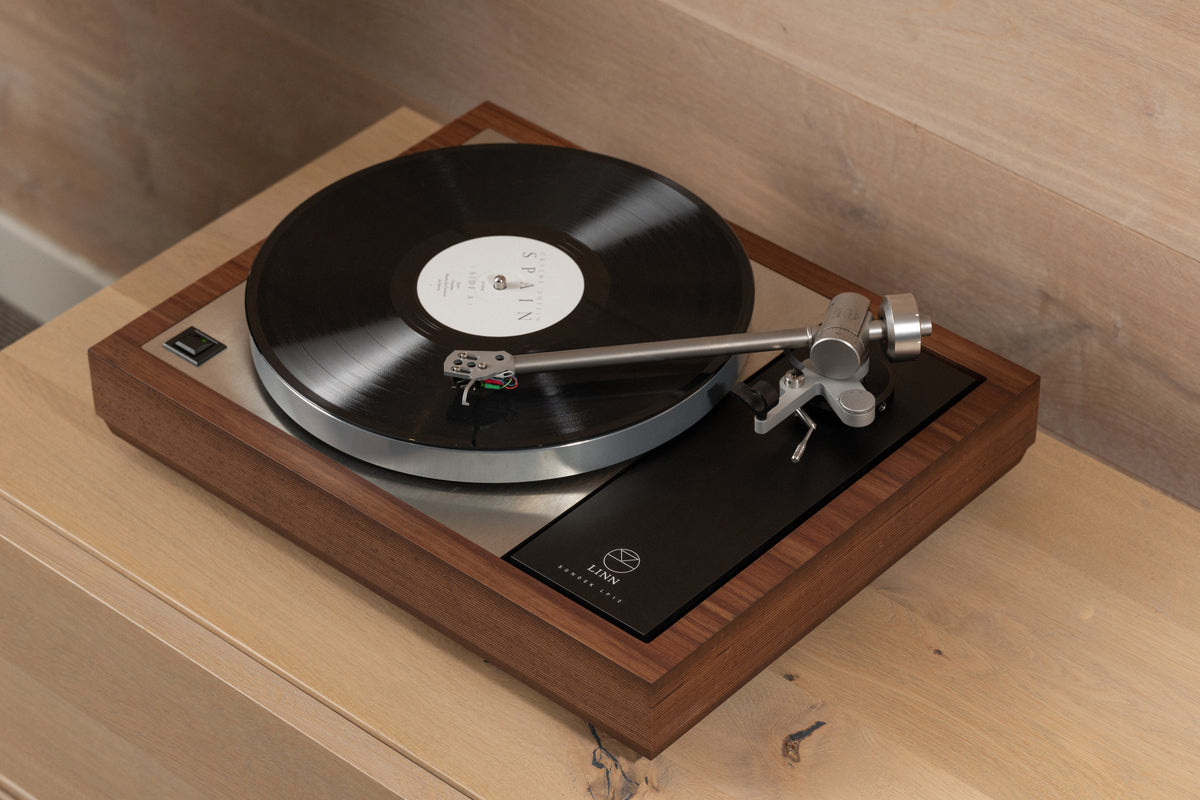
The Linn Sondek LP12
A belt-drive turntable with a suspended sub-chassis that has been in continuous production since 1972, and the only one of its generation that can be brought to current specification one part at a time. Pearl Audio has sold, built and serviced Sondeks in Portland since 2006.
- 1972The first Sondek LP12 is built in Castlemilk, Glasgow
- 50+Retrofittable upgrades released by Linn since the launch
- 3Complete specifications today: Majik, Selekt and Klimax
- 6LP12s in different configurations on display at Pearl Audio
The idea
Fifty years on one principle
Most turntables are replaced. The Sondek LP12 is revised. Since the first deck left Glasgow in 1972, Linn has changed the bearing, the sub-chassis, the motor, the power supply, the arm, the base board and the plinth itself, and every one of those changes has been made to fit the deck already standing in your room. Linn counts more than fifty retrofittable mechanical and electrical upgrades over the life of the design, and says that anyone who bought an LP12 from 1973 onward can bring it fully to the current specification. Nothing else in audio has been maintained that way for that long.
The LP12 also carried an argument. Ivor Tiefenbrun built it to prove that the record player, not the loudspeaker, decides how good a system can be, because information lost at the source cannot be recovered by anything downstream. That position, which Linn and Naim both argued through the 1970s and which came to be called source first, reorganized the way British hi-fi was sold and demonstrated. Hi-Fi Choice readers and reviewers later voted the LP12 the most important hi-fi component ever sold in the United Kingdom; Stereophile placed it first in its Hot 100 Products of 2002 and named it Analog Source Component of the Year in 2004 and again in 2007.
This page is the long version of that story: where the deck came from, how it works, what the three current specifications contain, what every option changes and costs, and how our workshop builds, sets up and upgrades them. It is a companion to the Linn story, which covers the company as a whole, and to the product pages for the Majik LP12, Selekt LP12 and Klimax LP12.

History, part one
Castlemilk, 1972
The Sondek LP12 was built before Linn existed. Ivor Tiefenbrun, then in his twenties, assembled the first deck in 1972 at Castle Precision Engineering, the Tiefenbrun family's machining firm in Castlemilk on the south side of Glasgow, after concluding that the turntable in his own system was being disturbed by the sound coming out of his loudspeakers. Linn Products Ltd was formed in February 1973 to make and sell it, and took its name from Linn Park across the road. The deck's name was plainer than it looks: Sondek is a contraction of sound deck, and LP12 refers to the twelve-inch long-playing record.
Its mechanical idea was not new. The LP12 belongs to the family of three-point suspended sub-chassis turntables that began with Edgar Villchur's Acoustic Research XA of 1961 and continued through the Thorens TD150, and its layout matched the Ariston RD11, a Hamish Robertson design of 1971 for which Castle had machined many parts. When Linn announced that the turntable previously sold as the Ariston RD11 was now available as the Linn LP12, a dispute over patents and parentage followed; the patent on the single-point bearing was ultimately awarded to Linn. What Linn added to the shared layout was a bearing machined to tolerances the others did not attempt, a stiffer sub-chassis, and a conviction that the way the parts were assembled and tuned mattered as much as the parts themselves.
The early decks were platforms rather than complete record players. They came with a basic power supply, ran at 33⅓ rpm only, with 45 rpm available by fitting a larger pulley adaptor, and were sold without an arm; buyers fitted a Grace 707, a Sumiko or, later, a Mission 774. Linn's own Ittok LVII tonearm arrived in 1979 and stayed in production until 1993. In the same decade the lid lost its prop in favor of spring-loaded hinges, the top plate was revised, and the sub-chassis gained a strap and a printed circuit board for the motor control. The modern habit of recording every change against a serial number begins here.
History, part two
Nirvana, Valhalla, Lingo and Cirkus
The 1980s turned a good turntable into a reference. In February 1981 Linn introduced Nirvana, a kit of revised springs, grommets and fittings for the suspension, from serial number 32,826. In May 1982 the Valhalla board became standard from serial 38,794: a crystal-controlled electronic supply mounted inside the plinth that generated a clean sine wave for the synchronous motor rather than feeding it straight from the wall. Through the middle of the decade the plinth's corner bracing was enlarged, the sub-chassis bar was bonded with epoxy instead of spot-welded, the bearing housing was redesigned and the armboard moved to a laminated construction, each change logged against the decks on the line.
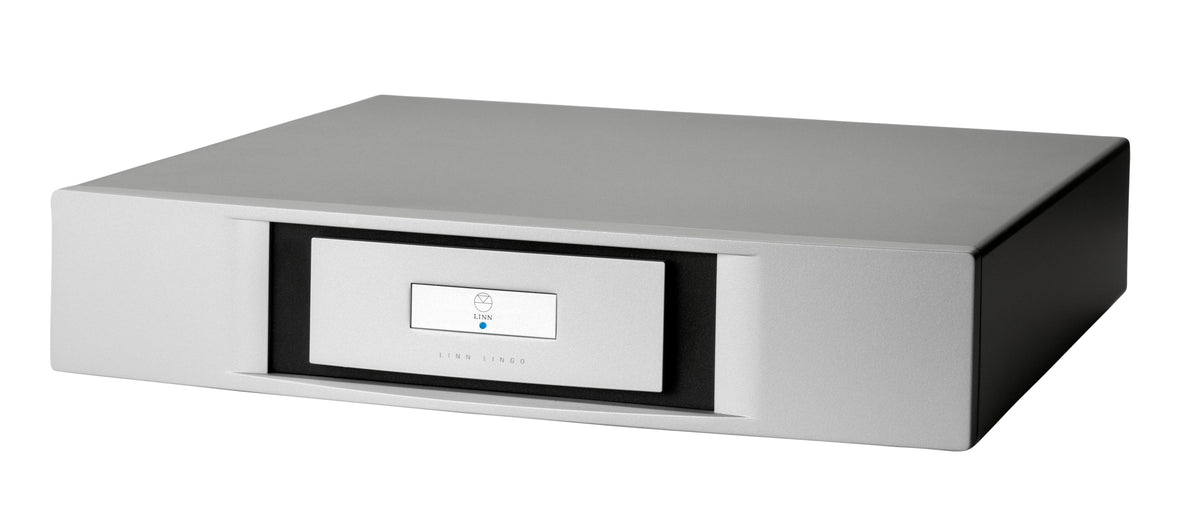
In 1990 the Lingo took the power supply out of the plinth altogether. It generated two crystal-referenced sine waves, one for 33⅓ and one for 45 rpm, and amplified them to drive the motor, so the deck finally had a switched second speed without a pulley change. A year later the hardboard base gave way to a solid base board and the Trampolin, an optional baseboard on isolating feet, appeared alongside a stripped-down Basik LP12.
The decade's work was gathered up in 1993 as Cirkus, fitted as standard from serial 90,582: a larger and better-machined inner platter, a new bearing, new springs, a new armboard and a new belt. For most of the next three decades a Cirkus bearing was the heart of every LP12, and a deck described as pre-Cirkus is still the first thing a technician asks about.
History, part three
A new motor, then Keel, Ekos SE, Radikal and Urika
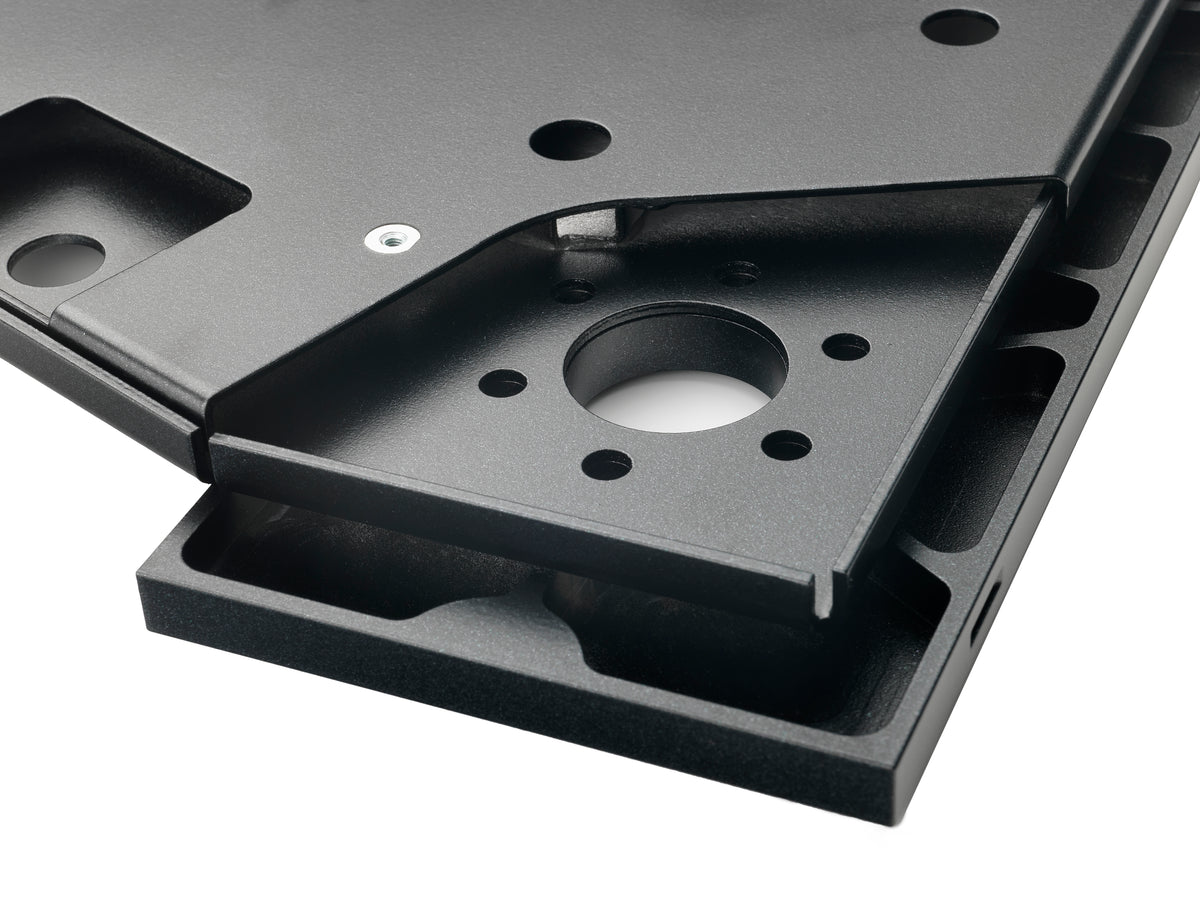
The LP12 kept its original motor for twenty-nine years; a new one arrived in 2001, and a maple plinth joined black, walnut, rosewood and afromosia in 2002. The larger change came in November 2006, for the deck's thirty-third birthday, when Linn introduced the Keel: a sub-chassis, armboard and arm collar machined from one solid piece of aircraft-grade aluminum, with no screws, fixings or joins between the parts, pocketed underneath in a pattern chosen for strength and designed to match the mass and center of gravity of the original pressed-steel assembly so that it worked with the suspension of every Sondek ever made. The Ekos SE tonearm, with a titanium arm tube and a stainless-steel bearing housing, and the aluminum Trampolin 2 arrived with it.
In 2008 Linn began selling the deck as a complete record player for the first time, the Majik LP12, with a Pro-Ject 9cc arm, the Adikt moving magnet cartridge and an internal supply. Then, in 2009, the drive system changed outright. The Radikal replaced the AC synchronous motor with a brushed DC motor and a controller that read the platter's speed on every rotation and corrected it; it also powered the Urika, a moving coil phono stage mounted on the Trampolin inside the plinth so that the cartridge's few hundred microvolts traveled inches rather than feet before amplification. Around these parts Linn organized the range as it still stands: three complete specifications, then called Majik, Akurate and Klimax, built on the same deck.

History, part four
Kore, Karousel, Arko, the LP12-50 and the Klimax Radikal
The Kore of August 2013 brought a machined armboard and a bonded aluminum sub-chassis to the middle of the range, and the same year a fortieth-anniversary edition of forty decks was built with plinths from Highland Park distillery casks. For the forty-fifth anniversary in February 2018 Linn released the fourth-generation Lingo, with speed management derived from the Radikal, and the Urika II, which digitizes the cartridge signal at the deck and sends it losslessly over Exakt Link. In March 2020 the Karousel single-point bearing replaced the Cirkus on new decks and as a retrofit, the Krane arm appeared on the Majik LP12, and painted plinths in any color joined the wood finishes. A second-generation Radikal and the Ekstatik flagship cartridge followed in 2021.
June 2022 brought the Arko, Linn's first entirely new tonearm since the Ekos SE, the Kendo and Koil cartridges, and a renamed middle specification: the Selekt LP12 replaced the Akurate LP12 with Arko and Kendo fitted as standard. In July 2023, for Linn's fiftieth year, the Sondek LP12-50 was unveiled, designed with Sir Jony Ive's LoveFrom and limited to 250 decks, and it introduced the Bedrok plinth, a block of beech layers laid at right angles and pressed under heat into a material more than twice the density of a standard plinth. Bedrok became an upgrade for every LP12 in February 2025, and in October 2025 Linn released the Klimax Radikal, a reference motor system powered by a Utopik supply in a chassis machined from three solid pieces of aluminum, together with the Keel SE, a sub-chassis it describes as 300 percent stiffer than its previous design. The Klimax LP12 we build in 2026 carries both.
Year by year
What changed, and when
Linn has logged most LP12 changes against the serial number of the deck on the line that day. The numbers below, where given, are the serial from which a change applied; they are the quickest way to place an older deck.
- 1972 The first Sondek LP12Built by Ivor Tiefenbrun at Castle Precision Engineering, Castlemilk. Linn Products Ltd is formed in February 1973.
- 1974 Bearing liner, sub-chassis strap, motor PCBThe main bearing liner is changed, the sub-chassis gains a strap and the motor control moves to a printed circuit board; a new mains switch. From about serial 2,000.
- 1978 Top plate revisedFrom about serial 23,000.
- 1979 Ittok LVII tonearm; hinged lidLinn's first own tonearm, in production until 1993. The lid prop gives way to spring-loaded hinges from serial 27,000.
- 1981 NirvanaRevised springs, grommets and mechanical fittings for the suspension (February, from serial 32,826).
- 1982 ValhallaCrystal-controlled electronic power supply fitted as standard (May, from serial 38,794).
- 1984 to 1987 Plinth bracing, bearing housing, armboardNew clear lid and enlarged corner bracing (1984); sub-chassis bar bonded rather than spot-welded (June 1984, 54,101); cap-head screws on the bearing housing (1985); new bearing housing and laminated armboard (March 1987, 69,161); improved bearing lining and springs (70,000).
- 1990 LingoThe first external supply: two crystal-referenced sine waves for 33⅓ and 45 rpm.
- 1991 Trampolin; solid base board; Basik LP12An optional base board on isolating feet; the hardboard base is replaced by a solid board; a stripped-down Basik variant appears (from 87,672).
- 1993 CirkusLarger, better-machined inner platter, new bearing, springs, armboard and belt, fitted as standard from serial 90,582.
- 1997 25th anniversary editionLimited edition with a plaque bearing Ivor Tiefenbrun's signature.
- 2001 New motorThe first motor change since 1972.
- 2002 Maple plinthAdded to black, walnut, rosewood and afromosia.
- 2006 Keel, Ekos SE, Trampolin 2Thirty-third birthday editions, later standard products: a one-piece machined sub-chassis (November), a titanium-tube tonearm and an aluminum base board.
- 2008 Majik LP12The first complete LP12 package: Pro-Ject 9cc arm, Adikt cartridge, internal supply.
- 2009 Radikal and UrikaA brushed DC motor with speed read from the platter on every rotation, and a phono stage inside the plinth. The range becomes Majik, Akurate and Klimax LP12.
- 2013 Kore; 40th anniversary editionA bonded aluminum sub-chassis with a machined armboard (August). Forty decks with plinths from Highland Park whisky casks.
- 2018 Lingo 4 and Urika IIFor the forty-fifth anniversary (February): a hybrid supply with Radikal-derived speed management, and a phono stage that digitizes at the deck for Exakt Link.
- 2020 Karousel and KraneA new single-point bearing replaces the Cirkus on new decks and as a retrofit (March). The Krane arm ships on every Majik LP12 from early 2020; painted plinths in any color are offered.
- 2021 Radikal 2 and EkstatikSecond-generation Radikal; a flagship moving coil with a sapphire cantilever, designed with EMT/HiFiction.
- 2022 Arko, Kendo, Koil; Selekt LP12A gimballed 7075-aluminum tonearm and two moving coils (June). The Selekt LP12 replaces the Akurate LP12 with Arko and Kendo as standard.
- 2023 Sondek LP12-50Linn's fiftieth-anniversary deck, designed with LoveFrom and limited to 250 (July). The Bedrok plinth appears.
- 2025 Bedrok for every LP12The densified-beech plinth becomes an upgrade for any LP12 (February).
- 2025 Klimax Radikal and Keel SEReference motor system with a Utopik supply in a machined chassis, and a sub-chassis 300 percent stiffer than its predecessor (October).
Sources: Linn Products (linn.co.uk and the LinnDocs product wiki); Wikipedia, Linn Sondek LP12 and Linn Products; Stereophile (2022); Hi-Fi+ (2015, 2018); The Ear (2022, 2025); What Hi-Fi? (2018, 2025); The Vinyl Factory (2023). Where the Wikipedia serial-number list and Linn's own documents differ, Linn's dates are used.

How it works
A sub-chassis hung on three springs
Take the platter and the arm off an LP12 and what remains inside the plinth is a flat metal sub-chassis hanging from three springs that are bolted to the top plate. The platter bearing is fixed to the sub-chassis; so is the armboard, and therefore the arm. The motor is not. It is bolted to the top plate, outside the suspended system, and drives the inner platter through a flat belt that is the only physical link between the two.
The purpose is to make the stylus and the groove move together while everything else moves separately. Footfall, a slammed door, the loudspeakers' own output, and the motor's small vibrations all arrive at the plinth; the springs and their rubber grommets are tuned so that the sub-chassis bounces vertically at a few cycles per second and is very poor at passing anything faster. The belt, being elastic, filters the motor in the same way. Because arm and bearing share one rigid structure, the suspension can move without changing the geometry between the stylus and the record.
This is also why an LP12 depends on how it is set up. The three springs must be adjusted so the sub-chassis is level, sits at the right height, and bounces straight up and down without rocking, with the arm cable dressed so it neither pulls nor rubs. A deck that is fitted with the right parts and set up carelessly will sound worse than a lesser deck set up well, which is the reason Linn has always insisted the work is done by a trained retailer, and the reason our two technicians do it on the bench and again in your home.

How it works
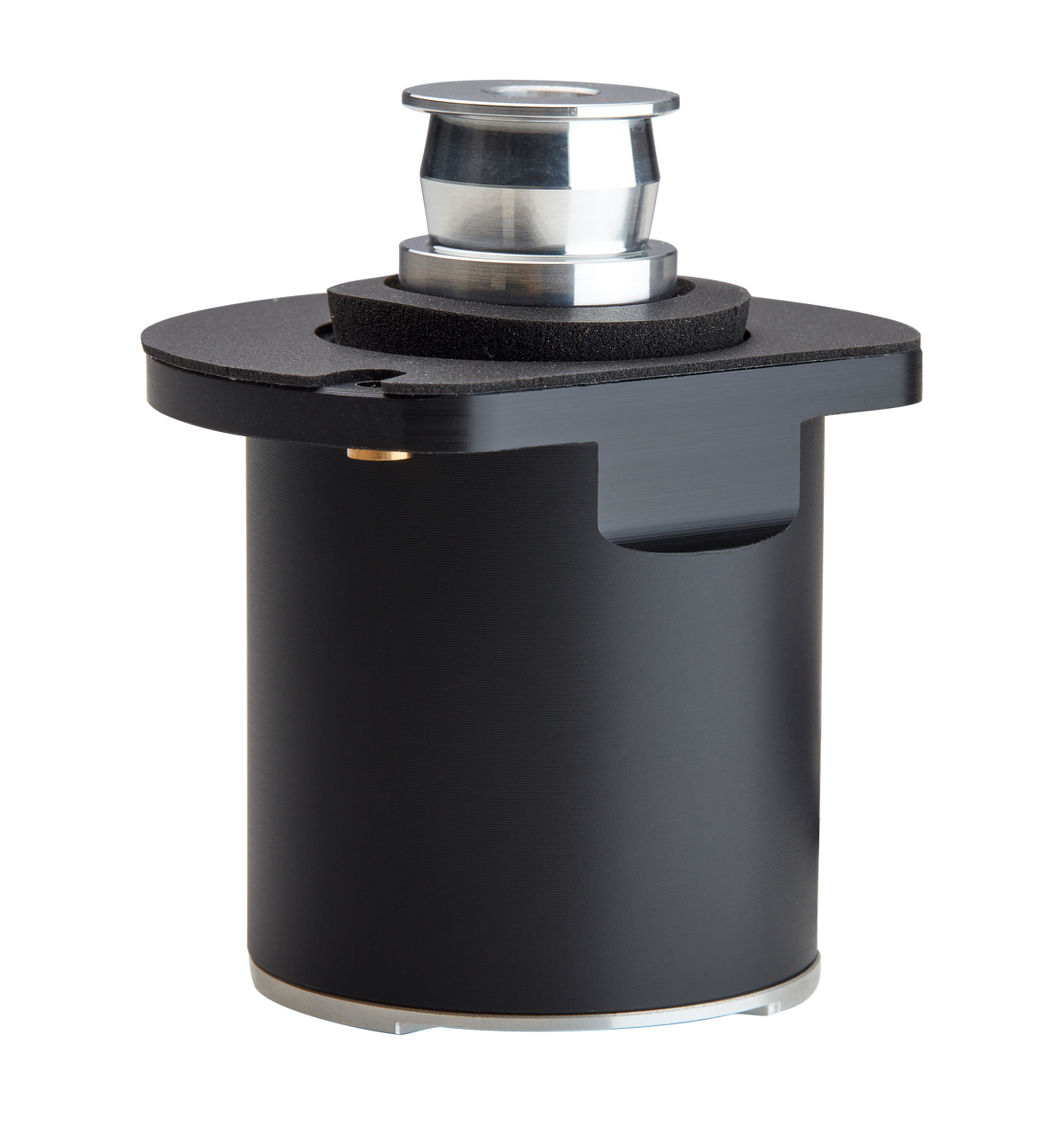
The single-point bearing
The platter turns on a hardened steel spindle whose rounded tip rests on a single point at the bottom of an oil-filled bearing housing. Only that point carries the platter's weight; the walls of the housing, lined to very close tolerances, keep the spindle vertical. It is the oldest idea in the deck and the one Linn has guarded most closely: the original patent dispute of the 1970s was over this bearing, and the Cirkus of 1993 and the Karousel of 2020 are the two occasions on which Linn has replaced it outright.
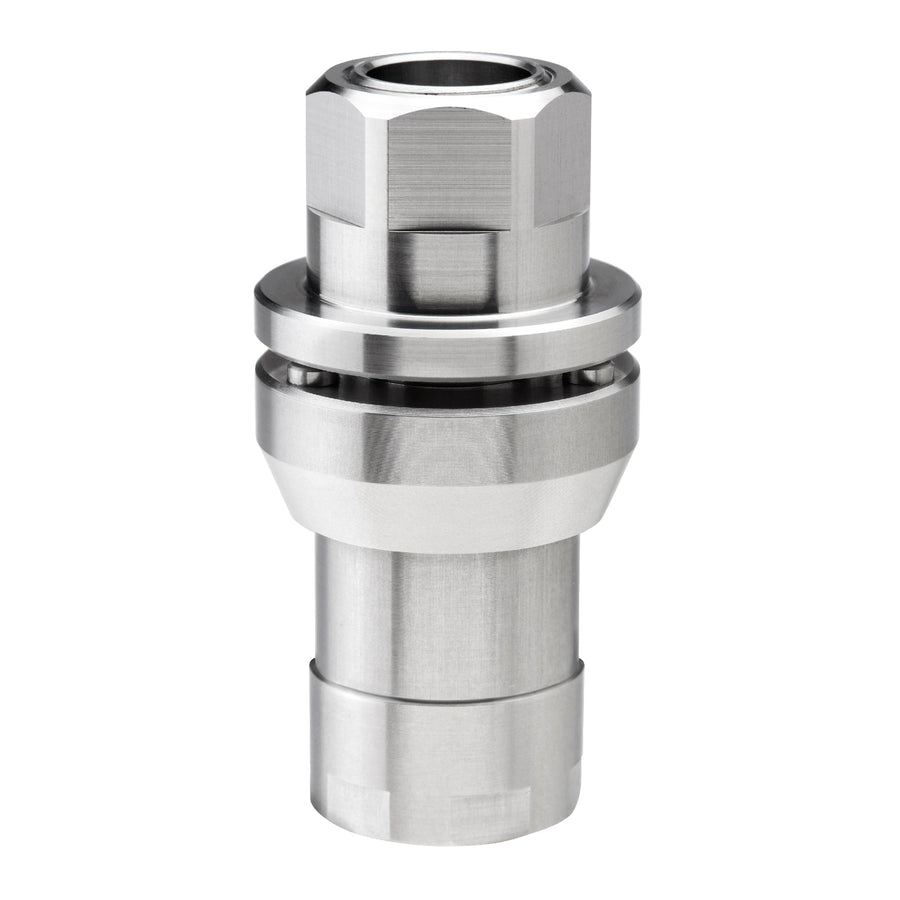
The Karousel keeps the single point but rebuilds everything around it. The housing is stainless steel, the thrust-pad housing at the base is smaller and stiffer, and a substantial lock-nut clamps the bearing to the sub-chassis so that bearing, sub-chassis, spindle and platter behave as one piece. Linn describes the result as smoother rotation, greater stability and reproduction that is more accurate and detailed, and a bearing that bolts into any LP12 built since 1972, with two conditions: the outer platter on some older decks must be replaced, and the Karousel cannot be fitted to a deck that still carries a Valhalla, Wakonda or third-party supply inside the plinth.
What the bearing does for the sound is best understood by what it removes. Any play or roughness at the spindle becomes rumble beneath the music and a blurring of the quietest detail; the closer the spindle runs to true, the darker the background against which a record plays. The bearing is also where the inner platter meets the belt, so its precision sets the floor for everything the motor and power supply can do.


How it works
Belt, motor and the power supply
A record is cut at 33⅓ revolutions per minute and must be played at exactly that; anything else changes the pitch of every note. On the LP12 the motor sits on the top plate and turns a small pulley; a flat rubber belt runs from the pulley around the rim of the inner platter, which sits on the bearing and carries the heavy outer platter. The belt's job is to transmit torque while absorbing the motor's vibration, and its condition, clean, correctly tensioned and the right way round, is one of the small things a service visit attends to.
For most of the deck's life the motor has been an AC synchronous type that locks its speed to the frequency of the voltage feeding it. The Majik power supply inside today's entry deck filters the mains and drives a 110 V motor at 33⅓; 45 rpm comes from an adaptor over the pulley. The Lingo, now in its fourth generation, drives a 12 V AC motor from a sine wave it generates itself, in the digital domain, and uses a sensor near the motor that reads a mark on the platter to check speed on every rotation, recalibrating each time the deck is switched on and switching between 33⅓ and 45 at a touch.
The Radikal takes the other route. Its motor is a brushed DC type, in the current Klimax version a precious-metal brushed motor with a moving-coil rotor in an acoustically isolated housing, whose speed is managed by a controller that measures every rotation and corrects it; Linn claims rotation closer to 33⅓ than any other turntable. The Klimax Radikal of 2025 feeds that motor from a Utopik supply with two self-regulating rails, one for the motor and controller and one for a Urika phono stage, housed in a chassis machined from three pieces of solid aluminum and weighing nearly 14 kg. What you hear from a better supply is not louder or warmer; it is steadier. Notes hold their pitch to the end, and the music has what reviewers of the Lingo and Radikal have described as a tauter, more focused and more immediate quality.
How it works
Arm, cartridge and the first inch of signal
The tonearm has to hold the cartridge rigidly in every direction except the two it must move in, across the record and up and down with its warps, while adding as little of its own resonance to the signal as possible. Linn's three current arms answer that in three ways. The Krane is static-balanced, with a polished tungsten-and-sapphire vertical bearing and a pair of ceramic horizontal bearings, a laser-etched scale for arm height and a magnetic anti-skate. The Arko is a gimballed arm made entirely of 7075-grade aluminum, from the cold-drawn arm tube to the headshell and gimbal, on a single-piece polished stainless-steel spindle. The Ekos SE is hand-built with a titanium arm tube, a stainless-steel bearing housing, bearings with less than 20 mg of friction and temperature-compensated springs for downforce and anti-skate, so that the settings hold as the room warms and cools.
All three share Linn's effective length and offset angle, and on the Kore and Keel SE the arm collar bolts directly to the sub-chassis rather than to a separate board, so the arm and the bearing are coupled as rigidly as the structure allows. The cartridge is chosen to match: the moving magnet Adikt for the Majik LP12 MM, the entry moving coils Koil and Krystal, the Kendo, designed alongside the Arko with the same 7075 body so that energy drains from cartridge to arm without a boundary, and the Ekstatik, with a micro-ridge stylus on a sapphire cantilever in a honeycomb-machined, diamond-like-carbon-coated body.
A moving coil produces well under a millivolt. On a conventional system that signal leaves the deck through a tonearm cable and travels to a phono stage elsewhere in the rack; on an LP12 with a Radikal it can instead travel a few inches to a Urika mounted on the Trampolin inside the plinth, where it is amplified, or in the Urika II digitized at once, equalized to the RIAA curve in the digital domain with per-unit calibration, and sent losslessly over Exakt Link to a Linn DS or DSM. Linn's claim for the arrangement is lower noise, lower distortion and more music, and it is the final step that distinguishes the Klimax LP12 from everything below it.

How it works
Why every upgrade fits
The LP12's plinth is a frame of kiln-dried hardwood, braced at the corners, with a stainless-steel top plate carrying the motor, the switch and the three suspension bolts. Those bolts, the cut-out for the arm, the position of the motor and the dimensions of the platter have not moved since 1972. Every sub-chassis, bearing, power supply board, base board and arm Linn has released since has been machined to that fixed geometry, which is the mechanical reason a 1970s deck and a 2026 Klimax LP12 can exchange parts.
There are a few boundaries. Linn says the Lingo 4 fits any plinth made after 1984; the Karousel cannot share a plinth with a Valhalla board; the Keel SE and Kore are made for Linn arms, with Kore versions for Rega, SME and Naim arms; the Urika needs a Radikal to power it and the Urika II needs an Exakt-enabled Linn player to receive it. Within those limits a deck can be improved in any order, in any decade, and the one part that most owners never replace, the plinth, now has a replacement of its own in Bedrok. Our technicians have rebuilt Sondeks from every era onto current parts, and the question we ask first is not what year the deck is but which bearing is in it.
A legend can be intimidating, especially when it's a classic, a revolutionary, an iconoclast, a survivor.
Three complete turntables, one deck


The LP12 today
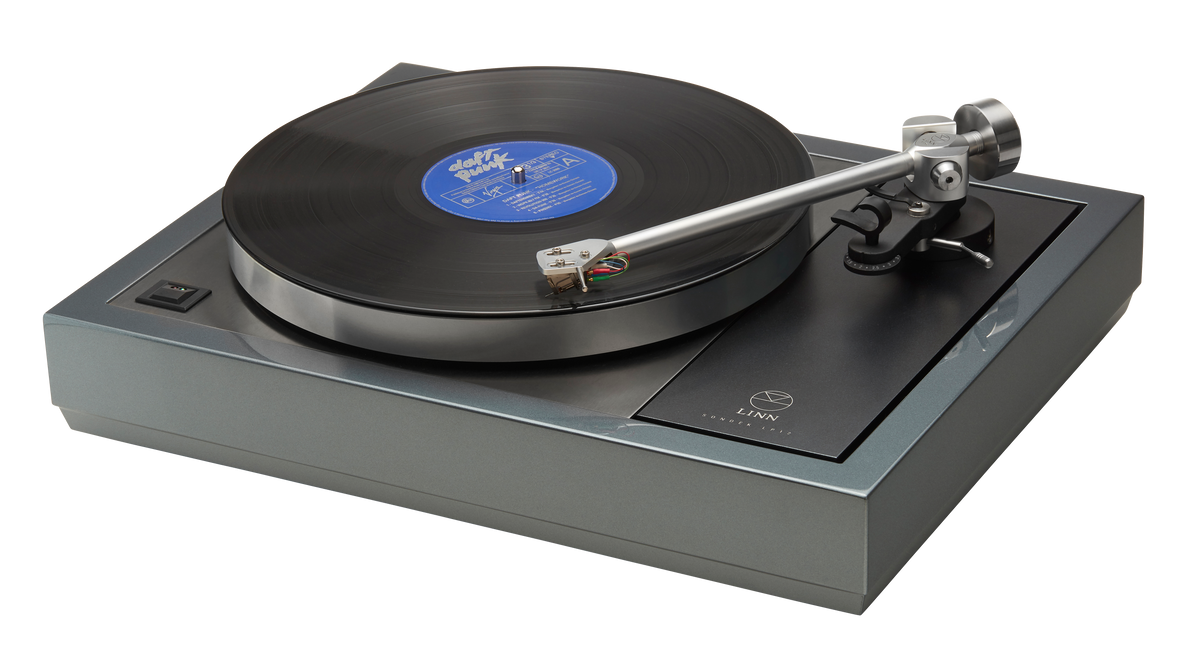
Majik, Selekt and Klimax, part by part
Linn sells the Sondek in three complete specifications, assembled and set up as single instruments, and any of them can be built up to the next. The table shows what each contains as Linn specifies it for 2026; prices are read live from our store and equal Linn's suggested US retail.
| Component |  Majik LP12$5,440
View |  Selekt LP12$16,912
View | 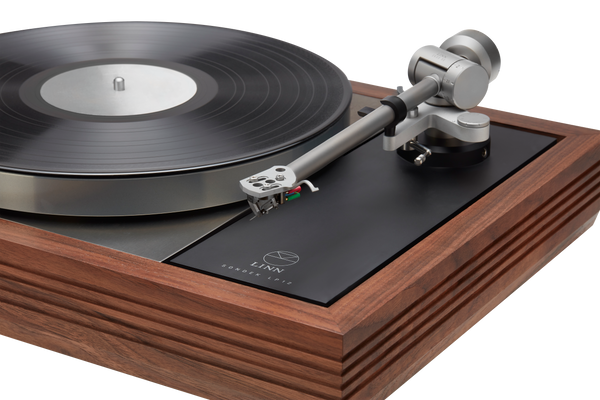 Klimax LP12$45,970
View |
|---|---|---|---|
| Plinth | Kiln-dried hardwood; Oak, Cherry, Black Ash, Rosenut or Walnut | Same | Same; Bedrok optional on any LP12 |
| Top plate | Stainless steel | Stainless steel | Stainless steel |
| Bearing | Karousel single-point | Karousel single-point | Karousel single-point |
| Sub-chassis and armboard | Majik aluminum sub-chassis with five-layer laminated armboard | Kore: bonded aluminum sub-chassis with machined, ribbed armboard | Keel SE: sub-chassis and armboard machined from solid, 300 percent stiffer than the Keel |
| Base board | Solid Base, aluminum, fixed feet | Trampolin, aluminum on suspended damped feet | Trampolin, integrated with the Urika II |
| Motor and power supply | 110 V AC synchronous motor, Majik internal supply; 33⅓ rpm, 45 with the included adaptor | 12 V AC motor, Lingo hybrid supply with speed checked every rotation; 33⅓ and 45 switched | Klimax Radikal: brushed DC motor, speed corrected every rotation, Utopik supply in a machined chassis; 33⅓ and 45 |
| Tonearm | Krane, static-balanced | Arko, gimballed, 7075 aluminum | Ekos SE, titanium arm tube |
| Cartridge | Adikt moving magnet (Majik LP12 MC with the Koil moving coil available) | Kendo moving coil | Ekstatik moving coil |
| Phono stage | Not included; a moving magnet input is needed | Not included; a moving coil input is needed | Urika II inside the plinth, Exakt Link output; the analog Urika can be substituted |
| Dust cover | Optional | Optional | Optional |
| Warranty | 5 years parts and labor in the US | 5 years parts and labor in the US | 5 years parts and labor in the US |
| Price, complete | $5,440 | $16,912 | $45,970 |
Specifications from Linn's product pages and its April 2026 US price list. The Majik LP12 MC with the Koil cartridge, fluted plinths, high-gloss and special finishes are priced on request. All three decks are on display in our Portland showroom.
The options
Every part, one at a time
What follows is the LP12 as a set of parts: what each one does, what Linn and independent reviewers say it changes, and what it costs at Pearl Audio. Prices are read live from the store, so they always match. Where a part is listed on our site you can read more and reserve it; where it is not, ask us. Most of these parts are on our shelves for immediate installation, and our technicians fit them on the bench, re-set the suspension, check speed and geometry, and return the deck ready to play.
If you are planning a series of upgrades rather than one, the order matters, and we set it out after the parts. The short version: bearing first on any deck that predates the Karousel, then the sub-chassis, then the power supply, then the arm, then the cartridge, with the phono stage as the final step toward Klimax specification.
Plinth and top plate

Standard plinth
Kiln-dried hardwood · five finishes
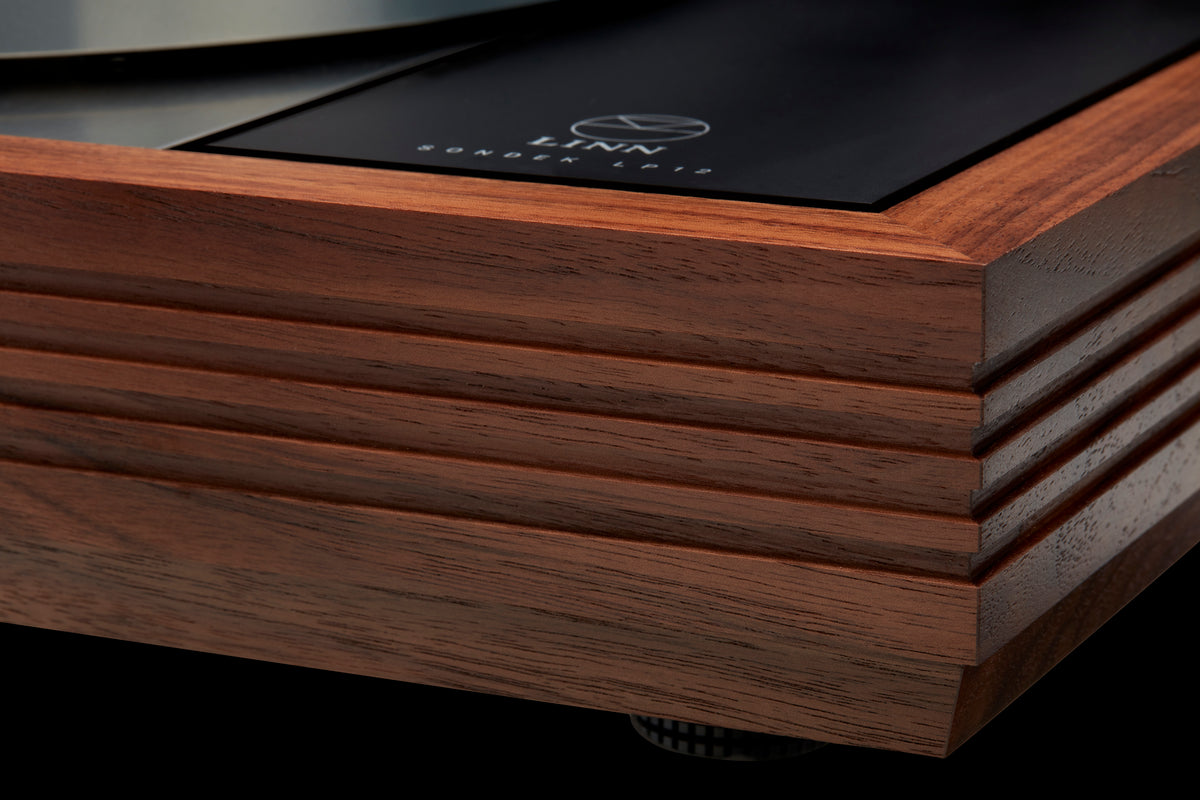
What it changesThe frame that carries the top plate and the three suspension points, in smooth kiln-dried hardwood: Oak, Cherry, Black Ash, Rosenut or Walnut at one price. A new plinth renews a damaged or dated deck or changes its finish; fluted, high-gloss, Piano Black, Alpine White and any RAL color are made to order.
What you hearLinn makes no sonic claim for a like-for-like plinth change. We treat it as a structural and cosmetic renewal, and check the corner bracing of older plinths while the deck is apart.
Fluted plinths and special finishes are priced on request. We stock all five standard finishes.
Bedrok
2023 on the LP12-50 · every LP12 since 2025
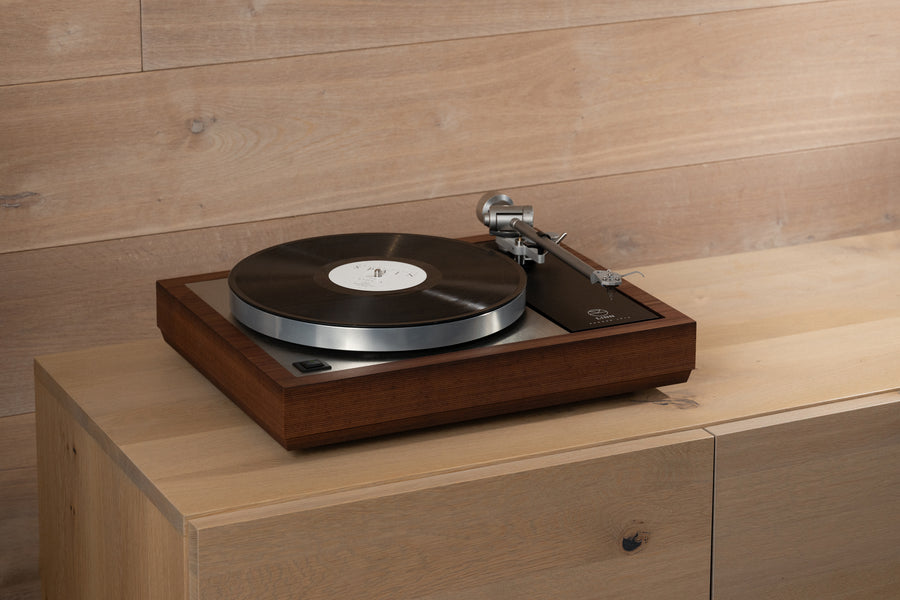
What it changesLinn's first performance upgrade for the plinth itself: layers of beech laid at right angles and pressed under heat into a solid engineered wood more than twice the density of a standard plinth, with very low resonance. Supplied with its own top plate, in natural oiled beech, and made in limited quantities.
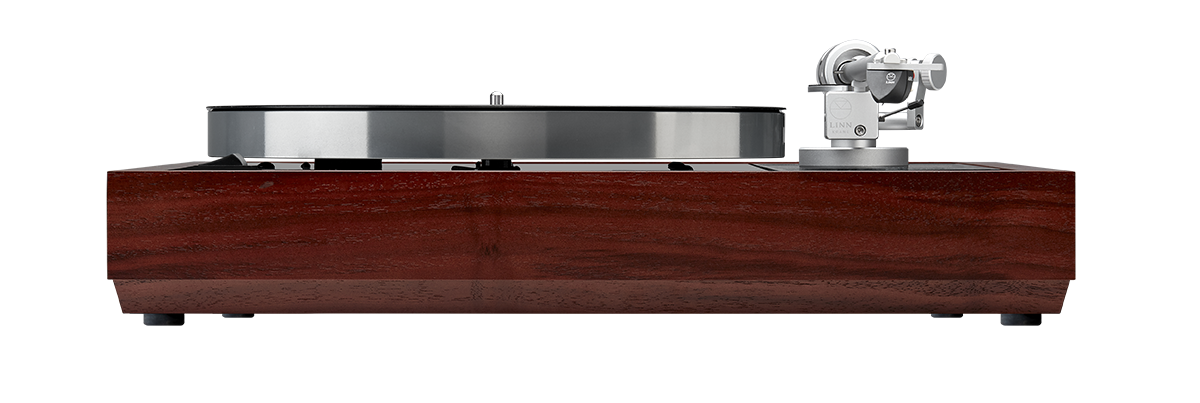
What you hearLinn calls it a holistic upgrade, because every part the plinth houses benefits, and describes more pace, tighter bass and greater insight. It is the plinth of the LP12-50 and of the Klimax LP12 photographed on this page.
Sub-chassis and armboard

Majik sub-chassis
Standard on the Majik LP12
What it changesA multi-layer box of 1.5 mm aluminum sheet with a five-layer laminated armboard, replacing the pressed-steel sub-chassis of older decks. It is the modern baseline: lighter, stiffer and better damped than the original, and the part every Majik LP12 is built on.
What you hearLinn positions it as the entry point rather than an upgrade; a deck still on a pre-Cirkus steel chassis gains a cleaner, more stable foundation.

Kore
2013 · Selekt LP12
What it changesThree 1.5 mm aluminum layers bonded with Linn's own adhesive into a stiff, light box, with an armboard machined from solid, ribbed underneath and bonded to it so the two act as one piece. The arm collar bolts straight to the sub-chassis, giving the arm a direct connection to the bearing. Made for Linn arms, with versions for Rega, SME and Naim arms.
What you hearLinn's stated goals are rigidity and the removal of unwanted damping; the step it describes is toward the performance of the middle of the range. Reviewers of the Selekt LP12 have credited the Kore, Lingo and Arko together with a more neutral, cleaner presentation than earlier LP12s.

Keel SE
2025 · Klimax LP12
What it changesThe highest-performance sub-chassis Linn makes: sub-chassis and armboard machined from solid aluminum, with a bracing structure cut into the underside, a stiffened path from bearing to arm collar and material removed beneath the armboard so the center of mass sits evenly on the three springs. Linn quotes a 300 percent increase in stiffness over the previous Keel.
What you hearLinn describes superior acoustic isolation, reduced tracking distortion and perfect balance. Reviewing the earlier Keel with the Karousel and Ekos SE, Stereophile heard conspicuously quiet, deep black backgrounds and attributed them to the three parts being rigidly coupled.
Pictured: the original Keel, which the Keel SE develops. Made for Linn tonearms; ask us about yours.
Bearing
Karousel
2020 · standard on every current LP12
What it changesThe single-point bearing rebuilt: stainless-steel housing, a smaller and stiffer thrust-pad housing and a substantial lock-nut that clamps the bearing to the sub-chassis. Retrofits to any LP12 except decks still carrying a Valhalla, Wakonda or third-party supply inside the plinth; older outer platters may need replacing.
What you hearLinn describes smoother rotation, greater stability and reproduction that is more accurate and detailed. In practice it is the single change most owners of a Cirkus deck notice first: a quieter background and a firmer sense of pitch.
Motor and power supply

Majik power supply
Internal · 33⅓ rpm
What it changesA low-noise supply board inside the plinth that filters the mains and drives the 110 V AC synchronous motor at 33⅓ rpm; 45 rpm comes from an adaptor over the pulley. The supply fitted to every Majik LP12, and the replacement for a tired Valhalla on an older deck.
What you hearLinn's claim is reduced motor judder from cleaner power. It is the quiet starting point; the Lingo is the upgrade from here.

Lingo
Fourth generation, 2018 · Selekt LP12
What it changesA hybrid supply: a board inside the deck where the Valhalla once sat, a slim external supply, and a 12 V AC motor. The sine wave is generated digitally, and a sensor reads a mark on the platter to check speed on every rotation, recalibrating at power-on. Switched 33⅓ and 45 rpm. Fits any plinth made after 1984.
What you hearLinn presents the Lingo as the first upgrade to make to a Majik-level deck. Hi-Fi+ found the fourth-generation Lingo made the LP12 that bit tauter and more focused, with the tonal character of recordings unchanged and the difference lying in precision.

Radikal and Klimax Radikal
DC motor · 2009, 2021, 2025
What it changesA brushed DC motor in an isolated housing and a controller that measures platter speed on every rotation and corrects it; the supply also powers a Urika phono stage inside the deck. The standard Radikal comes in the Akurate-style case. The Klimax Radikal of 2025 adds a Utopik supply with separate self-regulating rails for motor and phono stage, in a chassis machined from three solid pieces of aluminum weighing nearly 14 kg.
What you hearLinn claims rotation closer to 33⅓ than any other turntable. Stereophile, reviewing a Klimax LP12 with the previous Radikal, described its tempo, focus and immediacy as near-laboratory quality.
Owners of an earlier Radikal can have the 2025 motor control unit fitted as Linn's Radikal Performance Upgrade; ask us.
Tonearms
Krane
2020 · Majik LP12
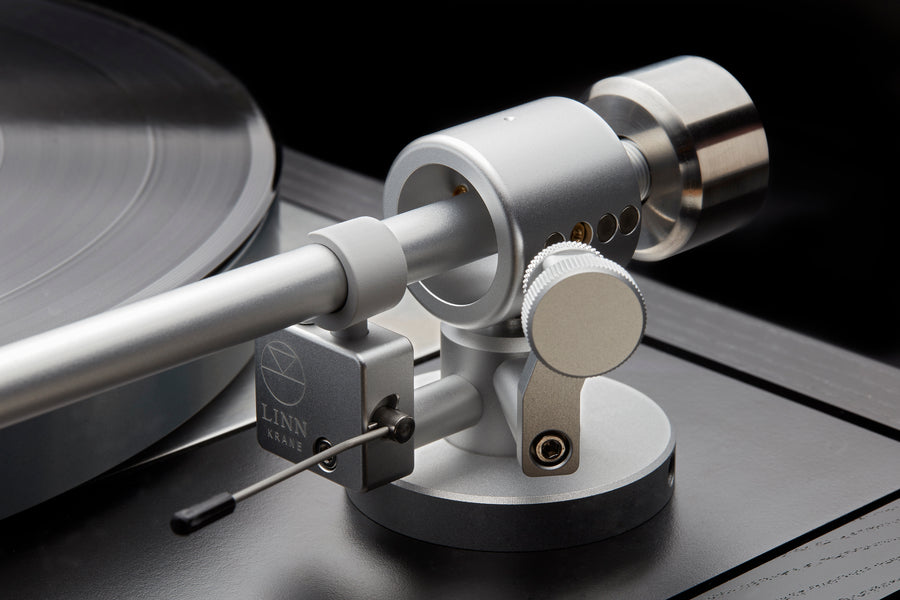
What it changesA static-balanced arm with a polished tungsten-and-sapphire vertical bearing and a dual ceramic horizontal bearing, a laser-etched scale for repeatable arm-height adjustment, magnetic anti-skate and Linn's own effective length and offset angle. Sold without a tonearm cable.
What you hearHi-Fi News measured bearing friction under 10 mg on the Majik LP12 package and found it makes music sound natural, unforced, easy and yet expressive and emotional. Linn has photographed the Krane in a palette of painted colors to match custom plinths; ask us what is currently available.
Arko
2022 · Selekt LP12
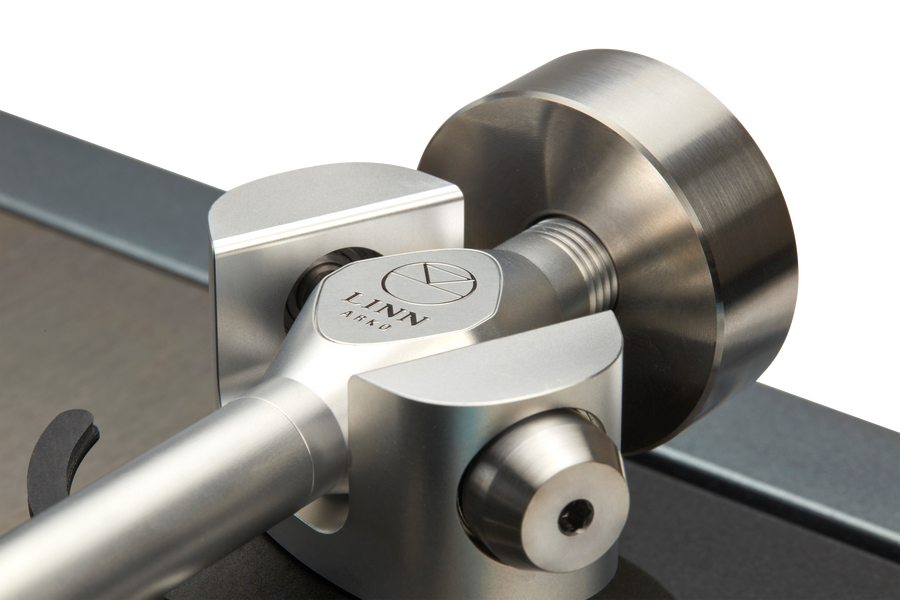
What it changesLinn's first all-new arm since the Ekos SE: a gimballed design in 7075-grade aluminum from the cold-drawn arm tube to the headshell and gimbal, with a machined stainless-steel counterweight and a single-piece polished stainless through-spindle. Effective length 229 mm, effective mass 10 g, for cartridges of 2 to 10 g.
What you hearLinn describes improved depth, impact and emotion from the gimballed platform, and matches it to the Kendo so arm and cartridge share a material. Hi-Fi+ wrote that the Selekt LP12 does detailed and fun like they were going out of fashion.
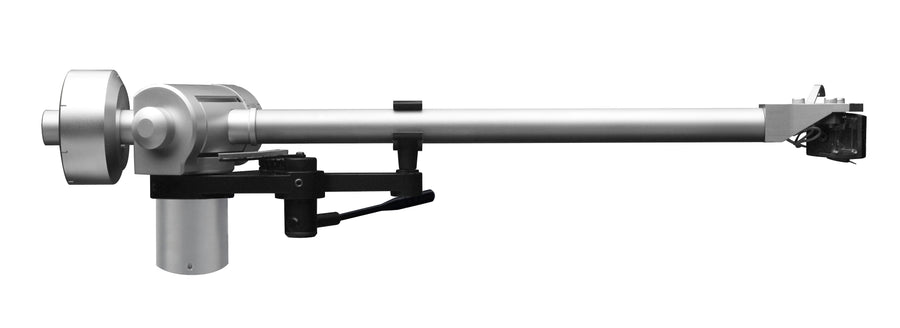
Ekos SE
2006 · Klimax LP12
What it changesThe hand-built flagship: a titanium arm tube to reduce resonance, a stainless-steel bearing housing for precision of movement, bearings with less than 20 mg of friction, temperature-compensated springs for downforce and anti-skate, and a long headshell that takes almost any cartridge. The phono version is supplied with a T-Kable.
What you hearStereophile attributed the Klimax LP12's conspicuously quiet, deep black backgrounds to the Ekos SE, Keel and Karousel being rigidly coupled.
Cartridges
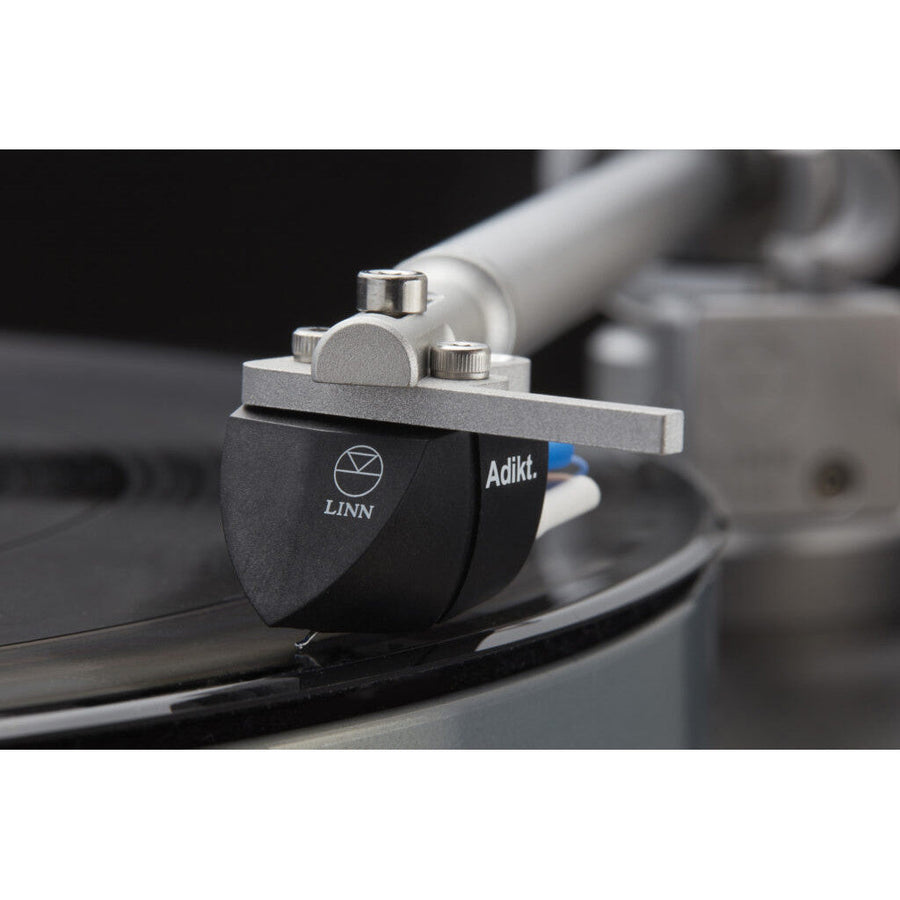
Adikt
Moving magnet · Majik LP12 MM
What it changesLinn's moving magnet cartridge, with an aluminum cantilever and a replaceable stylus, and a high enough output to feed the moving magnet phono input of almost any amplifier, including a Selekt DSM. The cartridge the Majik LP12 MM is built around.
What you hearHi-Fi News, testing the Majik LP12 with the Adikt, called it a punchy entry package that lets the Sondek perform well.
Replacement styli are available; ask us.

Koil
Moving coil · 2022 · Majik LP12 MC
What it changesLinn's entry moving coil: a nude MicroLinear stylus on a low-mass boron cantilever, 0.4 mV output at 5 cm/s into 100 Ω, 2.0 g tracking force, 7.6 g. Fitted to the Majik LP12 MC and available as an upgrade for any Adikt deck that has, or gains, a moving coil input.
What you hearLinn calls it a step up in performance from the Adikt and a first step onto the ladder of premium moving coils. What Hi-Fi? found the Majik LP12 MC fluid and wonderfully cohesive.

Krystal
Moving coil
What it changesThe mid-level moving coil of the Akurate LP12 era, still current. A natural step for a Lingo-and-Kore deck that has outgrown the Koil but is not yet ready for the Kendo or Ekstatik, and a cartridge our technicians know well from a decade of fitting it.
What you hearReviewers of Akurate-era LP12s consistently described the Krystal as the point at which the Linn moving coils trade warmth for clarity; the Kendo and Ekstatik continue in that direction.

Kendo
Moving coil · 2022 · Selekt LP12
What it changesDeveloped from the Ekstatik: a boron cantilever, a Super Fine Line stylus, 4N copper coils and a rigid nickel-coated 7075 aluminum body with aluminum-bronze threaded inserts. 0.45 mV at 3.54 cm/s into 100 Ω, 2.0 g, 7.6 g. Designed alongside the Arko so that arm and cartridge share one material.
What you hearLinn says it has the most level frequency response of any Linn cartridge. StereoNET called the Selekt LP12 with Kendo a highly emotional performer; Hi-Fi+ heard a crisp, dry treble and detail that was fresh rather than nostalgic.

Ekstatik
Flagship moving coil · 2021 · Klimax LP12
What it changesA micro-ridge stylus on a sapphire cantilever, far stiffer than boron or aluminum; a square armature wound with 4N copper; a honeycomb-machined 7075 aluminum body with a diamond-like carbon coating and aluminum-bronze inserts, mounted at three points. 0.45 mV at 3.54 cm/s into 100 Ω, 2.0 g, 7 g. Designed with EMT/HiFiction in Switzerland.
What you hearLinn describes an agile, responsive cartridge that sets a new bar for arm and cartridge synergy. Stereophile wrote that the Klimax LP12 with Ekstatik preserved the structure of a Miles Davis recording better than any turntable the reviewer had heard it on.
Phono stages

Uphorik
External · moving magnet and moving coil
What it changesLinn's external phono stage in an Akurate chassis, with moving magnet and moving coil inputs and adjustable gain and loading. The choice for an LP12 that feeds a non-Linn preamplifier, or a Linn DSM without a phono input, and for Majik and Selekt decks that have not yet taken a Radikal.
What you hearA clean, quiet stage that lets a Koil, Krystal or Kendo be heard through Luxman, McIntosh, Burmester or Audio Research electronics; we pair it with all four.

Urika and Urika II
Inside the plinth · 2009 and 2018
What it changesBoth mount on the Trampolin inside the plinth and are powered by the Radikal, so the cartridge signal travels inches before amplification. The Urika is an analog moving coil stage with RCA and transformer-coupled XLR outputs. The Urika II digitizes the signal at once, applies the RIAA curve in the digital domain with per-unit calibration, lets you set loading for your cartridge, and sends the result losslessly over Exakt Link to an Exakt-enabled Linn DS or DSM.
What you hearLinn's claim for the Urika II is lower distortion, lower noise and more music. The Ear, reviewing the 2026 Klimax LP12 with Urika II, found that congestion audible on a Selekt LP12 in the same system vanished.
Both require a Radikal. Radikal and Urika packages are listed in the store; ask us which suits your deck.
Base boards and finishing touches

Solid Base
Majik LP12
What it changesA rigid aluminum base board with fixed feet that closes the plinth, replacing the hardboard base of decks built before 1991. The base fitted to the Majik LP12.
What you hearA tidy foundation; the Trampolin is the performance step from here.

Trampolin
1991; aluminum version 2006 · Selekt and Klimax LP12
What it changesAn aluminum base board on suspended feet with acoustic damping material, fixed directly to the plinth, that isolates the deck from the shelf beneath it and carries the Urika on Radikal decks. Retrofits to any LP12.
What you hearLinn calls it its simplest performance upgrade and describes additional isolation from vibration. On a suspended wooden floor it is the first thing we reach for.
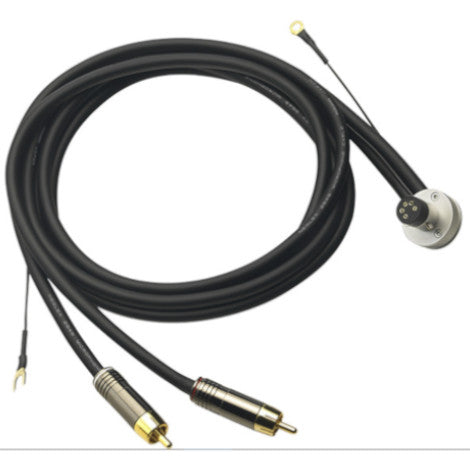
T-Kable
Tonearm cable · 1.2 m or 1.7 m · RCA or XLR
What it changesLinn's tonearm cable from the base of the arm to the phono stage, in two lengths and with RCA or XLR termination. The Krane is sold without a cable; the Ekos SE phono version includes one.
What you hearA low-capacitance cable matched to Linn cartridges; we fit the length your rack needs.
Dust cover and service parts
Lid, belt, oil, springs and grommets
What it changesThe clear acrylic lid on spring-loaded hinges, an option on every LP12 since 1979, plus the consumables a deck needs over its life: a belt that Linn says should last at least five years of regular use, Linn's own black bearing oil, and the springs and grommets that are renewed when a suspension is rebuilt.
What you hearA clean belt and fresh grommets are often the difference between an LP12 that sounds slow and one that sounds right.
Which upgrade first
The order that pays
Every part on this page fits the same plinth and top plate, so a deck can stop at any step and continue years later. The sequence below follows the order Linn has published for its own path from Majik to Akurate to Klimax specification, with the bearing placed first for decks that predate the Karousel.
- 01
Bearing
If the deck still turns on a Cirkus or earlier bearing, the Karousel comes first. Platter, arm and cartridge all ride on this one part, and Linn makes it retrofittable to any LP12 that does not carry a Valhalla or third-party supply inside the plinth.
- 02
Sub-chassis
Kore for a Majik-level deck, Keel SE for the rest. The arm collar bolts straight to the structure, so every later arm upgrade lands on a rigid foundation and the suspension can be set once, properly.
- 03
Power supply
Lingo on an AC deck, which Linn names as the first upgrade to make to a Majik; the Radikal or Klimax Radikal when the budget allows, which also opens the door to a Urika inside the plinth.
- 04
Tonearm
Krane to Arko to Ekos SE. Each is a different mechanical design rather than a trim level, and each asks for a fresh setup of the suspension and the arm cable.
- 05
Cartridge
Last among the mechanical parts, because it is the one that wears and the one whose character you choose by ear: Adikt, Koil, Krystal, Kendo or Ekstatik, auditioned in our rooms.
- 06
Phono stage
Uphorik outside the deck for a conventional system; Urika or Urika II inside it once a Radikal is fitted. The final step toward Klimax specification.
Linn's recommended sequence for its upgrade path, sub-chassis, power supply, arm and cartridge, was reported by Hi-Fi+ in 2015; Linn's own Lingo page names it the first upgrade to make. The Karousel's compatibility conditions are from Linn's Karousel page.

Pearl Audio
Two technicians, six decks, most parts on the shelf
Pearl Audio has been a Linn dealer since 2006, and the LP12 is the turntable we sell more of than any other. It is also the one we keep working on: our customers come back over the years for the next part, and a deck we delivered as a Majik may be a Klimax a decade later. That pattern shaped the way we run the store.
We have two in-house LP12 technicians, John Loranger, the owner, and Russ Sherrill, the store manager, each of whom has been building LP12s for more than a decade. We stock most parts for most LP12 upgrades, so a bearing, sub-chassis, power supply or arm can be fitted the day you decide rather than ordered and waited for, and we keep all five of Linn's standard plinth finishes in stock: Black Ash, Cherry, Walnut, Rosenut and Oak. Six LP12s in different configurations are on display in our rooms, so you can hear what a Lingo, a Kore, a Radikal or an Ekos SE adds before you commit to it.
Every deck we sell or upgrade is set up on the bench and then again in your home, on the furniture it will live on: suspension leveled and bounced, arm cable dressed, bearing oil checked, belt and pulley cleaned, arm geometry, tracking force and anti-skate set, and speed verified. A service visit covers the same ground for a deck of any age, and we take older LP12s and other quality turntables in trade toward upgrades or a new deck.
Plinths
Five finishes in stock, and more to order
Linn's standard plinth is kiln-dried hardwood in five finishes, smooth or fluted, at the same price across the three specifications. Pearl Audio keeps all five standard finishes in stock. High-gloss versions of each wood, Piano Black, Alpine White and any color matched to a RAL standard are made to order, and the Bedrok plinth comes in natural oiled beech.
- OakKiln-dried hardwood, smooth or fluted
- CherryKiln-dried hardwood, smooth or fluted
- Black AshKiln-dried hardwood, smooth or fluted
- RosenutKiln-dried hardwood, smooth or fluted
- WalnutKiln-dried hardwood, smooth or fluted
Swatches are approximate. Fluted plinths, high-gloss and special finishes carry a surcharge and are priced on request.




Owning one
Service, moving house and trading up
An LP12 asks little. Linn publishes no fixed service interval; it says the belt should last at least five years of regular use, that bearing oil is replaced only if it has been lost, and that the motor pulley and electrical contacts should be cleaned and checked periodically. In practice the deck tells you: if the bounce has gone uneven, a record sounds slow or flat, or the arm cable has been disturbed, bring it in. We check the suspension, oil, belt, speed and arm geometry, and with a Radikal deck we also confirm the controller's calibration.
When you bring a deck to us or move house, follow Linn's transport rules: lift off the outer platter, remove the inner platter and fit the spindle cover, fit the bearing cap so the oil stays where it belongs, remove the tonearm counterweight, and use the original packaging if you still have it. Never move an LP12 with the inner platter or the counterweight fitted. Bring the power supply, the arm cable and a record you know well; it is the quickest way for both of us to hear whether the deck is right.
If your LP12 is older than its parts, we would rather upgrade it than replace it, and the table above shows how far it can go. We also take LP12s and other quality turntables in trade toward upgrades or a new deck; values are confirmed when we see the deck, and condition, box and accessories matter. For a system around the deck, the Linn story covers the Selekt and Klimax DSM players that take a Urika II over Exakt Link, and we also pair LP12s with Luxman, McIntosh, Burmester and Audio Research electronics every week.

Hear it in Portland
Six LP12s, side by side
Hear a Majik, a Selekt and a Klimax LP12 in the same room with your own records, or bring the deck you own and let us show you what the next part would do. Appointments are by arrangement, Monday to Saturday.
Arrange an LP12 auditionOr call (503) 222-2599 · sales@pearlaudio.com · The Linn story