(503) 222-25991038 NW Johnson St, Portland · Mon–Sat 10–5:30
The
Bowers & Wilkins story
The loudspeaker that loses the least: Abbey Road's reference since 1980, built in Worthing since 1966.
Founded 1966 in Worthing, West Sussex, England, where the 800 Series and the Nautilus are still built by hand by John Bowers and Roy Wilkins ·
bowerswilkins.com ↗
The history and technologies of Bowers & Wilkins of Worthing, England, and what Pearl Audio keeps on the floor.
John Bowers and Roy Wilkins met in the war. Bowers, from Worthing on the Sussex coast, joined the Royal Corps of Signals at seventeen and was posted to Whaddon Hall, an outstation of Bletchley Park, where the two of them kept radio contact with agents and resistance fighters in occupied Europe and planned the business they would start when it was over. In August 1946 they opened a small shop in Worthing for amateur-radio enthusiasts, then sold and rented amplifiers, loudspeakers and televisions, with a repair workshop run by Peter Hayward. Bowers, who loved classical music and solo piano above all, modified the loudspeakers he sold to reproduce it better, and sold the results in small numbers to customers who asked for them.
The company proper dates from 1966 and a bequest. Miss Knight, a former opera singer and a loyal customer, left John Bowers ten thousand pounds in her will to pursue the loudspeaker business. He left the shop to Roy Wilkins, took Peter Hayward with him, and founded B&W Loudspeakers Ltd in the garages behind it; Roy's son Paul joined to sell what it made. The P1 of 1967 was the first product, and its profits bought test equipment. Bowers hired Dennis Ward, EMI's technical manager for drive units, so the company could design its own, and the DM70 of 1970 was the result, a bass unit under a curved electrostatic panel. Exports were sixty percent of production by 1973 and ninety percent by 1978, each earning a Queen's Award, and in 1976 the DM6, styled by Kenneth Grange and nicknamed the Pregnant Penguin, introduced the yellow woven Kevlar cone that would identify B&W for the next forty years.
An 802 D3 Prestige Edition in Santos rosewood at Pearl Audio. Photo: Pearl Audio.
In 1979, after four years of research with computer modelling and laser interferometry, B&W's engineers were given free rein and produced the 801: in the words of its manual, the first commercial effort to develop and produce a loudspeaker that would reflect the highest standards attainable. In 1980 John Bowers took a pair to Abbey Road and demonstrated them as a new generation of loudspeakers for both the professional and the exceptionally critical listener; the engineers adopted them, Decca and Deutsche Grammophon followed, and the 800 Series has been in Abbey Road's control rooms through six generations since. A year after the 801 the company set up the Steyning Research Establishment, its research home for almost four decades. The Matrix 801 of 1987 filled the cabinet with an interlocking lattice of panels, and the Matrix idea has been in every 800 Series since. John Bowers died late that year, and Robert Trunz led the company after him.
801 D4 with McIntosh in our Big Room, 2024. Photo: Pearl Audio.
Bowers's last experiment was carried on by the Steyning team and above all by Laurence Dickie, who gave each driver a long tapered tube to absorb its rear radiation and curled the bass tube into a spiral. After nearly five years the Nautilus appeared in 1993, named for the shell it resembled, and it is still built by hand at Dale Road in Worthing. Its tubes went behind the tweeters of the Nautilus 800 Series of 1998, which also introduced the FST midrange and the tweeter in its own pod on top of the cabinet. In 2005 the 800 Series Diamond put a dome of synthetic diamond in that pod, and the company won a Queen's Award for Innovation. By 2013 the Worthing factory employed about 320 people and built the 800 Series from the ground up, with the diamond domes grown for it by a division of De Beers.
801 D4 in walnut with the McIntosh MC275, 2026. Photo: Pearl Audio.
The 800 Series Diamond D3, announced in 2015 and completed in 2016 for the company's fiftieth anniversary, changed nearly everything but the tweeter: the Turbine Head of solid aluminum, the Reverse Wrap cabinet, Aerofoil bass cones, and Continuum, the woven composite that retired Kevlar after B&W admitted it had thought nothing could beat it. The 700 Series inherited the new drivers in 2017, and the research establishment moved from Steyning to a new building at Southwater in 2019, with three floating listening rooms, two anechoic chambers and a recreation of John Bowers's own listening room. The D4 of 2021 added the Biomimetic Suspension and the aluminum top plate, the 801 and 805 D4 Signature of 2023 raised the parts quality, and the 700 S3 of 2022 and 600 S3 of 2023, with the 700 S3 Signature of 2024, brought Continuum, tube loading and tweeter-on-top housings to every price the company sells at. The headphones, from the Pi8 to the Px7 S3 and Px8 S2, have carried the same drivers' thinking since 2024.
The 801 D5 launch evening with MOON in our Big Room, October 2026. Photo: Pearl Audio.
The 801 D5
→
Ownership has changed hands more than the engineering has. Joe Atkins, who had taken control in 1996, sold to EVA Automation of Silicon Valley in 2016; the company was separated again in 2020 and joined Sound United that October, with Denon and Marantz; Masimo bought Sound United in 2022, and in September 2025 HARMAN, Samsung's audio division, completed its purchase, with Bowers & Wilkins keeping its name, its Worthing factory and its research team. In June 2025 the 801 Abbey Road Limited Edition marked forty-five years of the studio relationship, and in June 2026, in the company's sixtieth year, the 800 Series Diamond D5 was revealed in Vienna and went on sale in September. The 800 Series and the Nautilus are still hand-built at Dale Road in Worthing; the 700 and 600 Series, the subwoofers and the headphones are designed and engineered in England and built in B&W's own factory in Zhuhai, China, with the midrange cones made in the UK. John Bowers's measure of a loudspeaker was that the best one loses the least, and it is still the one the company builds to.
MilestonesScroll →
1946The Worthing shopJohn Bowers and Roy Wilkins, who had kept radio contact with resistance agents from an outstation of Bletchley Park during the war, open a shop in Worthing in August. Bowers modifies loudspeakers for classical music and sells them to customers who ask.
1966B&W Loudspeakers LtdA bequest of ten thousand pounds from Miss Knight, a former opera singer, funds the loudspeaker company. It begins in the garages behind the shop; the P1 of 1967 is the first product.
1970DM70The first loudspeaker built from B&W's own drive units, designed by Dennis Ward from EMI: a bass unit beneath a curved electrostatic panel. Queen's Awards for export follow in 1973 and 1978.
1976DM6 and the Kevlar coneStyled by Kenneth Grange and nicknamed the Pregnant Penguin, the DM6 introduces the woven aramid midrange cone that identifies B&W for forty years.
1979The 801After four years of research, the first commercial effort to build a loudspeaker to the highest standards attainable. In 1980 John Bowers demonstrates it at Abbey Road, which adopts it as its reference; a year later the Steyning Research Establishment is founded.
1987Matrix 801; John Bowers diesThe Matrix bracing lattice fills the cabinet and a 30 cm bass driver takes response to 20 Hz; Abbey Road upgrades in 1988. John Bowers dies late in the year and Robert Trunz leads the company.
1993NautilusLaurence Dickie's tapered, absorbent tubes and spiral bass horn, after almost five years of work: the loudspeaker shaped like a shell, still built to order in Worthing.
1998Nautilus 800 SeriesTube-loaded tweeters in their own pod on top, the FST midrange in a Marlan head, and the Flowport. The Nautilus 801 becomes the next studio reference.
2005800 Series DiamondA 25 mm dome of synthetic diamond, grown by chemical vapor deposition, with its first breakup above 70 kHz. B&W receives the Queen's Award for Innovation.
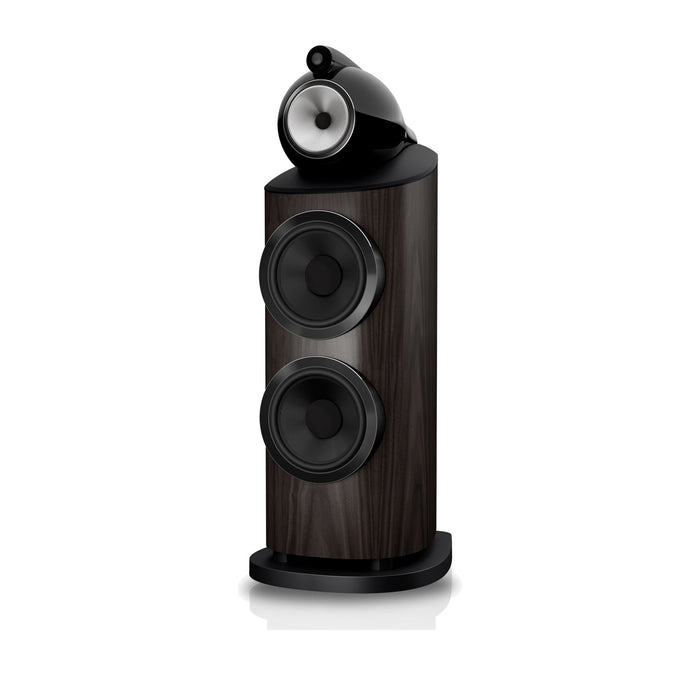
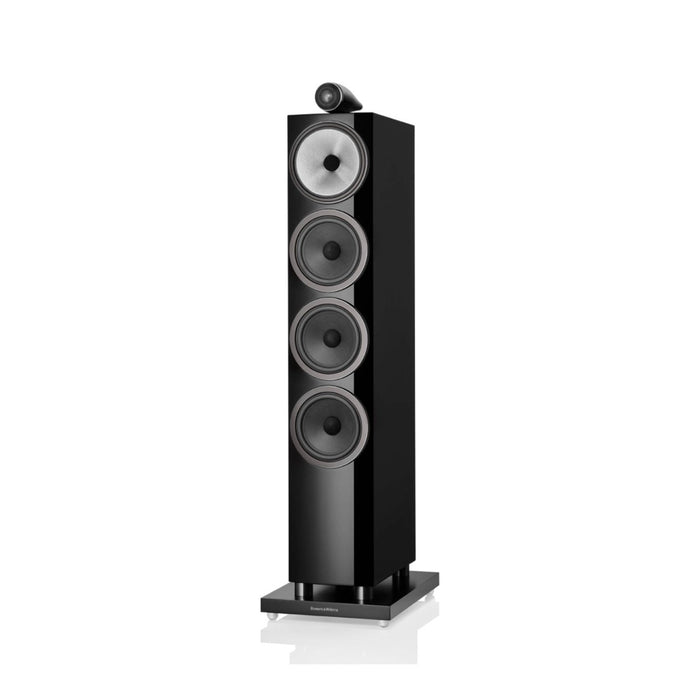
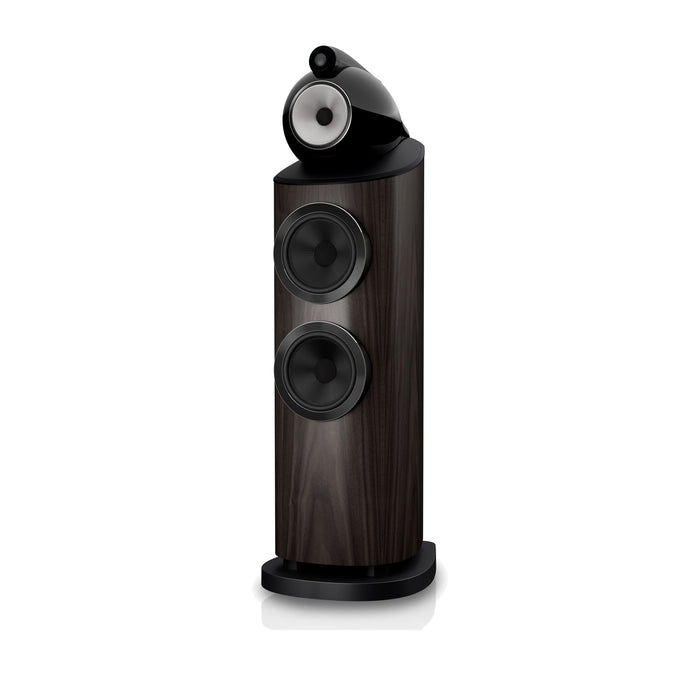
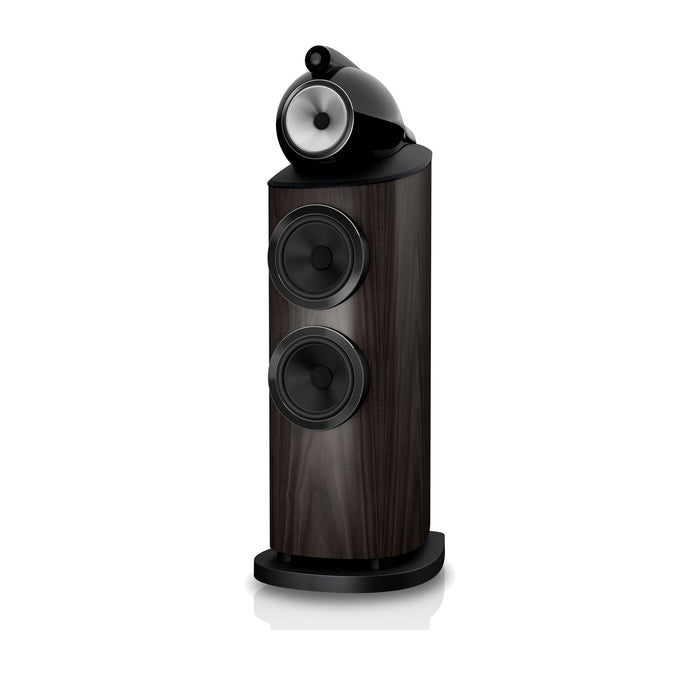
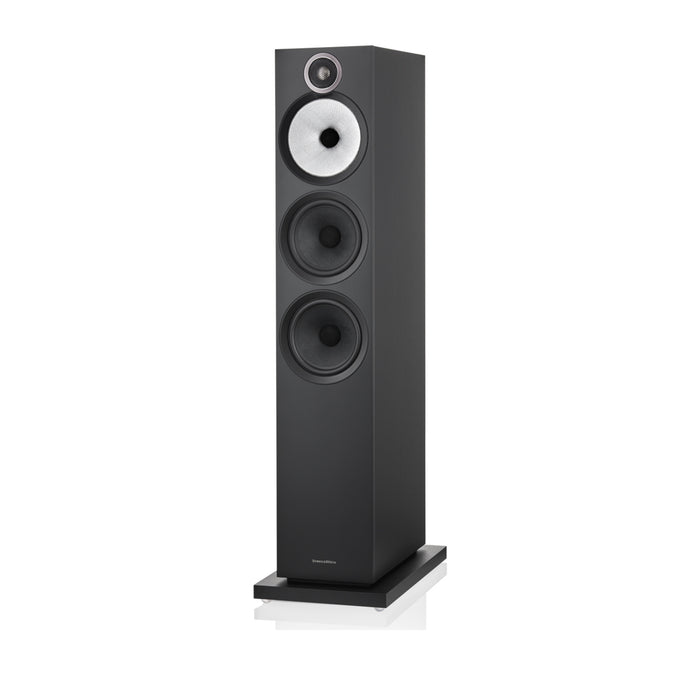
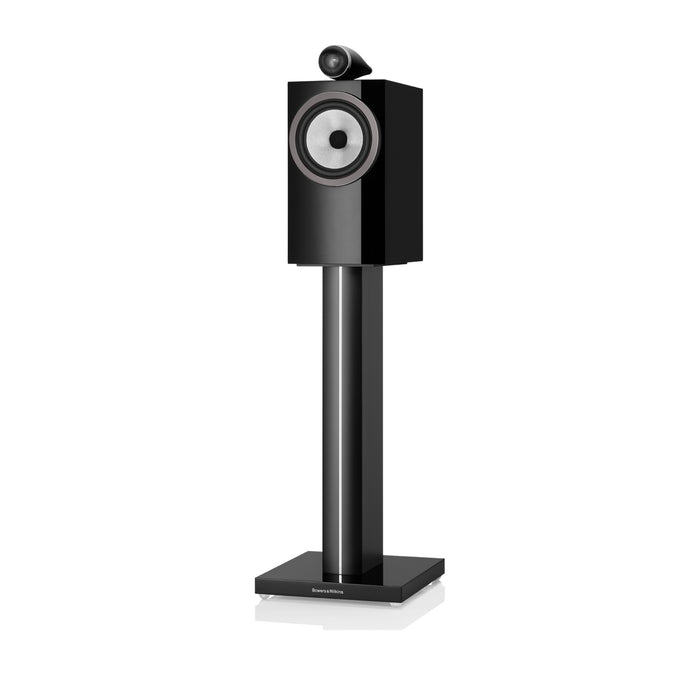
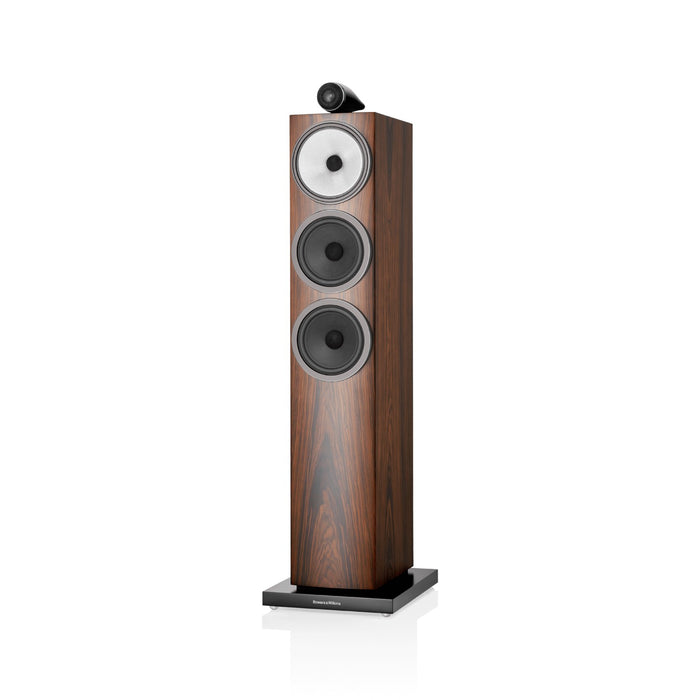
2015800 Series Diamond D3Continuum replaces Kevlar; the Turbine Head, Reverse Wrap cabinet and Aerofoil bass cones arrive. The 800 D3 flagship ships in 2016 for the company's fiftieth anniversary.Bowers & Wilkins 702 S3
→
2016EVA AutomationJoe Atkins, owner since 1996, sells to Gideon Yu's EVA Automation. In 2017 B&W becomes Abbey Road's official speaker and headphone partner, and the 700 Series inherits the D3 drivers.
2019Southwater Research & EngineeringSteyning's successor opens in West Sussex with three floating listening rooms, two anechoic chambers and a recreation of John Bowers's listening room.
2020Sound UnitedSeparated from EVA early in the year, B&W joins Sound United alongside Denon and Marantz in October. Masimo buys Sound United in April 2022.
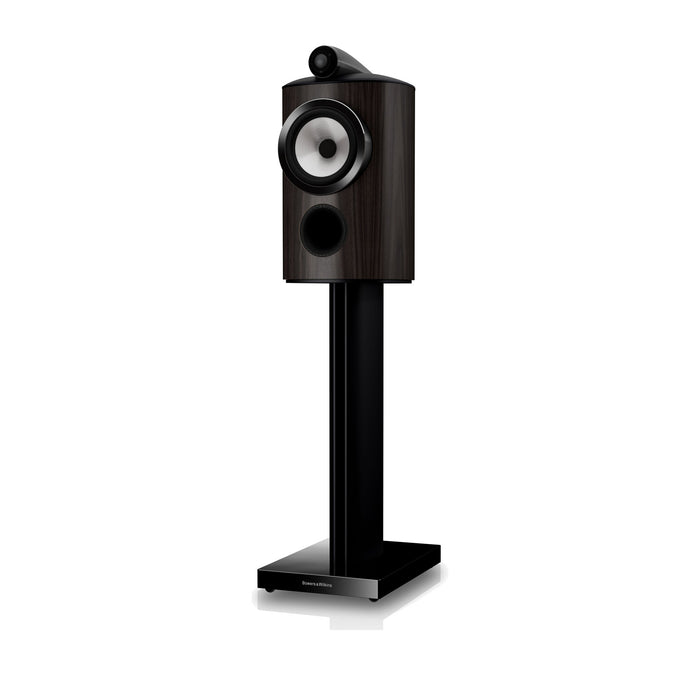
2021800 Series Diamond D4Biomimetic Suspension, the aluminum top plate, a longer tweeter housing and Reverse Wrap on every model, including the 804 and 805.Bowers & Wilkins 805 D5
→
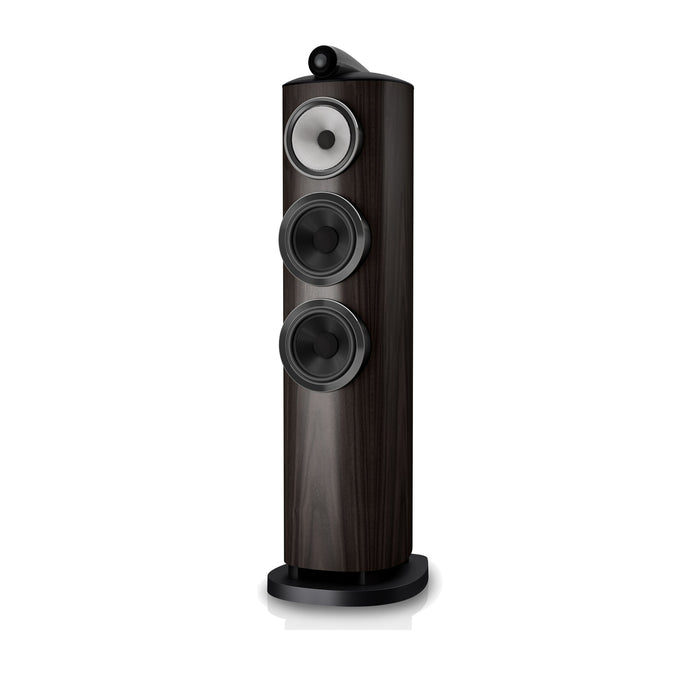
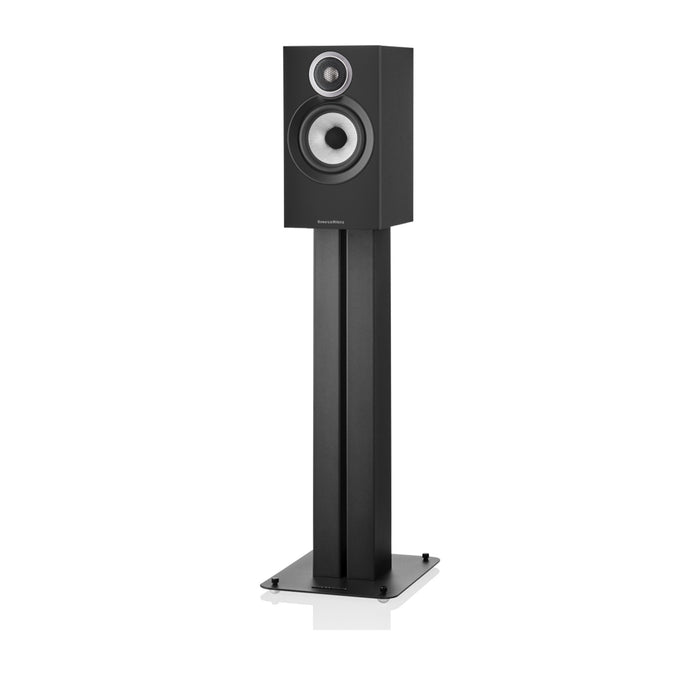
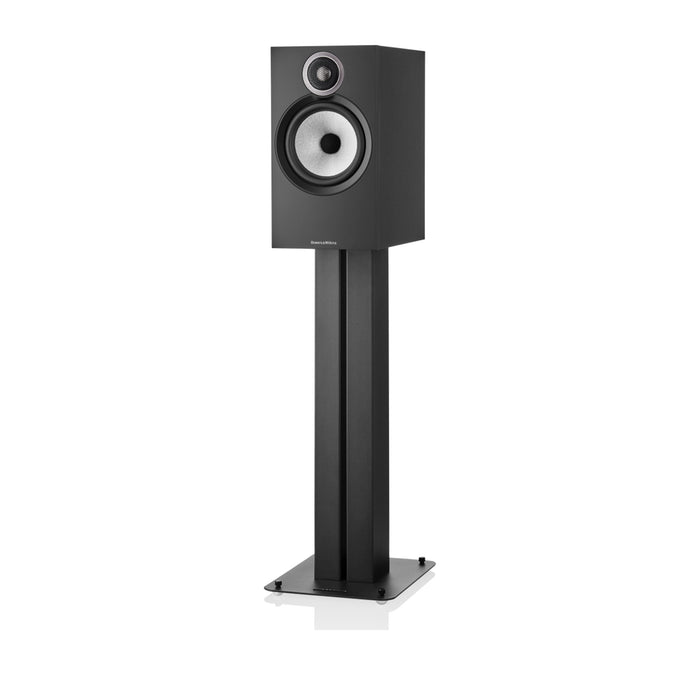
2022700 S3Carbon Dome tweeters, Biomimetic Suspension and tweeter-on-top housings on the 702, 703, 705 and HTM71. The 600 S3 follows in 2023 with the Titanium Decoupled Double Dome, and the 700 S3 Signature in 2024.Bowers & Wilkins 705 S3
→
2023801 and 805 D4 SignatureMidnight Blue Metallic and California Burl, upgraded crossovers and the transparent tweeter mesh later carried into the D5; only the seventh Signature series since 1966.
2025HARMAN, and forty-five years at Abbey RoadThe 801 Abbey Road Limited Edition, 140 pairs, marks the studio relationship in June; the Px7 S3 and Px8 S2 headphones arrive; in September HARMAN, Samsung's audio division, completes its purchase of Sound United.Bowers & Wilkins Px8 S2
→
2026800 Series Diamond D5Revealed in Vienna on June 4 in the company's sixtieth year and on sale from September 9: Space Frame bracing, Signature-grade motors and crossovers, damped plinths and the 804's aluminum midrange enclosure.Bowers & Wilkins 801 D5
→
Bowers & Wilkins at Pearl Audio
Pearl Audio is an authorized Bowers & Wilkins dealer in Portland. The 801 D5 plays in our Reference Sound Room, where we hosted its launch evening with MOON in October 2026, and we have kept the 800 Series on the floor through the D3, D4 and D5 generations. The 700 S3 and 600 S3 ranges, the HTM centers, the DB and ASW subwoofers and the Px and Pi headphones are available to hear and to order, and the full 800 Series Diamond D5 can be ordered in any of its four finishes. We deliver and set up Bowers & Wilkins loudspeakers ourselves in the Portland area, position them in your room, and tune the DB subwoofers' room equalization on site.
Bowers & Wilkins gives its technologies names because each one solves a specific problem. Here is what each does, where it came from, why it matters in a system, and what you may hear.
The fifth Diamond generation, 2026Since 2026
800 Series Diamond D5
Revealed in June 2026 in the company's sixtieth year and on sale from September, the D5 is the fifth 800 Series to carry the diamond tweeter. It keeps the D4's shape and rebuilds what is inside: Space Frame bracing, Signature-grade motors and crossovers, a revised top plate and damped plinths.Read the deep diveClose
What it does
The seven D5 models, 801, 802, 803, 804 and 805 with the HTM81 and HTM82 centers, look like the D4 and are mostly new underneath. Parallel aluminum rails bolted to the rear of the Matrix bracing, which B&W calls Space Frame Bracing, and profiled aluminum reinforcement around each driver opening, the Enhanced Matrix, make what the company describes as its most mechanically quiet enclosure. Every midrange, mid-bass and bass driver has a lower-distortion motor based on the components of the D4 Signature models, the crossovers use Signature-derived parts on new wiring harnesses, and on the stereo models the crossover sits on an all-aluminum plate coupled to the cabinet and its bracing. The aluminum top plate has thicker ribbing and more mounting points, the Connolly-trimmed collar beneath the Turbine Head is damped, and the plinths carry constrained-layer and tuned-mass damping and are extended to hide the spikes and wheels. The 804 D5 gains an internal aluminum midrange enclosure derived from the Turbine Head, and all models get the more transparent tweeter grille mesh first seen on the 801 D4 Signature. Finishes are Stealth Black, Warm White, Light Walnut and Dark Walnut.
Why it matters in a system
The 800 Series is the loudspeaker Abbey Road and other studios monitor on, and each generation is B&W's statement of what a loudspeaker can be; the D5's changes are all in the direction of a quieter structure and a cleaner motor, which is where the remaining distortion in a modern loudspeaker lives. The range is built by hand at Dale Road in Worthing, England, as it has been since 1979.
What you may hear
What Hi-Fi? heard a clear step up from the D4 at its first listen, more than expected given how similar the two generations look, and found the 801 D5's bass something to feel as much as hear. Stereophile's show report described the 801 D5 as able to get out of the way and let the music play.
A dome grown from diamondSince 2005
The Diamond Dome tweeter
The 25 mm dome in every 800 Series Diamond tweeter is synthetic diamond, grown by chemical vapor deposition. Diamond is so stiff that the dome behaves as a rigid piston through the audible range and first flexes at about 70 kHz, far above hearing, so its breakup never colors the music.Read the deep diveClose
What it does
Every tweeter dome eventually breaks up, flexing instead of moving as one piece, and the breakup of an aluminum dome sits close enough to the audible band to leave a trace. In 2005 B&W replaced aluminum with diamond on the 800 Series: a dome grown atom by atom by chemical vapor deposition, supplied by a UK division of De Beers and assembled into tweeters at Worthing. Its first breakup is above 70 kHz. The D4 revised the motor behind it with two neodymium magnets instead of three and extra vents in the voice-coil former; the D5 carries the more transparent grille mesh developed for the 801 D4 Signature, and sits in the Solid Body Tweeter-on-Top housing with a long tube behind the dome.
Why it matters in a system
A tweeter that is pistonic through the audible range needs no correction and leaves nothing of itself in the recording, which is why the diamond tweeter is the one part of the 800 Series that has stayed, across five generations, since 2005.
What you may hear
Treble that is detailed without being bright. Stereophile's review of the first 800D found the speaker's detail could put some electrostatics to shame; John Darko, listening to the 804 D5, described the top end as air without any insistence behind it.
The tweeter in its own podSince 1998
Tweeter-on-Top and the Solid Body housing
Since the Nautilus 800 Series of 1998, B&W's best tweeters sit in their own pod on top of the cabinet, decoupled from it, so cabinet vibration cannot reach the dome and the dome radiates with no baffle around it. Since 2015 the pod on the 800 Series is milled from a solid block of aluminum.Read the deep diveClose
What it does
A tweeter mounted in a baffle hears everything the baffle does: the cabinet's vibration reaches it through the panel, and the panel's edges reflect what it radiates. B&W's answer, first on the Nautilus 801 of 1998, was to put the tweeter in a separate housing on top of the midrange head. The D3 of 2015 machined that housing from solid aluminum, and the D4 of 2021 lengthened it to nearly 30 cm, with a longer tube behind the dome and two L-shaped, silicone-covered steel mounts that decouple the tube from the head. The 700 S3 of 2022 brought the idea down the range: the 702, 703, 705 and HTM71 S3 carry a Solid Body Tweeter-on-Top housing of their own, and their Signature versions keep it.
Why it matters in a system
The tweeter is the driver most easily disturbed by vibration and diffraction, and isolating it is the simplest way to a cleaner top end and a more precise image; it is why the tweeter-on-top models in each range image differently from the ones with the tweeter in the baffle.
What you may hear
Stable, three-dimensional imaging and a treble that seems to come from the air around the loudspeaker rather than from the box. On the 801 D4 Hi-Fi News found a loudspeaker that looked like its predecessor and was almost entirely different, the tweeter assembly among the changes.
What replaced KevlarSince 2015
The Continuum cone
For nearly forty years the yellow woven Kevlar cone was the face of Bowers & Wilkins. In 2015 the company retired it from the 800 Series for Continuum, a woven composite developed over eight years that controls cone breakup the same way with far less of a signature of its own. It is now the midrange in every 800, 700 and 600 Series loudspeaker.Read the deep diveClose
What it does
The DM6 of 1976 introduced the woven aramid midrange cone, and B&W's argument for it held for decades: a woven cone does not break up all at once but in a controlled, dispersed way that the ear tolerates. Continuum does the same thing better. Research began in 2007 under head of research Martial Rousseau, development of the D3 range began in October 2012, and the result is a coated woven composite whose breakup is lower in magnitude and shorter in duration than Kevlar's, which Andy Kerr described as about as transparent a cone as B&W could make, without a flavor. It arrived on the 800 D3 in 2015 and 2016, moved to the 700 Series in 2017, and replaced the aramid cones in the 600 Series with the S3 of 2023; in the 805 and the standmount 700 and 600 models it is the bass-midrange driver as well.
Why it matters in a system
The midrange carries voices and most instruments, and a cone that adds no character of its own is the difference between a loudspeaker that sounds like a loudspeaker and one that sounds like the recording. Continuum is the single biggest reason the D3 generation and everything after it sound different from the Kevlar generations.
What you may hear
An open, uncolored midrange. Stereophile's review of the 802 D3 traced the change to the cone; Sound & Vision's reviewer of the 703 S3 wrote of speakers that reveal music's emotional core.
A midrange with no surround to speak ofSince 1998
FST midrange
FST stands for Fixed Suspension Transducer. A dedicated midrange driver needs very little travel, so instead of a rubber roll surround, which stores energy and gives it back late, the edge of the cone rests on a ring of compressed foam that absorbs it.Read the deep diveClose
What it does
A conventional surround is a half-roll of rubber that lets the cone move a long way, and that same compliance makes it a store of energy: it flexes with the cone and returns the energy a moment later as a resonance at the cone's edge. The FST midrange, introduced on the Nautilus 801 in 1998, replaces the roll with a ring of compressed foam that holds the cone's rim fixed. The driver cannot travel far, which does not matter above a few hundred hertz, and the energy that reaches the edge of the cone is absorbed rather than reflected back. B&W uses it wherever a loudspeaker has a separate midrange: the 801 to 804 D5 and the HTM centers, the 702, 703, 704 and HTM71 S3, and the 603 S3.
Why it matters in a system
Combined with Continuum and, on the 800 Series, with the Turbine Head and Biomimetic Suspension, it is why B&W's three-way models hand over to the tweeter with so little evidence of a crossover. A two-way with a bass-midrange driver has to compromise here; the FST models do not.
What you may hear
A clean, fast midrange with a clear sense of the recorded space. SoundStage!'s description of the original Nautilus 801 called it a suspensionless midrange, and the quality it brought has defined B&W's three-ways since.
A cone shaped by computerSince 2015
Aerofoil bass cones
The bass drivers of the 800 Series and the DB subwoofers use Aerofoil cones: a foam core between carbon-fiber skins whose thickness varies across the radius, thick where the stress is highest and thin where it is not, so the cone stays rigid at low mass. The 700 Series uses a paper cone with the same profile.Read the deep diveClose
What it does
A bass cone of constant thickness is either heavy or flexible. B&W modeled the stresses in a moving cone and built one whose section follows them: the Aerofoil cone of 2015 has a foam core, thin near the voice coil, thickest toward the middle and thin again at the surround, sandwiched between carbon-fiber skins. The D4 added an anti-resonance plug inside the voice coil. The same cone goes into the DB1D, DB2D, DB3D and DB4S subwoofers, and the 702, 703, 704 and HTM71 S3 use a paper cone with the Aerofoil profile.
Why it matters in a system
Bass that is both deep and fast depends on a cone that does not flex under load, and a cone that does not flex can be driven hard without the mid-bass thickening that heavy cones bring. It is why the 801 D5 can reach 15 Hz from two 250 mm drivers in a cabinet of normal size.
What you may hear
Bass with definition as well as weight. What Hi-Fi?'s first listen to the 801 D5 described low notes felt as much as heard, and the Aerofoil DB subwoofers have been praised for speed as much as power.
The idea from the snailSince 1993
Nautilus tube loading
Behind every B&W tweeter, and behind the drivers of the Nautilus itself, is a long tapered tube filled with absorbent material. The sound radiated from the back of the dome travels down the tube and is absorbed instead of bouncing back through the diaphragm.Read the deep diveClose
What it does
After John Bowers died in 1987 the Steyning research team, and Laurence Dickie in particular, carried on his last experimental project. Dickie abandoned a dipole, went back to an enclosure, and gave each driver a long tube stuffed with wool so that the rear wave would be absorbed rather than reflected; a straight bass tube would have had to be about three meters long, so he tapered it and curled it up, which also compressed the wool and reduced pipe resonances. After almost five years of work the Nautilus was launched in 1993, shaped like the mollusc that gave it its name, and it is still built to order at Dale Road in Worthing with a dozen coats of paint and three days of polishing. The Nautilus 800 Series of 1998 put a tapered tube behind the tweeter of every model, and the practice has never stopped: the tweeters of the 800 D5, 700 S3 and 600 S3 are all tube-loaded, the 600 S3 with a longer tube borrowed from the 700 Series.
Why it matters in a system
A dome's rear radiation is as loud as its front, and in an ordinary tweeter it reflects around a small chamber and comes back through the dome a fraction of a millisecond late. Absorbing it in a tube is what lets a B&W tweeter decay cleanly, and it is the thinking that led to the tweeter-on-top housing.
What you may hear
A treble with a clean decay and no hardness, and in the Nautilus itself a loudspeaker that is still, thirty years on, a reference for how little a cabinet can add.
The cabinet that does not moveSince 1987
Matrix, Reverse Wrap and Space Frame
Matrix, introduced on the Matrix 801 of 1987, fills the cabinet with a honeycomb-like grid of interlocking panels so the walls cannot flex. Reverse Wrap, from 2015, bends the plywood so the curve faces forward and the panels meet at an aluminum spine at the back. The D5 adds aluminum Space Frame rails behind the Matrix.Read the deep diveClose
What it does
A loudspeaker cabinet is a box of panels, and panels ring. B&W's 1987 answer, credited to Laurence Dickie, was an internal lattice of interlocking plywood panels in two perpendicular planes, with foam-filled cells, that turns the cabinet into a rigid block; the Matrix 801 also added a front-venting port and a 30 cm bass driver extending response to 20 Hz. The D3 of 2015 reshaped the box itself: Reverse Wrap bends laminated beech so that the curved surface is the front and the panels meet at a stiff aluminum spine at the rear, with fewer joints and a narrower baffle, and the D4 extended the construction to the 804 and 805 and used fewer Matrix panels with aluminum braces. The D5 of 2026 bolts parallel aluminum rails, braced lengthwise and crosswise, to the rear of the Matrix, and surrounds each driver opening with profiled aluminum, the Enhanced Matrix. The bent-ply cabinets are formed at the Worthing factory.
Why it matters in a system
Cabinet resonance is coloration that arrives late and from the same place as the music, so it cannot be separated from it. Every 800 Series since 1987 has been a Matrix cabinet, and each generation has made it stiffer and quieter; B&W calls the D5 enclosure its most mechanically quiet.
What you may hear
Bass that stops when the note stops and a midrange with no box behind it. Jason Kennedy in hi-fi+ found the 802 D4 powerful both emotionally and physically; Stereophile heard the 801 D4 Signature make old favorites new by revealing unheard details.
Hear the sound, not the cabinetSince 2015
The Turbine Head
On the 801, 802 and 803 the midrange driver lives in its own enclosure on top of the bass cabinet: the Turbine Head, cast and machined from a single piece of aluminum with radial fins inside, so nearly inert, with the driver floating inside on silicone decouplers. The D5 gives the 804 an internal aluminum enclosure derived from it.Read the deep diveClose
What it does
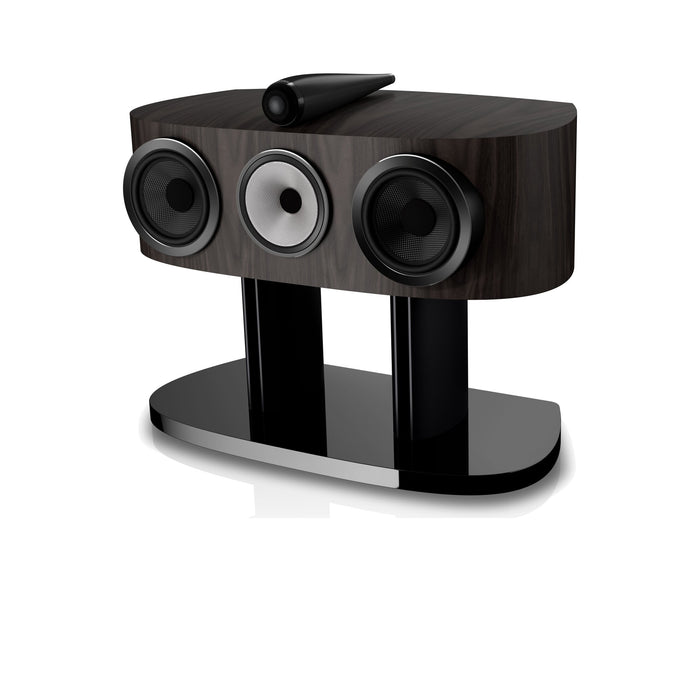
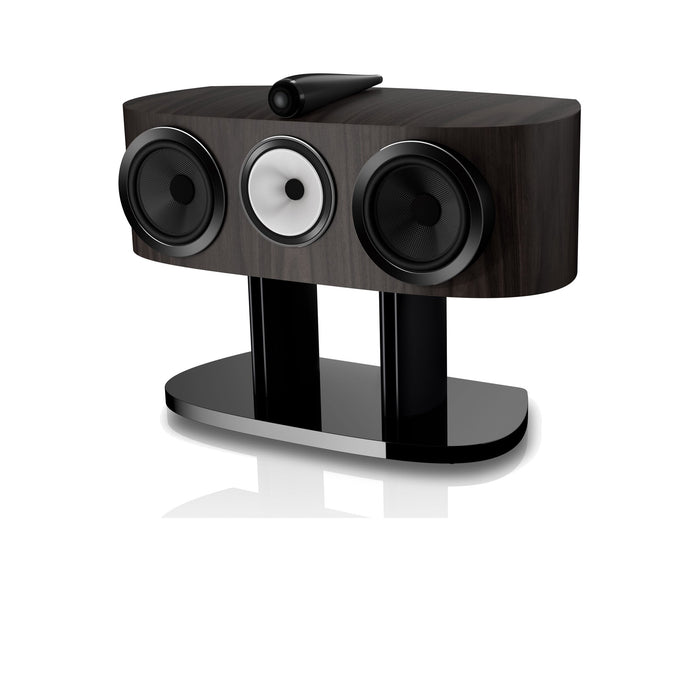
The Nautilus 801 of 1998 first separated the midrange into a head of Marlan resin on top of the bass cabinet. The D3 of 2015 replaced the resin with aluminum: a single casting with internal fins like a turbine, weighing about 40 pounds, that does not ring and does not pass the bass cabinet's vibration to the midrange. The FST driver inside floats on a spring rod and is held at the front by six silicone decoupling points. The D4 added a cast-aluminum top plate to the bass cabinet beneath it, with an upholstered collar, to stiffen the cabinet and give the decoupling a solid mounting; the D5 thickens that plate's ribbing, adds mounting points and damps the Connolly-trimmed collar. The 803 D5 is the smallest model with a Turbine Head, and the 804 D5, which has no head, now carries an internal aluminum midrange enclosure derived from it, for a freer, more open sound. The HTM81 and HTM82 centers carry their FST midrange in the same spirit, in a tube-loaded housing of their own.
Why it matters in a system
The midrange driver is the one that most needs a quiet, isolated home, because the ear is most sensitive there. Separating it from the bass cabinet, in an enclosure that cannot vibrate, is what gives the three Turbine Head models their particular clarity and scale.
What you may hear
Voices and instruments with no cabinet behind them, which is what B&W means by its line for the D3: hear the sound, not the cabinet.
A spider that does not breatheSince 2021
Biomimetic Suspension
The spider that centers a driver's voice coil is normally a corrugated fabric disc, and it pumps air and makes noise of its own. In 2021 B&W replaced it on its midrange drivers with a skeletal polymer frame that barely disturbs the air behind the cone.Read the deep diveClose
What it does
Behind every cone is a spider, a pleated fabric ring that keeps the voice coil centered. It is a piston in its own right, moving air in and out of the motor and adding its noise to the music. The Biomimetic Suspension, introduced with the 800 Series Diamond D4, is a minimal six-legged thermoplastic framework that does the centering with almost no surface area; hi-fi+ reported a reduction of about 80 dB in the suspension's own noise at 1 kHz. It is fitted to the midrange of the 801 to 804 D5 and the HTM81 and HTM82, and to the 702, 703, 704 and HTM71 S3 and their Signature versions. The standmount 700 and 600 models, whose single drivers must also handle bass, keep a conventional suspension.
Why it matters in a system
The midrange has no business carrying noise from its own suspension, and this is one of the few changes in a modern loudspeaker that reviewers could hear at once. It is a large part of why the D4 was described as almost entirely different from the D3 it resembled.
What you may hear
A quieter, more open midrange with a lower noise floor behind voices. Hi-fi+ described the six-leg thermoplastic spider on the 802 D4; Hi-Fi News called it a flexible skeletal frame with thin legs connecting cone to basket.
The dimpled portSince 1998
Flowport
B&W's bass-reflex port is dimpled inside like a golf ball, so air leaves it smoothly at high levels with less of the turbulence, and the chuffing noise, of a plain tube.Read the deep diveClose
What it does
A reflex port moves a great deal of air at low frequencies, and when the flow at its mouth becomes turbulent it makes a noise of its own. The Flowport's dimpled surface, borrowed from the aerodynamics of a golf ball, keeps the air attached to the port wall and the flow laminar to higher levels. It is used on every B&W loudspeaker with a port: down-firing on the 801, 802 and 803 D5, rear-firing on the 804, the 805 and the 700 and 600 Series. Pearl supplies the foam bungs for rooms where a rear port is too close to the wall.
Why it matters in a system
The sealed designs of some rivals avoid port noise at the cost of efficiency and extension; the Flowport is how B&W keeps the advantages of a reflex cabinet without the usual penalty.
What you may hear
Clean bass at high level, with none of the puffing from the port that gives a cheaper reflex design away.
The 700 and 600 Series tweetersSince 2022
Carbon Dome and Titanium Double Dome tweeters
Below the diamond tweeter B&W uses two domes of its own: the 700 S3's Decoupled Carbon Dome, an aluminum dome stiffened by a carbon coating and a carbon ring so it stays pistonic to 47 kHz, and the 600 S3's Titanium Decoupled Double Dome, a 25-micron titanium dome reinforced by a second ring-shaped dome around its edge.Read the deep diveClose
What it does
The Decoupled Double Dome is B&W's way of making a metal dome behave like a stiffer one: a thin main dome with a second, ring-shaped dome bonded around its edge, which raises the frequency of the first breakup without adding much mass. The 600 S3 of 2023 made it titanium, a 25-micron dome with a 30-micron ring, in an elongated tube-loaded housing, and gave it the 700 Series' bypass capacitors in the crossover. The 700 S3 of 2022 uses a Carbon Dome: an aluminum dome with a carbon coating and a carbon outer ring, with a first breakup at 47 kHz, in the Solid Body Tweeter-on-Top housing on the 702, 703, 705 and HTM71. Both are decoupled from the cabinet, both are tube-loaded, and both sit above Continuum cones.
Why it matters in a system
They are what let the 700 and 600 Series share the character of the 800 Series at their prices: the same approach, a stiff dome, tube loading and decoupling, with a less exotic material.
What you may hear
What Hi-Fi? found the 705 S3 improved on its predecessor in every way; StereoNET found it treading a clever line between detailed and clinical and gave it a strong recommendation; on the 600 S3 B&W's own claim is a benchmark in its category.
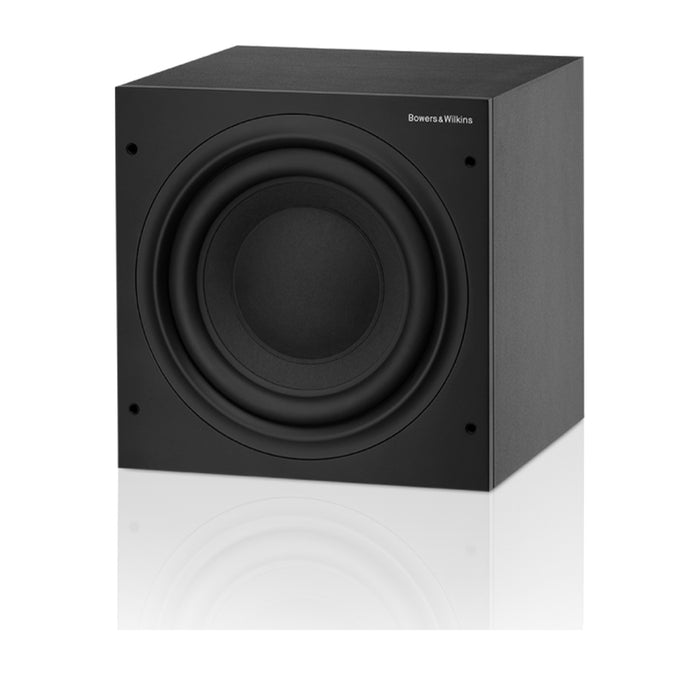
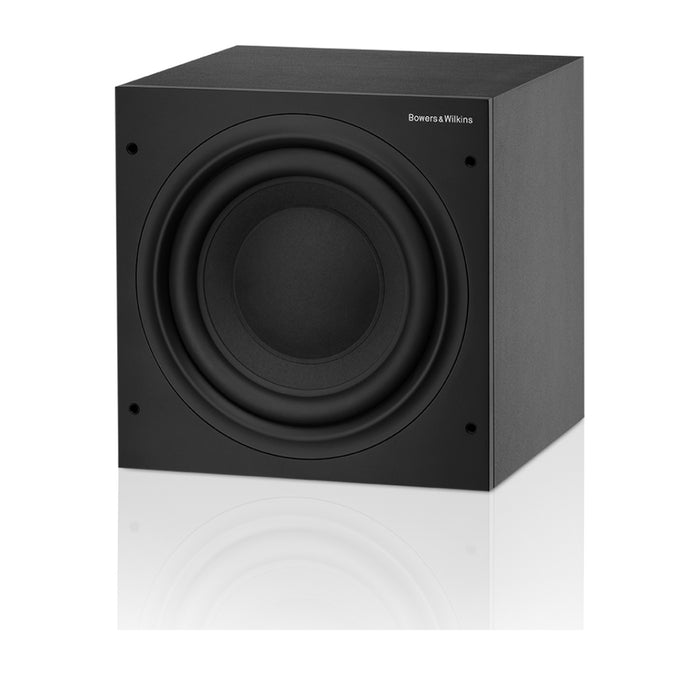
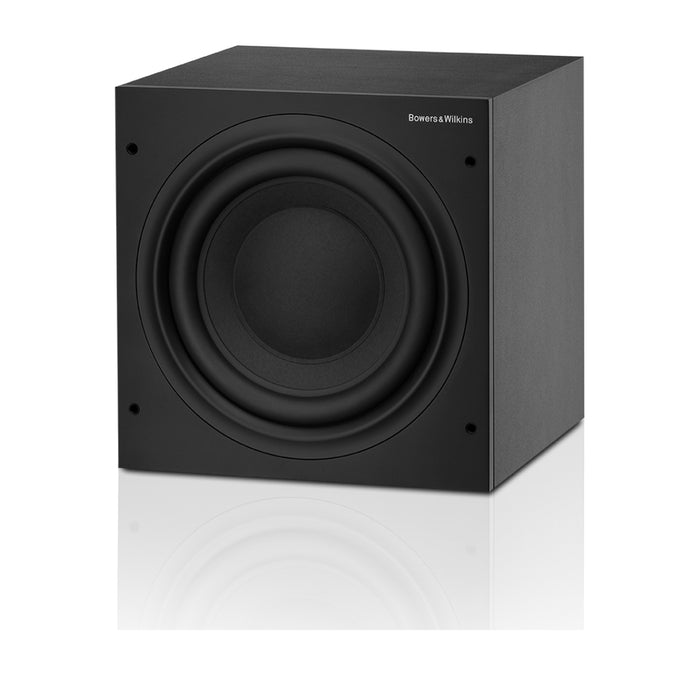
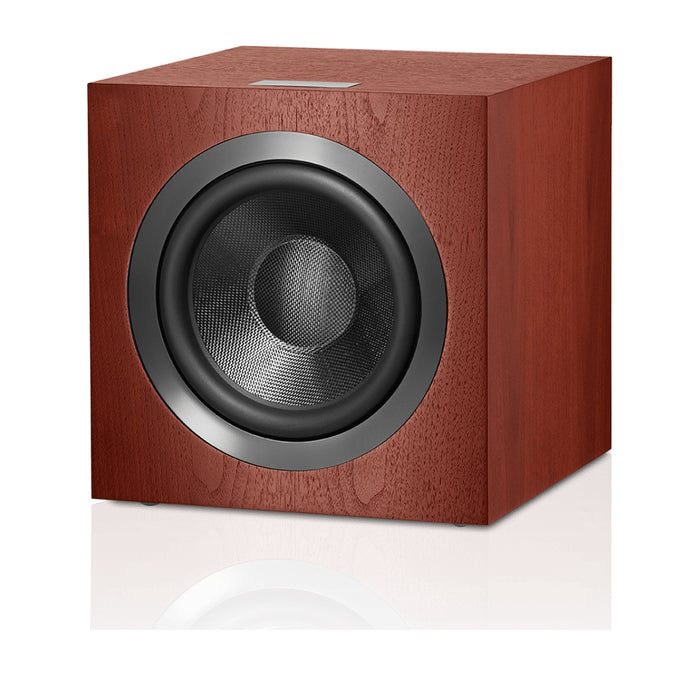
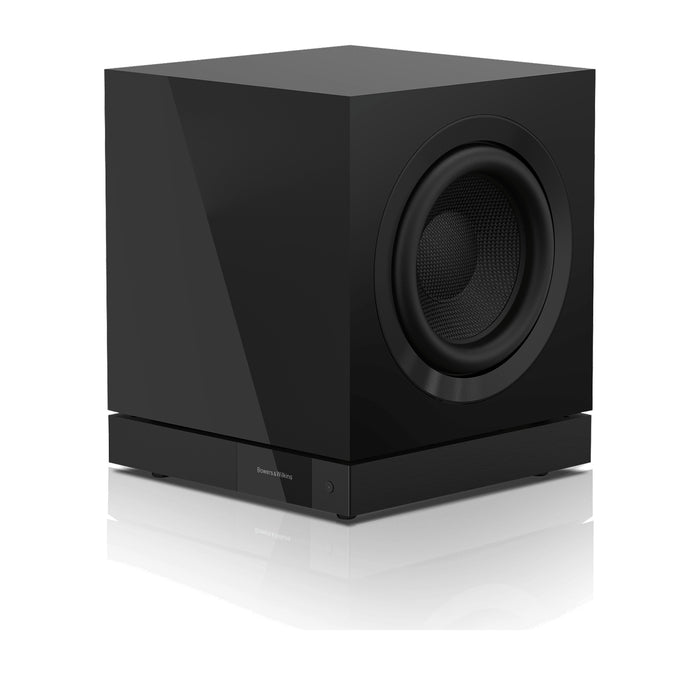
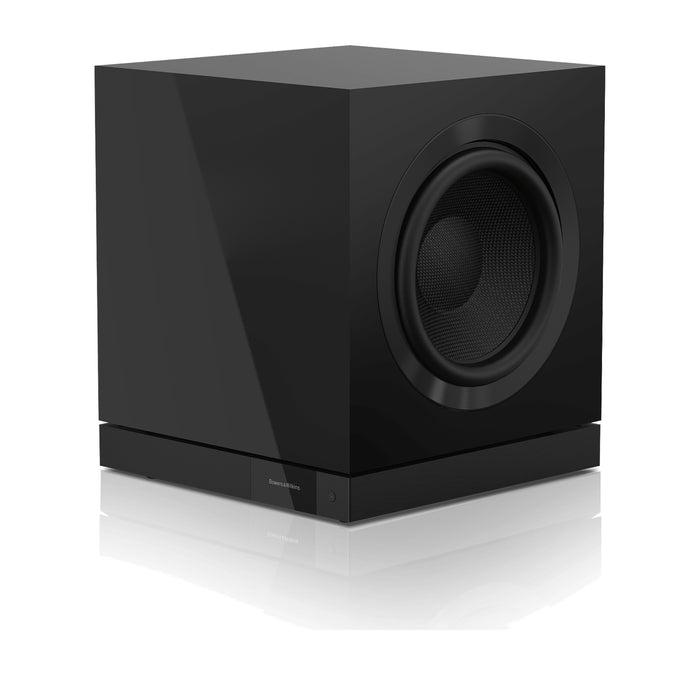
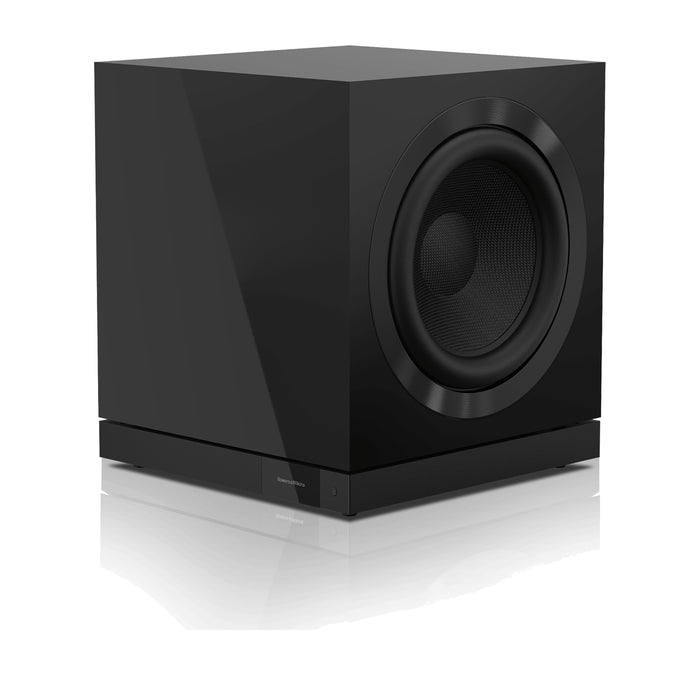
The DB Series subwoofers are sealed boxes with two opposed Aerofoil drivers, or one on the DB4S, driven by Hypex Class D amplification of 1,000 to 2,000 watts and set up entirely from a phone, including room equalization measured with the phone's microphone.Read the deep diveClose
What it does
The DB1D carries two 300 mm Aerofoil drivers mounted back to back so their reaction forces cancel and the cabinet stays still, with 2,000 watts of Hypex amplification, balanced and unbalanced inputs, a 12-volt trigger and RS-232; the DB2D and DB3D do the same with 250 mm and 200 mm drivers and 1,000 watts, and the DB4S puts a single 250 mm driver and 1,000 watts in the smallest box. All four are configured through the Bowers & Wilkins app over Bluetooth: crossover, phase, five-band equalization, Dynamic EQ that adjusts the balance with level, and Room EQ that measures the room with the phone and corrects for it. The ASW608, ASW610 and ASW610XP are the simpler analog-controlled subwoofers below them. The DB range is finished in Stealth Black and Warm White to match the D5.
Why it matters in a system
A B&W system from the 705 S3 up can be extended to the bottom octave with a subwoofer that matches the speed of Aerofoil bass drivers, and the app setup means the result is tuned to the room rather than to a guess. We use the DB1D and DB3D with the 800 and 700 Series in both stereo and theater systems.
What you may hear
Deep, fast, well-controlled bass that blends with the main loudspeakers. What Hi-Fi? called the DB4S yet another great subwoofer from this great British company.
The loudspeaker company's headphonesSince 2024
Px and Pi headphones
B&W's wireless headphones carry its loudspeaker thinking into a smaller space: carbon-cone drivers in the Px8 S2 and the Pi8 earbuds, biocellulose drivers in the Px7 S3, aptX Lossless Bluetooth, adaptive noise cancelling with eight microphones and thirty hours of battery.Read the deep diveClose
What it does
The Px8 S2 of September 2025 is the flagship: 40 mm carbon-cone drivers, a soft-touch finish, cast-aluminum arms, eight microphones for noise cancelling and calls, aptX Lossless and aptX Adaptive at up to 24-bit/96 kHz, and thirty hours of play. The Px7 S3 of April 2025 uses 40 mm biocellulose drivers on a redesigned motor with the same noise cancelling and battery. The Pi8 earbuds of 2024 use 12 mm carbon-cone drivers, with six and a half hours in the buds and twenty more in a case that can also retransmit from a USB-C or 3.5 mm source, in 24-bit/96 kHz aptX Adaptive, to the buds. All three are designed and engineered in England.
Why it matters in a system
They are the way to carry what a B&W system does out of the room, and they are tuned by the same people who voice the 800 Series. We stock them at the front of the shop and they are the easiest introduction to the brand.
What you may hear
What Hi-Fi? gave the Px8 S2 five stars, calling them luxurious, hugely capable wireless headphones with outstanding sound quality; the Px7 S3 won an EISA award for 2025 and 2026; the Pi8 was a What Hi-Fi? Award winner in 2024.
The studio reference since 1980Since 1980
True Sound and Abbey Road
John Bowers's goal was a loudspeaker that loses the least, and the proof B&W offers is that the 800 Series has been the reference monitor at Abbey Road Studios since John Bowers carried the first 801 through its doors in 1980. Six generations later the studio still monitors on it.Read the deep diveClose
What it does
The 801 of 1979 was built with a brief for full professional monitor requirements, and in 1980 John Bowers demonstrated it at Abbey Road as a new generation of loudspeakers for both the professional and the exceptionally critical listener. The engineers adopted it, making Abbey Road the first studio in the world to use the 801 full-time; Decca and Deutsche Grammophon followed. The studio moved to the Matrix 801 in 1988 and to each generation since, and in 2017 B&W became Abbey Road's official speaker and headphone partner, with the 800 D3 in Studios One, Two and Three. In 2025 the two marked forty-five years with the 801 Abbey Road Limited Edition, 140 pairs based on the 801 D4 Signature in vintage walnut and red Connolly trim. True Sound is B&W's name for the principle behind it: reproduce the recording as the artist and engineer heard it, add nothing.
Why it matters in a system
A loudspeaker that engineers mix on is one whose balance you can trust, and it is why the 800 Series is a reference for other loudspeakers as well as for recordings. It is also why B&W measures as much as it listens: Southwater Research & Engineering, which replaced the Steyning Research Establishment in 2019, has three floating listening rooms and two anechoic chambers.
What you may hear
A balance that matches the recording. Andy Kerr's line is that no one buys loudspeakers to listen to loudspeakers; the 800 Series is built so that they do not.