
← Back to your LP12 build

Linn · LP12 upgrades

Linn Radikal Power Supply and Motor - Akurate Enclosure

$6,270

Upgrade part — fits: Majik LP12 Turntable, Selekt LP12 Turntable, Klimax LP12 Turntable · All Linn upgrades and parts →

Signature technologiesThe Linn story

In stock

Not currently in our rooms. For a serious buyer we will often bring a piece in from the manufacturer for a private session — tell us about your system and what you are weighing it against, and we will advise.

Linn · LP12 upgrades

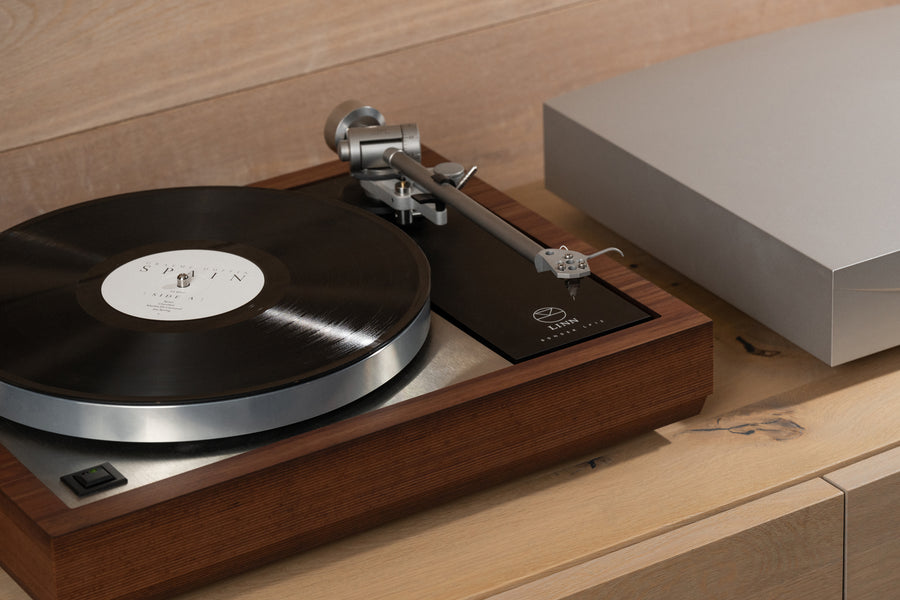
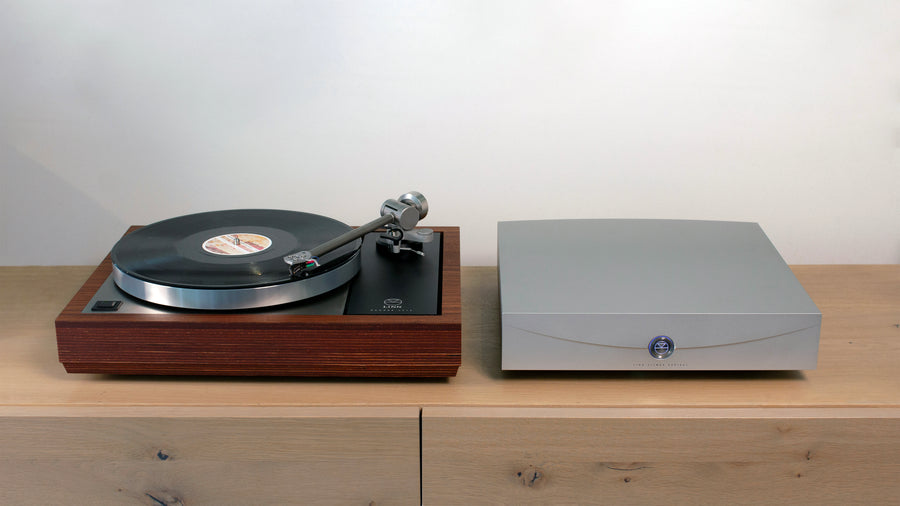
Linn's Radikal DC motor, motor control unit and power supply for the Sondek LP12 in the standard enclosure: speed checked on every rotation, a decoupled brushed DC motor, and the supply that powers a Urika phono stage inside the deck.

Supplied with the DC motor; required for the Urika and Urika II phono stages. Linn's current list calls it Radikal (Standard).

DC
brushed motor in an acoustic housing
Every rotation
speed checked by the FPGA controller
33⅓ / 45
rpm
Urika
powered from this supply

Authorized Linn dealer · Delivery and installation by Pearl Audio · Trade-ins welcome

The story

Radikal replaces the LP12's synchronous AC motor and its supply with a brushed DC motor driven by an FPGA-managed motor control unit. The motor, built from small, low-noise components, sits in an acoustic housing that decouples it from the deck, and its electromagnetic field is negligible beside an AC motor's. A tachometer under the platter reads its speed, and the controller checks and adjusts the motor on every rotation, calibrating 33⅓ rpm on first power-up and then holding what Linn describes as a sustained, uniform rotation closer to 33⅓ than any turntable. It runs at 33⅓ and 45 rpm, and it supplies the power for Linn's Urika and Urika II phono stages inside the plinth, which cannot be fitted without a Radikal.

The first Radikal of 2009 was, in Art Dudley's words in Stereophile, "revelatory: the most significant step I've heard in the LP12's evolution," adding "more force, more momentum, a little more sheer grip on the notes" while its control unit was "quick to notice and correct" any speed drift. The 2021 generation that followed brought a new motor and control unit, and the current Radikals carry that design forward. This is the Radikal in Linn's standard enclosure, the full-width case that matches Akurate-series electronics. The same motor and control electronics are available in the machined Klimax Radikal, which adds a Utopik supply with separate rails for motor and phono stage in a chassis cut from three solid blocks.

Choose the standard Radikal for the motor and speed control at the lower price, with the option of adding a Urika or Urika II now or later; the Klimax Radikal is the reference. On Linn's upgrade path the Radikal follows the Lingo and precedes the Keel SE. The motors of the 2009 and later Radikals are not interchangeable, so an LP12 moving up from an early Radikal has its motor changed as part of the fitting; the controller is then calibrated at 33⅓ on first power-up, which we do in our Portland workshop.

Each technology below is explained in depth in the Linn technology library; the Linn story follows the company from the first Sondek LP12 in 1973 to Organik and Exakt.

Key technologies

  • Brushed DC motor. Low-noise motor in an acoustic housing, decoupled from the deck, with negligible electromagnetic interference. The deep dive.
  • FPGA motor control. Speed read by a tachometer and corrected on every rotation; 33⅓ rpm calibrated at first power-up.
  • Urika power. Powers a Urika or Urika II phono stage inside the plinth.
  • Standard enclosure. Full-width case matching Akurate-series Linn electronics.
  • Soft mute. Enhanced mode applies a −25 dB soft mute to the phono stage while the deck starts and stops.
Specifications
Fits Sondek LP12
Motor Brushed DC motor in acoustic housing, supplied
Speeds 33⅓ and 45 rpm
Speed control FPGA-managed motor control unit; speed checked every rotation; 33⅓ calibrated at first power-up
Powers LP12 motor; Urika or Urika II phono stage
Enclosure Standard (Akurate-style)
Dimensions (W × H × D) 15.0 × 3.6 × 15.0 in (380 × 91 × 380 mm), Linn documentation for the Akurate-enclosure Radikal
Motor compatibility 2009 Radikal motors are not interchangeable with later units; the motor is changed at fitting
Weight Not published by Linn

Linn Radikal (Standard) product page

Options

Sold as one item; the usual combinations are listed as packages.

  • With a phono stage: Radikal + Urika or Radikal + Urika II packages pair this Radikal with the internal phono stage, fitted together.
  • Reference version: the Klimax Radikal with Utopik supply in the machined chassis.
  • Existing Radikal owners: Linn lists a Radikal Performance Upgrade with its latest motor control unit for earlier Radikals; ask us.

Upgrade path

Every Sondek LP12 built since 1972 shares the same plinth geometry, so each part below bolts into any deck. Linn's own guidance is to prioritize upgrades source-first, and its components page gives the suggested order roughly as bearing, deck, power supply, sub-chassis, tonearm, cartridge, phono stage and base board. Prices are our current store prices for each part on its own; fitting is done in our workshop.

1 · Bearing Karousel $1,300
The one upgrade that applies to every LP12 regardless of specification: a stainless-steel housing and lock-nut make the union of platter, spindle, bearing and sub-chassis stiffer and stronger, so rotation is smoother and less vibration reaches the record.
2 · Deck and plinth LP12 plinth $1,155 · Bedrok $12,060
A new hardwood plinth renews the frame every other part mounts to; Bedrok, in densified beech more than twice the density of hardwood, is the only plinth Linn offers as a performance upgrade.
3 · Power supply and motor Majik PSU $740 · Lingo $2,505 · Radikal (Standard) $6,270 (this product) · Klimax Radikal $16,820
Speed accuracy and motor noise. Lingo adds Radikal-derived speed management and switched 45 rpm to the AC motor; Radikal replaces it with a brushed DC motor checked on every rotation and provides the power for a Urika phono stage.
4 · Sub-chassis and armboard Majik sub-chassis $591 · Kore $1,480 · Keel SE $6,215
Stiffness between bearing and arm. Kore bonds a machined armboard to a three-layer aluminum box; Keel SE machines sub-chassis and armboard from solid with underside bracing, which Linn quotes as 300 percent stiffer.
5 · Tonearm Krane $2,050 · Arko $4,965 · Ekos SE $6,725
Bearing friction, resonance control and tracking: the static-balanced Krane of the Majik LP12, the all-7075-aluminum gimballed Arko of the Selekt, and the hand-built titanium Ekos SE of the Klimax.
6 · Cartridge Adikt $923 · Koil $1,250 · Krystal $2,415 · Ekstatik $8,335
Resolution, tracking and the match to arm and phono stage; the Kendo moving coil fitted to the Selekt LP12 is available to order.
7 · Phono stage Uphorik $3,740 · Urika $4,290 · Urika II $4,630
Uphorik works with any turntable and preamplifier; Urika and Urika II mount inside the deck inches from the arm and require a Radikal.
8 · Base board Solid Base $247 · Trampolin $346
Trampolin's suspended, damped feet isolate the deck from the shelf; the Solid Base suits a rack that already isolates.
Where it sits in the range

Linn's power supplies for the LP12, in order of price; the two Radikal generations are listed because we still service and complete 2021-era decks.

Add a Urika or Urika II; both are offered as packages with this Radikal. The Klimax Radikal is the reference version.

Reviews

Stereophile's Listening column reviewed the first Radikal with Urika; the Klimax LP12 reviews cover later Radikals as fitted.

Configure or upgrade with Pearl Audio

Pearl Audio has been a Linn dealer since 2006, and the Sondek LP12 is the turntable we sell more of than any other; we keep upgrading those customers' decks over the years. LP12 setup and upgrades are done in-house by John and Russ, our two LP12 technicians, each of whom has been building LP12s for more than a decade. We stock most parts for most LP12 upgrades for immediate installation, carry all of Linn's current standard plinth finishes, and keep five LP12s in different configurations on display in our Portland showroom.

We fit the Radikal, change the motor where needed, calibrate the controller and reset the suspension in one visit, and can add a Urika at the same time. Read more in our Linn Sondek LP12 story.

Plan your Linn system with Pearl Audio

Pearl Audio is an authorized Linn dealer. Bring your LP12 to our Portland workshop or ask us to collect it; we fit the upgrade, reset the suspension and return the deck set up for your room. Call (503) 222-2599 or email sales@pearlaudio.com.

Signature technologies

The engineering behind the Linn Radikal Power Supply and Motor - Akurate Enclosure

Linn gives its technologies names because each one solves a specific problem. Here is what each does, where it came from, why it matters in a system, and what you may hear.

The founding ideaSince 1973

The Sondek LP12 and source first

A belt-driven turntable on a three-point sprung sub-chassis, built around a patented single-point bearing and designed from the start to be upgraded: the oldest hi-fi component still in production, and the proof of Linn's rule that information lost at the source is lost forever. Read the deep diveClose

What it does

An AC synchronous motor, or a DC motor on Radikal decks, drives the inner platter through a flat belt. The platter, its bearing and the tonearm ride on a sub-chassis hung from three springs, isolated from the plinth and the motor, so vibration from the loudspeakers and the room has no easy path to the stylus. The bearing is a hardened point running on a thrust pad inside a precision bush, machined at the Tiefenbrun family's Castle Precision Engineering and patented in 1975. Every LP12 since 1973 shares that geometry, and every part around it has been redesigned at least once: the bearing twice, the sub-chassis four times, the power supply, the motor, the tonearms and the plinth. Linn's commitment is that any LP12 ever made can be brought to the current specification.

Why it matters in a system

Ivor Tiefenbrun's argument, made by taking the deck into shops and letting people listen, was that the source and not the loudspeaker decides what a system can do, because nothing downstream can recover what the stylus failed to read. It reordered how the industry spent its money, and it is why Pearl sets up the turntable first and builds the system around it. Our own page on the deck, The Linn Sondek LP12, tells the story part by part.

What you may hear

Pitch, timing and a lack of feedback that let a record sound like the musicians rather than the machine. David Price in StereoNET: the LP12's special sauce was its patented single-point bearing, and over fifty years the only way it could go was toward neutrality, and so it has. Herb Reichert in Stereophile found the current Klimax LP12 plowed through opera, Mahler and Brit-pop with unrivaled ease.

Speed, motor and silenceSince 2009

Radikal and the Linn power supplies

From Valhalla in 1982 to the Klimax Radikal of 2025, Linn has treated the LP12's motor supply as the floor beneath pitch and timing. Radikal replaces the AC motor with a precious-metal DC motor in an isolated housing, checks the platter's speed every revolution, and now runs from a dual-rail Utopik supply that also powers the Urika phono stage. Read the deep diveClose

What it does

The Majik supply is a tidy internal board driving the standard synchronous motor at 33⅓; the Lingo, Linn's first external supply in 1990 and since 2018 built on Radikal's speed management, generates its own clean sine wave for the AC motor and adds 45 rpm at a button. Radikal, from 2009, changes the motor itself: a brushed DC motor with a moving-coil rotor, chosen for its low noise, in an acoustically isolated housing, with a tachometer that reads the platter and a controller that corrects it on every rotation. Radikal/2 of 2021 moved the control to an FPGA with persistent auto-calibration, quieter motor components and a six-layer power board, and Linn claimed the lowest noise floor of any LP12; the Klimax Radikal of 2025 runs from a dual-rail Utopik supply, one isolated rail for the motor controller and one for the Urika inside the deck, in a chassis machined from three solid aluminum sections.

Why it matters in a system

A belt-drive turntable's pitch stability and background silence are set by its motor and the electricity that feeds it, and the Radikal's separate rail for the phono stage keeps the quietest signal in the system away from the noisiest. It is the largest single step on the LP12 ladder after the sub-chassis, and it is the step that takes a deck from Selekt toward Klimax.

What you may hear

Pitch that holds through sustained piano, a blacker background and a more composed, unhurried sense of time. Chris Kelly in The Ear called Radikal a robust and extremely well engineered power supply and the Klimax LP12 perhaps the most refined LP12 yet built.

All Linn technologies

The Linn story

Source first since 1973: the Sondek LP12, the first network music player, and a family company in Glasgow that upgrades rather than replaces.

Founded 1973 in Castlemilk, Glasgow; at Waterfoot, Eaglesham, since 1987 by Ivor Tiefenbrun · linn.co.uk

Milestones

  1. 1973 Linn founded in Castlemilk, Glasgow Ivor Tiefenbrun, an engineer at his father's firm Castle Precision Engineering, builds a turntable to cure the feedback in his own system and founds Linn Products to make it. The Sondek LP12 is the first product.Linn Klimax LP12 Turntable
  2. 1974 Isobarik, and the first Aktiv system Linn's first loudspeaker, with its patented isobaric loading, and its first active-crossover system: the crossover moved before the amplifiers, an idea Exakt would complete digitally forty years later.
  3. 1979 Ittok, Kan and a cutting lathe The Ittok LVII tonearm and the Kan loudspeaker; a Scully lathe bought to cut better test records becomes the seed of Linn Records.
  4. 1982 Valhalla, and Linn Records The Valhalla power supply is Linn's first electronics; Linn Records is founded, with The Blue Nile's A Walk Across the Rooftops among its first releases in 1983.
  5. 1985 LK1 and LK2 Linn's first preamplifier and power amplifier make it a complete-system company; the Axis turntable follows.
  6. 1987 The Eaglesham factory Linn moves into a purpose-built factory at Waterfoot, Eaglesham, designed by Richard Rogers around Single Stage Build: one person builds each product from start to finish and signs it.
  7. 1988 Ekos, Akito and Lingo The Ekos of 1988 is the first tonearm designed and built in-house; the Akito follows in 1989 and the Lingo, the first external LP12 supply, in 1990.Linn LP12 Ekos SE Tonearm
  8. 1992 Karik, Cirkus and an MBE Linn's first CD player and Numerik DAC; Ivor Tiefenbrun is appointed MBE; the Cirkus bearing and sub-platter upgrade of 1993 reaches every LP12.
  9. 1998 Sondek CD12 and the Klimax range A CD player machined from a solid aluminum billet founds Linn's flagship tier; the Klimax Solo of 1999 is the first product to carry the Klimax name.
  10. 2002 Royal Warrant Linn receives the Royal Warrant from the Prince of Wales and builds in-car audio for Aston Martin; Ivor Tiefenbrun had been Scottish Entrepreneur of the Year in 2001.
  11. 2006 Ekos SE and Keel The titanium Ekos SE tonearm and the one-piece machined Keel sub-chassis mark the LP12's thirty-third year; Chakra amplification and the first integrated Aktiv loudspeaker had arrived in 2004 and 2005.Linn Keel SE Sub-Chassis and Armboard
  12. 2007 Klimax DS The first high-resolution network music player, developed under Gilad Tiefenbrun: studio-master files over Ethernet, no disc and no moving parts. Linn Records becomes the first label to sell studio-master downloads.Linn Klimax Organik DSM Streamer
  13. 2009 No more CD players; Radikal and Urika Linn announces it will build no more CD players and will concentrate on network players; the Radikal motor supply and the Urika phono stage arrive for the LP12; Gilad Tiefenbrun becomes Managing Director.
  14. 2012 Queen's Award for Enterprise The DS platform earns the Queen's Award for Innovation; Linn Records had been Gramophone's Label of the Year in 2010, and the DSM players with HDMI arrived in 2011.
  15. 2013 Exakt On its fortieth anniversary Linn launches Exakt in the Klimax 350: the crossover performed digitally inside the loudspeaker, with each drive unit corrected. A forty-unit anniversary LP12 is built with a Highland Park cask-oak plinth.Linn Klimax Exaktbox Organik DAC
  16. 2015 Space Optimisation Model-based room correction becomes a free update to every Linn player; the Series 5 Exakt loudspeakers follow the same year, and Katalyst, the fourth-generation DAC, in 2016.
  17. 2018 Selekt DSM, Urika II and a new Lingo The configurable Selekt DSM with its slots and cartridges; Urika II with its Exakt Link output and the Radikal-derived Lingo for the LP12's forty-fifth anniversary. Krane and Karousel follow in 2020.Linn Selekt DSM: Classic Hub
  18. 2021 Organik, Radikal/2 and Ekstatik The next-generation Klimax DSM with Linn's first all-in-house DAC; the Radikal/2 and Ekstatik for the LP12. In 2022 Arko, Kendo and Koil, the Selekt LP12 replacing the Akurate, and the Selekt DSM Edition Hub with Utopik.Linn Ekstatik Moving Coil Cartridge
  19. 2023 Fifty years: LP12-50 and the 360 The Sondek LP12-50 with Jony Ive's LoveFrom and the first Bedrok plinth; the 360 loudspeaker with Adaptive Bias Control; the Klimax Solo 800 in January 2024.Linn 360 Loudspeakers
  20. 2025 Bedrok, Klimax Radikal, Keel SE, Solo 500 The Bedrok plinth released to every LP12 in February; the Klimax Solo 500 in May; the Klimax Radikal and Keel SE in October. In 2026 Linn's first in-house drive units, with the Pistonik motor, go into the 360, and the 343 arrives.Linn LP12 Bedrok Plinth
Read the Linn story
Linn

In 1973 a young Glasgow engineer named Ivor Tiefenbrun bought an expensive hi-fi system and found it sounded worse than his parents'. Tracing the problem, he discovered that the loudspeakers' output was feeding back through the turntable and corrupting the signal before it ever reached the amplifier. The received wisdom said the turntable merely went round and the speakers were what mattered; Tiefenbrun concluded the opposite. Working at his father Jack's firm, Castle Precision Engineering, with help from its machinists, he built a belt-driven deck with a sprung sub-chassis and a patented single-point bearing, designed to resist feedback and to extract everything cut into the groove, and founded Linn Products in Castlemilk to make it. The Sondek LP12 was the company's first product. More than fifty years later it is still in production and still upgradeable to the current specification, the oldest hi-fi component still being made, and Linn's founding principle has never changed: information lost at the source is lost forever.

Tiefenbrun's method of persuasion was to take the deck into shops and let people hear for themselves, and the demonstration turned the industry's priorities upside down. Over the next fifteen years Linn extended source-first thinking to every link in the chain: the Isobarik loudspeaker and the first Aktiv active-crossover system in 1974, the Ittok tonearm and the Kan in 1979, the Valhalla supply in 1982, Linn's first electronics, the LK1 and LK2 amplifiers in 1985, and the Ekos, the first tonearm designed and built entirely in-house, in 1988. A cutting lathe bought to make better test records became Linn Records in 1982, whose first releases included The Blue Nile's A Walk Across the Rooftops and which Gramophone named Label of the Year in 2010. In 1987 Linn moved into a purpose-built factory at Waterfoot, Eaglesham, designed by Richard Rogers around Single Stage Build, in which one skilled person builds each product from start to finish and signs it. Ivor Tiefenbrun was appointed MBE in 1992.

Linn built its first CD player, the Karik, in 1992, and in 1998 the Sondek CD12, machined from a solid aluminum billet, founded the Klimax range; the Klimax Solo of 1999 was the first product to carry the name. The 2000s brought the Royal Warrant and in-car audio for Aston Martin, a factory expansion that nearly doubled the plant, Chakra amplification and the first fully integrated Aktiv loudspeaker, and the Ekos SE and machined Keel sub-chassis for the LP12 in 2006. Then Linn did something no high-end company had done. In 2007 the Klimax DS, developed under Ivor's son Gilad Tiefenbrun, played studio-master files at 24 bits and 192 kHz straight from a network, with no disc, no drive and no moving parts; Stereophile found it better than any CD player its reviewer had heard. In November 2009 Linn announced it would stop making CD players altogether, Gilad became Managing Director and Ivor Executive Chairman, and the decision, taken as the financial crisis squeezed the high end, was vindicated by the Queen's Award for Enterprise in Innovation in 2012 and by profit every year since.

Owning the digital path let Linn attack problems no analog component could reach. Exakt, in 2013, keeps the signal digital all the way into the loudspeaker, where a phase-linear crossover corrects each measured drive unit and aligns every part of every note in time. Space Optimisation, in 2015, a free update to every Linn player, builds an acoustic model of the listener's own speakers, their position and the room and removes the energy the room adds. Katalyst in 2016 put Linn in control of every input to the converter chip, and Organik in 2021, Linn's first wholly in-house converter, replaced the chip with an FPGA and a discrete conversion stage that The Absolute Sound placed among the best DACs at any price. Linn has made its own switch-mode power supplies since 1993, and the Utopik generation now sits under the Klimax DSM, the Selekt DSM, the Klimax Solo amplifiers and the LP12's Klimax Radikal. Every one of these is a retrofit; a 2007 Klimax DS takes an Organik board in twenty minutes. The LP12 kept pace: Radikal and Urika in 2009, Urika II in 2018, Karousel in 2020, Ekstatik in 2021, Arko and Kendo in 2022, Bedrok, Klimax Radikal and Keel SE in 2025.

Linn marked its fiftieth year in 2023 with the Sondek LP12-50, a 250-unit edition refined with Jony Ive's LoveFrom and the first appearance of the Bedrok plinth, and with the 360, a four-way Exakt loudspeaker that Gilad Tiefenbrun called the finest Linn had ever made and the debut of Adaptive Bias Control, which corrects the bias of every output transistor in real time for the life of the amplifier. That technology went into the Klimax Solo 800 of 2024 and Solo 500 of 2025; in 2026 the 360 received Linn's first drive units designed entirely in-house, with the Pistonik motor, and the 343 followed. Linn remains an independent family business with no outside shareholders, Ivor Tiefenbrun as Chairman and Gilad Tiefenbrun as Chief Executive, and every product is still built by one person in the Eaglesham factory who signs it. Quality and longevity, not planned obsolescence, is how Linn puts it, which is why an LP12 bought in 1973, or a Klimax DS bought in 2007, is brought up to date rather than replaced.

The complete Linn story and technology library

Linn at Pearl Audio

Pearl Audio has been a Linn dealer since 2006 and is a Linn Reference Level dealer. Five Sondek LP12s in different configurations are on the floor, from the Majik to the Klimax on Bedrok, and John and Russ, our two LP12 technicians, have each been building and setting up the deck for more than a decade; Russ is our LP12 expert and sets up several turntables a week. Connor and Russ are our Linn digital streaming experts: they configure the Selekt and Klimax DSM, set up Space Optimisation and Exakt in your room, and keep the Linn systems in the showroom current. Linn digital, from the Selekt DSM to the Klimax DSM, the Klimax Solo amplifiers and the 360, is on demonstration, and we stock most LP12 upgrade parts for immediate installation. Read the deck's story on our LP12 page.

The Pearl Audio experience

How we work with you

A system at this level should be heard, thoughtfully matched, and properly set up. From the first audition to long-term ownership, you work with the same people, in person.

  1. 01

    Listen first

    The Radikal Power Supply and Motor - Akurate Enclosure is not in our rooms at present. When it is the right piece for a client we arrange a demonstration unit from the manufacturer and set it up for a private session.

  2. 02

    Delivery and installation

    We deliver and install throughout the Portland area, taking care of placement, connections, ventilation and system configuration ourselves.

  3. 03

    Support for as long as you own it

    We support everything we sell for as long as you own it, whether the answer comes by phone, in your home, or through factory service.

  4. 04

    A path for what comes next

    Trade-in assistance and qualifying 100% Trade-Up options give you flexibility when your listening priorities or your system change.

Search