







McIntosh Laboratory was founded in 1949 in Silver Spring, Maryland, by Frank H. McIntosh, a radio engineer who had run a Washington consulting practice, and Gordon J. Gow, the young engineer he had hired in 1946 to help build an amplifier that did not yet exist: one that could deliver real power across the whole audible band with distortion below one percent. Their answer was the Unity Coupled Circuit, patented in 1949 as U.S. Patent 2,477,074, which wound the output transformer into the operating circuit of the tubes with paired plate and cathode windings. The 50W-1 amplifier that carried it was the company's first product, and the AE2 of 1950 its first preamplifier. In 1951 the company moved to the second floor of a building in Binghamton, New York, where Sidney Corderman joined as head of research, engineering and development; the factory McIntosh still occupies at 2 Chambers Street opened in 1956.
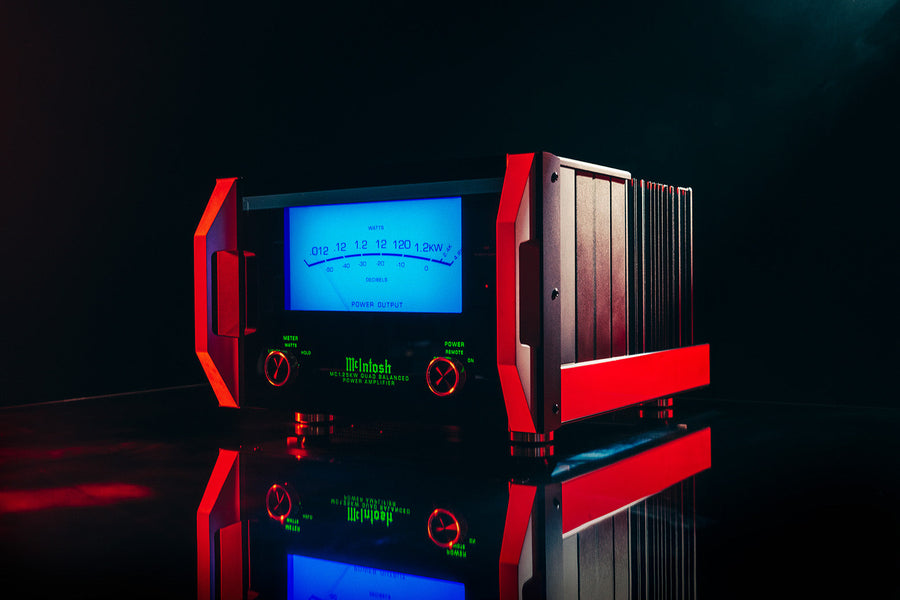
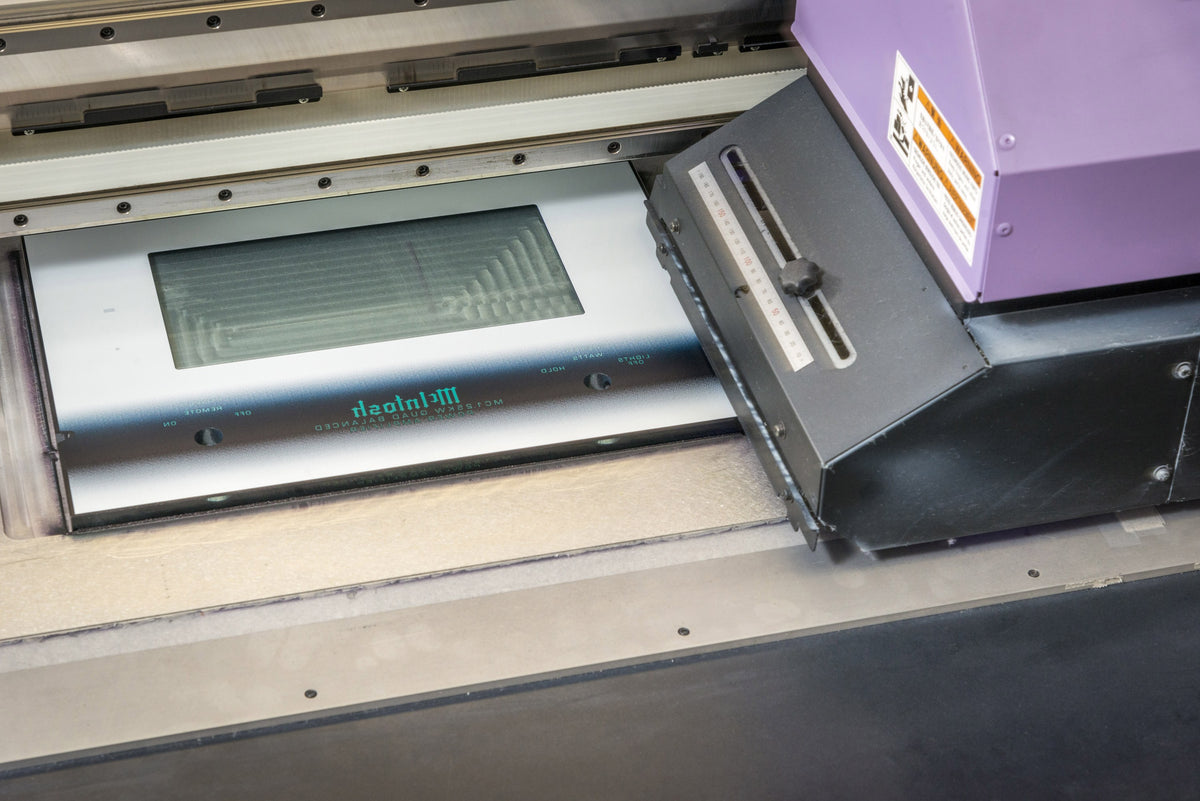
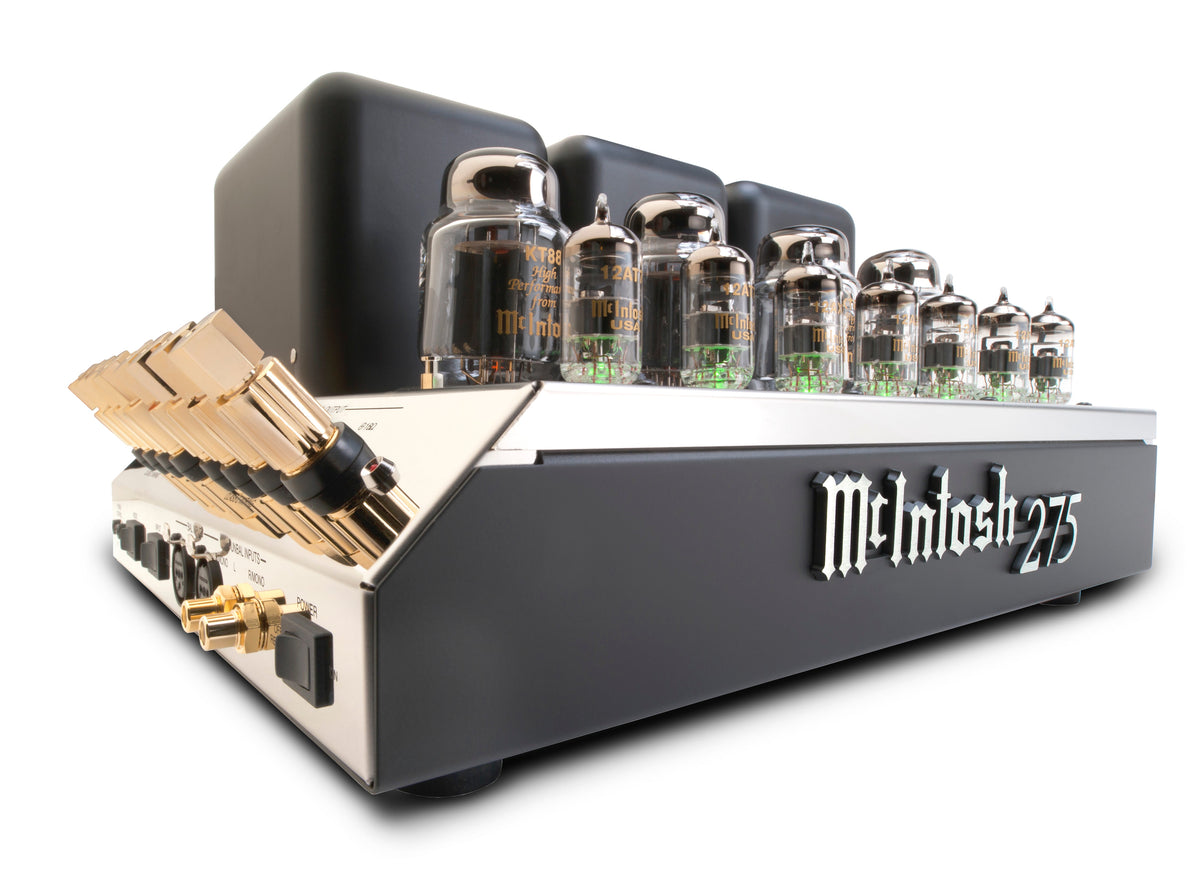
The 1950s and 1960s made the McIntosh look. The MC30 and MC60 of 1954 and 1955 established the chrome chassis, the C8 preamplifier showed that industrial design mattered, and the MR55 of 1957 was the first McIntosh tuner. Through the 1960s the company developed the front panel it is known for: a sheet of glass, screen-printed from the back in an ink McIntosh made itself, so the lettering reads gold under room light and glows teal in the dark and never wears off. The stereo tube amplifiers of the decade, the MC225, MC240 and MC275 of 1961, with the C22 preamplifier of 1963, are the designs collectors chase today; the MC275 has been back in production since 1993 and the C22 is in its fifth version. Dave O'Brien spent those years on the road running the McIntosh Performance Clinics, bench-testing customers' amplifiers of every make in dealers' stores, a tradition of measured proof that the company has never given up.
McIntosh's history runs through the music of the period. In 1969 McIntosh amplifiers, by most accounts about twenty MC3500 tube monoblocks, powered Woodstock. On March 23, 1974, the Grateful Dead unveiled the Wall of Sound at the Cow Palace with 48 McIntosh MC2300 solid-state amplifiers delivering 28,800 watts. The MC2300 belonged to the transistor generation McIntosh had begun in 1967 with the MC2505 and MC2105, the first solid-state amplifiers to keep output transformers, which McIntosh called Autoformers, so that the amplifier delivered full power into any loudspeaker impedance; the same amplifiers introduced Sentry Monitor protection, the illuminated output meters and the all-glass front panel. The MC2205 of the late 1970s added Power Guard, the anti-clipping circuit that has been on every McIntosh amplifier since. Frank McIntosh retired in 1977 and Gordon Gow became president; the XRT20 of 1980 brought line-array loudspeakers into the home, and the MCD7000 was the company's first CD player.
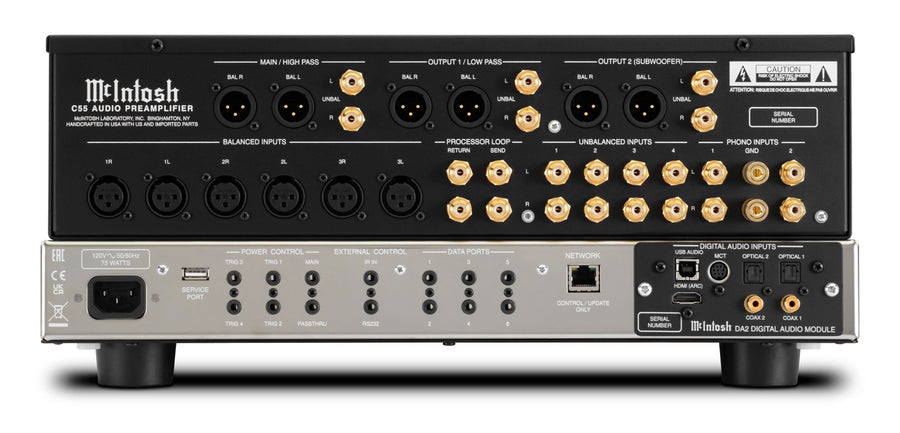
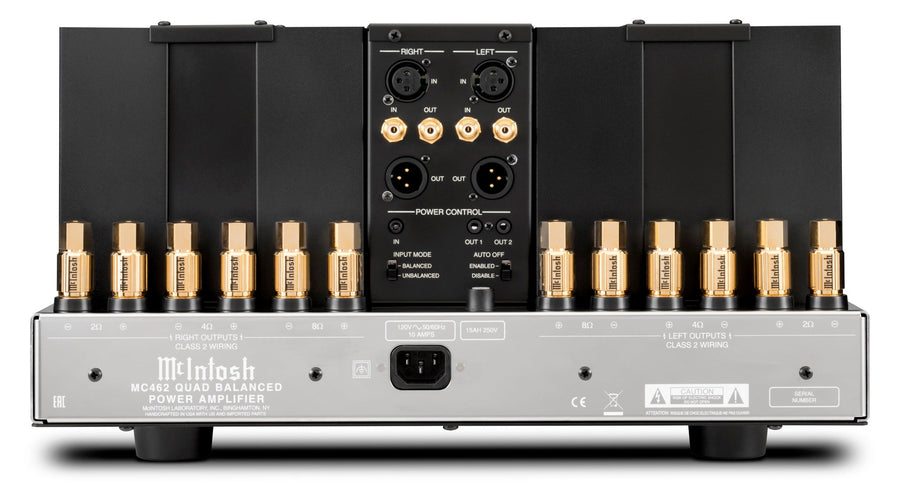
Gow died in 1989 and the company was sold to Clarion of Japan in 1990, the year Frank McIntosh also died; the MC275 returned in 1993 as the Gordon Gow Commemorative edition. D&M Holdings bought McIntosh in 2003; Fine Sounds of Milan, parent of Sonus faber and Audio Research, bought it in 2012; a management buyout in 2014 led to the group's renaming as McIntosh Group and its move to New York; Highlander Partners acquired the group in June 2022 and sold it to Bose Corporation in November 2024. Through all of it the company stayed in Binghamton, and since 2001 it has been led by Charlie Randall, an electrical engineer who joined in 1988 and rose through engineering to president. The MC1201 of 2000 brought the Quad Balanced architecture that defines today's big amplifiers; the Reference System of 2005, the MT10 turntable of 2007, the first hybrid integrated amplifier (the MA252 of 2017), the replaceable DA1 and DA2 digital modules, and the 70th-anniversary MC2152 and C70 of 2019 mark the modern era. Frank McIntosh and Gordon Gow were inducted into the Consumer Technology Hall of Fame in 2017.
The McIntosh of 2026 still winds its transformers by hand at 2 Chambers Street, still prints its glass panels in the building, and still tests every component on the bench before it ships. The MA2375 of June 2026, the first McIntosh vacuum-tube integrated amplifier in more than a decade, carries the Unity Coupled transformers of 1949, the Sentry Monitor of 1967 and a tube form of the Power Guard of 1977 in one chassis, which is as good a summary of the company as any. Pearl Audio holds the largest McIntosh inventory in Oregon.