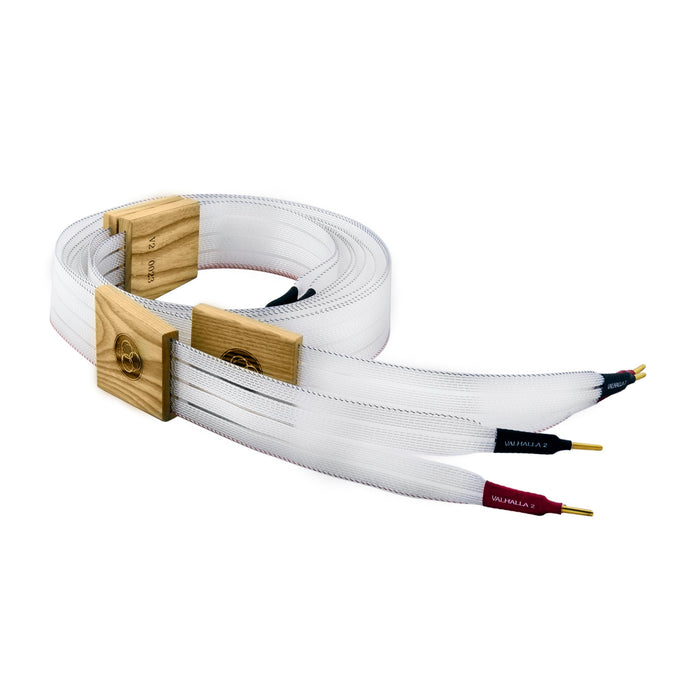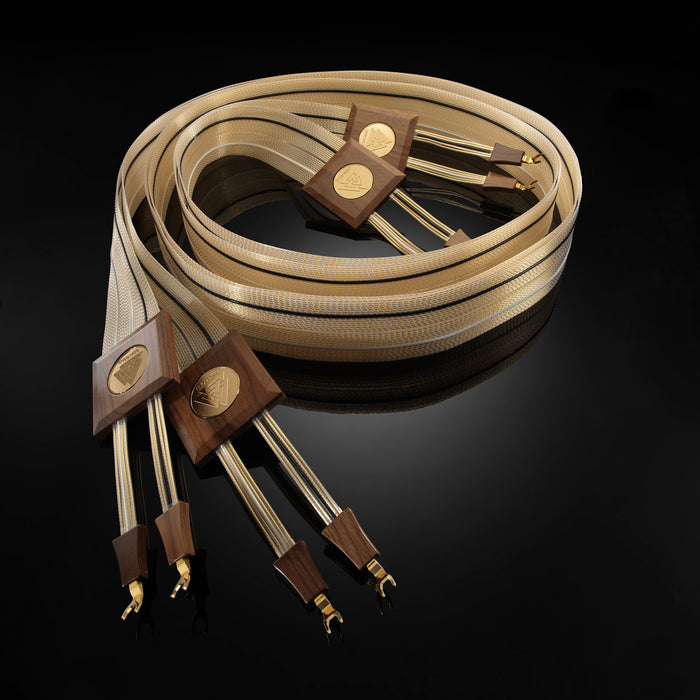


Nordost was founded in Massachusetts in 1991 by Joe Reynolds, and from the beginning its products have been designed, manufactured and assembled in the United States. The first was a speaker cable unlike anything in hi-fi: the Flatline, four flat copper conductors per run laid side by side in clear Teflon pressed flat, a design derived from one made for the aerospace industry. It ran under carpets and inside walls, it measured lower in capacitance than round cables, and when Art Dudley reviewed it in 1996 at about two hundred dollars a pair he found clarity, flow and dynamic ease and told his readers to investigate it without delay. Blue Heaven followed around 1993, at a price Nordost's own staff thought too high to sell, and the SPM Reference of the later 1990s brought the heavy silver plating over solid copper that has defined the company's conductors since.
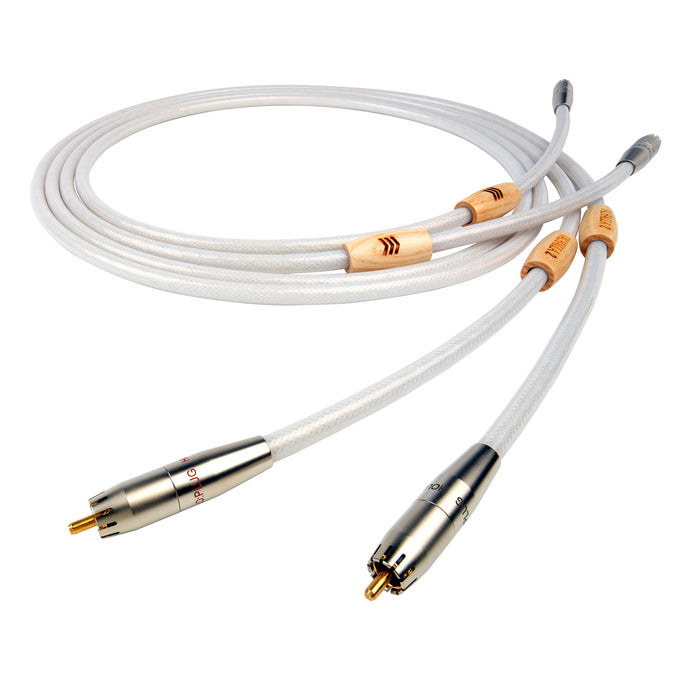
Valhalla, in 2001, was the turn. Its conductors were eight-nines copper under 78 microns of silver, and each one was wound with a thread of FEP before its insulation was extruded over it, so that most of the conductor's surface touched air: Micro Mono-Filament, the patented construction on which every Nordost range above the entry level is now built. Stereophile measured its capacitance at 11.8 picofarads a foot. The Norse series, Heimdall, Frey and Tyr, brought the construction to lower prices around 2004, and in May 2007 Odin went the other way, with Dual Mono-Filament, two twisted threads raising the air fraction to about 85 percent, and Total Signal Control, a shield around each individual conductor; it cost from fourteen thousand dollars a pair. The names come from Norse mythology, Valhalla the hall of Odin's throne, and the ranges have kept them.
Around the same time Nordost took on Quantum Resonant Technology, a Santa Monica company whose field-generating devices it first distributed and then, by 2009, largely owned; production moved to Massachusetts and QRT became Nordost's name for everything that is not a cable. The QBASE distribution blocks, with their passive star-earth topology, and the QVIBE plug-in of 2011 were the first; the Leif series of 2011 and Norse 2 of 2012 renewed the cables; and in 2012 the company moved into its own factory at 93 Bartzak Drive in Holliston, Massachusetts, where it builds its boards, circuits and Sort Kones and has developed its own soldering method. That September it released the first HDMI cable entirely designed, built and hand-terminated in the United States.
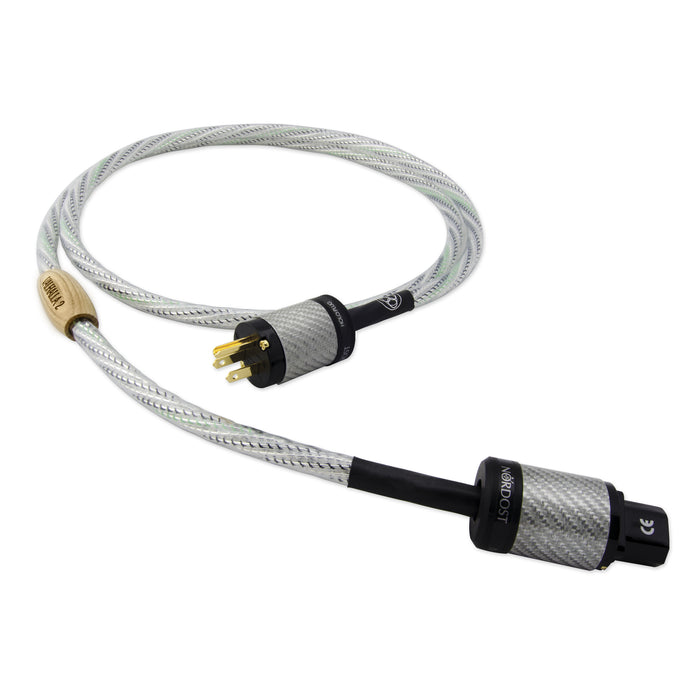
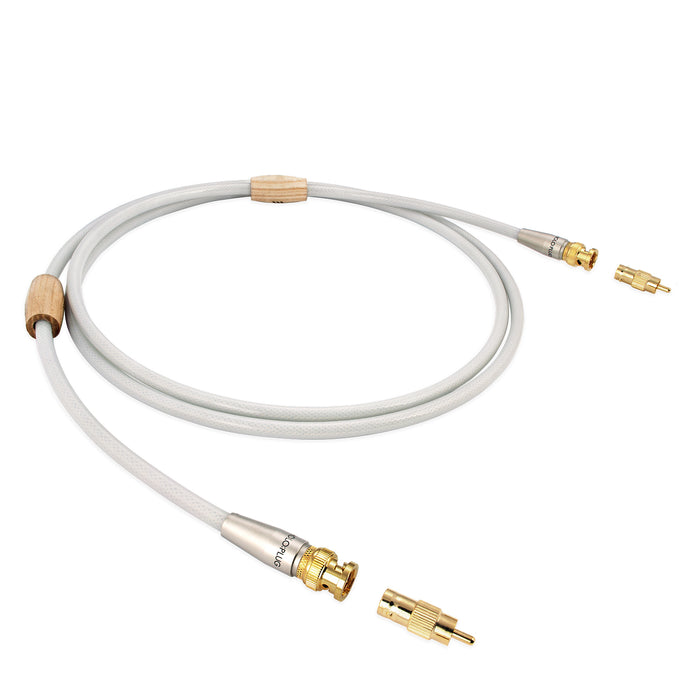
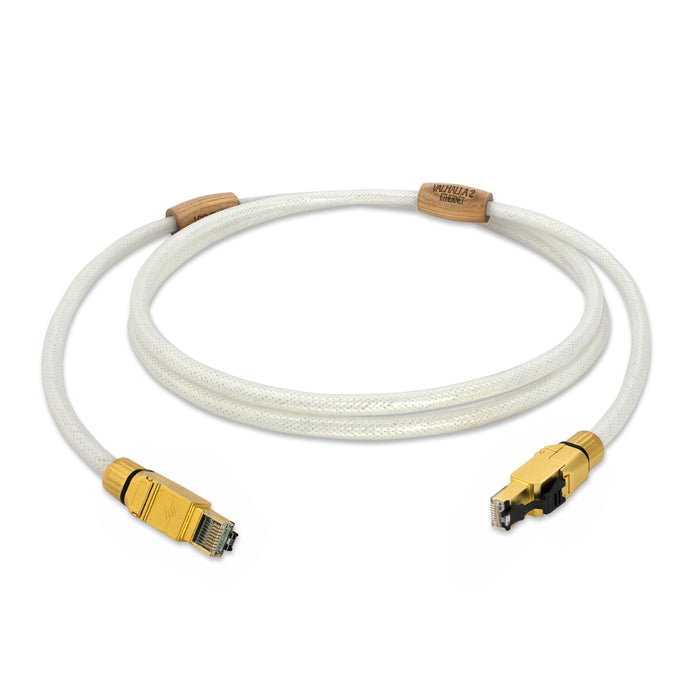
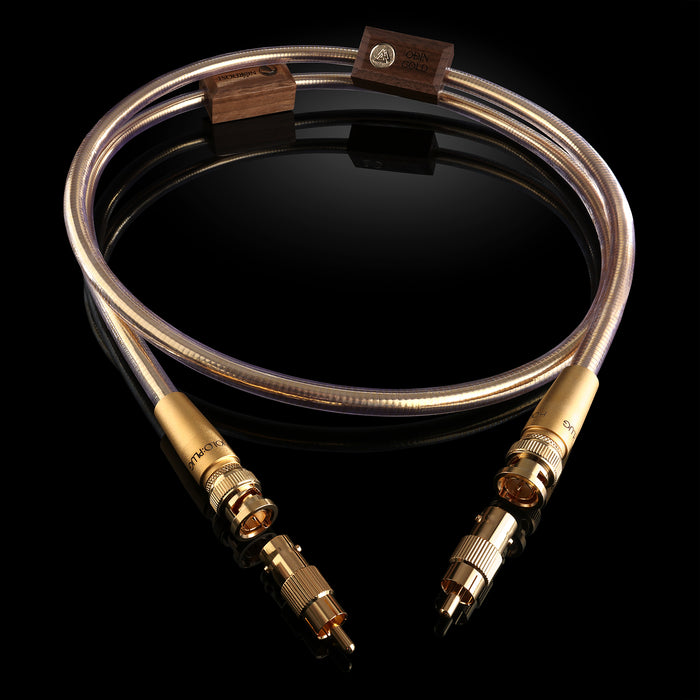
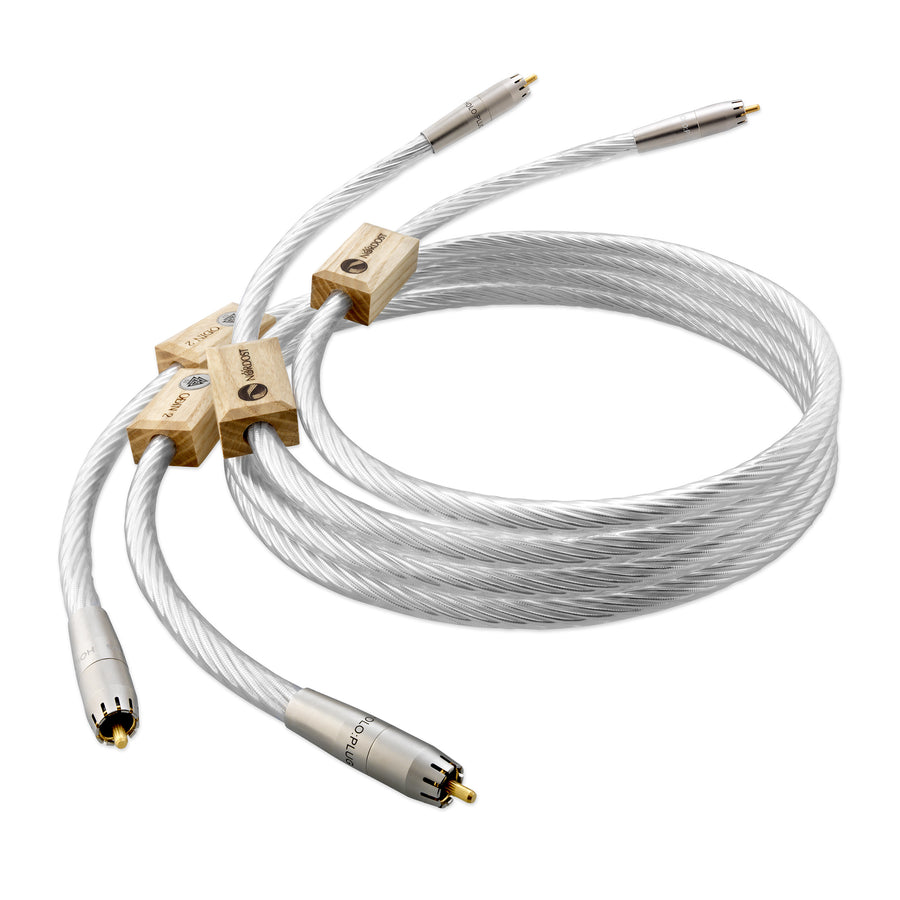
Valhalla 2 arrived in 2013 with silver thickened to 85 microns, Dual Mono-Filament throughout and the first HOLO:PLUG, Nordost's own patented low-mass connector designed so the cable's geometry continues into the plug; Brian Damkroger called them the best cables he had heard. Odin 2 followed in May 2015 after seven years of development, and Odin Gold in August 2021 replaced the silver with gold from conductor to connector. The QRT line grew around them: the Sort Füt and Sort Lift of 2015 to 2017, the QKORE ground units of 2017, the QPOINT resonance synchronizer and QSOURCE linear power supply of 2019, the QNET network switch of 2022, the QBASE Mark III, QSINE and QWAVE and the QBASE Reference of 2023, the QNET7 of 2025 and, at Vienna in June 2026, the QBASE Supreme Reference, wired internally with Odin 2.
The current cable ranges are new. Leif 3, Blue Heaven 3 and Red Dawn 3 among them, was unveiled at Munich in May 2024 and became the company's most-reviewed products of 2025; Norse 3, Heimdall 3, Frey 3 and Tyr 3, was announced on October 13, 2026 and reaches dealers in November, with the Norse 3 speaker cables welded ultrasonically rather than soldered. In 2025 Nordost co-hosted 59 dealer events and demonstrated at 15 shows, and in September that year Paula Rotondo was named President, with Amy Hansen, at the company since 2012, taking over North American sales. Nordost remains privately held, a company that, in Joe Reynolds's words, is committed to making all of its products in the United States and wants to make everything locally so it can control the quality.
Three ideas run through all of it. The first is that the noise floor is the enemy, and that cables, grounding and power distribution are where it is set. The second is the loom: Nordost was the first company to argue for a single brand of cable through the whole system, power cords first, and its ranges are built so the same construction is available from Blue Heaven to Odin. The third is that the claims should be heard rather than believed, which is why Nordost supplies its dealers with the Vidar burn-in machine and sends its trainers to demonstrate. Pearl Audio has carried Nordost since 2005, runs the Vidar, hosted An Evening with Nordost in its main room in June 2026, and brings a case of burned-in cables to your home so the difference is heard in your own system.