
Turntables · Speed
Optical speed control
Some turntables do more than set a speed and trust it. They watch the platter with a light sensor and correct the motor while the record plays.
Why watch the platter
The speed of the platter sets the pitch of the music. A small speed error is a pitch error, and a speed that wanders is heard as an unsteady note.
A motor can be given a very steady supply and the platter can still drift. Belts stretch and age. A bearing runs more freely once it is warm. A room is cooler in the morning than at night.
A turntable with optical speed control measures what the platter is doing. It has three parts:
- A pattern or a marker on the platter or the sub-platter.
- A light sensor that reads it as the platter turns.
- Control electronics that compare the reading with the correct speed and adjust the motor.
Three makers, three ways
- Clearaudio: Optical Speed Control. An infrared sensor reads the sub-platter in real time, and the electronics correct the motor's speed as it runs. On the Reference Jubilee the system calibrates at the push of a button and compensates for friction and for drift with temperature. Clearaudio's Optical Speed Control in depth →
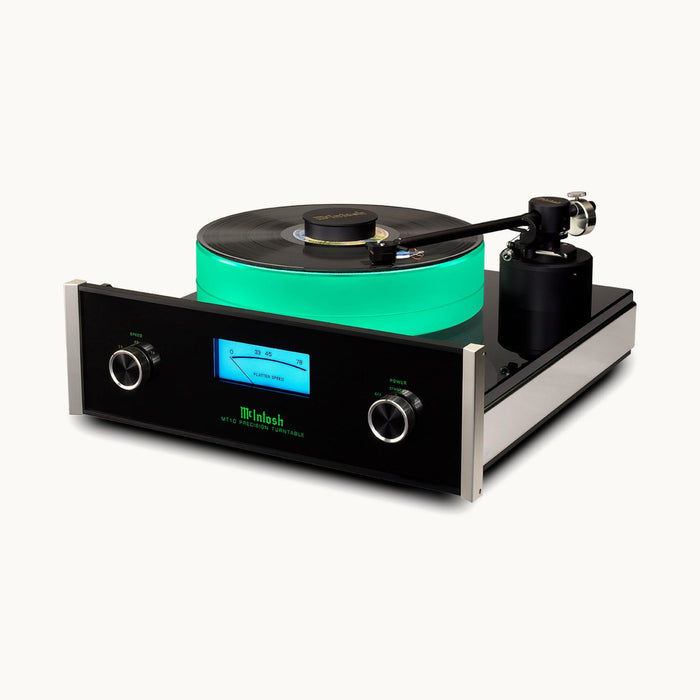
- McIntosh: the MT10. An optical sensor reads 1,595 fine stripes on a disc fixed under the platter and reports to the servo that drives the brushless motor. McIntosh and Clearaudio worked together to build the MT10.
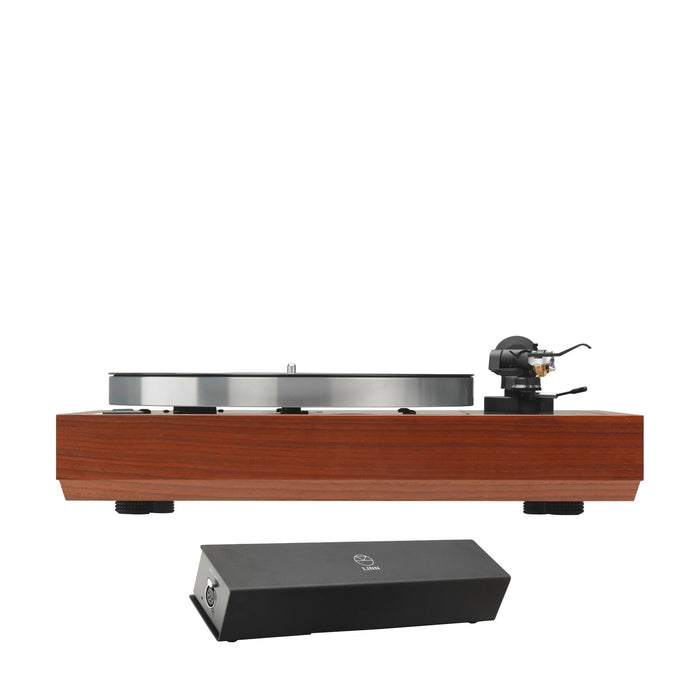
- Linn: the Lingo and the Radikal. An optical tachometer on the top plate reads a single marker on the inner rim of the outer platter. The controller checks the speed on every rotation and corrects the motor. How it works on the Sondek LP12 ↓
Clearaudio and McIntosh read a fine pattern many times in each turn. Linn times a single marker once in each turn. Both arrive at a platter whose speed is checked against a reference all the time it is playing.
On the Sondek LP12
Linn's name for the sensor is an optical tachometer. It is a small board on a bracket, mounted on the top plate beside the motor pulley, where the outer platter covers it.
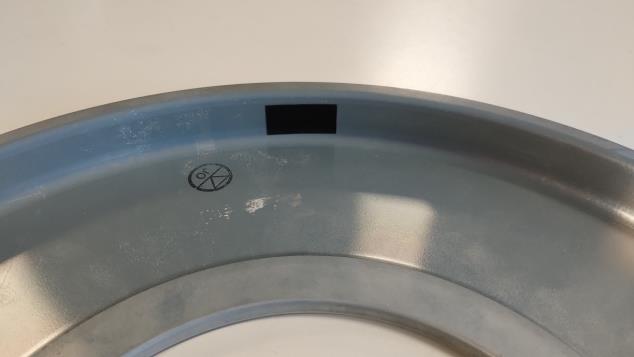
On the inner rim of the outer platter there is one small black marker. It is non-reflective. The tachometer shines its light on the rim as the platter turns. The bare metal sends the light back, and the marker does not. Each time the marker passes, the controller knows that one rotation is complete and how long it took.
From that one reading the controller checks the speed on every rotation and adjusts the motor. It calibrates itself each time the turntable is switched on.
The Lingo and the Radikal use the same tachometer. When we fit either one to a Sondek LP12 that did not have it, the marker goes onto the platter as part of the work. There is only ever one.

The turntables we carry that use it
Clearaudio
 Ovation
From $11,000
Optical Speed Control with a 24 V motor.
 Innovation Compact Wood
$11,000
Optical Speed Control; room for two tonearms.
 Innovation Wood
From $16,000
Optical Speed Control on the full-size chassis.
 Master Innovation Wood
$45,000
Optical Speed Control with magnetic drive.
 Reference Jubilee
$45,000
Optical Speed Control that calibrates at the push of a button.
 Statement V2
$275,000
Optical Speed Control on Clearaudio's flagship.
McIntosh
Linn Sondek LP12
 Majik LP12 Lingo
From $7,945
The Majik LP12 with the Lingo power supply.
 Selekt LP12
$16,912
Lingo power supply as standard.
 Klimax LP12
From $45,630
Klimax Radikal motor and supply.
 Lingo
$2,505
For any Sondek LP12: the optical tachometer with an AC motor.
 Radikal
$6,270
For any Sondek LP12: the optical tachometer with a DC motor.
Speed control by another method
Some turntables measure and correct their speed without a light sensor on the platter. They are not optical, so they are listed here and not above.
- Clearaudio Signature: Tacho Speed Control. A close relative of Optical Speed Control, but not optical. On the Signature the belt runs around a second pulley beside the motor, and a detector on that pulley reports the speed to the control electronics. It calibrates itself at every start. No light sensor reads the platter.
- McIntosh MT5: a servo. The MT5 holds its speed with a servo-controlled DC motor and has fine speed adjustment.
- Technics: direct drive. A Technics turntable has no belt. The platter sits on the motor's rotor, and the motor's own electronics hold the speed. Technics and direct drive →
How a turntable holds its speed: every method, and the upgrade paths →