

Sondek LP12 · History
Castlemilk to Bedrok
In production since 1972 and revised rather than replaced: the people, the arguments and the parts that made the Sondek LP12 what it is, year by year.
The idea
Fifty years on one principle
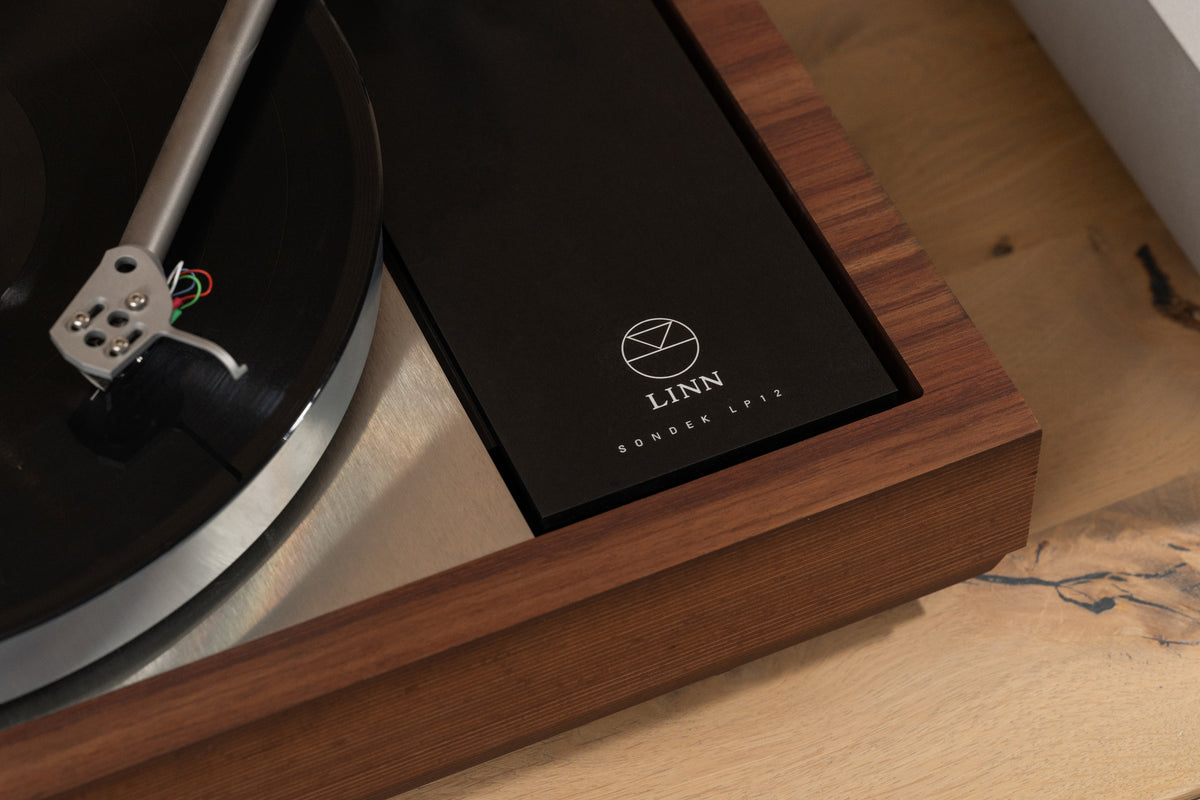
Most turntables are replaced. The Sondek LP12 is revised. Since the first deck left Glasgow in 1972, Linn has changed the bearing, the sub-chassis, the motor, the power supply, the arm, the base board and the plinth itself, and every one of those changes has been made to fit the deck already standing in your room. Linn counts more than fifty retrofittable mechanical and electrical upgrades over the life of the design, and says that anyone who bought an LP12 from 1973 onward can bring it fully to the current specification. Nothing else in audio has been maintained that way for that long.
The LP12 also carried an argument. Ivor Tiefenbrun built it to prove that the record player, not the loudspeaker, decides how good a system can be, because information lost at the source cannot be recovered by anything downstream. That position, which Linn and Naim both argued through the 1970s and which came to be called source first, reorganized the way British hi-fi was sold and demonstrated. Hi-Fi Choice readers and reviewers later voted the LP12 the most important hi-fi component ever sold in the United Kingdom; Stereophile placed it first in its Hot 100 Products of 2002 and named it Analog Source Component of the Year in 2004 and again in 2007.
These pages are the long version of that story: where the deck came from, how it works, what the three current specifications contain, what every option changes and costs, and how our workshop builds, sets up and upgrades them. They are a companion to the Linn story, which covers the company as a whole, and to the product pages for the Majik LP12, Selekt LP12 and Klimax LP12.
History, part one
Castlemilk, 1972
The Sondek LP12 was built before Linn existed. Ivor Tiefenbrun, then in his twenties, assembled the first deck in 1972 at Castle Precision Engineering, the Tiefenbrun family's machining firm in Castlemilk on the south side of Glasgow, after concluding that the turntable in his own system was being disturbed by the sound coming out of his loudspeakers. Linn Products Ltd was formed in February 1973 to make and sell it, and took its name from Linn Park across the road. The deck's name was plainer than it looks: Sondek is a contraction of sound deck, and LP12 refers to the twelve-inch long-playing record.
Its mechanical idea was not new. The LP12 belongs to the family of three-point suspended sub-chassis turntables that began with Edgar Villchur's Acoustic Research XA of 1961 and continued through the Thorens TD150, and its layout matched the Ariston RD11, a Hamish Robertson design of 1971 for which Castle had machined many parts. When Linn announced that the turntable previously sold as the Ariston RD11 was now available as the Linn LP12, a dispute over patents and parentage followed; the patent on the single-point bearing was ultimately awarded to Linn. What Linn added to the shared layout was a bearing machined to tolerances the others did not attempt, a stiffer sub-chassis, and a conviction that the way the parts were assembled and tuned mattered as much as the parts themselves.
The early decks were platforms rather than complete record players. They came with a basic power supply, ran at 33⅓ rpm only, with 45 rpm available by fitting a larger pulley adaptor, and were sold without an arm; buyers fitted a Grace 707, a Sumiko or, later, a Mission 774. Linn's own Ittok LVII tonearm arrived in 1979 and stayed in production until 1993. In the same decade the lid lost its prop in favor of spring-loaded hinges, the top plate was revised, and the sub-chassis gained a strap and a printed circuit board for the motor control. The modern habit of recording every change against a serial number begins here.
History, part two
Nirvana, Valhalla, Lingo and Cirkus
The 1980s turned a good turntable into a reference. In February 1981 Linn introduced Nirvana, a kit of revised springs, grommets and fittings for the suspension, from serial number 32,826. In May 1982 the Valhalla board became standard from serial 38,794: a crystal-controlled electronic supply mounted inside the plinth that generated a clean sine wave for the synchronous motor rather than feeding it straight from the wall. Through the middle of the decade the plinth's corner bracing was enlarged, the sub-chassis bar was bonded with epoxy instead of spot-welded, the bearing housing was redesigned and the armboard moved to a laminated construction, each change logged against the decks on the line.
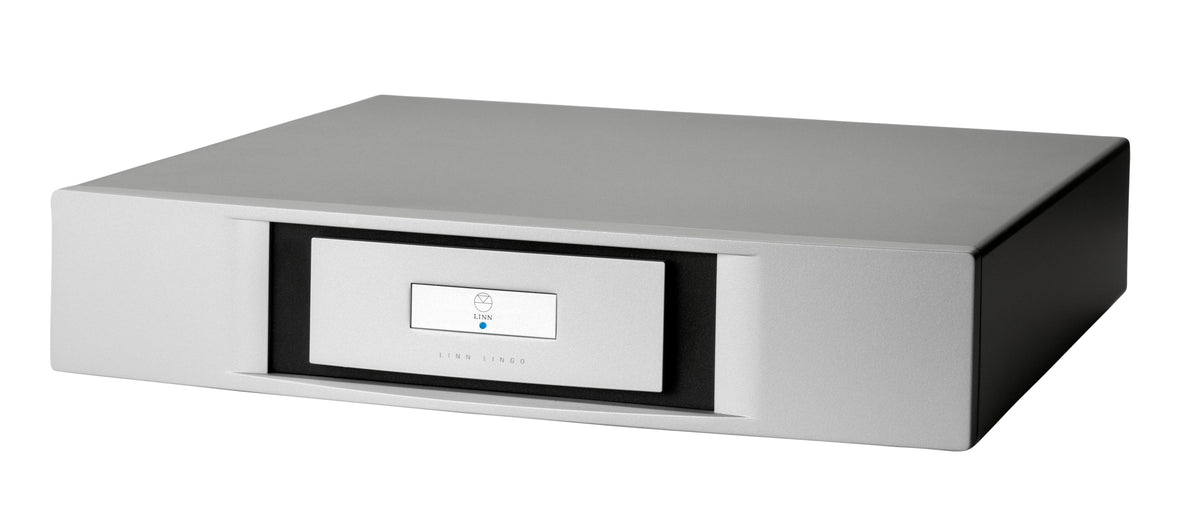
In 1990 the Lingo took the power supply out of the plinth altogether. It generated two crystal-referenced sine waves, one for 33⅓ and one for 45 rpm, and amplified them to drive the motor, so the deck finally had a switched second speed without a pulley change. A year later the hardboard base gave way to a solid base board and the Trampolin, an optional baseboard on isolating feet, appeared alongside a stripped-down Basik LP12.
The decade's work was gathered up in 1993 as Cirkus, fitted as standard from serial 90,582: a larger and better-machined inner platter, a new bearing, new springs, a new armboard and a new belt. For most of the next three decades a Cirkus bearing was the heart of every LP12, and a deck described as pre-Cirkus is still the first thing a technician asks about.
History, part three
A new motor, then Keel, Ekos SE, Radikal and Urika
The LP12 kept its original motor for twenty-nine years; a new one arrived in 2001, and a maple plinth joined black, walnut, rosewood and afromosia in 2002. The larger change came in November 2006, for the deck's thirty-third birthday, when Linn introduced the Keel: a sub-chassis, armboard and arm collar machined from one solid piece of aircraft-grade aluminum, with no screws, fixings or joins between the parts, pocketed underneath in a pattern chosen for strength and designed to match the mass and center of gravity of the original pressed-steel assembly so that it worked with the suspension of every Sondek ever made. The Ekos SE tonearm, with a titanium arm tube and a stainless-steel bearing housing, and the aluminum Trampolin 2 arrived with it.
In 2008 Linn began selling the deck as a complete record player for the first time, the Majik LP12, with a Pro-Ject 9cc arm, the Adikt moving magnet cartridge and an internal supply. Then, in 2009, the drive system changed outright. The Radikal replaced the AC synchronous motor with a brushed DC motor and a controller that read the platter's speed on every rotation and corrected it; it also powered the Urika, a moving coil phono stage mounted on the Trampolin inside the plinth so that the cartridge's few hundred microvolts traveled inches rather than feet before amplification. Around these parts Linn organized the range as it still stands: three complete specifications, then called Majik, Akurate and Klimax, built on the same deck.

History, part four
Kore, Karousel, Arko, the LP12-50 and the Klimax Radikal
The Kore of August 2013 brought a machined armboard and a bonded aluminum sub-chassis to the middle of the range, and the same year a fortieth-anniversary edition of forty decks was built with plinths from Highland Park distillery casks. For the forty-fifth anniversary in February 2018 Linn released the fourth-generation Lingo, with speed management derived from the Radikal, and the Urika II, which digitizes the cartridge signal at the deck and sends it losslessly over Exakt Link. In March 2020 the Karousel single-point bearing replaced the Cirkus on new decks and as a retrofit, the Krane arm appeared on the Majik LP12, and painted plinths in any color joined the wood finishes. A second-generation Radikal and the Ekstatik flagship cartridge followed in 2021.
June 2022 brought the Arko, Linn's first entirely new tonearm since the Ekos SE, the Kendo and Koil cartridges, and a renamed middle specification: the Selekt LP12 replaced the Akurate LP12 with Arko and Kendo fitted as standard. In July 2023, for Linn's fiftieth year, the Sondek LP12-50 was unveiled, designed with Sir Jony Ive's LoveFrom and limited to 250 decks, and it introduced the Bedrok plinth, a block of beech layers laid at right angles and pressed under heat into a material more than twice the density of a standard plinth. Bedrok became an upgrade for every LP12 in February 2025, and in October 2025 Linn released the Klimax Radikal, a reference motor system powered by a Utopik supply in a chassis machined from three solid pieces of aluminum, together with the Keel SE, a sub-chassis it describes as 300 percent stiffer than its previous design. The Klimax LP12 we build in 2026 carries both.
Year by year
What changed, and when
Linn has logged most LP12 changes against the serial number of the deck on the line that day. The numbers below, where given, are the serial from which a change applied; they are the quickest way to place an older deck.
- 1972 The first Sondek LP12Built by Ivor Tiefenbrun at Castle Precision Engineering, Castlemilk. Linn Products Ltd is formed in February 1973.
- 1974 Bearing liner, sub-chassis strap, motor PCBThe main bearing liner is changed, the sub-chassis gains a strap and the motor control moves to a printed circuit board; a new mains switch. From about serial 2,000.
- 1978 Top plate revisedFrom about serial 23,000.
- 1979 Ittok LVII tonearm; hinged lidLinn's first own tonearm, in production until 1993. The lid prop gives way to spring-loaded hinges from serial 27,000.
- 1981 NirvanaRevised springs, grommets and mechanical fittings for the suspension (February, from serial 32,826).
- 1982 ValhallaCrystal-controlled electronic power supply fitted as standard (May, from serial 38,794).
- 1984 to 1987 Plinth bracing, bearing housing, armboardNew clear lid and enlarged corner bracing (1984); sub-chassis bar bonded rather than spot-welded (June 1984, 54,101); cap-head screws on the bearing housing (1985); new bearing housing and laminated armboard (March 1987, 69,161); improved bearing lining and springs (70,000).
- 1990 LingoThe first external supply: two crystal-referenced sine waves for 33⅓ and 45 rpm.
- 1991 Trampolin; solid base board; Basik LP12An optional base board on isolating feet; the hardboard base is replaced by a solid board; a stripped-down Basik variant appears (from 87,672).
- 1993 CirkusLarger, better-machined inner platter, new bearing, springs, armboard and belt, fitted as standard from serial 90,582.
- 1997 25th anniversary editionLimited edition with a plaque bearing Ivor Tiefenbrun's signature.
- 2001 New motorThe first motor change since 1972.
- 2002 Maple plinthAdded to black, walnut, rosewood and afromosia.
- 2006 Keel, Ekos SE, Trampolin 2Thirty-third birthday editions, later standard products: a one-piece machined sub-chassis (November), a titanium-tube tonearm and an aluminum base board.
- 2008 Majik LP12The first complete LP12 package: Pro-Ject 9cc arm, Adikt cartridge, internal supply.
- 2009 Radikal and UrikaA brushed DC motor with speed read from the platter on every rotation, and a phono stage inside the plinth. The range becomes Majik, Akurate and Klimax LP12.
- 2013 Kore; 40th anniversary editionA bonded aluminum sub-chassis with a machined armboard (August). Forty decks with plinths from Highland Park whisky casks.
- 2018 Lingo 4 and Urika IIFor the forty-fifth anniversary (February): a hybrid supply with Radikal-derived speed management, and a phono stage that digitizes at the deck for Exakt Link.
- 2020 Karousel and KraneA new single-point bearing replaces the Cirkus on new decks and as a retrofit (March). The Krane arm ships on every Majik LP12 from early 2020; painted plinths in any color are offered.
- 2021 Radikal 2 and EkstatikSecond-generation Radikal; a flagship moving coil with a sapphire cantilever, designed with EMT/HiFiction.
- 2022 Arko, Kendo, Koil; Selekt LP12A gimballed 7075-aluminum tonearm and two moving coils (June). The Selekt LP12 replaces the Akurate LP12 with Arko and Kendo as standard.
- 2023 Sondek LP12-50Linn's fiftieth-anniversary deck, designed with LoveFrom and limited to 250 (July). The Bedrok plinth appears.
- 2025 Bedrok for every LP12The densified-beech plinth becomes an upgrade for any LP12 (February).
- 2025 Klimax Radikal and Keel SEReference motor system with a Utopik supply in a machined chassis, and a sub-chassis 300 percent stiffer than its predecessor (October).
Sources: Linn Products (linn.co.uk and the LinnDocs product wiki); Wikipedia, Linn Sondek LP12 and Linn Products; Stereophile (2022); Hi-Fi+ (2015, 2018); The Ear (2022, 2025); What Hi-Fi? (2018, 2025); The Vinyl Factory (2023). Where the Wikipedia serial-number list and Linn's own documents differ, Linn's dates are used.
Click a photograph to enlarge it; move over it to magnify.
Hear it in Portland
The history is on the shelf. The deck is in the room.
Five LP12s from Majik to Klimax are on display at Pearl Audio; hear fifty years of revisions in an afternoon.
Arrange an LP12 auditionOr call (503) 222-2599 · sales@pearlaudio.com · Back to the LP12 overview