Accuphase was founded on June 1, 1972, in Tokyo as Kensonic Laboratory, Inc. by the brothers Nakaichi and Jiro Kasuga, who left Trio-Kenwood with a small number of colleagues, among them Shigemasa "Jim" Saito, to build components that would rank among the best in the world. For about a year Jiro Kasuga's house in Ota ward served as office and design studio. The brand name joined "accurate" with "phase," which the founders considered an important factor in audio technology, and was so unfamiliar that the company was often assumed to be foreign. The founders chose a small production run over mass production, with design, manufacture, sales and service all kept in-house. In June 1973 the company moved to Aoba ward in Yokohama, where it remains, and in August 1973 the first products went into production: the C-200 preamplifier and P-300 power amplifier, followed in September by the T-100 tuner. That autumn the P-300 won the Gold Prize at the Japan Compo Grand Prix, which the company credits with launching its growth, and in May 1974 the E-202, built on the P-300 and C-200 circuits, began the integrated-amplifier line at 100 watts per channel and ¥198,000.
The 1970s brought the M-60 monophonic amplifier in 1975, the C-240 preamplifier in 1978 and the P-400 in 1979. On its tenth anniversary in 1982 Kensonic Laboratory took the name of its products and became Accuphase Laboratory, Inc. Digital arrived in July 1986 with the DP-80 CD transport and DC-81 processor, the company's first two-box digital front end, and the DP-70 integrated player followed in 1987. In December 1991 the A-100, a pure Class-A monophonic amplifier of 100 watts with a MOS-FET output stage, opened the Class-A A series; the A-50 stereo followed in May 1993 and the A-20 in May 1995. The DC-91 processor of 1992 used sixteen parallel 20-bit converters, the beginning of the MDS parallel-conversion principle still used in every Accuphase player. The PS-500 Clean Power Supply of March 1996 and the PS-1200 of April 1997 treated the AC line as a waveform to be corrected by an analog amplifier stage, and the DG-28 Digital Voicing Equalizer of May 1997 began the DG series of measurement-driven room equalizers.
In June and July 2000 the DP-100 transport and DC-101 processor became Accuphase's first separate SACD system. In July 2002 the C-2800 preamplifier, at ¥1,100,000 and shipped alongside the M-8000 monoblock, introduced AAVA, the Accuphase Analog Vari-gain Amplifier, a volume control with no variable resistor in the signal path; every preamplifier and integrated amplifier the company has made since uses it. The P-7100 stereo amplifier of 2006, with the C-2810, brought the instrumentation-amplifier topology, the MCS+ parallel circuit and current feedback together in a flagship, and the DP-700 of December 2007 carried MDSD, the company's double-speed conversion for DSD. The C-3800 of July 2010 added Balanced AAVA, two AAVA modules per channel in a fully balanced pair. The A-200 Class-A monoblock followed in July 2012, the P-7300 in December 2015, the A-250 mono in April 2017, the T-1200 tuner in April 2018 and the DP-750 player in June 2018.
Accuphase marked its fiftieth year early and over several seasons. The E-800 of November 2019, described by the company as the pinnacle of Class-A integrated amplifiers, was the first of the anniversary series. The C-3900 preamplifier of July 2020 was the second, introducing Dual Balanced AAVA and ANCC, the Accuphase Noise and distortion Canceling Circuit, which cancels noise and distortion at the volume control's output stage and gave the company the lowest preamplifier noise in its history; the C-47 phono stage and DG-68 equalizer arrived the same year. The DP-1000 transport and DC-1000 processor of August 2021 were the third, and the E-5000 integrated came that November. In the anniversary year itself, 2022, the P-7500 doubled the P-7300's power to 300 watts per channel, the E-4000 brought ANCC to the middle of the integrated line in November, and in October the A-300, five years in development and the fifth anniversary model, delivered 125 watts of Class A per monoblock. The A-300 made its US debut at AXPONA in April 2023 and in 2024 was named Stereophile's Amplification Component of the Year.
The current range filled out quickly. In 2023 came the C-2300 preamplifier and AD-60 phono board in June, the P-4600 in October, and the DP-770 SA-CD player and the A-80 Class-A stereo amplifier in November; Japan's Audio Meiki Award 2024 gave the A-80 its Gold award and the DP-770, C-2300 and P-4600 Silver. In 2024 the E-700 became the first Class-A integrated with Balanced AAVA, the E-800S succeeded the E-800 with the theme of ultra-low noise, and the A-48S replaced the A-48. In 2025 five models followed: the E-3000 in April, merging the E-380 and E-280 into one entry model, the C-57 phono stage in May, the T-1300, the fifteenth tuner since the T-100, in June, the C-3900S in October and the DP-570S in November. In 2026 the DC-500 converter, DP-470 player and DG-78 equalizer were listed as new alongside the company's third-ever price revision in Japan, effective October 1, 2026, and on September 29 the E-6000, at 260 watts per channel the most powerful integrated amplifier Accuphase has made, was announced.
Accuphase Laboratory today is run by President Masaomi Suzuki and Executive Vice President Fumiaki Wada from the same Yokohama address it moved to in 1973, with Jim Saito as corporate advisor. It is privately held, reports more than 20 years without debt and an equity ratio above 85 percent, employs 84 people, recorded net sales of ¥3.1 billion in the year to September 2025, and has released more than 250 models, about five a year. It makes about 5,000 units annually, slightly more than twenty a day, each operated and tested for at least 24 hours and logged on a history card; the file of cards is complete back to 1973. It sells through about 100 dealer companies in Japan and distributors in more than 60 countries, Axiss Audio USA among them, and publishes a lifetime after-service policy covering every model it has made and a five-year warranty. The company's stated vision is that the ideal audio equipment is equipment that disappears; its slogan is to enrich life through technology.

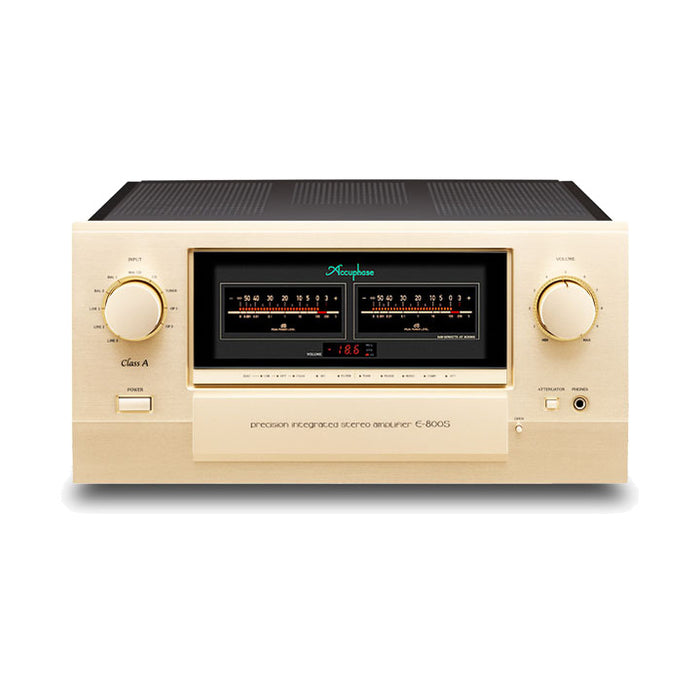 E-800S Integrated
$21,975
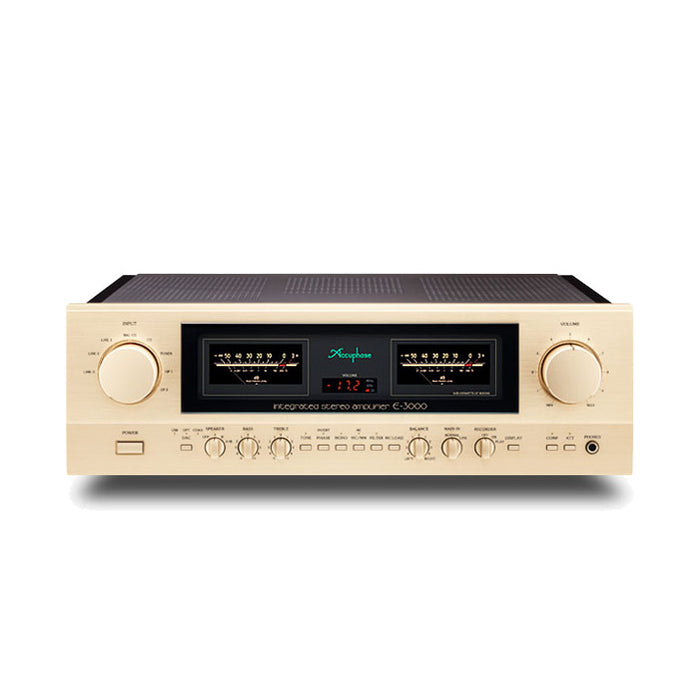 E-3000 Integrated
$8,975
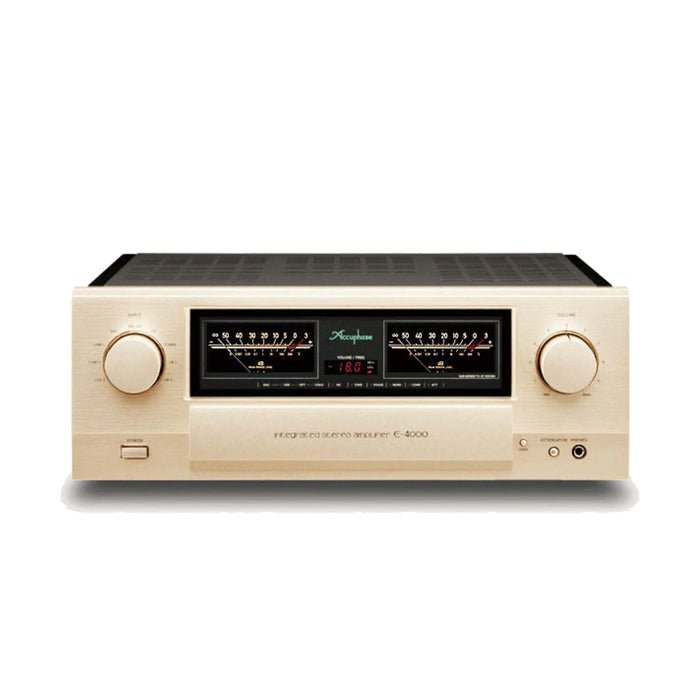 E-4000 Integrated
$13,975
 E-700 Integrated
$16,975
 DP-770 SA-CD Player
$26,575
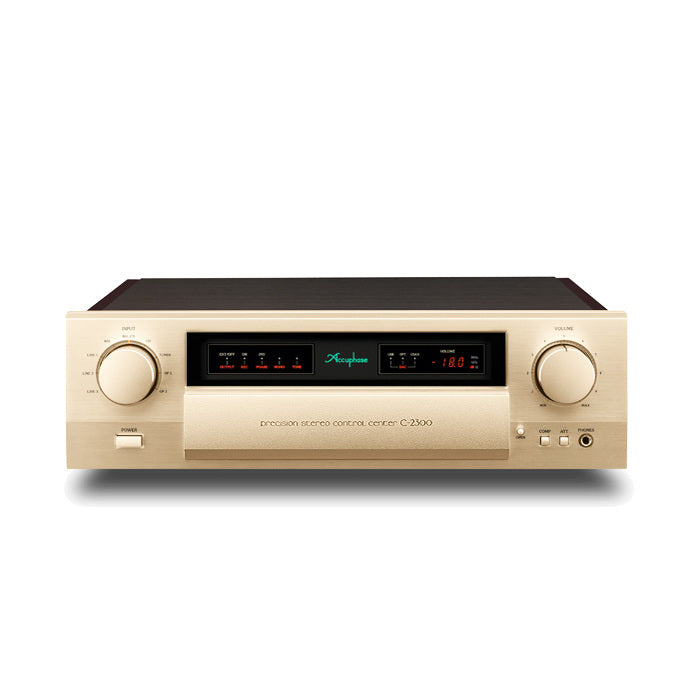 C-2300 Preamplifier
$14,975
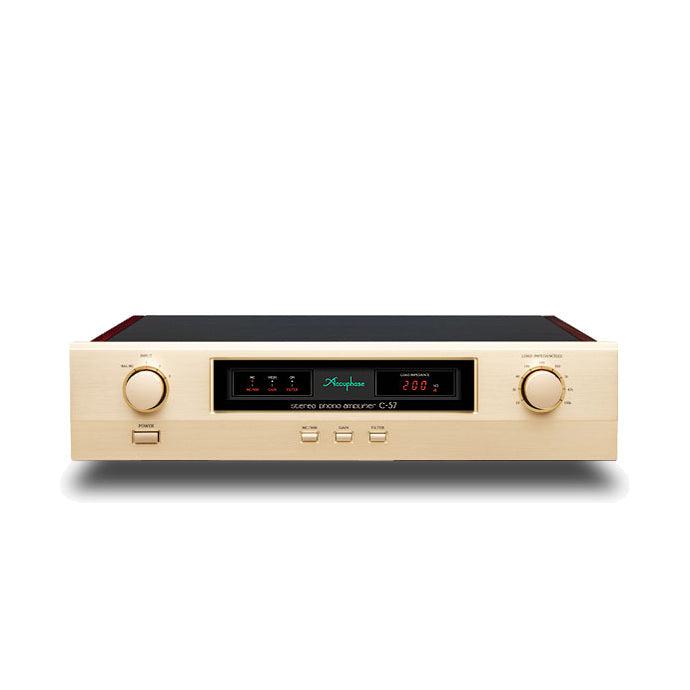 C-57 Phono Amplifier
$13,975
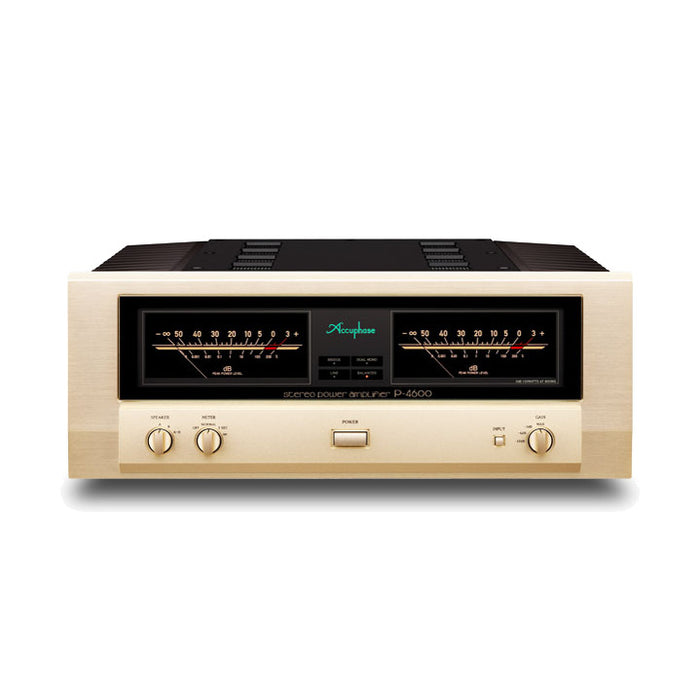 P-4600 Power Amplifier
$13,975
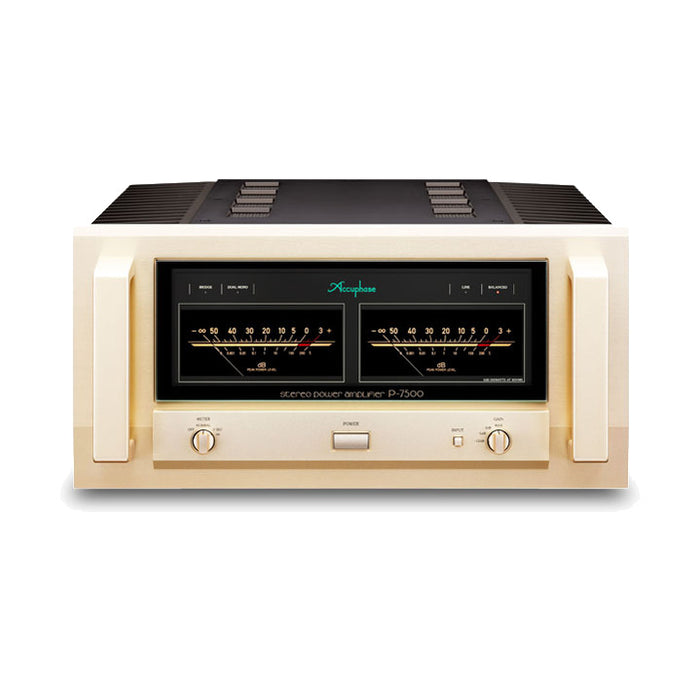 P-7500 Power Amplifier
$25,975
 A-80 Class A Power Amplifier
$26,575
 A-300 Mono Power Amplifiers (pair)
$49,950



