← Back to your LP12 build

Pearl Reference

dCS · Lina

dCS Lina Network DAC

$14,400

Signature technologiesThe dCS story

On demonstration

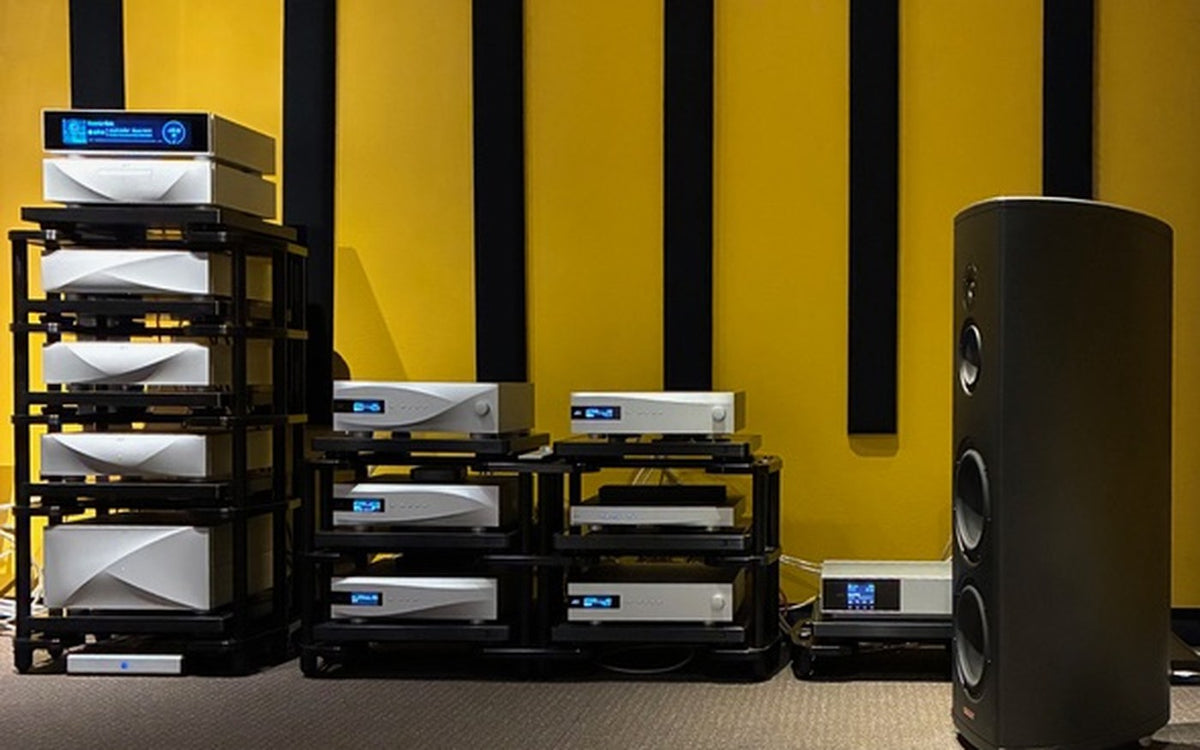
On the floor at our Portland showroom. Ask and we will set it up for you to hear.

dCS · Lina

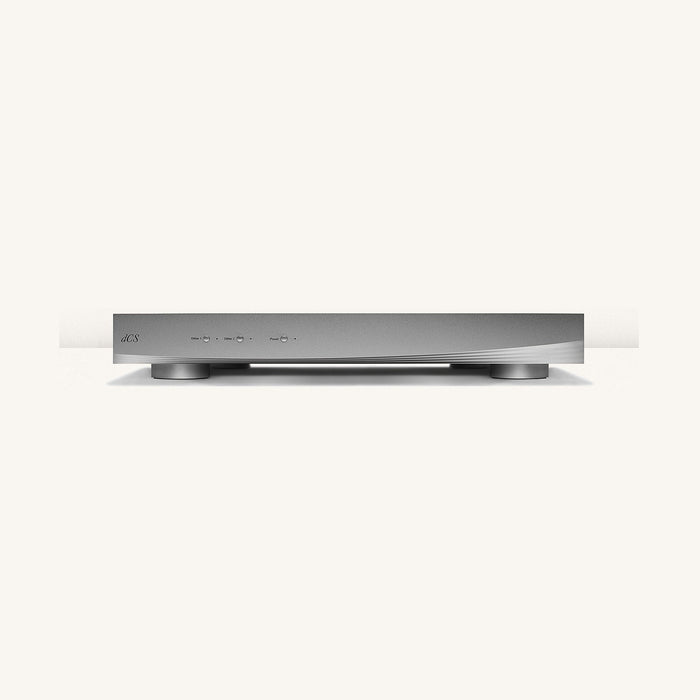
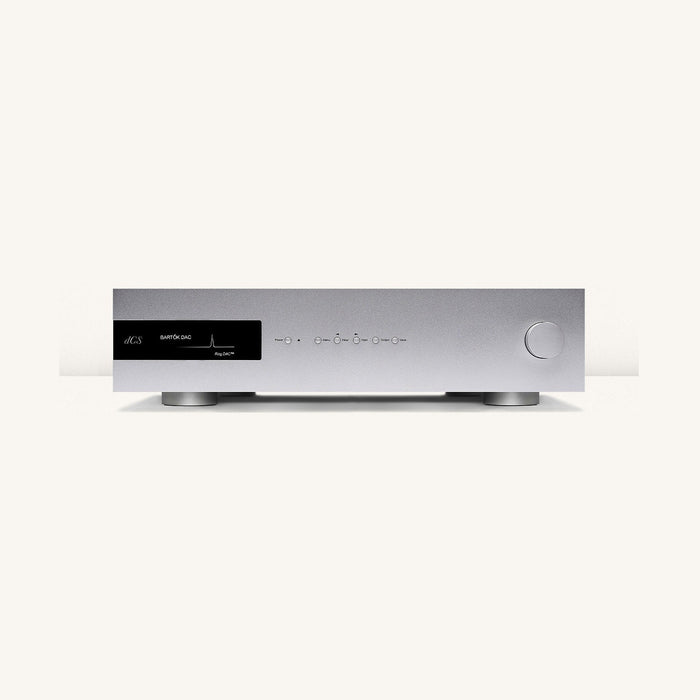
A complete dCS in half the width: the Ring DAC and Mosaic streaming in a 220 mm chassis, with a digital volume control for a power amplifier or headphone amplifier and word clock inputs for the Lina Master Clock.

Price is for the Lina Network DAC alone. The Lina Master Clock and Lina Headphone Amplifier are listed separately.

220 mm
wide (8.7 in): half the width of a Bartók
−113 dB0
residual noise, 24-bit, 20 Hz–20 kHz (dCS specification)
117 dB
A-weighted signal-to-noise measured by Hi-Fi News
7.4 kg
weight (16.3 lb)

Authorized dCS dealer · Advice and support from Pearl Audio · Trade-ins welcome

How it sounds

Spatially expansive and physically present, with density, rhythmic force and a beautiful sense of space and light. Adding the Lina Master Clock brings more dimensionality, calm and focus.

Stereophile Recommended Components 2026, Class A+.

The story

Lina arrived in 2022 as a three-box dCS system built around headphone listening, and the Network DAC is its center. The brief was a dCS source small enough for a desk without a smaller converter inside it. So the Lina carries a complete Ring DAC and Digital Processing Platform, laid out on a flex-rigid circuit board to fit a chassis 220 mm wide.

The Ring DAC is the converter dCS designs and builds itself from discrete parts instead of buying as a chip. Where a conventional ladder converter gives each bit of the signal its own current source of a different size, the Ring DAC uses a bank of equal-value sources and a different combination of them for every sample, so the small differences between them average out as a faint, steady noise instead of distortion that follows the music. The streaming section uses the StreamUnlimited Stream800 module under dCS's Mosaic software, and the whole runs from a linear supply behind an automatic voltage-switching inlet.

The Lina has grown through software. The 1.1 release in 2023 added a digital volume control, so the DAC drives a power amplifier or the Lina Headphone Amplifier directly, with full-scale output set to 0.2, 0.6, 2 or 6 V in the menu. The 2.0 release in October 2023 widened its choices: six PCM filters where there had been two, three Mapper settings, upsampling to DSDx2 as well as DSD, channel balance, and control from a dCS or other infrared remote. For headphone listening the DAC also offers crossfeed and dCS Expanse processing. All of it arrives through Mosaic, and dCS's record of adding features to hardware already in the home is part of what a Lina owner is buying.

Mark Craven reviewed the Lina DAC 2.0 for Hi-Fi News and scored it 89%, writing that "performance, meanwhile, is bang on the money"; Paul Miller's lab report measured 117 dB A-weighted signal-to-noise, distortion of 0.00019% at 1 kHz and full scale, jitter of 21 ps and a maximum balanced output of 5.91 V from a 1 Ω source impedance. Ed Selley in Hi-Fi+ called the Lina "quite astonishingly sophisticated" by any reasonable standard, and of the Lina Master Clock wrote that it leaves the overall balance of the Lina alone and simply refines it. Stereophile found the Lina DAC spatially expansive and physically present, with density and rhythmic force.

Connectivity is complete for the size. Streaming over Ethernet brings Roon Ready, Spotify Connect, AirPlay 2, UPnP, TIDAL, Qobuz, Deezer, internet radio and library playback through Mosaic. Two AES/EBU inputs accept PCM to 384 kS/s, S/PDIF is provided on BNC and RCA to 192 kS/s and Toslink to 96 kS/s, the asynchronous USB-B input takes 384 kS/s PCM and DSD128, and a USB-A port plays from a drive. Two 75 Ω BNC word clock inputs lock to the Lina Master Clock's 44.1 kHz and 48 kHz references, and a Power Link connection switches the Lina components on and off together. Outputs are one balanced XLR pair at 3 Ω and one RCA pair at 52 Ω.

Within the dCS range the Lina DAC X above it is the full-width version with a front-panel rotary control and remote, and the Bartók APEX DAC is the step to the APEX converter board, a full-size chassis and the Rossini Transport as a disc source. The Lina Network DAC is the one to choose for a desk or a compact two-channel system, and it becomes a complete dCS system with the Lina Master Clock and Lina Headphone Amplifier, all three in matching half-width chassis in black or, since 2024, silver.

We plan the Lina most often as the front end of a headphone system with the Lina Headphone Amplifier and Master Clock, and as a compact source for an integrated amplifier such as the Burmester 101 or Audio Research I/70, driving loudspeakers such as the Sonus faber Olympica I G3 or Sonetto VIII G2 or the Magico A1. Arrange an audition in our Portland showroom and ask to hear it both ways, with and without the clock.

Each technology below is explained in depth in the dCS technology library; the dCS story follows the company from radar converters in 1987 to the Varèse.

Choosing a first dCS? See Lina, Bartók and Rossini compared.

Key technologies

  • dCS Ring DAC. A bank of equal-value current sources switched under FPGA control, with a mapping algorithm that turns component tolerance into random low-level noise; the full converter on a flex-rigid board in a half-width chassis. The deep dive.
  • Digital Processing Platform. Multi-stage oversampling to DXD with switchable DSD and DSDx2 upsampling, six PCM filters and the DSD filter set; three mapper settings since Lina 2.0. The deep dive.
  • Digital volume control. Added in software; full-scale output of 0.2, 0.6, 2 or 6 V so the Lina drives a power amplifier or headphone amplifier directly. The deep dive.
  • dCS Expanse and crossfeed. Headphone processing options applied in the DAC for use with the Lina Headphone Amplifier. The deep dive.
  • Mosaic streaming. Roon Ready, Spotify Connect, AirPlay 2, UPnP, TIDAL, Qobuz, Deezer and internet radio on a StreamUnlimited Stream800 module under dCS software. The deep dive.
  • Word clock inputs. Two 75 Ω BNC inputs lock to the Lina Master Clock's 44.1 and 48 kHz references, selected automatically. The deep dive.
  • Power Link. An RJ45 link switches the Lina DAC, Master Clock and Headphone Amplifier on and off together.

Finishes

  • Silver anodized aluminum
  • Black anodized aluminum

Both finishes are the same price; silver was added to the Lina range in 2024.

Specifications
Type Half-width upsampling network DAC with digital volume control
Converter dCS Ring DAC and Digital Processing Platform on a flex-rigid PCB; three mapper settings
Sample rates / formats PCM 44.1–384 kS/s up to 24-bit; DSD64 and DSD128 (native and DoP, input dependent); FLAC, WAV, AIFF, MQA
Upsampling / filters Multi-stage DXD oversampling; DSD (2.822/3.07 MS/s) and DSDx2 (5.644/6.14 MS/s) upsampling; up to six PCM filters; four DSD filters plus Filter 5
Digital inputs 2 × AES/EBU (XLR, 44.1–384 kS/s); 1 × S/PDIF BNC and 1 × S/PDIF RCA (44.1–192 kS/s); 1 × Toslink (44.1–96 kS/s); 1 × USB-B (44.1–384 kS/s PCM, DSD and DSDx2 in asynchronous mode); 1 × USB-A for storage
Network / streaming Ethernet (RJ45); Roon Ready, Spotify Connect, AirPlay 2 (44.1/48 kS/s), UPnP, TIDAL, Qobuz, Deezer, internet radio via dCS Mosaic
Analog outputs 1 stereo pair balanced XLR (3 Ω, balance ratio better than 40 dB at 1 kHz); 1 stereo pair RCA (52 Ω); 0.2 V, 0.6 V, 2 V or 6 V rms full scale, set in the menu; 600 Ω minimum load, 10 kΩ–100 kΩ recommended
Clock inputs 2 × word clock (75 Ω BNC), locking to 44.1–192 kHz
Frequency response (Filter 1) ±0.1 dB, 10 Hz–20 kHz; −3 dB above 38 kHz at 88.2/96 kS/s, above 67 kHz at 176.4/192 kS/s, above 100 kHz at 352.8/384 kS/s
Residual noise Better than −113 dB0 (24-bit) and −96 dB0 (16-bit), 20 Hz–20 kHz unweighted, 6 V setting
Measured (Hi-Fi News lab report) 5.91 V maximum balanced output; 117 dB A-weighted S/N; 0.00019% THD at 1 kHz, 0 dBFS; 21 ps jitter; 1.0 Ω balanced source impedance
Dimensions (W × D × H) 220 × 339 × 121.5 mm (8.7 × 13.3 × 4.8 in)
Weight 7.4 kg (16.3 lb)
Power 90–127 V / 220–240 V automatic, 50/60 Hz; 30 W; Power Link synchronization with other Lina components
Finish Black or silver machined aluminum
Supplied Power cord, 2 × 0.5 m XLR cables, 2 m Ethernet cable, 0.5 m Power Link cable
Warranty 3 years parts and labor, original owner (dCS)

dCS Lina Network DAC specification sheet (dCS)

Where it sits in the range

dCS's DACs.

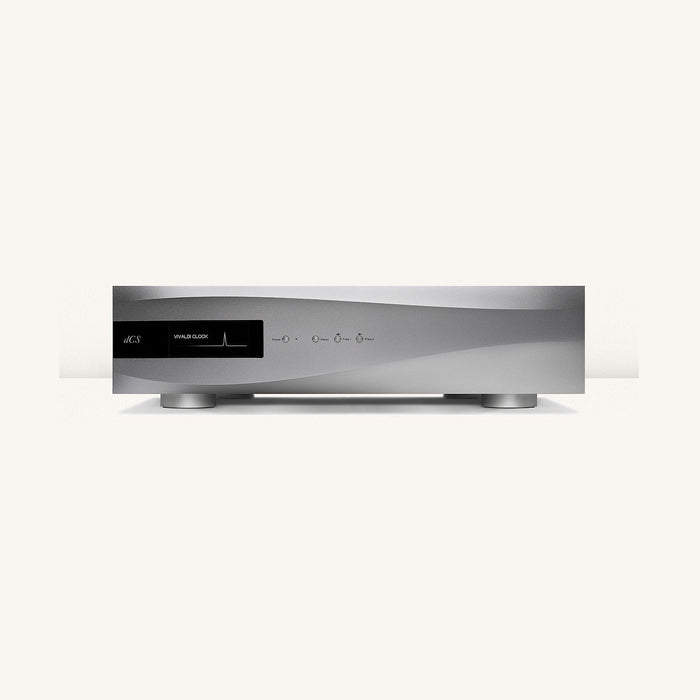
Its partners are the Lina Master Clock and Lina Headphone Amplifier.

Reviews

Plan your dCS system with Pearl Audio

Pearl Audio is an authorized dCS dealer. Arrange an audition of the Lina Network DAC in our Portland showroom, as a headphone system with the Lina Master Clock and Headphone Amplifier or driving a power amplifier directly. Call (503) 222-2599 or email sales@pearlaudio.com.

Signature technologies

The engineering behind the dCS Lina Network DAC

dCS gives its technologies names because each one solves a specific problem. Here is what each does, where it came from, why it matters in a system, and what you may hear.

The founding technologySince 1993

The Ring DAC

dCS's own converter, not a chip: a ring of 48 identical current sources switched by an FPGA, with a mapping algorithm that never uses the same source for the same bit twice, so component tolerances become faint noise rather than distortion. Read the deep diveClose

What it does

Most high-end converters use either a chip or a resistor ladder in which each bit has a fixed, binary-weighted resistor; any tolerance error in those resistors appears as distortion, and it is proportionally largest on quiet signals. The Ring DAC takes a different route. Incoming audio is oversampled and reduced to a five-bit stream running at roughly 3 or 6 MHz, and each five-bit value is expressed by switching on some of 48 equal-value current sources. The Mapper chooses a different combination of sources for every sample, following, in dCS's words, a carefully calculated set of patterns, so that no source is tied to any bit. The small mismatches between sources are therefore never repeated the same way twice: they average out as a tiny amount of random, out-of-band noise that the following filter removes, instead of locking to the signal as harmonics. The summed current is then filtered and buffered by a discrete analog stage. Because the latches, the Mapper and the filters live in dCS's own FPGA code, the converter has been refined in firmware for three decades on the same principle.

Why it matters in a system

A converter's job is hardest at the bottom of the scale, where the reverberation, the decay of a note and the acoustic of the room live, and that is exactly where ladder DACs are weakest. The Ring DAC's linearity at low level is its reason for being: dCS claims class-leading distortion particularly at lower signal levels, and independent measurements of current dCS DACs show linearity errors that do not appear until well below −130 dBFS. It is also why every dCS from the Lina to the Varèse shares one character: the same ring, at different levels of execution.

What you may hear

Low-level detail that stays intact rather than blurring into the noise, natural tone on voices and strings, and an absence of the hardness that makes digital tiring. On Stereophile's bench the Rossini APEX produced 0.00026% THD+N at full scale with linearity error negligible until below −135 dBFS, and John Atkinson concluded its measured performance "was beyond reproach".

What happens before the ringSince 1999

Upsampling, DXD and DSD, filters and Mappers

dCS raises every source to a very high rate, DXD at 352.8 or 384 kS/s or DSD at 2.8 or 5.6 MHz, and on Bartók and Rossini with the v3.0 firmware at four times the SACD rate, before the Ring DAC sees it, and leaves the listener a choice of filters and Mapper settings. The Vivaldi does this in a separate Upsampler; Rossini, Bartók and Lina do it inside the DAC. Read the deep diveClose

What it does

dCS discovered upsampling with its professional 972 digital-to-digital converter and launched the first consumer upsampler, the Purcell, in 1999. The principle has not changed: take a 44.1 kS/s CD rip or a 192 kS/s file, resample it in multiple stages to 24-bit PCM at up to 384 kS/s (DXD) or to DSD at 2.8 or 5.6 MHz, and present that to the converter, so the Ring DAC's own modulator and the analog filter have an easier job and the choice of anti-alias filter can be made deliberately. In the Vivaldi system the work is done in the Vivaldi Upsampler, a separate chassis with its own supplies that is also the system's streamer, and the result reaches the DAC over Dual AES. In Rossini, Bartók and Lina the same multi-stage oversampling runs inside the DAC on the dCS Digital Processing Platform. Six PCM filters trade image rejection against phase behavior, a DSD filter set controls out-of-band noise, and the Mapper setting chooses how the ring is driven: Map 1 and Map 3 run the Ring DAC at 5.6 or 6.1 MHz, Map 2 is the original 3 MHz design. On Bartók and Rossini the v3.0 firmware of October 2026 adds two more: Map 4, a new design that also runs at 6 MHz, and Map 5, which runs at 1.5 MHz and has the lowest ultrasonic switching noise of any Mapper. v3.0 also adds a DSDx4 upsampling option, at four times the SACD rate. dCS's advice on the Mappers is to keep whichever sounds best to you.

Why it matters in a system

Doing the processing in software rather than in a converter chip is what lets dCS improve a product after it is sold: Vivaldi 2.0 (2015–16) brought the new Mappers and DSDx2, Rossini 2.0 (2019) and Bartók 2.0 (2022) carried them down the range, and v3.0 (2026) gave Bartók and Rossini two more Mappers and DSDx4. Doing it in a separate chassis, as Vivaldi does, keeps the processors and the network board, the noisiest parts of any digital front end, away from the converter's reference and summing stages, and it lets the streaming platform be revised, as it was with the Upsampler Plus, without touching the DAC. Which output format and filter sound best is a matter for the listener and the recording; switching takes seconds in Mosaic and the dCS defaults are a sensible place to start.

What you may hear

Smoother treble and a more natural sense of space from CD-resolution material, and a presentation that can be tuned rather than taken as given. Chris Thomas wrote of Vivaldi 2.0 in hi-fi+ that it was "no minor update but rather, a new performance level entirely"; Stereophile's Jason Victor Serinus settled on Map 1 for the Rossini APEX, which he found "richest in color saturation and contrast".

The control platformSince 2019

dCS Mosaic and Mosaic ACTUS

dCS's streaming and control platform: the Mosaic app on a phone or tablet, and the Mosaic Processor firmware on the network board, bringing Roon, Qobuz, TIDAL, Spotify, Deezer, AirPlay, UPnP, radio and USB storage into one interface that also controls every setting of the DAC. Read the deep diveClose

What it does

Mosaic was launched at HIGH END Munich on May 9, 2019 for every dCS streaming product then current, as a free update to the network board. Mosaic Control is the iOS and Android app; Mosaic Processor is the firmware it talks to. Together they handle the streaming services and local libraries, and every product setting, filters, Mappers, output level, clock mode and dither among them, so that the listener can make a change and hear it from the chair. Later releases added TIDAL Connect, Qobuz Connect and Spotify Lossless. Mosaic ACTUS is the Varèse version: because every Varèse box is connected to the Core over ACTUS, the app configures the whole system from one place and pushes firmware to every chassis at once; the Varèse User Interface, a separate touch-screen chassis, is the other way in.

Why it matters in a system

A reference digital front end is used every day, and the platform is how it is used. Keeping the streaming board separate from the converter, and the software separate from the hardware, is also how dCS keeps a product current: the services change, the DAC does not.

What you may hear

Nothing of its own; Mosaic is the means of choosing what you hear, from the recording to the filter.

Headphone processingSince 2020

dCS Expanse

A patent-pending headphone mode that moves the image out of the head without the dulling of ordinary crossfeed: the stereo signal is widened first, the crossfeed is delayed, and a population-based equalization simulates the reflections of head, torso and ear. Lina, Bartók and Rossini. Read the deep diveClose

What it does

Conventional crossfeed mixes a little of each channel into the other to imitate loudspeaker listening, and in doing so it narrows the image and blunts the recording's own reverberation. Expanse widens the stereo signal before the crossfeed stage, so the recording's space survives; delays the cross-fed signal by 300 microseconds, roughly the time sound takes to travel around the head; and applies equalization derived from a large population dataset to simulate the reflections of head, torso and ear. There are two settings, the original and a gentler Expanse 2; the v3.0 firmware adds a third, Expanse 3, on the Rossini and the Bartók Headphone DAC, with a new equalization profile that dCS intends for a wider range of recordings. Because it runs in the FPGA, it adds no noise. dCS's Andy McHarg: "Expanse only affects the things it's meant to."

Why it matters in a system

Headphone listening is where a dCS source is most exposed, because there is no room to soften anything. Expanse is dCS's answer to the two complaints about headphones, the image inside the skull and the fatigue of hard-panned recordings, without the usual cost. It is why the Lina system and the Bartók APEX Headphone DAC are complete headphone front ends rather than DACs with a socket.

What you may hear

A soundstage in front of the listener rather than between the ears, with the recording's reverberation intact. John Darko wrote that, of the crossfeed implementations he had tried, none had improved the sound "while also preserving the original reverberation in a recording" until Expanse.

All dCS technologies and the company story

The dCS story

Forty years of writing its own converter: the Ring DAC, born in radar and the recording studio, and still hand-built in Cambridgeshire.

Founded 1987 in Cambridge, England (in Swavesey, Cambridgeshire, since 2009) by Mike Story · dcsaudio.com

Milestones

  1. 1987 Founded in Cambridge Data Conversion Systems, incorporated November 1986, begins work at Castle Park under founder Mike Story: a converter and signal-processing consultancy for Ferranti, Marconi Avionics and British Aerospace, specializing in radar A/D conversion.
  2. 1989 dCS 900 A 24-bit studio analog-to-digital converter and the first product with the company's Ring conversion technology; Bob Ludwig's Gateway Mastering becomes a customer.
  3. 1993 dCS 950: the first Ring DAC The company's first digital-to-analog converter, described as the world's first 24-bit DAC. Andy McHarg joins in November and writes code for it; the early 1990s also bring more than 120 bespoke converters for the BBC.
  4. 1996 Elgar The first dCS for the home, a Ring DAC styled by Allen Boothroyd and reviewed by John Atkinson in 1997. The consultancy work ends and the company moves to Great Chesterford.
  5. 1999 Purcell and Delius Purcell is the first consumer upsampler, an idea dCS discovered with the professional 972 converter in 1997; Delius is the matching DAC. The Verdi SACD transport (2001) and Verona master clock complete the first four-box system.
  6. 2007 Scarlatti The first flagship after dCS leaves professional audio: transport, DAC, upsampler and clock linked by FireWire. Paganini and the one-box Puccini (Stereophile's 2010 Digital Component of the Year) follow in 2008.
  7. 2009 David Steven, and Swavesey After the death of David Marshall Steven, who had taken the majority of the company in the mid-2000s, his son David J. Steven becomes Managing Director; dCS moves into its purpose-designed building at Swavesey, Cambridgeshire.
  8. 2012 Vivaldi Unveiled at the Hong Kong AV Show: four chassis, Dual AES in place of FireWire, a dual-mono Ring DAC, a new FPGA processing platform, auto-clocking and the first dCS network interface.dCS Vivaldi APEX DAC
  9. 2015 Rossini, and Vivaldi 2.0 Rossini puts the Vivaldi's Ring DAC into a one-box player and DAC with a matching Master Clock. Vivaldi 2.0 brings new Mappers, DSDx2 and streaming services as a free update, the pattern for every dCS since.dCS Rossini APEX DAC
  10. 2017 Vivaldi One A 250-unit thirtieth-anniversary player at HIGH END Munich: Ring DAC, transport and streamer in one chassis.
  11. 2018 Bartók A network DAC with an optional Class A headphone amplifier replaces Debussy, the 2010 computer-audio DAC that was Stereophile's 2011 Digital Component of the Year.dCS Bartók APEX DAC
  12. 2019 Mosaic, and a Queen's Award The Mosaic streaming and control platform launches at Munich for every current dCS streamer; Rossini 2.0 arrives; dCS receives the Queen's Award for Enterprise: Innovation for the Vivaldi technologies.
  13. 2020 Expanse dCS Expanse headphone processing is released in December as a Mosaic update for Bartók.
  14. 2022 Ring DAC APEX, and Lina APEX, the first hardware revision of the Ring DAC board in a decade, ships in March for Vivaldi and Rossini; the Lina headphone system (DAC, Master Clock and amplifier) arrives in May; Bartók 2.0 follows.
  15. 2023 Bartók APEX and Vivaldi Transport II Bartók APEX is Stereophile's Digital Source Component of the Year; the Vivaldi Transport II, with a new SACD mechanism, ships in November.dCS Vivaldi Transport II
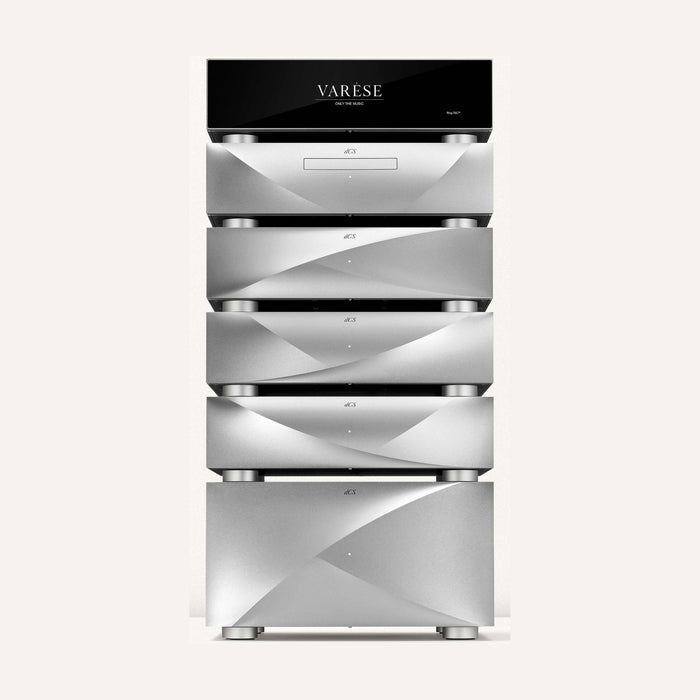
  16. 2024 Varèse Announced 7 August and first shown at the Hong Kong AV Show: the Differential Ring DAC, Mono DACs, the Core, a Master Clock and User Interface, linked by ACTUS. UK premiere in November; shipping by the end of the year.dCS Varèse Music System
  17. 2025 Varèse Transport, Lina DAC X, a King's Award The Varèse Transport launches in September; Lina DAC X debuts at Munich; dCS receives the King's Award for Enterprise: Innovation for Ring DAC APEX; Varèse is Stereophile's and The Absolute Sound's joint Overall Product of the Year.dCS Varèse Transport
  18. 2025 dCS at Pearl Audio Managing Director David Steven joins us in Portland for a dCS evening in the Pearl Audio showroom.
Read the dCS story
dCS

Data Conversion Systems was incorporated in Cambridge in November 1986 and counts 1987 as its first year. Its founder, Mike Story, an Oxford physicist with a doctorate from Imperial College, gathered a team of electronics engineers with venture backing and set up at Castle Park as a consultancy for Ferranti, Marconi Avionics and British Aerospace, specializing in the analog-to-digital conversion behind radar; work that later flew in the RAF's Harrier and Typhoon. The habit of measuring everything, and of writing the signal processing themselves rather than buying it, came from that beginning.

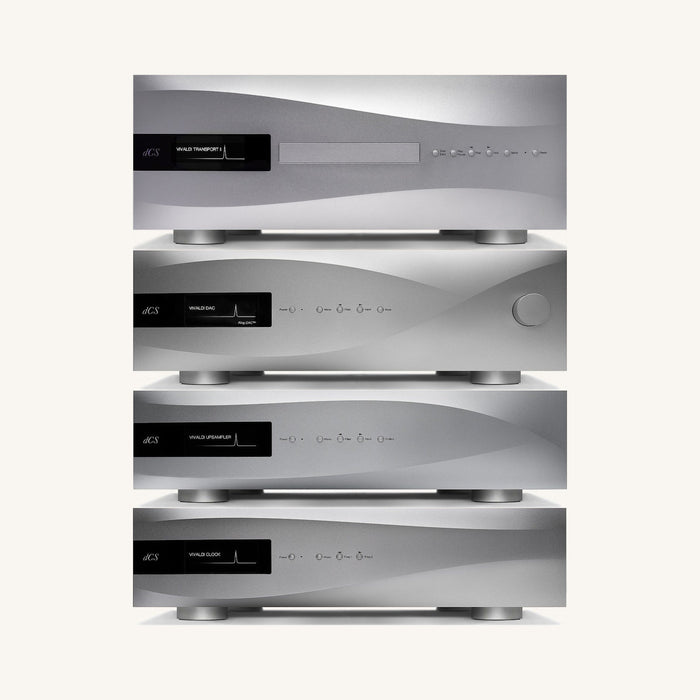
Audio followed. The dCS 900, begun in 1988 and released in 1989, was a 24-bit studio analog-to-digital converter and the first product to carry the company's Ring conversion idea; Bob Ludwig of Gateway Mastering was, in his words, a very good customer. In the early 1990s dCS built more than 120 bespoke converters and a custom clocking system for the BBC's London radio center, and in 1993 the dCS 950 became the company's first digital-to-analog converter, built on the Ring DAC. Andy McHarg joined that November and wrote code for it; he is Technical Director today. The Elgar of 1996, styled by Allen Boothroyd, brought the Ring DAC into the home; the consultancy work ended and the company moved to Great Chesterford, south of Cambridge. The 972 digital-to-digital converter of 1997 was where dCS discovered upsampling, and the Purcell of 1999 was the first consumer upsampler, followed by the Delius DAC, the Verdi SACD transport of 2001 and the Verona master clock: the four-box dCS system, in its first form.

Ownership changed in the mid-2000s. Mike Story stepped back from day-to-day leadership, David Marshall Steven took the majority of the company, and dCS left professional audio to concentrate on the home; the Scarlatti of 2007 was the first flagship of that era, and the Paganini range and the one-box Puccini of 2008, the latter Stereophile's 2010 Digital Component of the Year, made the company's name with a wider audience. When David Marshall Steven died in 2009, his son David J. Steven became Managing Director, a post he still holds, and the company moved into its purpose-designed building at Swavesey, where every unit is still hand-assembled. The Debussy of 2010 was dCS's first computer-audio DAC and Stereophile's 2011 Digital Component of the Year.

Vivaldi, unveiled at the Hong Kong AV Show in August 2012, defined the modern dCS: a transport, a DAC, an upsampler and a master clock, each in its own chassis, with Dual AES in place of FireWire, a dual-mono Ring DAC, a new FPGA processing platform and the company's first network interface. Rossini of 2015 put the same Ring DAC into a one-box player and DAC with a matching clock; Vivaldi 2.0 the same year showed that a dCS could be remade in software, with new Mappers and DSDx2 arriving as a free update. The thirtieth anniversary brought the Vivaldi One in 2017; Bartók followed in 2018, Mosaic, the company's streaming and control platform, in 2019 with a Queen's Award for Enterprise in Innovation the same year, and Expanse headphone processing in 2020.

The current generation began in March 2022 with Ring DAC APEX, the first hardware revision of the Ring DAC board in a decade, and the Lina headphone system the same spring; Bartók APEX and the Vivaldi Transport II came in 2023. On August 7, 2024, dCS announced Varèse: the Differential Ring DAC with twice the current sources, a Mono DAC for each channel, a Core that does all the processing, and ACTUS, a single cable to each box carrying audio, control and the Tomix clock. It was first shown in Hong Kong two days later, premiered in the UK that November, won Stereophile's and The Absolute Sound's joint Overall Product of the Year for 2025, and gained its own Transport in September 2025, the year the company received a King's Award for Enterprise in Innovation for APEX and launched the full-width Lina DAC X. dCS remains privately held by the Steven family, with Andy McHarg and Chris Hales, Product Development Director since 1998, still on the board. In David Steven's words, "everything is in service of the music and bringing that moment to people."
The complete dCS story and technology library

dCS at Pearl Audio

Pearl Audio is an authorized dCS dealer in Portland. Each step in the range can be compared here by appointment, from the Lina Network DAC and Master Clock to the Varèse Music System, and we generally hold several dCS events at Pearl Audio each year, often with the dCS team in the room. The Rossini, Vivaldi and Varèse Music Systems are compared box by box on our dCS music systems page. Ask us about installation.

Our dCS specialist

Talk to Connor about the Lina Network DAC

Connor is the person at Pearl Audio who knows dCS best. Ask him how this piece compares with the steps on either side of it, and what it needs around it.

Ask Connor about this piece

The Pearl Audio experience

How we work with you

A system at this level should be heard, thoughtfully matched, and properly set up. From the first audition to long-term ownership, you work with the same people, in person.

  1. 01

    Listen first

    Hear the Lina Network DAC by appointment in one of our two purpose-designed demonstration rooms, with your own music and time to compare without pressure.

  2. 02

    Installation

    Ask us about installation, and about placement, connections, ventilation and system configuration.

  3. 03

    Support for as long as you own it

    We support everything we sell for as long as you own it, whether the answer comes by phone, in the shop, or through factory service.

  4. 04

    A path for what comes next

    Trade-in assistance and qualifying 100% Trade-Up options give you flexibility when your listening priorities or your system change.

Search