← Back to your LP12 build

Pearl Reference

dCS · Rossini

dCS Rossini Master Clock

$12,100

Signature technologiesThe dCS story

On demonstrationIn stock

On the floor at our Portland showroom. Ask and we will set it up for you to hear. New and sealed units are in stock.

dCS · Rossini

The timing reference for a Rossini or Bartók system, in a chassis that does nothing else: two crystal oscillators, one for each family of sample rates, three buffered word clock outputs, and accuracy better than ±1 ppm as shipped, typically ±0.1 ppm once stabilized.

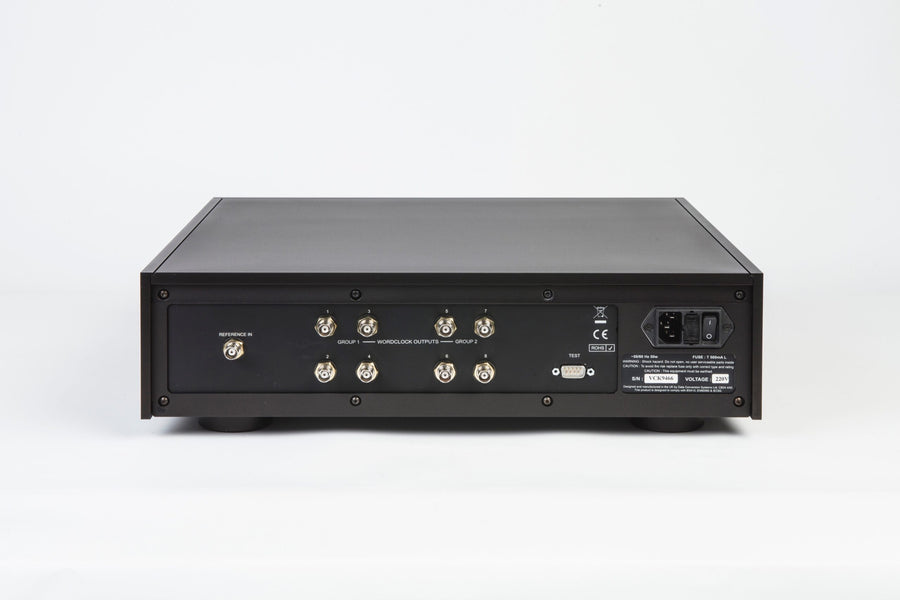
Connects to any dCS DAC, player or transport with word clock inputs; two 75 Ω BNC cables are needed for a DAC, a third for a transport.

±0.1 ppm
typical accuracy when shipped and stabilized
3
independently buffered word clock outputs, 75 Ω BNC
1 min
typical start-up time to rated accuracy
8.3 kg
weight (18.3 lb)

Authorized dCS dealer · Advice and support from Pearl Audio · Trade-ins welcome

The story

Every digital-to-analog converter keeps time. Each sample has to be converted at exactly the right instant, and the clock that names that instant decides how precisely the music is put back together. When the timing wavers, an error engineers call jitter, the first things to blur are the smallest: the low-level cues that place instruments in a space.

A dCS DAC's internal clock is already very good, but it must do two jobs at once: run the converter and lock to whatever source is feeding it. A master clock separates the two. The Rossini Master Clock generates the 44.1 kHz and 48 kHz word clock references on its own, in a chassis with nothing else in it, and the DAC and transport each lock to that reference. The whole front end then runs from one stable, low-noise source of time, instead of each box negotiating with the next. dCS has built its systems this way since the Elgar and Verona of the 1990s, and the Rossini Master Clock is the version matched to Rossini and Bartók.

Inside are two crystal oscillators, one for the 44.1 kHz family of sample rates and one for the 48 kHz family, so neither has to be derived from the other. The crystals are pre-aged and individually calibrated across a wide temperature range, and a microcontroller applies smooth frequency correction as the chassis temperature changes. dCS says this approach gives a more stable result than an oven-controlled oscillator or even an atomic reference. Multi-stage regulation keeps the clock and PLL circuitry isolated from digital interference, and the chassis is the same aerospace-grade machined aluminum with tuned damping panels as the Rossini DAC, 64 mm high.

There are three outputs, each independently buffered, on 75 Ω BNC connectors: the first fixed at 44.1 kHz, the second at 48 kHz, and the third at 44.1 kHz by default and switchable to 48 kHz over RS232. A Rossini or Bartók DAC takes the first two on its word clock inputs and chooses between them automatically as the sample rate of the music changes; the third feeds a Rossini Transport, which runs in the 44.1 kHz family for CD and SACD.

Accuracy is better than ±1 ppm as shipped over an ambient range of 10 to 30°C, and typically ±0.1 ppm once stabilized. The clock reaches its rated accuracy about a minute after switch-on, and dCS recommends leaving it powered; it draws 3 W.

The effect of a master clock is consistent across reviews. Chris Binns, reviewing the Rossini DAC and Clock for HIFICRITIC, heard more detail, air and space with the clock in place, and wrote that the confidence it brings to a performance "will be difficult to live without". What Hi-Fi? found that adding the Master Clock to an already superb DAC lifts performance by a level or two, with "no doubting the increase in precision, solidity or transparency". John Atkinson used the Rossini Clock throughout his Stereophile review of the Rossini Player and called the pair the best sound from digital he had heard in his room at that time. None of these reviewers describes a change in tonal balance; what they describe is a more stable image, quieter backgrounds and a firmer sense of the recorded space, which is what a clock is designed to deliver.

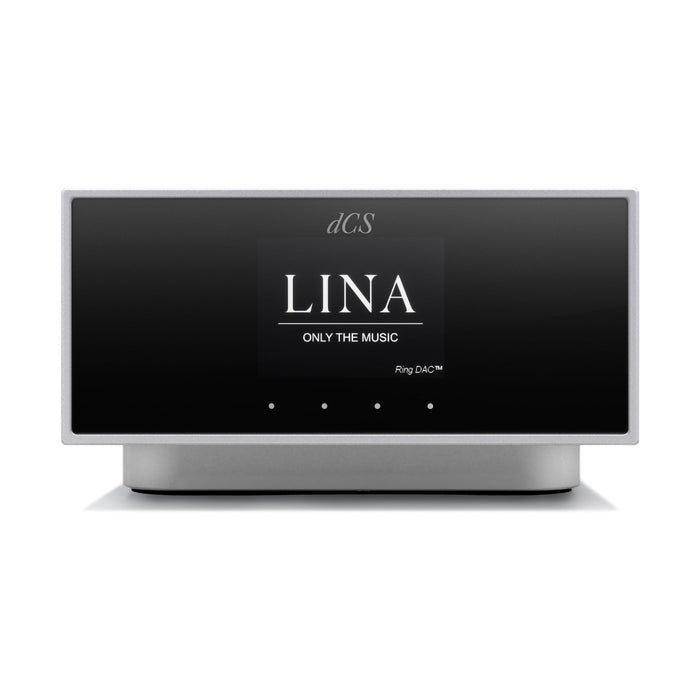
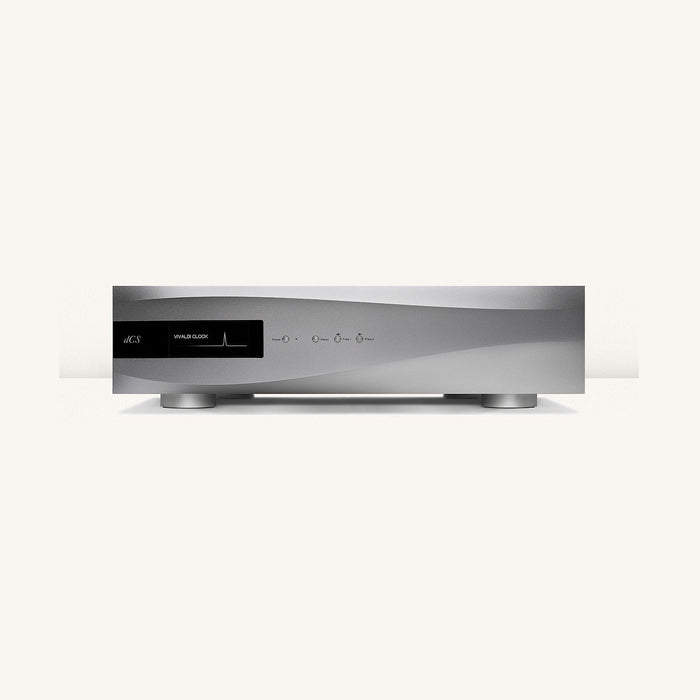
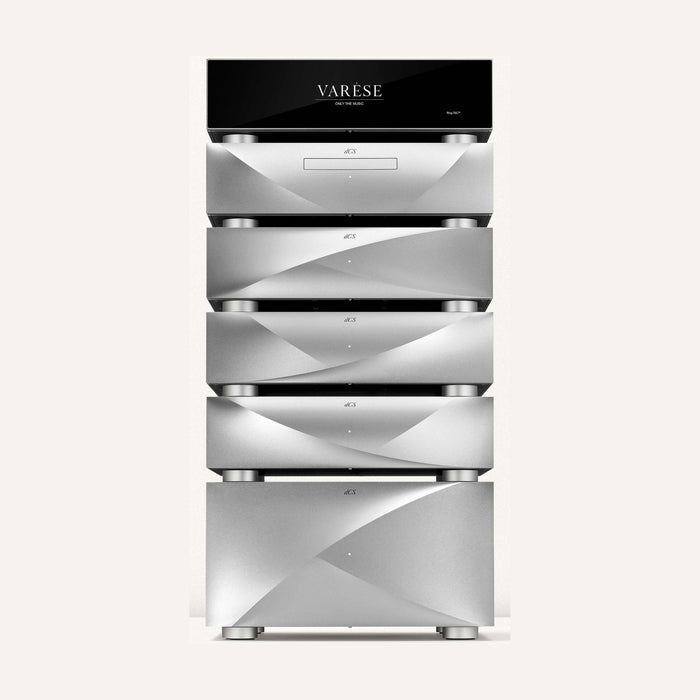
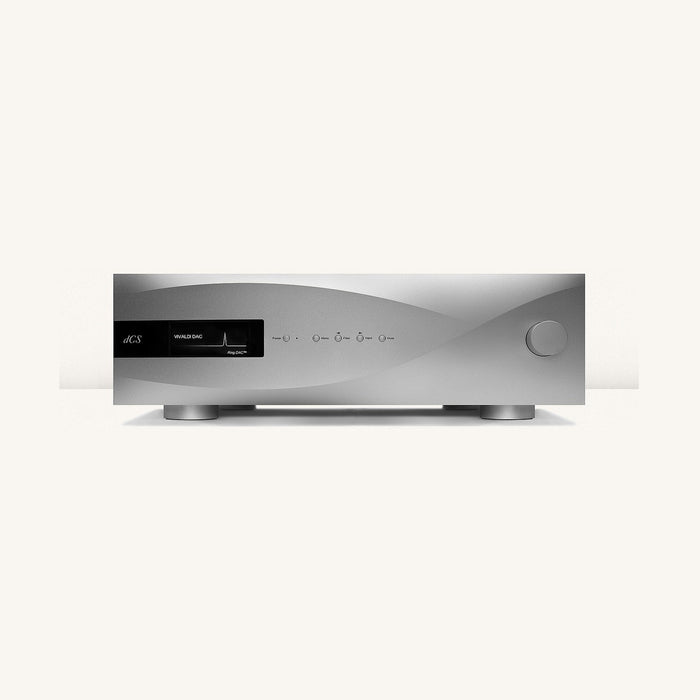
In the dCS range the Lina Master Clock below it is a half-width unit with two outputs for the Lina system, and the Vivaldi Master Clock above it adds more outputs and dither options for a Vivaldi Music System; the Varèse system carries its clock over ACTUS and needs no word clock cables. The Rossini Master Clock is the right choice for a Rossini APEX DAC or Rossini APEX Player, for a Bartók APEX DAC, and for any Rossini system that includes the Rossini Transport.

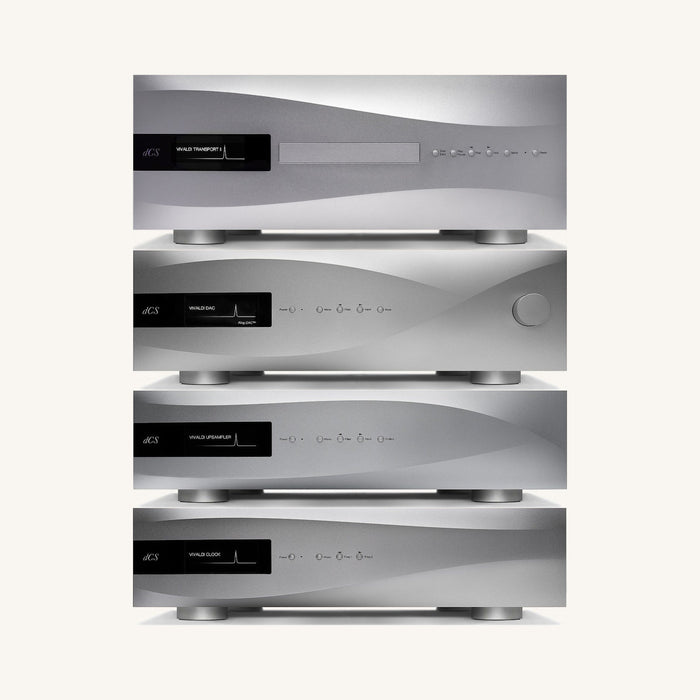
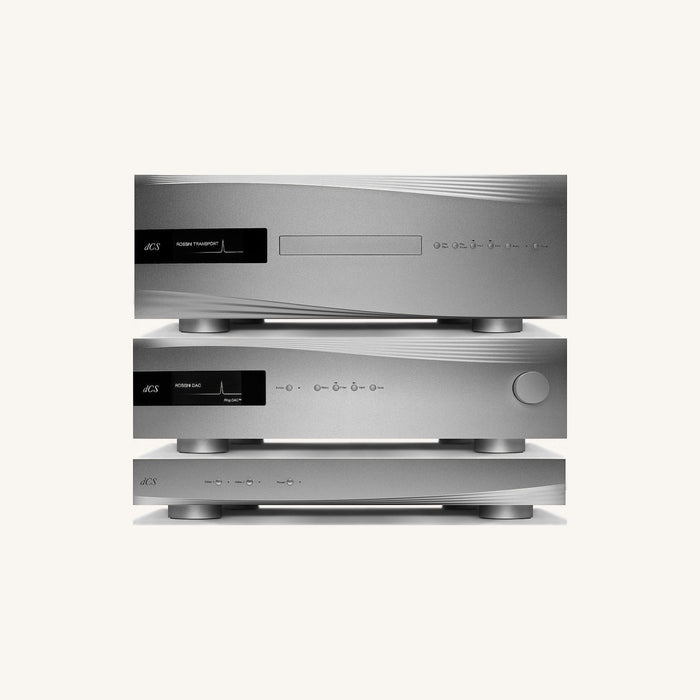
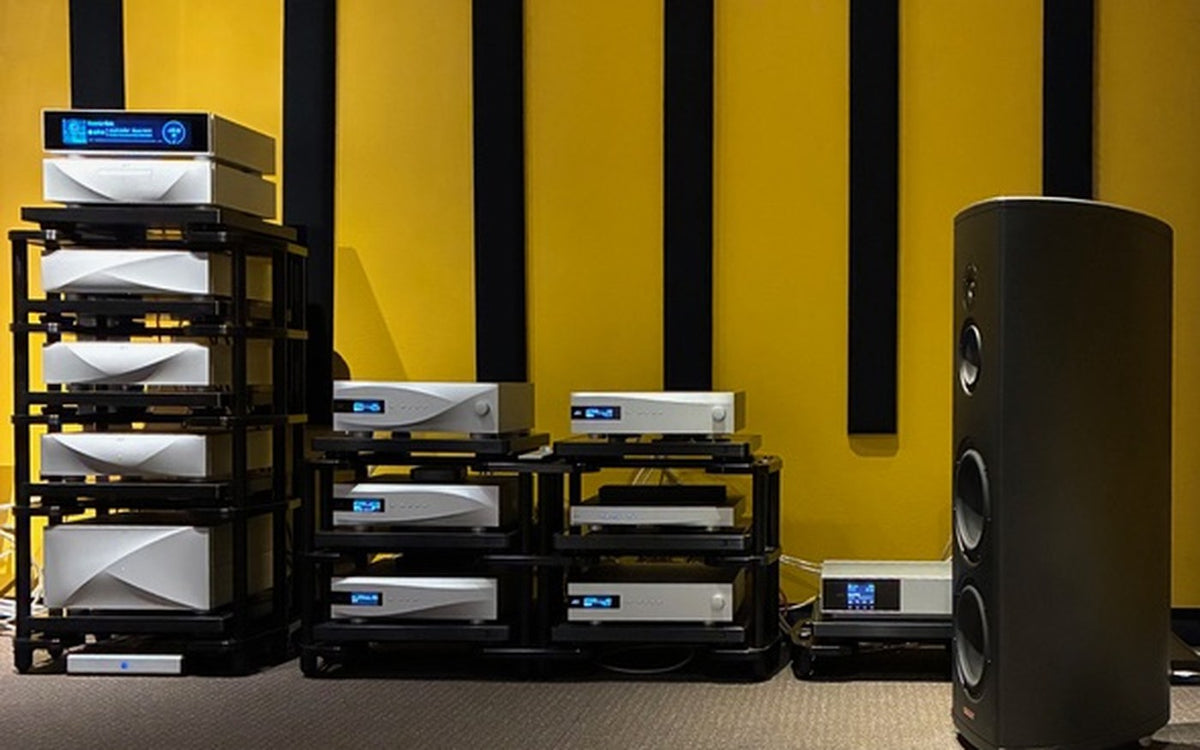
We plan the Rossini Master Clock as part of a Rossini DAC and Transport system, stacked on an HRS rack with the clock between the two, and it is the usual addition for Bartók owners who want the last step before moving to Rossini. Those systems most often run into Boulder 1100-series, Burmester 216 or 218, or Audio Research Reference amplification, with Magico S-series or Sonus faber Amati G5 and Stradivari G2 loudspeakers. Arrange an audition in our Portland showroom and ask us to switch the clock in and out while you listen, which is the only way to judge what it does. Owners often hear the difference in their own system before deciding, on a trial we arrange, and most of them go on to add it.

Each technology below is explained in depth in the dCS technology library; the dCS story follows the company from radar converters in 1987 to the Varèse.

Part of the Rossini Music System, explained box by box there and compared with the Vivaldi and Varèse on the dCS music systems page. The Rossini Master Clock is also the clock we pair with Bartók in the Bartók Music System.

Key technologies

  • Dual crystal oscillators. One for the 44.1 kHz family and one for the 48 kHz family, so neither reference is derived from the other.
  • Microcontroller temperature correction. Pre-aged crystals, individually calibrated across temperature, with smooth frequency correction applied as the chassis warms; dCS's alternative to an oven-controlled oscillator.
  • Three buffered outputs. Independently buffered 75 Ω BNC outputs: 44.1 kHz, 48 kHz and a third at 44.1 kHz switchable to 48 kHz over RS232.
  • Automatic family selection in the DAC. A Rossini or Bartók DAC takes both references and switches to the one that matches the incoming sample rate.
  • Multi-stage regulation. Clock and PLL circuitry isolated from digital interference by separate regulated supplies. The deep dive.
  • Machined aluminum chassis. Aerospace-grade aluminum with tuned acoustic damping panels, 64 mm high, matching the Rossini DAC and Transport.

Finishes

  • Silver anodized aluminum
  • Black anodized aluminum

Both finishes are the same price.

Specifications
Type Class 1 master clock (word clock generator)
Clock frequencies 44.1 kHz and 48 kHz
Outputs 3 independently buffered word clock outputs on 75 Ω BNC: output 1 fixed at 44.1 kHz; output 2 fixed at 48 kHz; output 3 at 44.1 kHz, switchable over RS232
Accuracy Better than ±1 ppm when shipped, over an ambient range of 10–30°C; typically ±0.1 ppm when shipped and stabilized
Start-up time Typically 1 minute to rated accuracy
Oscillators Two pre-aged, individually calibrated crystal oscillators with microcontroller temperature correction
Control RS232 (power and output 3 frequency); front-panel buttons
Dimensions (W × D × H) 444 × 435 × 64 mm (17.5 × 17.2 × 2.6 in); allow extra depth for connectors
Weight 8.3 kg (18.3 lb)
Power Factory set to 100, 115/120, 220 or 230/240 V, 49–62 Hz; 3 W typical, 4 W maximum
Finish Silver or black anodized aluminum
Compatible with Rossini APEX DAC and Player, Rossini Transport, Bartók APEX DAC and Headphone DAC, and any component with a 75 Ω word clock input
Warranty 3 years parts and labor, original owner (dCS)

dCS Rossini product page (Master Clock figures from the dCS Rossini Clock data sheet)

Where it sits in the range

dCS's word clocks.

  • dCS Lina Master Clock: half-width, two outputs (44.1 and 48 kHz), for Lina and Bartók
  • dCS Rossini Master Clock (this model)
  • dCS Vivaldi Master Clock: the reference for Vivaldi Music Systems, with more outputs and dither options

It clocks the Rossini APEX DAC, Rossini APEX Player, Rossini Transport and Bartók APEX DAC.

Reviews

Plan your dCS system with Pearl Audio

Pearl Audio is an authorized dCS dealer. Arrange an audition of the Rossini Master Clock with a Rossini or Bartók DAC in our Portland showroom, and ask us to switch it in and out while you listen. Call (503) 222-2599 or email sales@pearlaudio.com.

Signature technologies

The engineering behind the dCS Rossini Master Clock

dCS gives its technologies names because each one solves a specific problem. Here is what each does, where it came from, why it matters in a system, and what you may hear.

Timing in its own boxSince 2003

Master clocks and word clock

Every dCS DAC accepts an external word clock, and every dCS system has a matching Master Clock: a reference in its own chassis, with its own supplies, that the DAC, upsampler and transport all lock to, so every sample is converted at the instant the recording intended. Read the deep diveClose

What it does

A digital-to-analog converter must do two things with time: run its own conversion, and stay locked to whatever source is feeding it. dCS separates them. The Master Clock generates the 44.1 kHz and 48 kHz families of word clock from two separate crystal oscillators, so neither is derived from the other, in a chassis that holds nothing else. The DAC's internal clock still times conversion but is phase-locked to the external reference, adjusting its frequency over time to match it, and in auto-clocking mode the DAC chooses the 44.1 or 48 kHz reference to match the incoming sample rate without a menu change. The crystals are pre-aged and individually calibrated across temperature in dCS's environmental chamber, with a microcontroller applying smooth correction as the chassis warms; dCS argues this is more stable in practice than an oven-controlled or atomic reference, because what matters to a DAC is short-term stability and low phase noise rather than absolute frequency to many decimal places. A switchable dither adds tiny random timing variations so the DAC's phase detector keeps working in its least sensitive region; it is filtered out before the output.

Why it matters in a system

Any irregularity in sample timing at the converter, jitter, produces sidebands around every tone and smears energy into a raised noise floor, which blurs the low-level cues that define space and texture. A good oscillator kept away from processors, network boards, display drivers and heat is better than a good oscillator inside the DAC, and in a multi-box system a shared reference settles which box is master: none of them. The Rossini Master Clock has three outputs, enough for a DAC and a transport; the Vivaldi Master Clock has eight, in two groups that can run at different rates, plus an input for a 1, 5 or 10 MHz atomic or GPS standard. In Varèse the word clock cables disappear and the timing travels over ACTUS.

What you may hear

The clock does not change a dCS DAC's character; it sharpens the focus of each instrument and holds the recorded acoustic steady, so the image does not shift with volume. Most Rossini owners add the Master Clock sooner or later, and in Portland we demonstrate it by switching it in and out.

All dCS technologies and the company story

The dCS story

Forty years of writing its own converter: the Ring DAC, born in radar and the recording studio, and still hand-built in Cambridgeshire.

Founded 1987 in Cambridge, England (in Swavesey, Cambridgeshire, since 2009) by Mike Story · dcsaudio.com

Milestones

  1. 1987 Founded in Cambridge Data Conversion Systems, incorporated November 1986, begins work at Castle Park under founder Mike Story: a converter and signal-processing consultancy for Ferranti, Marconi Avionics and British Aerospace, specializing in radar A/D conversion.
  2. 1989 dCS 900 A 24-bit studio analog-to-digital converter and the first product with the company's Ring conversion technology; Bob Ludwig's Gateway Mastering becomes a customer.
  3. 1993 dCS 950: the first Ring DAC The company's first digital-to-analog converter, described as the world's first 24-bit DAC. Andy McHarg joins in November and writes code for it; the early 1990s also bring more than 120 bespoke converters for the BBC.
  4. 1996 Elgar The first dCS for the home, a Ring DAC styled by Allen Boothroyd and reviewed by John Atkinson in 1997. The consultancy work ends and the company moves to Great Chesterford.
  5. 1999 Purcell and Delius Purcell is the first consumer upsampler, an idea dCS discovered with the professional 972 converter in 1997; Delius is the matching DAC. The Verdi SACD transport (2001) and Verona master clock complete the first four-box system.
  6. 2007 Scarlatti The first flagship after dCS leaves professional audio: transport, DAC, upsampler and clock linked by FireWire. Paganini and the one-box Puccini (Stereophile's 2010 Digital Component of the Year) follow in 2008.
  7. 2009 David Steven, and Swavesey After the death of David Marshall Steven, who had taken the majority of the company in the mid-2000s, his son David J. Steven becomes Managing Director; dCS moves into its purpose-designed building at Swavesey, Cambridgeshire.
  8. 2012 Vivaldi Unveiled at the Hong Kong AV Show: four chassis, Dual AES in place of FireWire, a dual-mono Ring DAC, a new FPGA processing platform, auto-clocking and the first dCS network interface.dCS Vivaldi APEX DAC
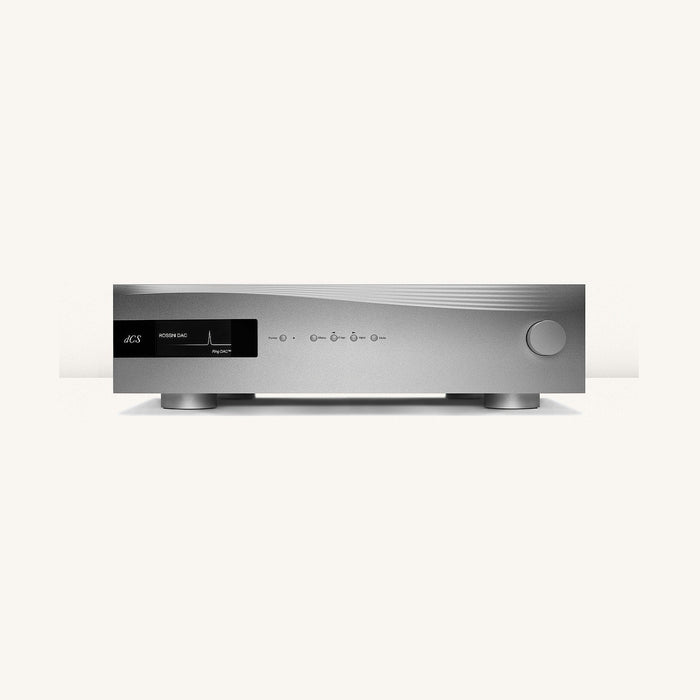
  9. 2015 Rossini, and Vivaldi 2.0 Rossini puts the Vivaldi's Ring DAC into a one-box player and DAC with a matching Master Clock. Vivaldi 2.0 brings new Mappers, DSDx2 and streaming services as a free update, the pattern for every dCS since.dCS Rossini APEX DAC
  10. 2017 Vivaldi One A 250-unit thirtieth-anniversary player at HIGH END Munich: Ring DAC, transport and streamer in one chassis.
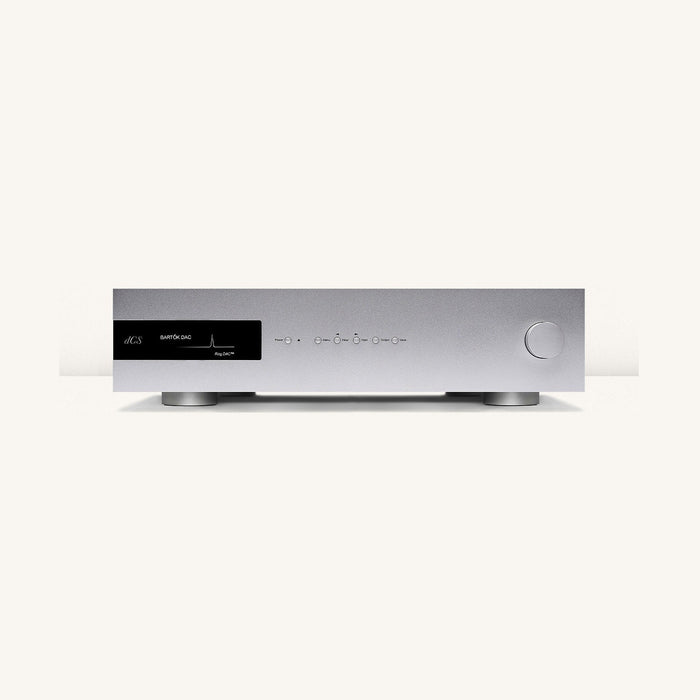
  11. 2018 Bartók A network DAC with an optional Class A headphone amplifier replaces Debussy, the 2010 computer-audio DAC that was Stereophile's 2011 Digital Component of the Year.dCS Bartók APEX DAC
  12. 2019 Mosaic, and a Queen's Award The Mosaic streaming and control platform launches at Munich for every current dCS streamer; Rossini 2.0 arrives; dCS receives the Queen's Award for Enterprise: Innovation for the Vivaldi technologies.
  13. 2020 Expanse dCS Expanse headphone processing is released in December as a Mosaic update for Bartók.
  14. 2022 Ring DAC APEX, and Lina APEX, the first hardware revision of the Ring DAC board in a decade, ships in March for Vivaldi and Rossini; the Lina headphone system (DAC, Master Clock and amplifier) arrives in May; Bartók 2.0 follows.dCS Lina Network DAC
  15. 2023 Bartók APEX and Vivaldi Transport II Bartók APEX is Stereophile's Digital Source Component of the Year; the Vivaldi Transport II, with a new SACD mechanism, ships in November.dCS Vivaldi Transport II
  16. 2024 Varèse Announced 7 August and first shown at the Hong Kong AV Show: the Differential Ring DAC, Mono DACs, the Core, a Master Clock and User Interface, linked by ACTUS. UK premiere in November; shipping by the end of the year.dCS Varèse Music System
  17. 2025 Varèse Transport, Lina DAC X, a King's Award The Varèse Transport launches in September; Lina DAC X debuts at Munich; dCS receives the King's Award for Enterprise: Innovation for Ring DAC APEX; Varèse is Stereophile's and The Absolute Sound's joint Overall Product of the Year.dCS Varèse Transport
  18. 2025 dCS at Pearl Audio Managing Director David Steven joins us in Portland for a dCS evening in the Pearl Audio showroom.
Read the dCS story
dCS

Data Conversion Systems was incorporated in Cambridge in November 1986 and counts 1987 as its first year. Its founder, Mike Story, an Oxford physicist with a doctorate from Imperial College, gathered a team of electronics engineers with venture backing and set up at Castle Park as a consultancy for Ferranti, Marconi Avionics and British Aerospace, specializing in the analog-to-digital conversion behind radar; work that later flew in the RAF's Harrier and Typhoon. The habit of measuring everything, and of writing the signal processing themselves rather than buying it, came from that beginning.

Audio followed. The dCS 900, begun in 1988 and released in 1989, was a 24-bit studio analog-to-digital converter and the first product to carry the company's Ring conversion idea; Bob Ludwig of Gateway Mastering was, in his words, a very good customer. In the early 1990s dCS built more than 120 bespoke converters and a custom clocking system for the BBC's London radio center, and in 1993 the dCS 950 became the company's first digital-to-analog converter, built on the Ring DAC. Andy McHarg joined that November and wrote code for it; he is Technical Director today. The Elgar of 1996, styled by Allen Boothroyd, brought the Ring DAC into the home; the consultancy work ended and the company moved to Great Chesterford, south of Cambridge. The 972 digital-to-digital converter of 1997 was where dCS discovered upsampling, and the Purcell of 1999 was the first consumer upsampler, followed by the Delius DAC, the Verdi SACD transport of 2001 and the Verona master clock: the four-box dCS system, in its first form.

Ownership changed in the mid-2000s. Mike Story stepped back from day-to-day leadership, David Marshall Steven took the majority of the company, and dCS left professional audio to concentrate on the home; the Scarlatti of 2007 was the first flagship of that era, and the Paganini range and the one-box Puccini of 2008, the latter Stereophile's 2010 Digital Component of the Year, made the company's name with a wider audience. When David Marshall Steven died in 2009, his son David J. Steven became Managing Director, a post he still holds, and the company moved into its purpose-designed building at Swavesey, where every unit is still hand-assembled. The Debussy of 2010 was dCS's first computer-audio DAC and Stereophile's 2011 Digital Component of the Year.

Vivaldi, unveiled at the Hong Kong AV Show in August 2012, defined the modern dCS: a transport, a DAC, an upsampler and a master clock, each in its own chassis, with Dual AES in place of FireWire, a dual-mono Ring DAC, a new FPGA processing platform and the company's first network interface. Rossini of 2015 put the same Ring DAC into a one-box player and DAC with a matching clock; Vivaldi 2.0 the same year showed that a dCS could be remade in software, with new Mappers and DSDx2 arriving as a free update. The thirtieth anniversary brought the Vivaldi One in 2017; Bartók followed in 2018, Mosaic, the company's streaming and control platform, in 2019 with a Queen's Award for Enterprise in Innovation the same year, and Expanse headphone processing in 2020.

The current generation began in March 2022 with Ring DAC APEX, the first hardware revision of the Ring DAC board in a decade, and the Lina headphone system the same spring; Bartók APEX and the Vivaldi Transport II came in 2023. On August 7, 2024, dCS announced Varèse: the Differential Ring DAC with twice the current sources, a Mono DAC for each channel, a Core that does all the processing, and ACTUS, a single cable to each box carrying audio, control and the Tomix clock. It was first shown in Hong Kong two days later, premiered in the UK that November, won Stereophile's and The Absolute Sound's joint Overall Product of the Year for 2025, and gained its own Transport in September 2025, the year the company received a King's Award for Enterprise in Innovation for APEX and launched the full-width Lina DAC X. dCS remains privately held by the Steven family, with Andy McHarg and Chris Hales, Product Development Director since 1998, still on the board. In David Steven's words, "everything is in service of the music and bringing that moment to people."
The complete dCS story and technology library

dCS at Pearl Audio

Pearl Audio is an authorized dCS dealer in Portland. Each step in the range can be compared here by appointment, from the Lina Network DAC and Master Clock to the Varèse Music System, and we generally hold several dCS events at Pearl Audio each year, often with the dCS team in the room. The Rossini, Vivaldi and Varèse Music Systems are compared box by box on our dCS music systems page. Ask us about installation.

Our dCS specialist

Talk to Connor about the Rossini Master Clock

Connor is the person at Pearl Audio who knows dCS best. Ask him how this piece compares with the steps on either side of it, and what it needs around it.

Ask Connor about this piece

The Pearl Audio experience

How we work with you

A system at this level should be heard, thoughtfully matched, and properly set up. From the first audition to long-term ownership, you work with the same people, in person.

  1. 01

    Listen first

    Hear the Rossini Master Clock by appointment in one of our two purpose-designed demonstration rooms, with your own music and time to compare without pressure.

  2. 02

    Installation

    Ask us about installation, and about placement, connections, ventilation and system configuration.

  3. 03

    Support for as long as you own it

    We support everything we sell for as long as you own it, whether the answer comes by phone, in the shop, or through factory service.

  4. 04

    A path for what comes next

    Trade-in assistance and qualifying 100% Trade-Up options give you flexibility when your listening priorities or your system change.

Search