Pearl Reference

dCS · Vivaldi

dCS Vivaldi Stack

$153,800

Signature technologiesThe dCS story

On demonstration in our Portland showroom

dCS · Vivaldi

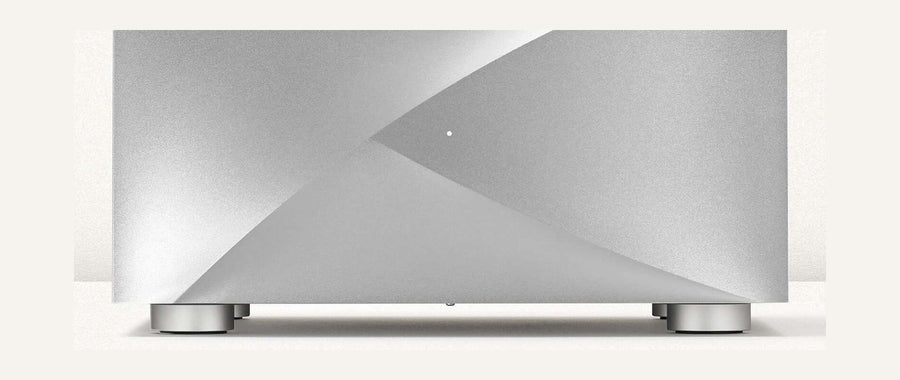
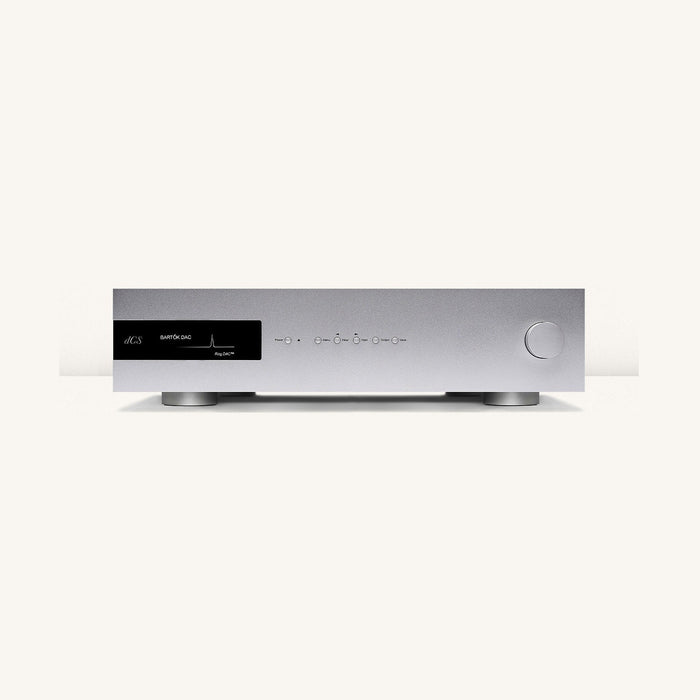
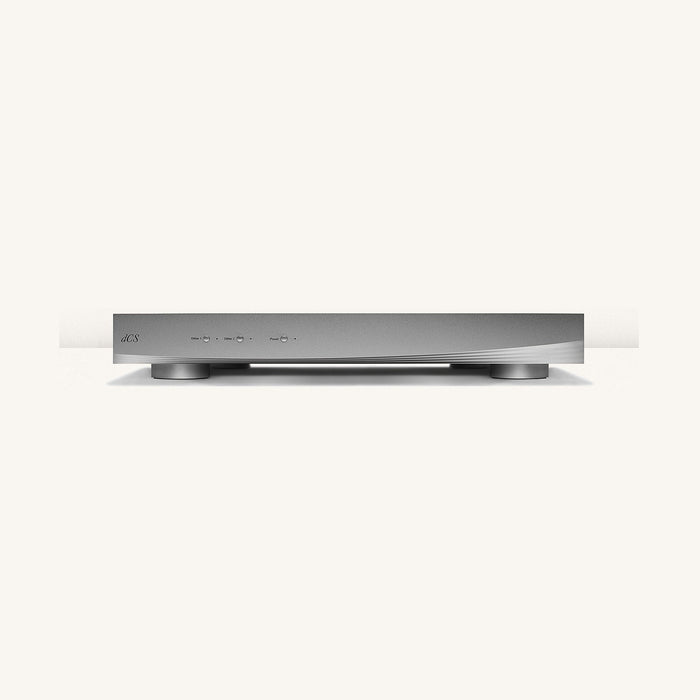
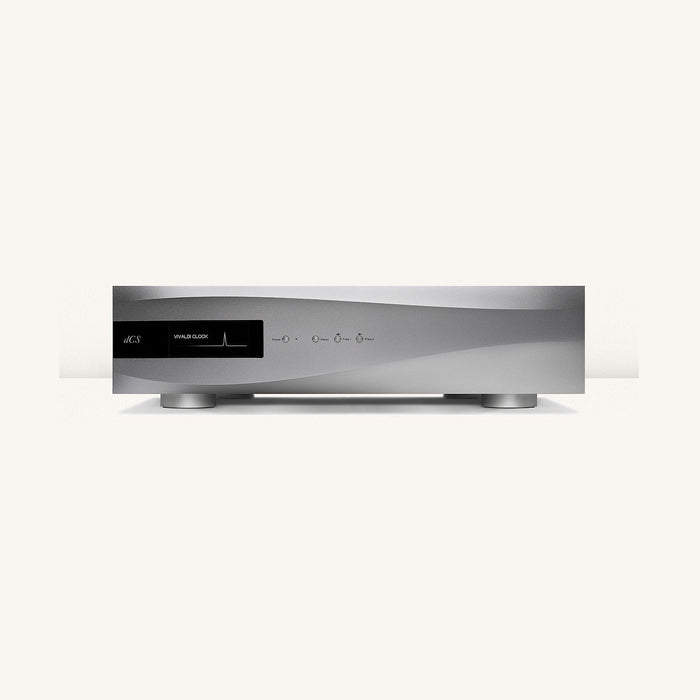
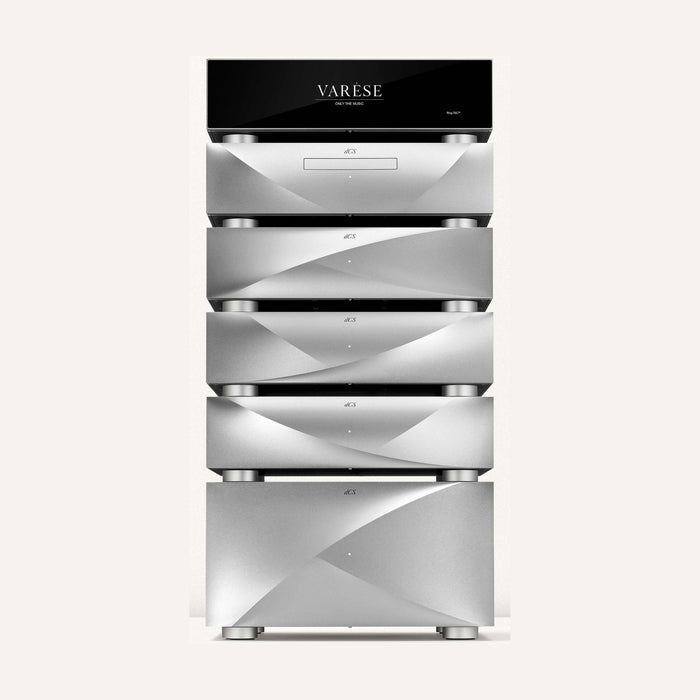
The four-box dCS Vivaldi: a chassis that only converts, a chassis that only streams and upsamples, a chassis that only keeps time, and a transport, each with its own power supplies and each updatable on its own.

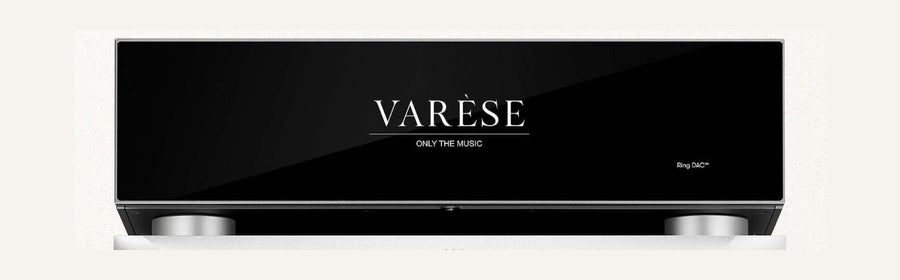
Stack price: Vivaldi APEX DAC, Vivaldi Upsampler, Vivaldi Master Clock and Vivaldi Transport II, priced as the sum of the four components at dCS's current US list. Each is also sold separately; the Transport II can be left out for a three-box streaming system. Cables are not included: a four-box Vivaldi needs two Dual AES pairs, five word clock cables and a network cable, and we quote Nordost cabling for it separately; the Varèse is supplied with its four ACTUS cables.

4
chassis: APEX DAC, Upsampler, Master Clock, Transport II
−113 dB0
residual noise, 20 Hz–20 kHz (dCS figure for the APEX generation)
6 MHz
Ring DAC APEX operation on Mappers 1 and 3; 3 MHz on Mapper 2
8
word clock outputs on the Master Clock, in two groups, so every box locks to one reference

Authorized dCS dealer · Delivery and installation by Pearl Audio · Trade-ins welcome

Box by box

What each box in the Vivaldi stack does

Vivaldi is the dCS architecture in its classic form: a chassis that only converts, a chassis that only streams and upsamples, a chassis that only keeps time, and a transport. Nothing shares a power supply with anything it could disturb, and each box can be updated on its own; the DAC has needed one hardware revision, APEX, since 2012.

Choose a chassis to open it. 4 boxes, photographed on our floor.

The stack as listed$153,800

The converter 2 of 4

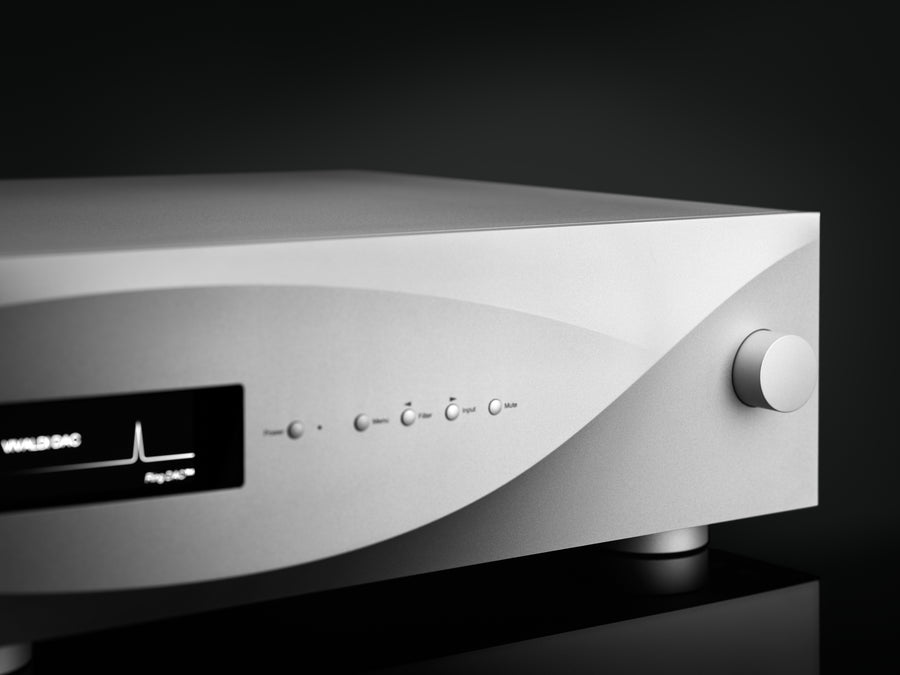
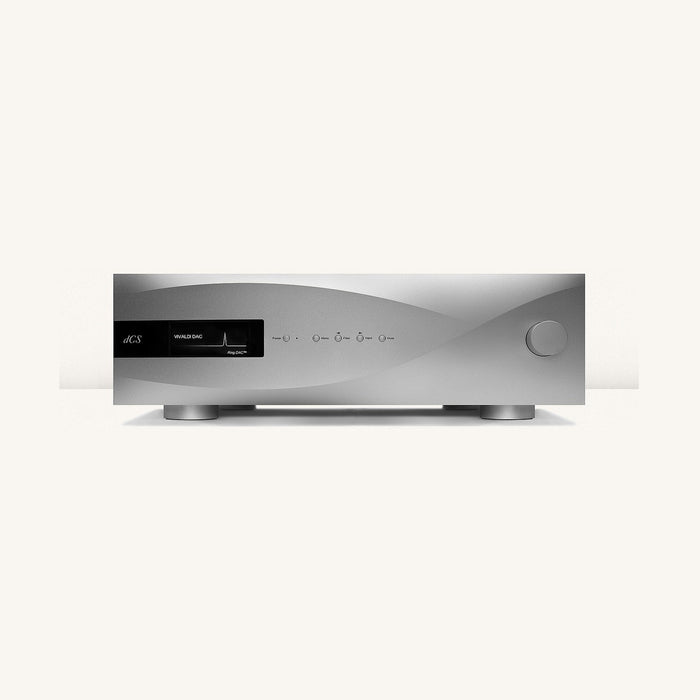
Vivaldi APEX DAC

What this box does

Converts, and only converts. Inside are the Ring DAC APEX board running at 6 MHz, the dCS Digital Processing Platform and the analog output stage, on their own power supplies in a chassis that holds no network board, no transport and no upsampler. The digital volume control runs power amplifiers directly.

Why it is in the stack

A converter is only as quiet as its reference supply and its summing stage, and both are disturbed by the processors and switching supplies a one-box player has to carry. Giving the Ring DAC a chassis of its own is the Vivaldi idea in one sentence; John Atkinson measured linearity accurate to about −135 dBFS.

In
Dual AES from the Upsampler (DXD, DSD, DSDx2 to 384 kS/s and DSD128); single AES, S/PDIF and USB for direct sources; two word clock inputs
Out
Balanced XLR and unbalanced RCA at 0.2, 0.6, 2 or 6 V full scale

Inside it

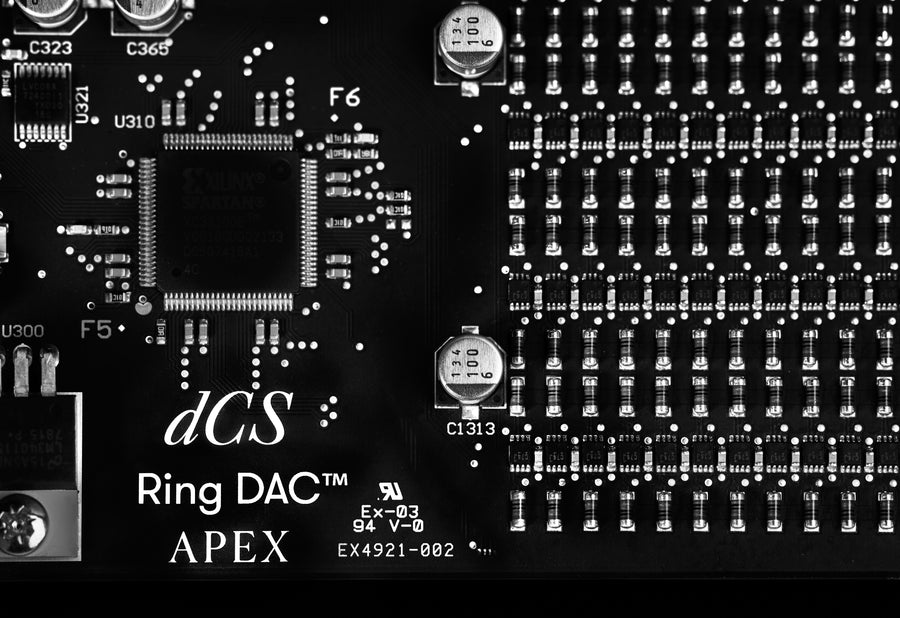
  • The Ring DAC dCS's own converter, not a chip: a ring of 48 identical current sources switched by an FPGA, with a mapping algorithm that never uses the same source for the same bit twice, so component tolerances become faint noise rather than distortion.The deep dive
  • Ring DAC APEX The first hardware change to the Ring DAC board in a decade: a lower-impedance reference supply, a more symmetrical summing stage and an all-new output stage, for about 12 dB better linearity and a lower noise floor.The deep dive
  • The dCS Digital Processing Platform All of dCS's signal processing, oversampling, filters, the Mapper, Expanse and clock management, runs in field-programmable gate arrays written by dCS rather than in off-the-shelf DAC chips, so major upgrades ship as free firmware for the life of the product.The deep dive

Earlier Vivaldi DACs can be upgraded to APEX hardware at the factory.

Together, what you hear

What the separation buys is a lower noise floor and a steadier picture: the Vivaldi APEX DAC measures to about −135 dBFS of linearity and the system places instruments with a stability the Rossini approaches but does not match. Reviewers describe the result as ease rather than detail: dense recordings come apart into lines without effort, at low volume as well as high.

What it adds over Rossini

The Ring DAC in the Vivaldi APEX DAC is the same generation as the Rossini's (Ring DAC APEX, 2022), so the step up is not a better converter chip. It is three things around the converter.

The DAC does nothing else

In Rossini, the network board, the upsampling processor, the clock and the Ring DAC share one chassis and one mains inlet. In Vivaldi the DAC chassis holds the Ring DAC APEX board, the Digital Processing Platform and the analog stage, and nothing that switches, streams or displays. Processors and network interfaces are noisy neighbors for a converter's reference and summing stages; moving them out is the single biggest reason a Vivaldi stack measures and sounds quieter.

Upsampling gets its own box

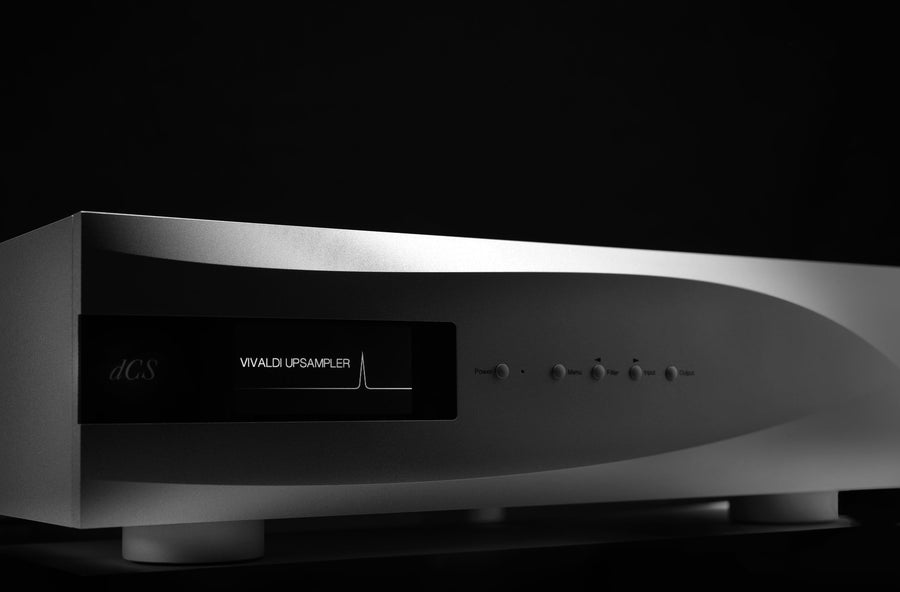
The Vivaldi Upsampler takes every source, raises it to DXD, DSD or DSDx2 on its own supplies, and hands finished data to the DAC over Dual AES. It is also where the streaming platform lives, which is the part of any digital system most likely to be revised; dCS has updated it to the Upsampler Plus while the DAC stayed put. See upsampling and filtering.

A Class 1 clock with eight outputs

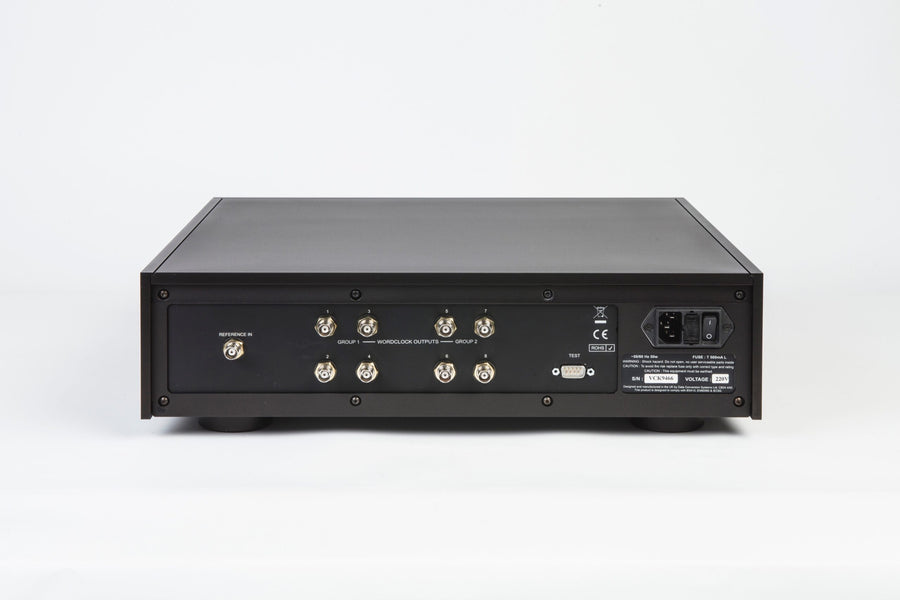
The Vivaldi Master Clock is a larger, better-isolated reference than the Rossini clock, with two independently buffered groups of four outputs so that the DAC, the Upsampler and the Transport II all lock to the same source at the right rate, and an input for a 10 MHz atomic or GPS standard. Why that matters is in master clocking.

The cost of the architecture is cabling: Dual AES from Upsampler to DAC and from Transport to Upsampler, and a word clock run to each box. That is the problem Varèse was designed to remove.

Compare the Rossini, Vivaldi and Varèse stacks side by side The dCS story and technology library

The story

Vivaldi is the dCS architecture in its classic form, and the system that defined the modern company when it was unveiled in Hong Kong in 2012. The principle is one job per chassis. The Vivaldi APEX DAC holds the Ring DAC APEX board, the dCS Digital Processing Platform and the analog output stage, and nothing that streams, switches or displays. The Vivaldi Upsampler does everything before conversion: it is the system's network streamer and takes USB, AES and S/PDIF sources, raises any of them to DXD, DSD or DSDx2 on its own supplies, and hands finished data to the DAC over Dual AES. The Vivaldi Master Clock is a Class 1 reference with eight outputs in two groups, so that DAC, Upsampler and Transport all lock to one source, and the Vivaldi Transport II plays SACD as native DSD and can upsample CD before it leaves the box.

The reason for the separation is noise. A converter is only as quiet as its reference supply and its summing stage, and both are disturbed by the processors, network interfaces and switching supplies that a one-box player has to carry. Moving them out is why a Vivaldi stack measures and sounds quieter than a Rossini stack built on the same generation of Ring DAC: John Atkinson's measurements of the Vivaldi APEX DAC in Stereophile found THD+N of 0.00026 percent at 6 V into 600 Ω, the third harmonic at −127 dB and linearity accurate to about −135 dBFS. It is also why the system ages well. The streaming board is the part of any digital front end most likely to be revised, and dCS has revised it, as the Upsampler Plus, while the DAC has needed one hardware change, APEX, since 2012; earlier Vivaldi DACs can be upgraded to it at the factory.

What you hear is ease rather than detail for its own sake: dense recordings come apart into separate lines without effort, the image holds still as the volume changes, and the background between notes is very dark. Jason Victor Serinus, comparing the Vivaldi APEX with the Rossini APEX in Stereophile, heard a greater sense of air, space and detail, richer tone and a more natural flow. The cost of the architecture is cabling, Dual AES between the boxes and a word clock run to each, and that is the problem the Varèse was designed to remove; the comparison page sets the three stacks side by side. Each box is opened and explained above, and the dCS story page covers the technologies in depth.

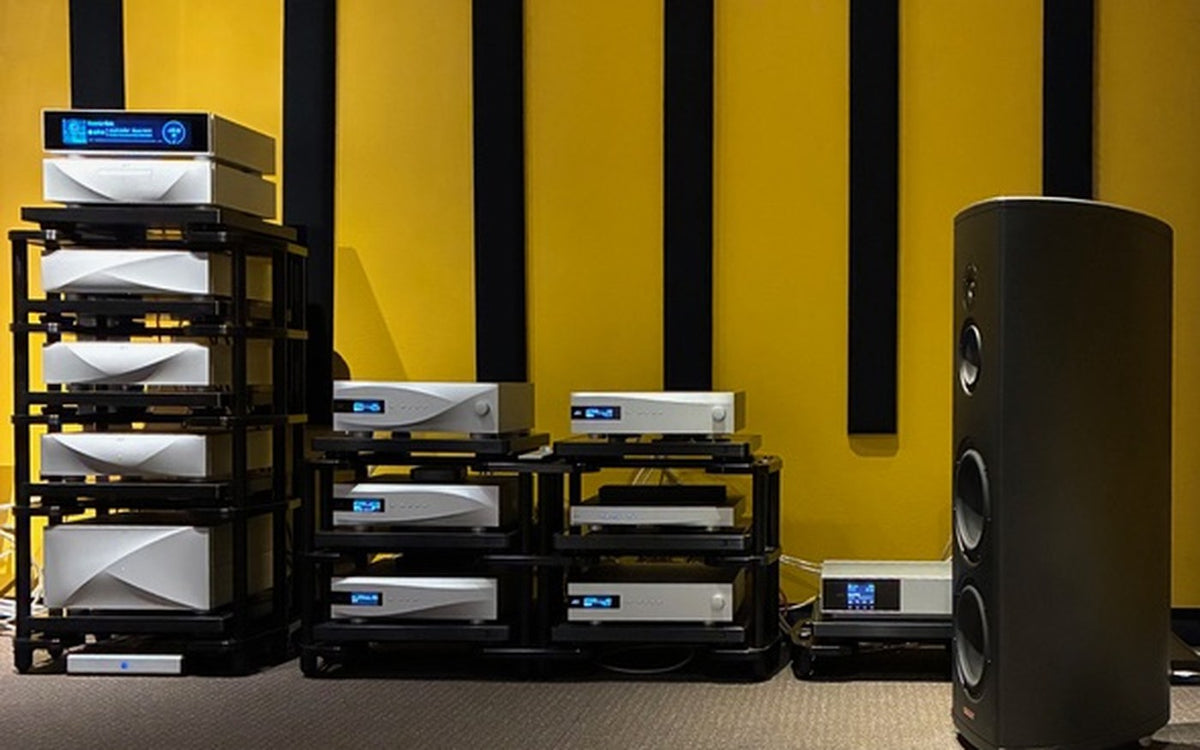
On our floor the Vivaldi stack sits on an HRS rack and is most often heard with Burmester, Boulder or Audio Research amplification into Magico, Sonus faber or Bowers & Wilkins loudspeakers. We set up the clock links and the Mosaic app ourselves at delivery, and we can demonstrate the Master Clock's contribution by switching it in and out.

dCS Vivaldi stack on an HRS rack in the Pearl Audio listening room

Key technologies

  • Ring DAC APEX. dCS's own discrete converter, 48 equal-value current sources switched by an FPGA under a mapping algorithm, in its 2022 hardware revision: a lower-impedance reference supply, a more symmetrical summing stage and a new output stage, about 12 dB more linear than the previous board. The deep dive.
  • A chassis that only converts. The DAC carries no network board, no upsampler and no display driver; the Upsampler, the Clock and the Transport each have their own supplies. Why that matters, tier by tier.
  • Upsampling in its own box. The Vivaldi Upsampler resamples every source to DXD, DSD or DSDx2 with a choice of filters for each conversion, and is the system's streamer: Mosaic, Roon Ready, Qobuz, TIDAL, UPnP, AirPlay. The deep dive.
  • Vivaldi Master Clock. Two crystal oscillators, one per sample-rate family, calibrated across temperature; eight independently buffered word clock outputs in two groups; input for a 10 MHz external reference. The deep dive.
  • Dual AES. Two AES cables carry one high-rate stream between the boxes, up to 384 kS/s PCM or DSD128, and encrypted native DSD from the Transport. The deep dive.
  • Vivaldi Transport II. A dual-wavelength laser SACD/CD mechanism in a 23 kg chassis; SACD as native DSD, CD upsampled to DXD, DSD or DSDx2 before it leaves, locked to the Master Clock. The deep dive.
  • Software-defined. Filters, Mappers and streaming services arrive as free firmware; Vivaldi 2.0 remade the system in 2015–16 and Mosaic in 2019. The deep dive.

Finishes

  • Silver anodized aluminum
  • Black anodized aluminum

Both finishes are the same price; every box in the stack is ordered in the same finish.

Specifications
Stack comprises Vivaldi APEX DAC ($52,500), Vivaldi Upsampler ($34,400), Vivaldi Master Clock ($25,900), Vivaldi Transport II ($41,000): $153,800 at dCS's current US list
Converter dCS Ring DAC APEX, stereo, in the Vivaldi APEX DAC; 48 current sources per channel; 6 MHz on Mappers 1 and 3, 3 MHz on Mapper 2
Sample rates / formats PCM 44.1–384 kS/s up to 24-bit; DSD64 and DSD128; DXD, DSD and DSDx2 between Upsampler and DAC over Dual AES
Streaming In the Upsampler: Ethernet (dCS Mosaic, Roon Ready, Qobuz, TIDAL, Spotify, Deezer, UPnP, AirPlay, internet radio), USB-A storage, asynchronous USB-B
Clocking Vivaldi Master Clock: 44.1, 48, 88.2, 96, 176.4 and 192 kHz on eight 75 Ω BNC outputs in two independently buffered groups; ±0.1 ppm typical once stabilized; external 1, 5 or 10 MHz reference input
Disc Vivaldi Transport II: CD and SACD; SACD output as encrypted native DSD; CD as 16-bit/44.1 or upsampled to DXD, DSD or DSDx2; word clock input at 44.1, 88.2 or 176.4 kHz
Analog outputs Balanced XLR and unbalanced RCA from the DAC at 0.2, 0.6, 2 or 6 V full scale; digital volume control for direct connection to power amplifiers
Residual noise Better than −113 dB0, 20 Hz–20 kHz (dCS figure, APEX generation); Upsampler spurious responses better than −100 dB0
Dimensions, each chassis 444 mm wide; DAC, Upsampler and Clock 151 mm tall, Transport II 178 mm; weights 16.2, 14.2, 13.6 and 23 kg
Cabling Dual AES Upsampler to DAC and Transport to Upsampler; one word clock cable per box (two to the DAC); Ethernet to the Upsampler. Not included; we quote Nordost Dual AES, 75 Ω clock and Ethernet cables with the stack

Reviews

Plan your dCS system with Pearl Audio

Pearl Audio is an authorized dCS dealer and keeps the Vivaldi stack on demonstration in Portland. Ask us to arrange an extended audition, to hear it against the Rossini and Varèse stacks in the same room, or to quote the three-box system without the Transport II. Call (503) 222-2599 or email sales@pearlaudio.com.

Signature technologies

The engineering behind the dCS Vivaldi Stack

dCS gives its technologies names because each one solves a specific problem. Here is what each does, where it came from, why it matters in a system, and what you may hear.

The founding technologySince 1993

The Ring DAC

dCS's own converter, not a chip: a ring of 48 identical current sources switched by an FPGA, with a mapping algorithm that never uses the same source for the same bit twice, so component tolerances become faint noise rather than distortion. Read the deep diveClose

What it does

Most high-end converters use either a chip or a resistor ladder in which each bit has a fixed, binary-weighted resistor; any tolerance error in those resistors appears as distortion, and it is proportionally largest on quiet signals. The Ring DAC takes a different route. Incoming audio is oversampled and reduced to a five-bit stream running at roughly 3 or 6 MHz, and each five-bit value is expressed by switching on some of 48 equal-value current sources. The Mapper chooses a different combination of sources for every sample, following, in dCS's words, a carefully calculated set of patterns, so that no source is tied to any bit. The small mismatches between sources are therefore never repeated the same way twice: they average out as a tiny amount of random, out-of-band noise that the following filter removes, instead of locking to the signal as harmonics. The summed current is then filtered and buffered by a discrete analog stage. Because the latches, the Mapper and the filters live in dCS's own FPGA code, the converter has been refined in firmware for three decades on the same principle.

Why it matters in a system

A converter's job is hardest at the bottom of the scale, where the reverberation, the decay of a note and the acoustic of the room live, and that is exactly where ladder DACs are weakest. The Ring DAC's linearity at low level is its reason for being: dCS claims class-leading distortion particularly at lower signal levels, and independent measurements of current dCS DACs show linearity errors that do not appear until well below −130 dBFS. It is also why every dCS from the Lina to the Varèse shares one character: the same ring, at different levels of execution.

What you may hear

Low-level detail that stays intact rather than blurring into the noise, natural tone on voices and strings, and an absence of the hardness that makes digital tiring. On Stereophile's bench the Rossini APEX produced 0.00026% THD+N at full scale with linearity error negligible until below −135 dBFS, and John Atkinson concluded its measured performance "was beyond reproach".

The 2022 revisionSince 2022

Ring DAC APEX

The first hardware change to the Ring DAC board in a decade: a lower-impedance reference supply, a more symmetrical summing stage and an all-new output stage, for about 12 dB better linearity and a lower noise floor. Read the deep diveClose

What it does

APEX keeps the ring of current sources and changes everything around it. The reference supply that feeds the sources was redesigned for lower output impedance and noise, because the Ring DAC is a multiplying converter and any noise on its reference appears directly at the output. The summing and filter stages were reworked for symmetry, individual transistors became thermally matched compound pairs, the latches that address the current-source matrix were tightened, and a new output stage isolates the summing stage from whatever cable and amplifier follow it while driving real current. The board itself was laid out again from scratch; only the resistor array is unchanged. The digital side, including the Mapper and the filters, is untouched and remains updatable in firmware.

Why it matters in a system

The reference supply and the output stage set the floor beneath everything the ring does. Lowering the reference's impedance means fewer errors are multiplied into the output; isolating the ring from the load means the converter sounds the same into any preamplifier or power amplifier. dCS puts the result at around 12 dB more linear than the previous generation, from harmonics that were already 110 to 120 dB below the fundamental, and the same reference-supply, clock-path and output-stage work was carried into the Varèse Mono DACs. Existing Vivaldi, Rossini and Bartók DACs can be upgraded to APEX at the factory, which is dCS's long product life in practice.

What you may hear

dCS listeners reported better resolution and dynamics, a stronger sense of rhythm and timing, and more natural voices and string tone. Hi-Fi News measured the Vivaldi APEX at 117.1 dB A-weighted signal-to-noise with second-harmonic distortion of 0.00004% over the top 10 dB of its range, and Jason Victor Serinus wrote in Stereophile that the Rossini APEX "is more than another upgrade; it's a major advance in digital sound reproduction".

Timing in its own boxSince 2003

Master clocks and word clock

Every dCS DAC accepts an external word clock, and every dCS system has a matching Master Clock: a reference in its own chassis, with its own supplies, that the DAC, upsampler and transport all lock to, so every sample is converted at the instant the recording intended. Read the deep diveClose

What it does

A digital-to-analog converter must do two things with time: run its own conversion, and stay locked to whatever source is feeding it. dCS separates them. The Master Clock generates the 44.1 kHz and 48 kHz families of word clock from two separate crystal oscillators, so neither is derived from the other, in a chassis that holds nothing else. The DAC's internal clock still times conversion but is phase-locked to the external reference, adjusting its frequency over time to match it, and in auto-clocking mode the DAC chooses the 44.1 or 48 kHz reference to match the incoming sample rate without a menu change. The crystals are pre-aged and individually calibrated across temperature in dCS's environmental chamber, with a microcontroller applying smooth correction as the chassis warms; dCS argues this is more stable in practice than an oven-controlled or atomic reference, because what matters to a DAC is short-term stability and low phase noise rather than absolute frequency to many decimal places. A switchable dither adds tiny random timing variations so the DAC's phase detector keeps working in its least sensitive region; it is filtered out before the output.

Why it matters in a system

Any irregularity in sample timing at the converter, jitter, produces sidebands around every tone and smears energy into a raised noise floor, which blurs the low-level cues that define space and texture. A good oscillator kept away from processors, network boards, display drivers and heat is better than a good oscillator inside the DAC, and in a multi-box system a shared reference settles which box is master: none of them. The Rossini Master Clock has three outputs, enough for a DAC and a transport; the Vivaldi Master Clock has eight, in two groups that can run at different rates, plus an input for a 1, 5 or 10 MHz atomic or GPS standard. In Varèse the word clock cables disappear and the timing travels over ACTUS.

What you may hear

The clock does not change a dCS DAC's character; it sharpens the focus of each instrument and holds the recorded acoustic steady, so the image does not shift with volume. Most Rossini owners add the Master Clock sooner or later, and in Portland we demonstrate it by switching it in and out.

What happens before the ringSince 1999

Upsampling, DXD and DSD, filters and Mappers

dCS raises every source to a very high rate, DXD at 352.8 or 384 kS/s or DSD at up to 5.6 MHz, before the Ring DAC sees it, and leaves the listener a choice of filters and three Mapper settings. The Vivaldi does this in a separate Upsampler; Rossini, Bartók and Lina do it inside the DAC. Read the deep diveClose

What it does

dCS discovered upsampling with its professional 972 digital-to-digital converter and launched the first consumer upsampler, the Purcell, in 1999. The principle has not changed: take a 44.1 kS/s CD rip or a 192 kS/s file, resample it in multiple stages to 24-bit PCM at up to 384 kS/s (DXD) or to DSD at 2.8 or 5.6 MHz, and present that to the converter, so the Ring DAC's own modulator and the analog filter have an easier job and the choice of anti-alias filter can be made deliberately. In the Vivaldi system the work is done in the Vivaldi Upsampler, a separate chassis with its own supplies that is also the system's streamer, and the result reaches the DAC over Dual AES. In Rossini, Bartók and Lina the same multi-stage oversampling runs inside the DAC on the dCS Digital Processing Platform. Six PCM filters trade image rejection against phase behavior, a DSD filter set controls out-of-band noise, and the Mapper setting chooses how the ring is driven: Map 1 and Map 3 run the Ring DAC at 5.6 or 6.1 MHz, Map 2 is the original 3 MHz design.

Why it matters in a system

Doing the processing in software rather than in a converter chip is what lets dCS improve a product after it is sold: Vivaldi 2.0 (2015–16) brought the new Mappers and DSDx2, Rossini 2.0 (2019) and Bartók 2.0 (2022) carried them down the range. Doing it in a separate chassis, as Vivaldi does, keeps the processors and the network board, the noisiest parts of any digital front end, away from the converter's reference and summing stages, and it lets the streaming platform be revised, as it was with the Upsampler Plus, without touching the DAC. Which output format and filter sound best is a matter for the listener and the recording; switching takes seconds in Mosaic and the dCS defaults are a sensible place to start.

What you may hear

Smoother treble and a more natural sense of space from CD-resolution material, and a presentation that can be tuned rather than taken as given. Chris Thomas wrote of Vivaldi 2.0 in hi-fi+ that it was "no minor update but rather, a new performance level entirely"; Stereophile's Jason Victor Serinus settled on Map 1 for the Rossini APEX, which he found "richest in color saturation and contrast".

Software-defined, updated for freeSince 2012

The dCS Digital Processing Platform

All of dCS's signal processing, oversampling, filters, the Mapper, Expanse and clock management, runs in field-programmable gate arrays written by dCS rather than in off-the-shelf DAC chips, so major upgrades ship as free firmware for the life of the product. Read the deep diveClose

What it does

Rather than buy a converter chip and accept its filters, dCS writes its own processing for FPGAs: a Spartan-6 array in the Vivaldi generation, an Artix-7 in the Varèse Core, which dCS describes as having the most processing power of any dCS product. Oversampling, the PCM and DSD filters, PCM-to-DSD conversion, the Mapper that drives the Ring DAC, Expanse headphone processing and clock management are all code. In Varèse the Core does nearly all of it and leaves the Mono DACs only the final five-bit modulator and Mapper, which lowers the demand on the DACs' power supplies; dCS says that yields cleaner supplies and fewer non-linearities. Hardware that does change, network boards and the APEX analog board, is designed to be fitted at the factory or by the dealer.

Why it matters in a system

It is why a dCS bought years ago is still current. Vivaldi 2.0 (2015–16) brought new Mappers, DSDx2, a new filter and Roon; Rossini 2.0 (2019) and Bartók 2.0 (2022) carried them down the range; Mosaic (2019), Expanse (2020), Qobuz Connect and Spotify Lossless (2025) all arrived as updates. David Steven of dCS: "We're a small high-tech company and our products have long life-cycles but that doesn't stop our engineers from innovating." For a buyer, the practical consequence is that the component on the rack improves over its life rather than being replaced.

What you may hear

Owners of a Vivaldi DAC from 2012 who applied 2.0 and the APEX upgrade are listening to a converter that measures and sounds like a current one. The sound of the platform is the sound of the Ring DAC; what the platform adds is the certainty that it will keep up.

Two cables, one streamSince 2012

Dual AES

Two AES3 cables carrying one high-rate stream between dCS boxes, up to 384 kS/s PCM or DSD128, and the way encrypted SACD data leaves a dCS transport. Vivaldi adopted it in place of Scarlatti's FireWire; Varèse replaces it with ACTUS. Read the deep diveClose

What it does

A single AES3 link tops out at 192 kS/s. Dual AES splits a higher-rate stream across two balanced XLR cables, so that DXD at 352.8 or 384 kS/s, or DSD and DSDx2 carried as DoP, can pass between an upsampler or transport and the DAC over a standard professional interface. dCS encrypts the DSD it sends from its transports, which is how native SACD data reaches a dCS DAC with a Dual AES input and why the transports' upsampled output can only be decoded by a dCS converter. The Vivaldi APEX DAC has two Dual AES input pairs; the Vivaldi Upsampler and the transports output on AES 1 and 2.

Why it matters in a system

In a Vivaldi or Rossini system Dual AES is the audio path between the boxes, with word clock running alongside to keep them in step. It is robust and it is standard, which is why dCS chose it over FireWire for Vivaldi in 2012. Its limits, the second cable, the separate clock run and the interface's own timing behavior, are what the ACTUS link in Varèse was designed to remove; the comparison page sets the two approaches side by side.

What you may hear

Nothing of its own, which is the point of a digital interface; what it carries is the Upsampler's or the Transport's work, intact, to the DAC.

The disc, in its own chassisSince 2001

dCS transports

dCS keeps the CD/SACD mechanism in its own chassis to isolate its motors, servos and supplies from the converter, plays SACD as native DSD, and in the Rossini and Vivaldi transports upsamples CD to DSD or DXD before it leaves the box. Read the deep diveClose

What it does

A dCS transport reads the disc and, in the Rossini Transport and Vivaldi Transport II, does the first stage of processing: a CD's 16-bit/44.1 kS/s data can leave the Dual AES outputs as DXD, DSD or DSDx2, encrypted for a dCS DAC, while the SACD layer is passed as encrypted native DSD. The transport's clock is calibrated to ±10 ppm and it locks to the system's Master Clock, so disc, upsampler and DAC run from one reference; in a two-box system the transport can be master for the DAC. The Vivaldi Transport II (2023) replaced the original's Esoteric mechanism with a Sound United D&M SACD mechanism and improved its supplies and clock regulation; the Rossini Transport uses the same mechanism family. The Varèse Transport (2025) is different in kind: it reads CD at 44.1 and SACD as DSD and passes both bit-perfect to the Core over one ACTUS cable, with no conversion inside the transport and, dCS says, the lowest vibration of any transport it has built, thanks to a single-billet chassis with the mechanism hung from pillars and damped by mass.

Why it matters in a system

Two reasons a disc player belongs in a system that streams. An SACD collection has no other way into a Ring DAC at native resolution. And a disc read in real time, delivered over AES with a shared clock, is a different path from a file over the network; some listeners prefer it, and dCS leaves the upsampling choice to them.

What you may hear

John Atkinson, reviewing the Rossini Transport for Stereophile, heard CDs upsampled to double DSD with "palpable realism", SACD playback that was "sweet and natural", and a fuller double bass from an SACD in the transport than from the same data streamed. Reviewers of the Varèse found disc and stream close, which is the point: the system's conversion dominates, and the transport's job is not to compromise it.

The control platformSince 2019

dCS Mosaic and Mosaic ACTUS

dCS's streaming and control platform: the Mosaic app on a phone or tablet, and the Mosaic Processor firmware on the network board, bringing Roon, Qobuz, TIDAL, Spotify, Deezer, AirPlay, UPnP, radio and USB storage into one interface that also controls every setting of the DAC. Read the deep diveClose

What it does

Mosaic was launched at HIGH END Munich on 9 May 2019 for every dCS streaming product then current, as a free update to the network board. Mosaic Control is the iOS and Android app; Mosaic Processor is the firmware it talks to. Together they handle the streaming services and local libraries, and every product setting, filters, Mappers, output level, clock mode and dither among them, so that the listener can make a change and hear it from the chair. Later releases added TIDAL Connect, Qobuz Connect and Spotify Lossless. Mosaic ACTUS is the Varèse version: because every Varèse box is connected to the Core over ACTUS, the app configures the whole system from one place and pushes firmware to every chassis at once; the Varèse User Interface, a separate touch-screen chassis, is the other way in.

Why it matters in a system

A reference digital front end is used every day, and the platform is how it is used. Keeping the streaming board separate from the converter, and the software separate from the hardware, is also how dCS keeps a product current: the services change, the DAC does not.

What you may hear

Nothing of its own; Mosaic is the means of choosing what you hear, from the recording to the filter.

All dCS technologies and the company story

The dCS story

Forty years of writing its own converter: the Ring DAC, born in radar and the recording studio, and still hand-built in Cambridgeshire.

Founded 1987 in Cambridge, England (in Swavesey, Cambridgeshire, since 2009) by Mike Story · dcsaudio.com

Milestones

  1. 1987 Founded in Cambridge Data Conversion Systems, incorporated November 1986, begins work at Castle Park under founder Mike Story: a converter and signal-processing consultancy for Ferranti, Marconi Avionics and British Aerospace, specializing in radar A/D conversion.
  2. 1989 dCS 900 A 24-bit studio analog-to-digital converter and the first product with the company's Ring conversion technology; Bob Ludwig's Gateway Mastering becomes a customer.
  3. 1993 dCS 950: the first Ring DAC The company's first digital-to-analog converter, described as the world's first 24-bit DAC. Andy McHarg joins in November and writes code for it; the early 1990s also bring more than 120 bespoke converters for the BBC.
  4. 1996 Elgar The first dCS for the home, a Ring DAC styled by Allen Boothroyd and reviewed by John Atkinson in 1997. The consultancy work ends and the company moves to Great Chesterford.
  5. 1999 Purcell and Delius Purcell is the first consumer upsampler, an idea dCS discovered with the professional 972 converter in 1997; Delius is the matching DAC. The Verdi SACD transport (2001) and Verona master clock complete the first four-box system.
  6. 2007 Scarlatti The first flagship after dCS leaves professional audio: transport, DAC, upsampler and clock linked by FireWire. Paganini and the one-box Puccini (Stereophile's 2010 Digital Component of the Year) follow in 2008.
  7. 2009 David Steven, and Swavesey After the death of David Marshall Steven, who had taken the majority of the company in the mid-2000s, his son David J. Steven becomes Managing Director; dCS moves into its purpose-designed building at Swavesey, Cambridgeshire.
  8. 2012 Vivaldi Unveiled at the Hong Kong AV Show: four chassis, Dual AES in place of FireWire, a dual-mono Ring DAC, a new FPGA processing platform, auto-clocking and the first dCS network interface.dCS Vivaldi APEX DAC
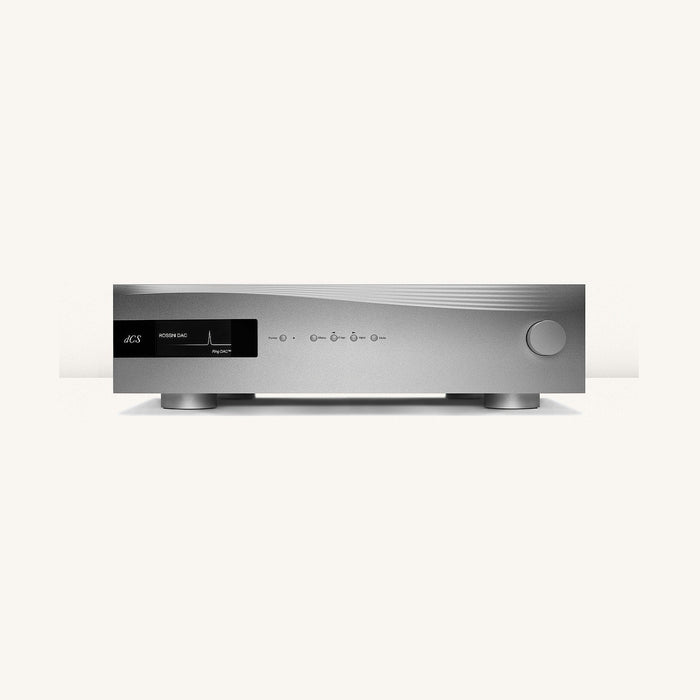
  9. 2015 Rossini, and Vivaldi 2.0 Rossini puts the Vivaldi's Ring DAC into a one-box player and DAC with a matching Master Clock. Vivaldi 2.0 brings new Mappers, DSDx2 and streaming services as a free update, the pattern for every dCS since.dCS Rossini APEX DAC
  10. 2017 Vivaldi One A 250-unit thirtieth-anniversary player at HIGH END Munich: Ring DAC, transport and streamer in one chassis.
  11. 2018 Bartók A network DAC with an optional Class A headphone amplifier replaces Debussy, the 2010 computer-audio DAC that was Stereophile's 2011 Digital Component of the Year.dCS Bartók APEX DAC
  12. 2019 Mosaic, and a Queen's Award The Mosaic streaming and control platform launches at Munich for every current dCS streamer; Rossini 2.0 arrives; dCS receives the Queen's Award for Enterprise: Innovation for the Vivaldi technologies.
  13. 2020 Expanse dCS Expanse headphone processing is released in December as a Mosaic update for Bartók.
  14. 2022 Ring DAC APEX, and Lina APEX, the first hardware revision of the Ring DAC board in a decade, ships in March for Vivaldi and Rossini; the Lina headphone system (DAC, Master Clock and amplifier) arrives in May; Bartók 2.0 follows.dCS Lina Network DAC
  15. 2023 Bartók APEX and Vivaldi Transport II Bartók APEX is Stereophile's Digital Source Component of the Year; the Vivaldi Transport II, with a new SACD mechanism, ships in November.dCS Vivaldi Transport II
  16. 2024 Varèse Announced 7 August and first shown at the Hong Kong AV Show: the Differential Ring DAC, Mono DACs, the Core, a Master Clock and User Interface, linked by ACTUS. UK premiere in November; shipping by the end of the year.dCS Varèse Music System
  17. 2025 Varèse Transport, Lina DAC X, a King's Award The Varèse Transport launches in September; Lina DAC X debuts at Munich; dCS receives the King's Award for Enterprise: Innovation for Ring DAC APEX; Varèse is Stereophile's and The Absolute Sound's joint Overall Product of the Year.dCS Varèse Transport
  18. 2025 dCS at Pearl Audio Managing Director David Steven joins us in Portland for a dCS evening in the Pearl Audio showroom.
Read the dCS story
dCS

Data Conversion Systems was incorporated in Cambridge in November 1986 and counts 1987 as its first year. Its founder, Mike Story, an Oxford physicist with a doctorate from Imperial College, gathered a team of electronics engineers with venture backing and set up at Castle Park as a consultancy for Ferranti, Marconi Avionics and British Aerospace, specializing in the analog-to-digital conversion behind radar; work that later flew in the RAF's Harrier and Typhoon. The habit of measuring everything, and of writing the signal processing themselves rather than buying it, came from that beginning.

Audio followed. The dCS 900, begun in 1988 and released in 1989, was a 24-bit studio analog-to-digital converter and the first product to carry the company's Ring conversion idea; Bob Ludwig of Gateway Mastering was, in his words, a very good customer. In the early 1990s dCS built more than 120 bespoke converters and a custom clocking system for the BBC's London radio center, and in 1993 the dCS 950 became the company's first digital-to-analog converter, built on the Ring DAC. Andy McHarg joined that November and wrote code for it; he is Technical Director today. The Elgar of 1996, styled by Allen Boothroyd, brought the Ring DAC into the home; the consultancy work ended and the company moved to Great Chesterford, south of Cambridge. The 972 digital-to-digital converter of 1997 was where dCS discovered upsampling, and the Purcell of 1999 was the first consumer upsampler, followed by the Delius DAC, the Verdi SACD transport of 2001 and the Verona master clock: the four-box dCS system, in its first form.

Ownership changed in the mid-2000s. Mike Story stepped back from day-to-day leadership, David Marshall Steven took the majority of the company, and dCS left professional audio to concentrate on the home; the Scarlatti of 2007 was the first flagship of that era, and the Paganini range and the one-box Puccini of 2008, the latter Stereophile's 2010 Digital Component of the Year, made the company's name with a wider audience. When David Marshall Steven died in 2009, his son David J. Steven became Managing Director, a post he still holds, and the company moved into its purpose-designed building at Swavesey, where every unit is still hand-assembled. The Debussy of 2010 was dCS's first computer-audio DAC and Stereophile's 2011 Digital Component of the Year.

Vivaldi, unveiled at the Hong Kong AV Show in August 2012, defined the modern dCS: a transport, a DAC, an upsampler and a master clock, each in its own chassis, with Dual AES in place of FireWire, a dual-mono Ring DAC, a new FPGA processing platform and the company's first network interface. Rossini of 2015 put the same Ring DAC into a one-box player and DAC with a matching clock; Vivaldi 2.0 the same year showed that a dCS could be remade in software, with new Mappers and DSDx2 arriving as a free update. The thirtieth anniversary brought the Vivaldi One in 2017; Bartók followed in 2018, Mosaic, the company's streaming and control platform, in 2019 with a Queen's Award for Enterprise in Innovation the same year, and Expanse headphone processing in 2020.

The current generation began in March 2022 with Ring DAC APEX, the first hardware revision of the Ring DAC board in a decade, and the Lina headphone system the same spring; Bartók APEX and the Vivaldi Transport II came in 2023. On 7 August 2024 dCS announced Varèse: the Differential Ring DAC with twice the current sources, a Mono DAC for each channel, a Core that does all the processing, and ACTUS, a single cable to each box carrying audio, control and the Tomix clock. It was first shown in Hong Kong two days later, premiered in the UK that November, won Stereophile's and The Absolute Sound's joint Overall Product of the Year for 2025, and gained its own Transport in September 2025, the year the company received a King's Award for Enterprise in Innovation for APEX and launched the full-width Lina DAC X. dCS remains privately held by the Steven family, with Andy McHarg and Chris Hales, Product Development Director since 1998, still on the board. In David Steven's words, "everything is in service of the music and bringing that moment to people."

The complete dCS story and technology library

dCS at Pearl Audio

Pearl Audio is an authorized dCS dealer and keeps the whole range on the floor in Portland, from the Lina Network DAC and Master Clock to the Varèse Music System, so that each step in the range can be heard in one room on one afternoon. We generally hold several dCS events at Pearl Audio each year, often with the dCS team in the room. dCS components are set up and delivered by our own staff in the Portland area; the Rossini, Vivaldi and Varèse stacks are on demonstration, and we compare them box by box on the dCS stacks page.

The Pearl Audio experience

How we work with you

A system at this level should be heard, thoughtfully matched, and properly set up. From the first audition to long-term ownership, you work with the same people, in person.

  1. 01

    Listen first

    Hear the Vivaldi Stack by appointment in one of our two purpose-designed demonstration rooms, with your own music and time to compare without pressure.

  2. 02

    Delivery and installation

    We deliver and install throughout the Portland area, taking care of placement, connections, ventilation and system configuration ourselves.

  3. 03

    Support for as long as you own it

    We support everything we sell for as long as you own it, whether the answer comes by phone, in your home, or through factory service.

  4. 04

    A path for what comes next

    Trade-in assistance and qualifying 100% Trade-Up options give you flexibility when your listening priorities or your system change.

Search