Pearl Reference

Burmester · Reference Line

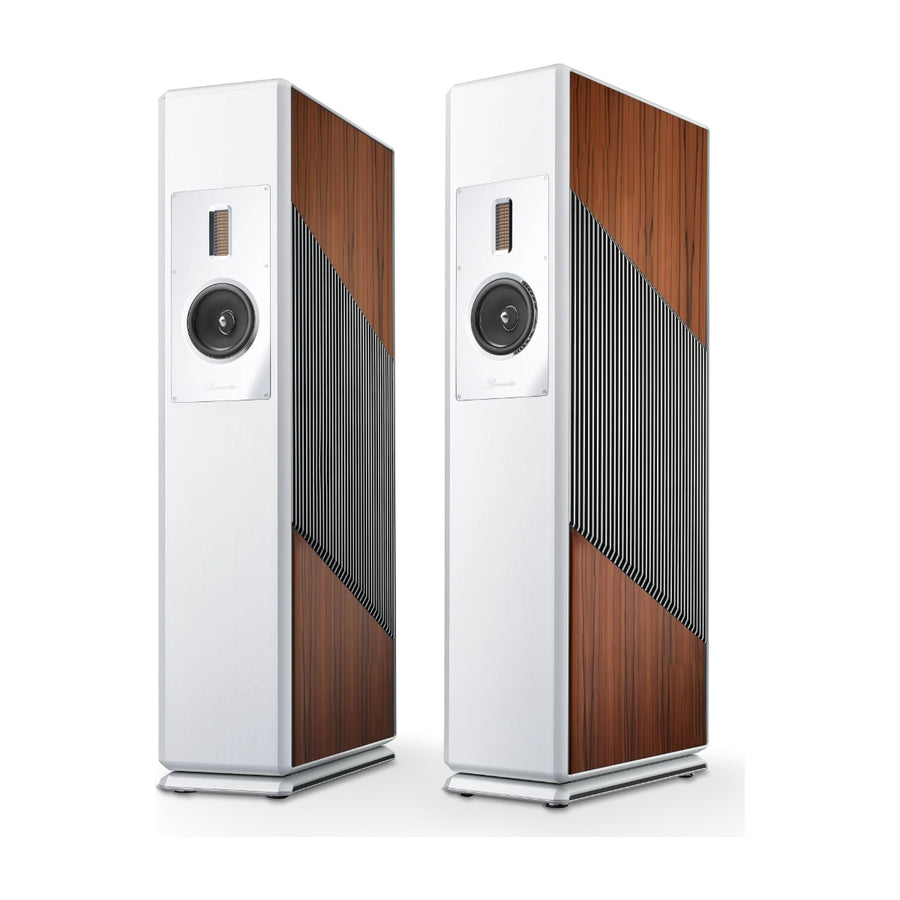
Burmester BC150 Loudspeaker

$180,000 per pair

Signature technologiesThe Burmester story

Not currently in our rooms. For a serious buyer we will often bring a piece in from the manufacturer for a private session — tell us about your system and what you are weighing it against, and we will advise.

Burmester · Reference Line

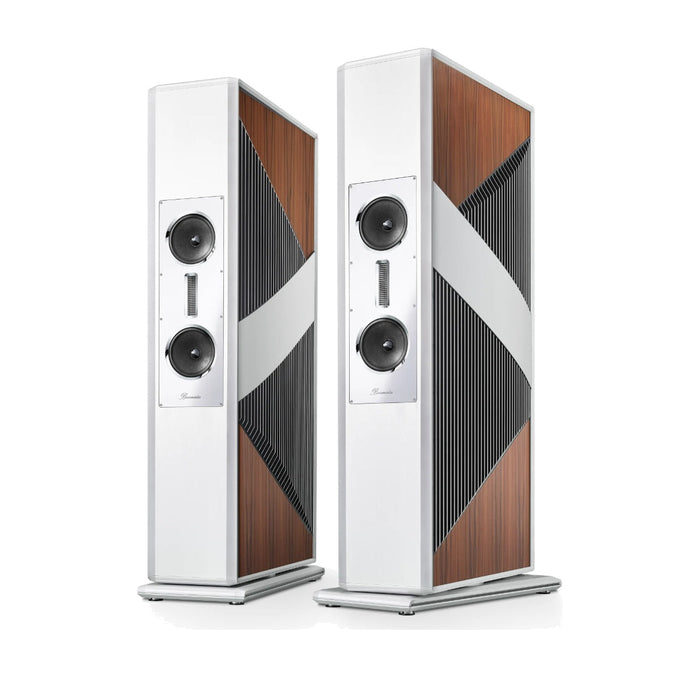
The BC150 brings the BC350's dual-AMT high-frequency system, side-firing 32 cm woofer and aluminum-framed cabinet into a 56-inch, 397-pound floorstander that any Burmester system can drive.

Price is for a pair.

2 × AMT
front tweeter plus adjustable rear Ambience tweeter
32 cm
side-firing long-throw sandwich-cone woofer
34 Hz
bass extension, ±3 dB
397 lb
per speaker (180 kg)

Authorized Burmester dealer · Delivery and installation by Pearl Audio · Trade-ins welcome

The story

Burmester developed the BC150 to carry the engineering of its Signature Line BC350 into the rest of the range. The cabinet is built around a solid aluminum frame, internally braced, reinforced with steel plates and damped so that it transmits energy to the drivers rather than to the room. The crossover is mounted on vibration-isolated supports, every driver is fastened with high preload forces so it couples rigidly to the enclosure, and the internal wiring is Burmester's own. Each BC150 weighs 180 kg, and 95 percent of its materials come from workshops in and around Berlin.

The high frequencies are handled by two Air Motion Transformers: a front AMT for clarity, and a rear Ambience tweeter whose level is adjustable so the owner can set stage depth and the width of the sweet spot to the room and the listening position. The midrange driver is 18 cm with an elliptical phase plug and an oval voice coil, chosen for even dispersion and natural vocal timbre, and the bass comes from a 32 cm long-throw woofer on the side of the cabinet, supported by an optimized reflex system. Burmester rates the BC150 at 88.5 dB sensitivity, 3 Ω nominal impedance, 34 Hz to 20 kHz within 3 dB and 400 W power handling.

Tom Martin of The Absolute Sound called the BC150 exceptional for the way it lets the reproduction disappear behind the music, pairing power with delicacy, and judged it required listening for anyone shopping in its class alongside the Magico M6 and Wilson Alexx V; hi-fi+ had previewed it in Berlin before launch and called it a milestone for the brand. In a system it is the loudspeaker for a 218 or 259 power amplifier with the 808 MK5 or 111 Musiccenter, and its 3 Ω load rewards an amplifier with current to spare. Copper bridges on the terminal panel allow single-wired or bi-amplified operation, and the exterior design elements are replaceable, so the look can be changed later.

The BC150 is finished in Tineo (Indian apple) veneer or middle-grey matt lacquer, each with chrome front panels, and is built to order in Berlin.

Each technology below is explained in depth in the Burmester technology library; the Burmester story follows the company from the 777 of 1977 to the new Reference Line.

Key technologies

  • Dual AMT with Ambience control. A front Air Motion Transformer plus an adjustable rear AMT set the depth and width of the soundstage.
  • Oval voice-coil midrange. An 18 cm driver with elliptical phase plug and oval voice coil for clear, natural midrange.
  • 32 cm side-firing woofer. A long-throw sandwich-cone bass driver with dual magnets, supported by an optimized bass reflex system.
  • Aluminum frame cabinet. Solid aluminum frame, steel reinforcement plates, internal bracing and targeted damping for a resonance-free enclosure.
  • Decoupled crossover. Vibration-isolated mounting keeps microphonic resonances out of the signal.
  • Bi-amp ready. Solid copper bridges on the terminal panel allow single or bi-amplified operation.

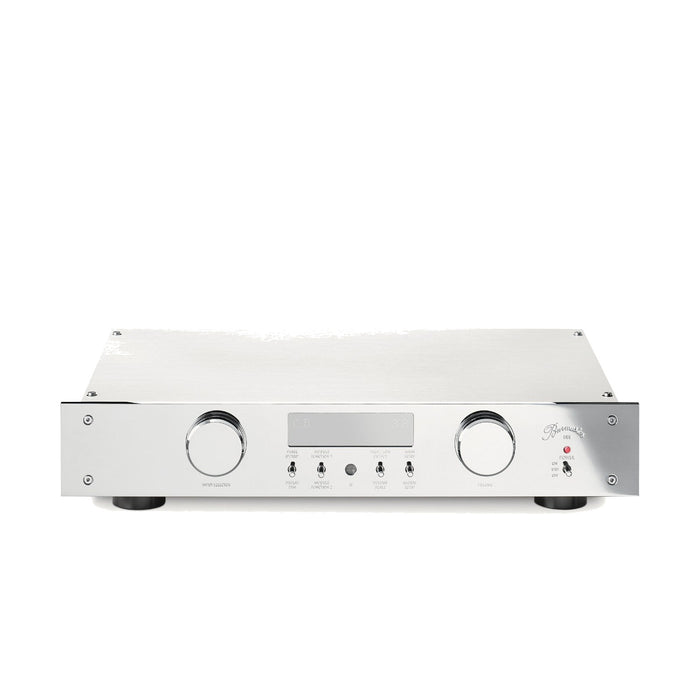
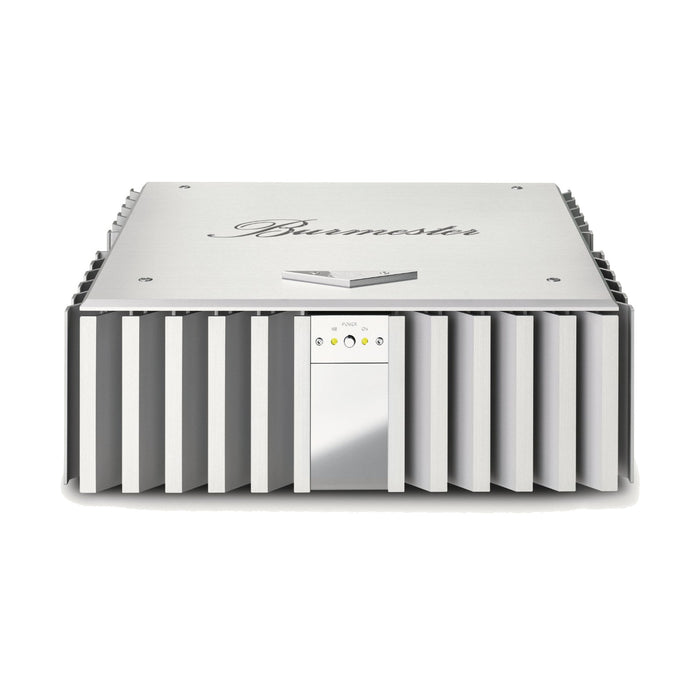
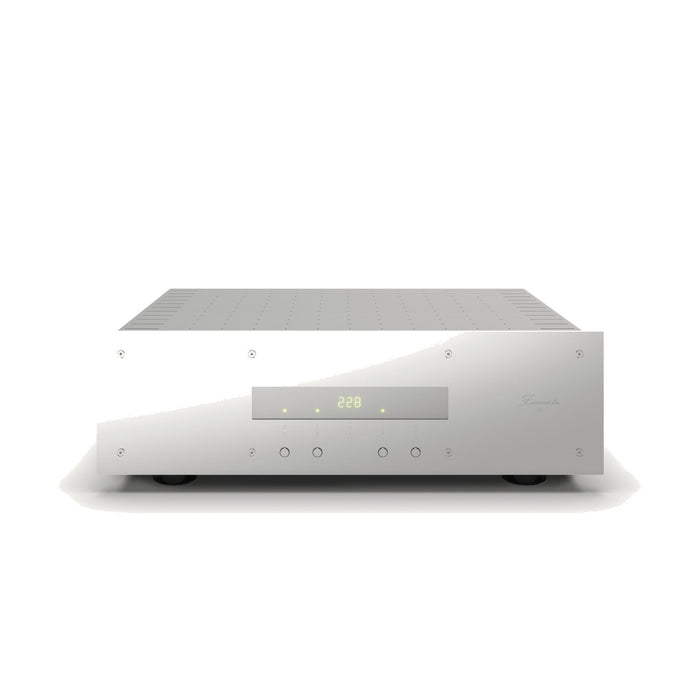
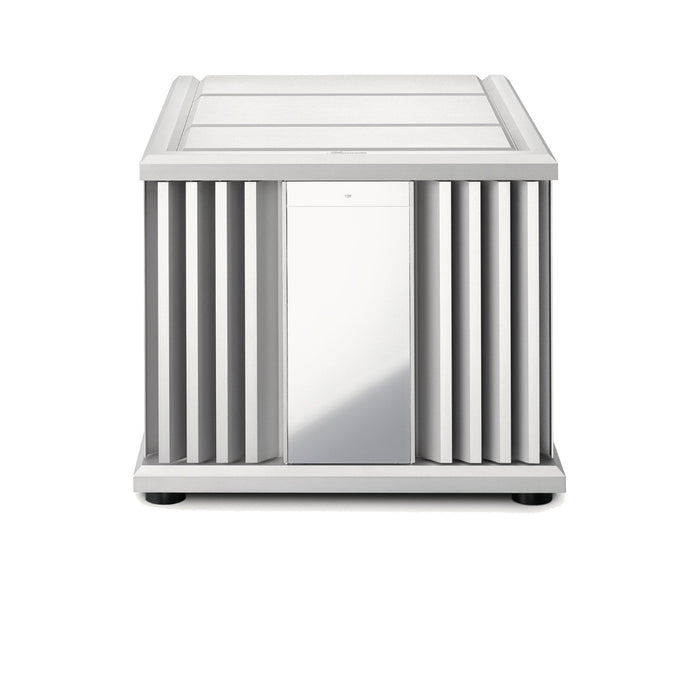
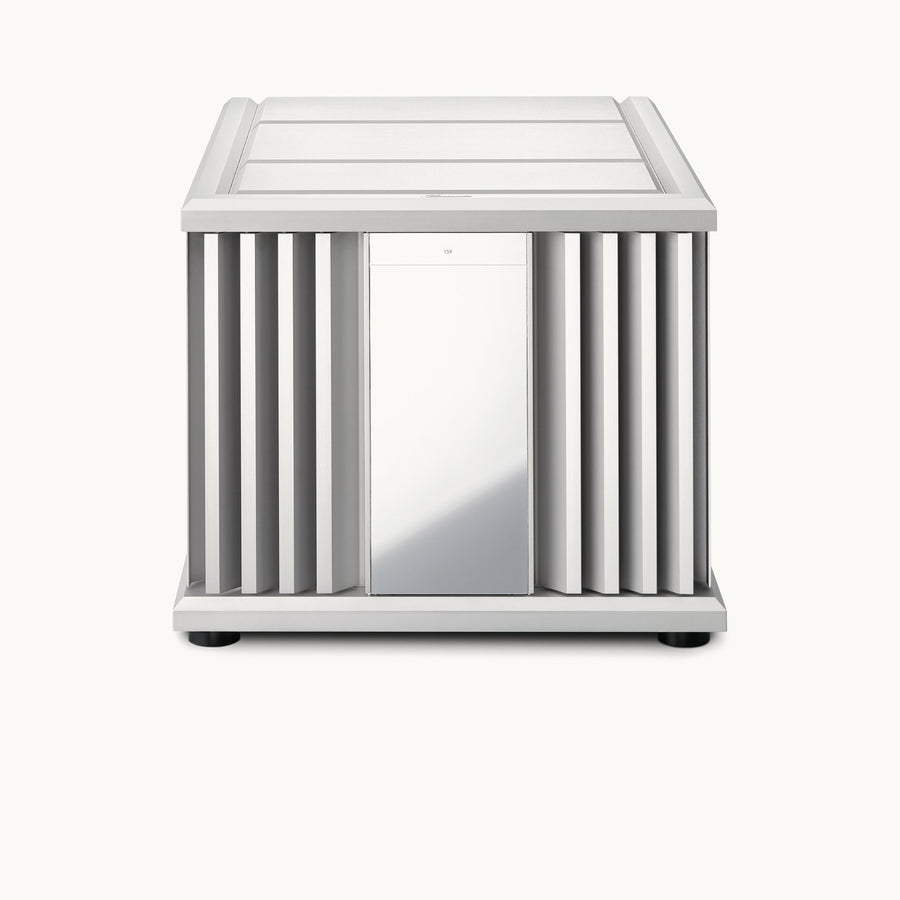
The 159 monoblocks and the 218 are the amplifiers Burmester designs its loudspeakers around.

Finishes

  • Tineo (Indian apple) veneer, silk-matt; chrome front
  • Middle-grey matt lacquer; chrome front

Replaceable exterior design elements allow the finish to be changed later; Burmester's BESPOKE program can also finish the BC150 to order.

Specifications
Type 3-way bass reflex floorstanding loudspeaker
Tweeter 2 × Air Motion Transformer (including one adjustable rear Ambience tweeter)
Midrange 18 cm, elliptical phase plug and oval voice coil
Bass 32 cm side-firing sandwich cone, dual-magnet motor
Frequency response (±3 dB) 34 Hz – 20 kHz
Sensitivity (2.83 V / 1 m) 88.5 dB
Impedance 3 Ω
Power rating (IEC 60268) 400 W
Crossover frequencies Not published by Burmester
Dimensions (H × W × D) 56.4 × 12 × 23.6 in (approximately 1,432 × 305 × 600 mm)
Weight 396.8 lb (180 kg) each
Finish Tineo (Indian apple) veneer or middle-grey matt lacquer; chrome front
Sold as Pair

Burmester BC150 product page and specifications (Burmester Home Audio)

Where it sits in the range

Burmester's loudspeakers, from the B-Series to the Signature Line; all are priced per pair.

Partner the BC150 with the 218 or 259 and the 808 MK5 or 111 Musiccenter.

Reviews

Plan your Burmester system with Pearl Audio

Pearl Audio is an authorized Burmester dealer. Contact us to arrange an audition of the BC150 in our Portland showroom and to plan amplification, delivery and setup for a pair. Call (503) 222-2599 or email sales@pearlaudio.com.

Signature technologies

The engineering behind the Burmester BC150 Loudspeaker

Burmester gives its technologies names because each one solves a specific problem. Here is what each does, where it came from, why it matters in a system, and what you may hear.

Made in Germany since 1977Since 1978

Chrome, and hand assembly in Berlin

Since the 785 of 1978 every Burmester has worn a mirror-polished chrome front, and every unit is still developed, hand-assembled, measured about three hundred times and burned in for seven days at the company's own factory in Berlin-Schöneberg. Read the deep diveClose

What it does

Burmester develops each product in-house from the first sketch to the shipped unit, sources more than 95 percent of its parts and sub-assemblies from German manufacturers, and assembles everything by hand in Schöneberg, where it has been since 1977. A finished component is put through about three hundred computer-aided measurements before and after a seven-day burn-in, then a functional and a listening check; a 909 MK5 takes about a hundred hours to build. The factory was rebuilt and modernized in 2023 with production brought back fully in-house, and the company keeps spare parts for every product it has ever made. The chrome front panel, introduced on the 785 preamplifier in May 1978, is the visual promise of all that; the 232 of 2023 kept it while introducing a new enclosure and display language.

Why it matters in a system

The measurement-and-burn-in regime is why a Burmester arrives working to specification and why units from the 1980s are still serviced in Berlin. For an owner it means a component bought as a long-term piece, which is how Burmester intends its products to be used.

What you may hear

Not a sound of its own, but reviewers consistently cite the build: What Hi-Fi? on the 808 MK5 noted exceptional build and finish, and John Darko described the factory as a meticulous, clean environment. Burmester is a founding member of the Initiative Deutsche Manufakturen.

One-ohm stability, supervised protection, adjustable dampingSince 1990

Load control

From the 909 of 1990 to the 159 and 259, Burmester's power amplifiers are built to control any loudspeaker: stable into one ohm, watched by a processor that keeps the output devices inside their safe area, and on the 159 with a damping factor the owner sets in 23 steps. Read the deep diveClose

What it does

The 909 established the pattern: an output stage and supply that deliver high current into one-ohm loads, a processor that supervises the amplifier and diagnoses faults without sitting in the signal path, and a damping factor above a thousand. The 159 monoblock, seven years in development, takes it further: 1,200 watts into 4 ohms continuous, 2,500 on peaks, 70 amps of peak current, an analog computer that continuously monitors the safe operating area of the output transistors, a thermal design that reaches its operating points within seconds, and a rear encoder that sets the damping factor in 23 steps from 102 to 3,895 at 4 ohms. The 218 measures an output impedance of 0.065 ohms from 20 Hz to 20 kHz; BurSync coordinates several amplifiers, and BurLink ties them into a control system.

Why it matters in a system

Burmester's own BC350 and BC150 loudspeakers are three-ohm loads, designed around this current capability, and the adjustable damping factor lets us tune the amplifier's grip on the bass to the loudspeaker and the room rather than changing amplifiers. It is also the reason a Burmester power amplifier is unbothered by difficult speakers from other houses.

What you may hear

Bass control and timbral accuracy, in Jim Austin's words after Mahler's Fifth on a pair of 218s, and in Stereophile's measurement, a frequency response that barely changes with a simulated loudspeaker load. FIDELITY called the 159's adjustable damping a playground for audiophiles.

Burmester loudspeakersSince 1995

Air Motion Transformers and the ambience tweeter

Burmester's loudspeakers pair Air Motion Transformer tweeters, including a rear or upward-firing ambience tweeter whose level the owner sets, with heavily damped aluminum-framed cabinets; on the BC350 two separate crossovers give a Pure and a Live voicing. Read the deep diveClose

What it does

An Air Motion Transformer moves air with a pleated diaphragm that squeezes it out like an accordion, which is faster and lower in mass than a dome. Burmester has used ribbon and AMT tweeters since the B99 of around 2000, and since the Ambience line it has added a second, adjustable AMT on the back or top of the cabinet that sends reflected high-frequency energy into the room. The BC150 carries a front AMT adapted from the BC350, a second adjustable AMT, an 18 cm midrange with an oval voice coil and elliptical phase plug, a 32 cm side-firing sandwich-cone woofer, a carbon-fiber port and an aluminum frame with a 4 mm steel plate and polymer damping layer, with the crossover in its own decoupled chamber. The BC350 adds two 12.5-inch side-firing woofers vented through ceramic ports from Berlin's royal porcelain manufactory, a central AMT that is the largest realization of the design, and two completely independent crossovers for its Pure and Live modes; its cabinet was developed with the Technical University of Berlin using laser Doppler vibrometry. Drivers are run in for seven days and pair-matched.

Why it matters in a system

The ambience tweeter lets us set spatial depth to the room without touching the tonal balance, Live and Pure let the same loudspeaker suit the classical and the rock listener, and the three-ohm load is designed around Burmester's own high-current amplifiers. Dieter Burmester's rule was that the whole loudspeaker works together as a system.

What you may hear

Tom Martin of The Absolute Sound found the BC150 does a very good job of disappearing and errs, if it errs at all, on the side of being relaxed rather than tense; Robert Harley heard the BC350's Pure mode as lush, liquid and natural and its Live mode as more dynamic and expansive, and wrote that the speaker occupies a category all its own.

All Burmester technologies and the company story

The Burmester story

A bass player's amplifier company: balanced, DC-coupled, chrome-fronted, and hand-built in Berlin since 1977.

Founded 1977 in Berlin-Schöneberg, Germany, where every Burmester is still built by Dieter Burmester · burmester.de

Milestones

  1. 1977 The 777, and a company born in Schöneberg Dieter Burmester, an engineer building medical measurement electronics and a rock bassist on weekends, replaces his failing Quad tube amplifier with a preamplifier of his own in July 1977. About twenty 777s are built by hand; a magazine review brings the dealers.
  2. 1978 Chrome arrives: the 785 The 785 preamplifier of May 1978 establishes the mirror-chrome front panel that identifies every Burmester since. Burmester Audiosysteme is fully established the same year.
  3. 1980 The 808, the first modular preamplifier Launched in August 1980 with plug-in input and output modules and an external supply; in continuous production ever since, now as the 808 MK5.Burmester 808 MK5 Preamplifier
  4. 1983 The first balanced power amplifier Burmester brings fully symmetrical circuitry to home audio. Dieter Burmester had been a founding member of Germany's High End society two years earlier.
  5. 1987 DC coupling from phono stage to loudspeaker The first amplifier chain with no coupling capacitors anywhere in the signal path, and the first remote-controlled relay-switched volume.
  6. 1990 The 909 The 909 stereo power amplifier, stable into one ohm and supervised by a processor, is the flagship until the 159 and the basis of every later Burmester power amplifier; it is still made as the 909 MK5.
  7. 1991 The first belt-driven CD player Turntable thinking applied to the disc: a belt from a separate motor drives a platter on a precision bearing. The drive has been built by hand in Berlin ever since, in the 969, the 069 and the 089.
  8. 1994 The 948 power conditioner A patented parallel circuit that cancels DC on the mains without limiting current to the amplifiers, still in production. Burmester also builds its first loudspeakers in 1994 and 1995.Burmester 948 Power Conditioner
  9. 2005 Into the car: the Bugatti Veyron Burmester's first automotive system goes into the Veyron 16.4, the beginning of partnerships with Porsche (2009), Mercedes-Benz (2013) and Ferrari (2022).
  10. 2007 Thirty years: the 069 and 077 The 069 belt-drive CD player and the 077 Reference preamplifier, with X-AMP 2 inside, define the modern Reference Line on the thirtieth anniversary of the 777.
  11. 2011 The 100 Phono A fully balanced, modular phono stage with X-AMP gain and an optional analog-to-digital converter; the basis of the phono stages in Burmester's later turntables.Burmester 100 Phono
  12. 2012 The 111 Musiccenter CD ripper, library, streamer, DAC and balanced preamplifier in one box, a decade ahead of most of high-end audio on computer-based music. The 151 follows in 2015. In 2013 the Mercedes S-Class launches with Burmester 3D surround as standard.Burmester 111 Musiccenter
  13. 2015 Dieter Burmester dies; Marianne Burmester leads Dieter Burmester dies on August 15, 2015, at 69. The company passes to his widow Marianne, with Stefan Größler as technical director, and sets a course of evolution rather than revolution.
  14. 2017 Forty years: the 175 turntable Burmester's first turntable, the 175, and the Phase 3 all-in-one system mark the anniversary; Andreas Henke becomes co-chief executive.
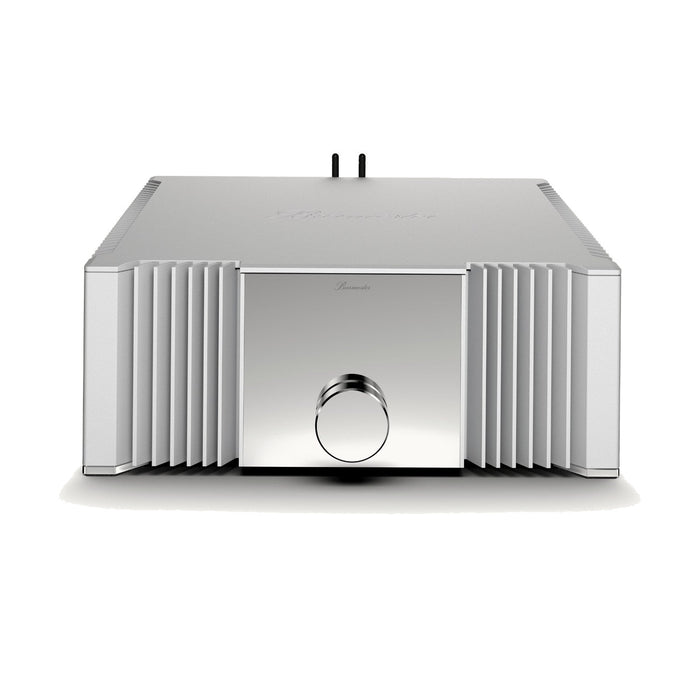
  15. 2018 The Signature Line: 159 and BC350 The 1,200-watt 159 monoblocks, seven years in development, and the BC350 loudspeakers open a line above Reference.Burmester 159 Amplifier (pair)
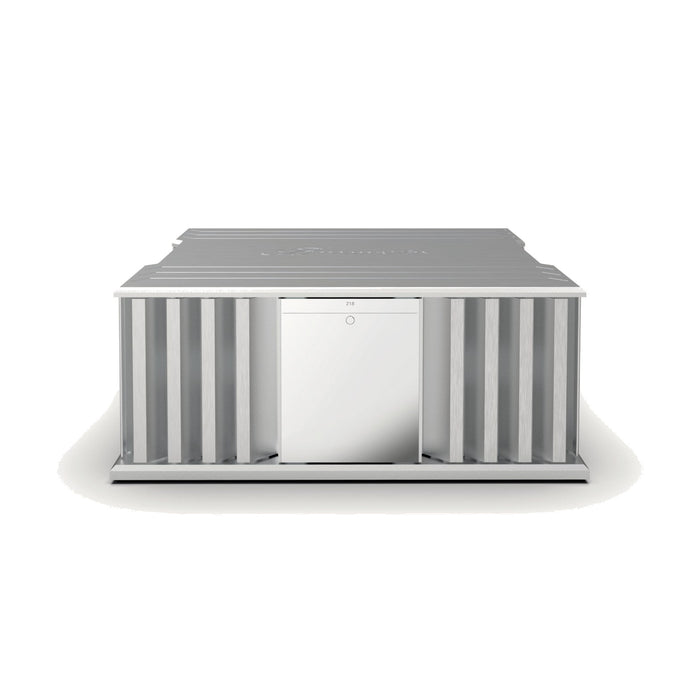
  16. 2021 BC150, 217, and a new generation of amplifiers The BC150 loudspeaker and 217 turntable arrive in 2021 and the 216 and 218 power amplifiers in 2022, with the 159's heat-pipe cooling inside.Burmester 218 Amplifier
  17. 2023 The 232, and new leadership The 232 integrated introduces a new design language with app control; from January 2024 co-chief executives Thorsten Poenig and Thomas Schneider lead the company, with the Burmester family as owners. The modular BX100 loudspeaker follows in 2024.Burmester 232 Streaming Integrated
  18. 2025 An all-new Reference Line At Munich in May 2025 Burmester shows the 249 preamplifier, 257 turntable and 259 power amplifier on X-AMP 3, all-new designs that borrow nothing from the previous generation.Burmester 259 Amplifiers
Read the Burmester story
Burmester

Dieter Burmester never set out to build a hi-fi company. Born in Austria in 1946 and raised in Lüchow in Lower Saxony, he was on stage with rock bands from the age of fifteen, playing bass and guitar every weekend across northern Germany, and he came to Berlin in 1968 to study electrical engineering. By 1977 he was running a small engineering office in Berlin-Schöneberg designing circuitry for medical measuring instruments. What pushed him toward audio was frustration: his Quad tube amplifier kept failing. In July 1977 he applied the precision parts and circuit discipline of his medical work to a solid-state preamplifier and called it the 777, for the month and the year. He built about twenty by hand for friends; a German magazine praised it, dealers called, and when a local bank refused him a loan on the grounds that the business could not work, he found he did not need one.

The look arrived almost at once. The 785 preamplifier of May 1978 introduced the mirror-polished chrome front that has identified every Burmester since. The engineering foundations followed in quick succession: in August 1980 the 808, the first modular preamplifier, with plug-in cards that let an owner add phono or balanced inputs years later, a component that has never left production and is sold today as the 808 MK5; in 1983 fully balanced circuitry, brought to home audio for the first time; in 1987 the first amplifier chain that was DC-coupled from the phono stage to the loudspeaker terminals, with no capacitors anywhere in the path. The 909 stereo power amplifier of 1990, stable into one ohm, supervised by a processor and built around an outsized supply, became the template for every Burmester power amplifier since. Dieter Burmester was a founding member of Germany's High End society in 1981, and his description of the enterprise was plain: high-end audio is "a means of transporting musical emotions; nothing more, but also nothing less."

Burmester treated digital as a mechanical and analog problem first. In 1991 the company introduced the first belt-driven CD player, decoupling the disc and laser from the motor as a turntable does, with a bearing it has machined and hand-assembled in Berlin ever since; the 969 and 970, the 069 of 2007 and the 089 of 2010 all descend from it. In 1994 came the 948 power conditioner, a patented circuit that cancels DC on the mains in parallel, with nothing in series with the amplifiers, and still in the catalog. Loudspeakers followed in 1994 and 1995. In the 2000s the X-AMP discrete gain module became the common building block of Burmester's phono stages, preamplifiers, DACs and power amplifiers, and the 111 Musiccenter of 2012, a CD ripper, library, streamer, DAC and balanced preamplifier in one chrome box, put the company a decade ahead of most of high-end audio on computer-based music; the 151 and 151 MK2 brought the platform to the Top Line.

Around 2005 Burmester did something no serious high-end company had done and built a sound system for a car, the Bugatti Veyron. The design was adapted for the Porsche Panamera of 2009, beginning a partnership that now spans the Cayenne, Macan, 911, 718 and Taycan; Mercedes-Benz followed with the 2013 S-Class, the first luxury sedan with 3D surround as standard, then the Maybach, and Ferrari's Purosangue joined in 2022. The automotive work was controversial inside the industry at the time, but it funded the company's growth and fed back into the home products in resonance control and driver design. Through it all Burmester stayed in the same Schöneberg quarter, hand-building every unit, sourcing more than 95 percent of its parts from German suppliers, and putting each finished piece through some three hundred measurements before and after a seven-day burn-in.

Dieter Burmester died suddenly on August 15, 2015, at 69, still playing guitar in his office and still the public face of the company. His widow Marianne, who had helped build the business, took over as managing partner with long-time development chief Stefan Größler as technical director, and the course was set as evolution rather than revolution. The fortieth anniversary in 2017 brought Burmester's first turntable, the 175; the Signature Line opened in 2018 with the 1,200-watt 159 monoblocks and the BC350 loudspeakers; the BC150, B38, 216 and 218 followed in 2021 and 2022, and the 232 integrated of 2023 introduced a new design language. Since January 2024 the company has been led by co-chief executives Thorsten Poenig and Thomas Schneider, with Ralf Schmidt heading home-audio engineering, and it remains wholly family-owned. In May 2025 Burmester showed an all-new Reference Line, the 249 preamplifier, 257 turntable and 259 power amplifier, built on X-AMP 3 and borrowing, in the company's words, nothing from the previous generation. Nearly fifty years on, every Burmester is still developed and hand-built in Berlin, still wears chrome, and is still measured against the question Dieter asked in 1977: does it carry the music?
The complete Burmester story and technology library

Burmester at Pearl Audio

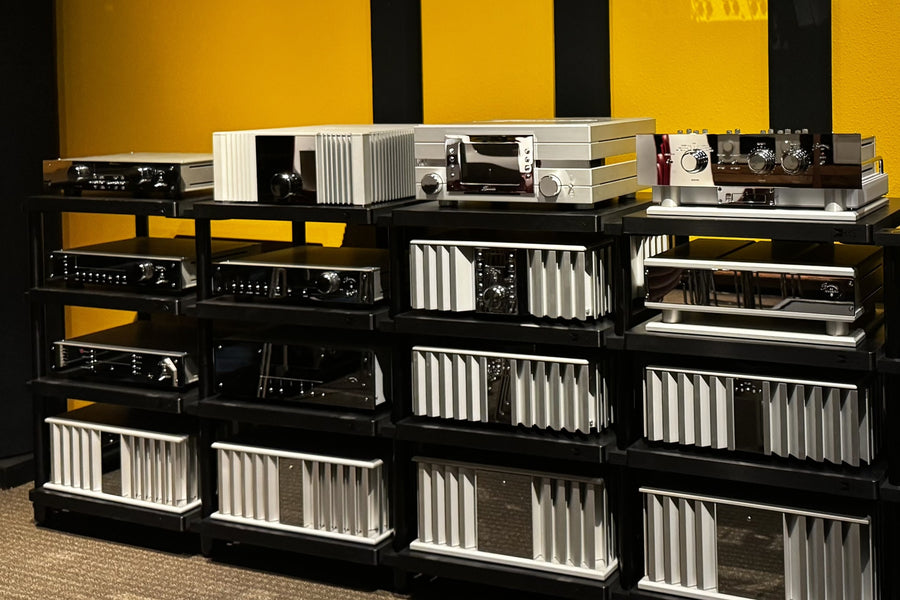
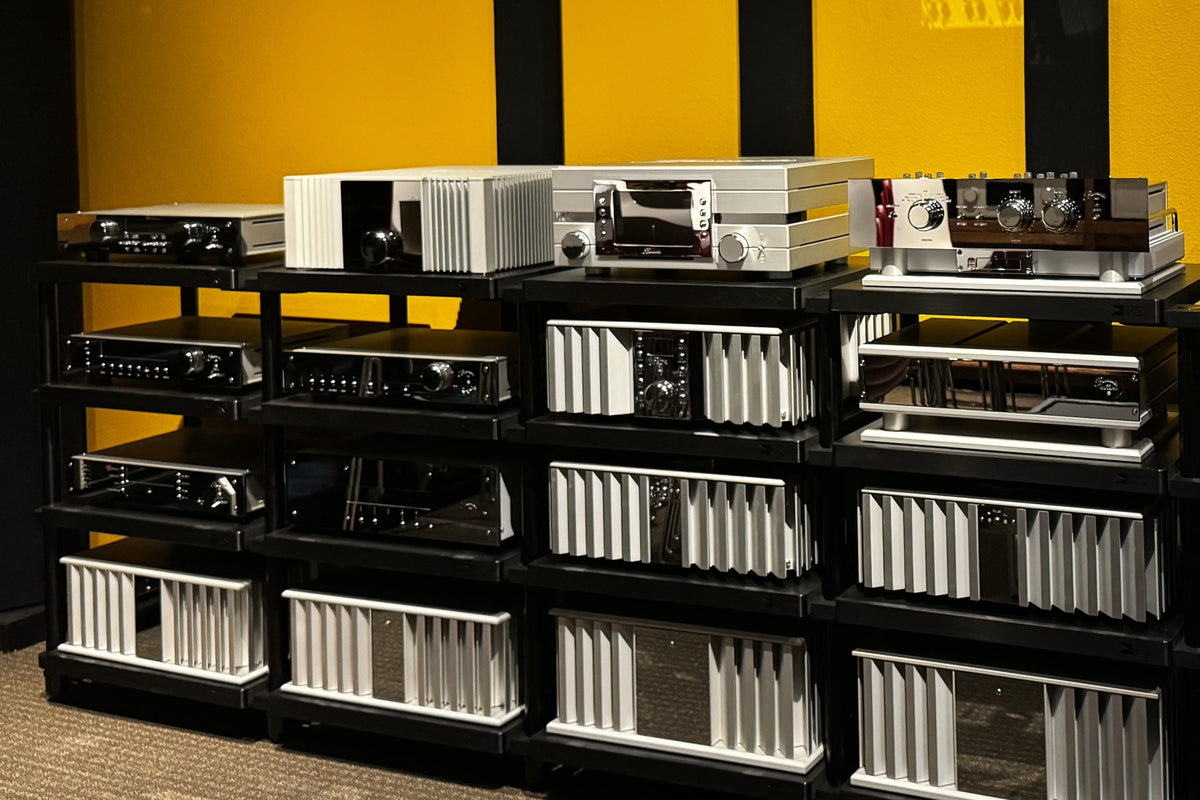
Pearl Audio is an authorized Burmester dealer in Portland. Burmester electronics from the Classic Line through the Top Line to the Reference Line are set up and playing in our showroom, with the 808 MK5, 111 Musiccenter and 218 at the top of the rack and the 232, 088, 151 MK2, 216 and 100 Phono beside them, and the Signature Line 159 and the BC loudspeakers available to order. Burmester systems are wired with the company's reversed XLR polarity in mind, delivered and set up by our own staff in the Portland area, and we keep the 948 on the floor so the amplifiers can be heard with the mains cleaned up as Burmester intends.

The Pearl Audio experience

How we work with you

A system at this level should be heard, thoughtfully matched, and properly set up. From the first audition to long-term ownership, you work with the same people, in person.

  1. 01

    Listen first

    The BC150 Loudspeaker is not in our rooms at present. When it is the right piece for a client we arrange a demonstration unit from the manufacturer and set it up for a private session.

  2. 02

    Delivery and installation

    We deliver and install throughout the Portland area, taking care of placement, connections, ventilation and system configuration ourselves.

  3. 03

    Support for as long as you own it

    We support everything we sell for as long as you own it, whether the answer comes by phone, in your home, or through factory service.

  4. 04

    A path for what comes next

    Trade-in assistance and qualifying 100% Trade-Up options give you flexibility when your listening priorities or your system change.

Search