


Luxman began in June 1925 as the radio-equipment department of Kinsuido, a painting and picture-frame dealer in Osaka, in the year radio broadcasting began in Japan. T. Hayakawa and his brother K. Yoshikawa incorporated the business as Lux Corporation; by the company's own account Kinsuido was the first in Japan to display and sell radio receivers in a store, and its radio manual, the first Japanese radio guidebook, ran to fourteen editions. The first products followed in 1928, the LUX-1730 and LUX-735 hi-fi radios sold with a magnetic-horn speaker, and in 1931 a magnetic pickup for the LUX-1730 electric phonograph. Through the 1930s the firm built its reputation on the parts it made itself, transformers and switches, and in 1952 it developed the OY-type output transformers that collectors still seek out and that Luxman's tube amplifiers carry in descendant form today.
The MA-7A of 1958, a mono vacuum-tube power amplifier with a patented NFB cross-over circuit, was Luxman's first fully assembled post-war hi-fi amplifier. The SQ-5A integrated of 1961, with its center-mounted level meter and Luxman's own tone-control circuit, was a hit, and the company dates its unbroken run of tube amplifiers from it. The SQ-65 of 1962 carried a motional-feedback patent, and the PZ-11 of the same year was Japan's first germanium-transistor phono equalizer. The SQ-38 of 1964 became a fixture of Japanese jazz cafés and began a series that reached its twelfth generation in the LX-380. The MQ-36 of 1966, an output-transformer-less tube amplifier, stayed in production until 1978; the SQ-505 and SQ-507 of 1968 preceded the 500 series; and the MQ-60 power amplifier of 1969 and CL-35 preamplifier of 1970 are the models the current MQ-88uC and CL-38uC are built to honor. By The Absolute Sound's account Luxman was the only major Japanese manufacturer still producing tube amplifiers through the 1970s and 1980s.
LUX Kit, a do-it-yourself brand, sold about seventy products between 1971 and 1980. For the fiftieth anniversary in 1975 Luxman introduced the 300-watt M-6000 stereo amplifier, the C-1000 preamplifier and the T-110 tuner; the M-3000, M-4000 and M-6000 were designed by Tim de Paravicini, whom Luxman employed for amplifier design. The Laboratory Reference Series of 1977 included a DC amplifier, and the PD-300 turntable of 1980 held the record down with a vacuum, a first. Atsushi Miura, who had married the eldest daughter of co-founder Yoshikawa and joined the company in 1956, was running it by the early 1980s. In 1984 Alpine Electronics acquired the Luxman brand; Miura and designer Masami Ishiguro founded A&M Limited in 1986, creating Air Tight. Under Alpine the products were co-badged Alpine/Luxman and sold through mass retailers such as Costco in the US; Stereophile later wrote that high-end dealers dropped the line because of the confusion, and Hi-Fi News that the fit was never an easy one. The engineering went on: the Fluency DA-07 converter and DP-07 transport of 1987, built on a University of Tsukuba professor's function-complementation theory, and the top-loading D-500X CD player of 1990 with a Philips CDM-3 mechanism.
Alpine sold the brand in 1994. The ownership that followed is not well documented, and the present Luxman Corporation was formed from the old Lux Corporation around 2000; what the company built in those years is clearer. The SQ-38s marked the seventieth anniversary in 1995. The C-10 preamplifier and B-10 power amplifier of 1996 remained the flagships for about ten years, and the C-10's Ultimate Attenuator, a fixed-resistor volume control, is the ancestor of LECUA. In 1999 the CM-2100 car amplifier became the first product with ODNF, the feedback circuit that fed back only the distortion. The DU-10 universal SACD player arrived in 2001, and the CL-88 and MQ-88 of 2004 were the first tube separates in eleven years. For the eightieth anniversary the B-1000f monoblocks of 2005, more than thirteen years in development, and the C-1000f control amplifier of 2006, at ¥2,100,000, introduced LECUA1000 and ODNF 2.4. In 2007 Philip O'Hanlon's On a Higher Note brought Luxman back to the United States after roughly two decades away, with the C-1000f at $30,000 and the B-1000f at $48,000 each; what struck O'Hanlon was that the technology really did trickle down to more realistically priced models.
In 2009 Luxman became part of the International Audio Group, which kept it separate from its British brands, Quad and Wharfedale among them, and left design and manufacturing in Kanagawa. The SQ-38u, eleventh of its line, launched the same year. The PD-171 of 2011 revived turntable development 28 years after the PD-350; the P-700u headphone amplifier followed in 2012, and the C-900u and M-900u of 2013, at ¥1,155,000 each, brought ODNF 4.0 and New LECUA1000. The MQ-300 of 2015, with two Japanese-made 300B tubes, marked the ninetieth anniversary. The X generation renewed the integrateds, the L-505uXII and L-507uXII in November 2017 and the L-509X in January 2018, and the CL-38uC and MQ-88uC tube separates of April 2018 reproduced the OY15 output transformers in their original shape. The PD-151 turntable arrived in February 2019 and the CL-1000 tube preamplifier in January 2020. In July 2020 the D-10X gave the world premiere of ROHM's MUS-IC BD34301EKV converter, run as a pair in dual mono, and the same year the L-595A LIMITED reissued the 1990s L-570 Class A design in 300 units each for Japan and overseas.
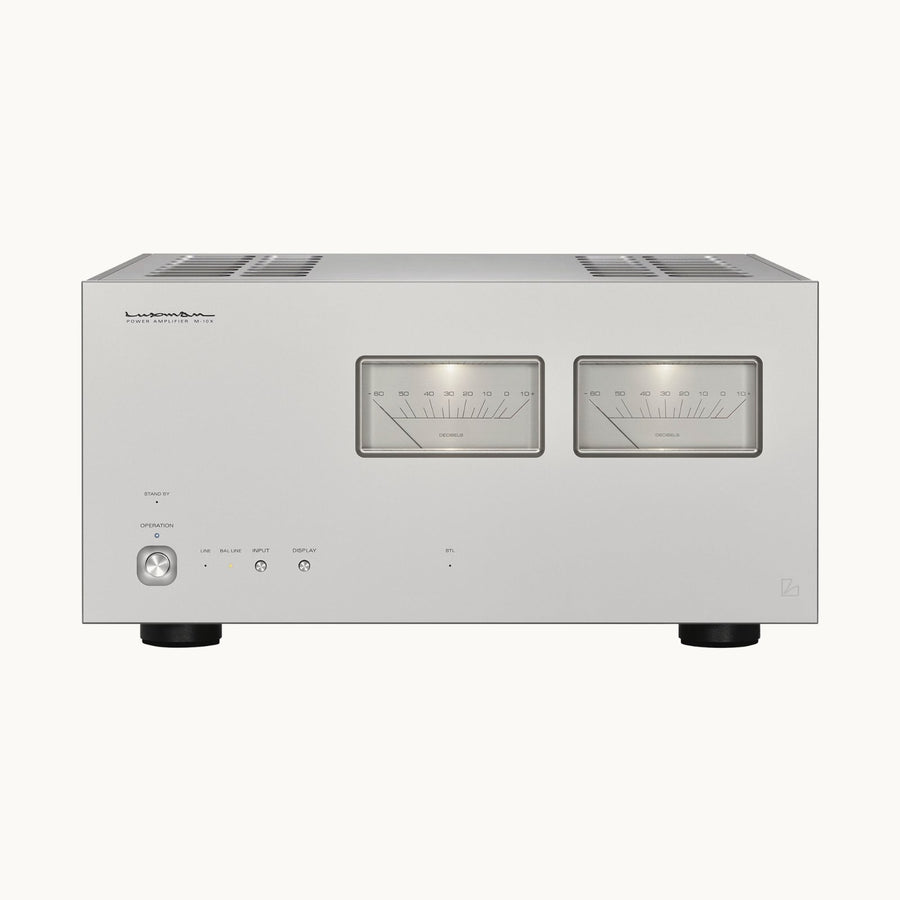
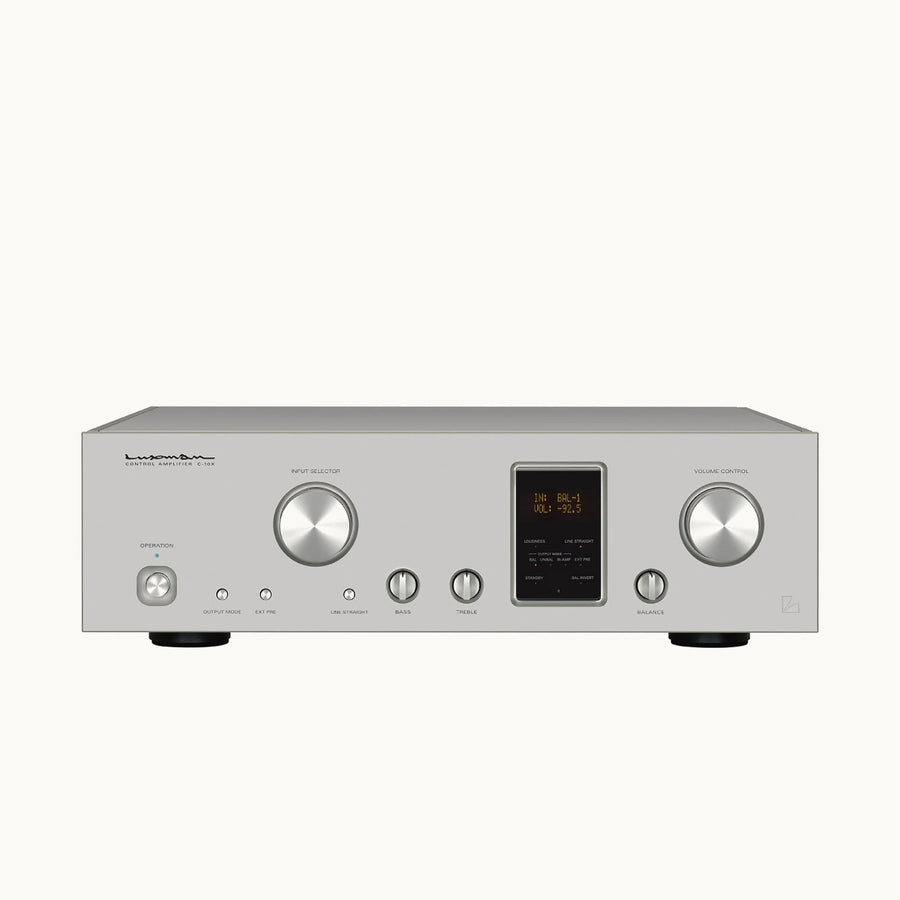
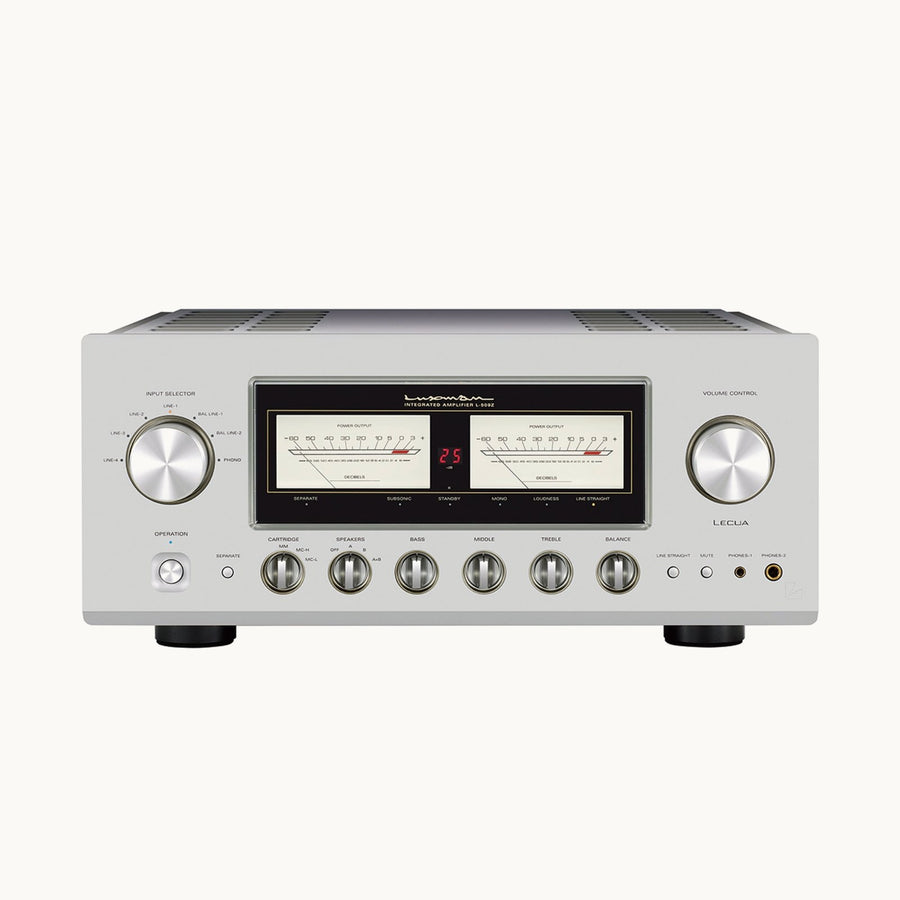
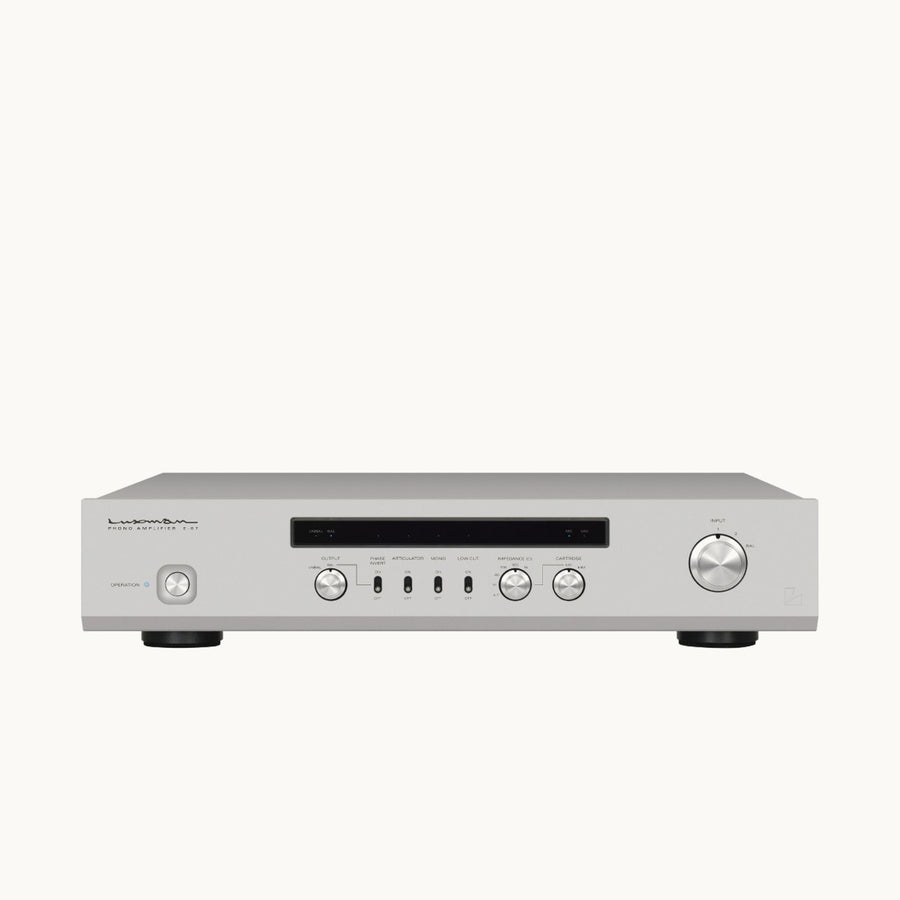
LIFES, the successor to ODNF, shipped first in the M-10X power amplifier, announced in the US in January 2022 at $19,995, then in the L-507Z of August 2022, the L-509Z that December, and the C-10X of November 2023, the first new flagship preamplifier in ten years. The D-07X SACD player arrived in February 2023 and the PD-191A turntable, with the SAEC-developed LTA-710 arm, reached the US that April; the NT-07 network transport and L-505Z followed in 2024. The centennial year of 2025 brought the E-07 phono stage, Black Edition CENTENNIAL versions of four models, the D-03R, and the L-100 and D-100 CENTENNIAL, the first pure Class A integrated and the first disc player built on LIFES 1.1. In February 2025 Rhythm Audio of Upland, California took over distribution for the United States and Canada, and in May Luxman was inducted into the Hi-Fi Hall of Fame. The B-100 CENTENNIAL mono amplifier followed in September 2026, and in October Stereophile put the L-100 on its cover and named it Joint Amplification Component of the Year. Luxman is headquartered and still manufactures in Yokohama under president Tatsuya Sueyoshi, and each L-100 is built by hand by a team of four.