


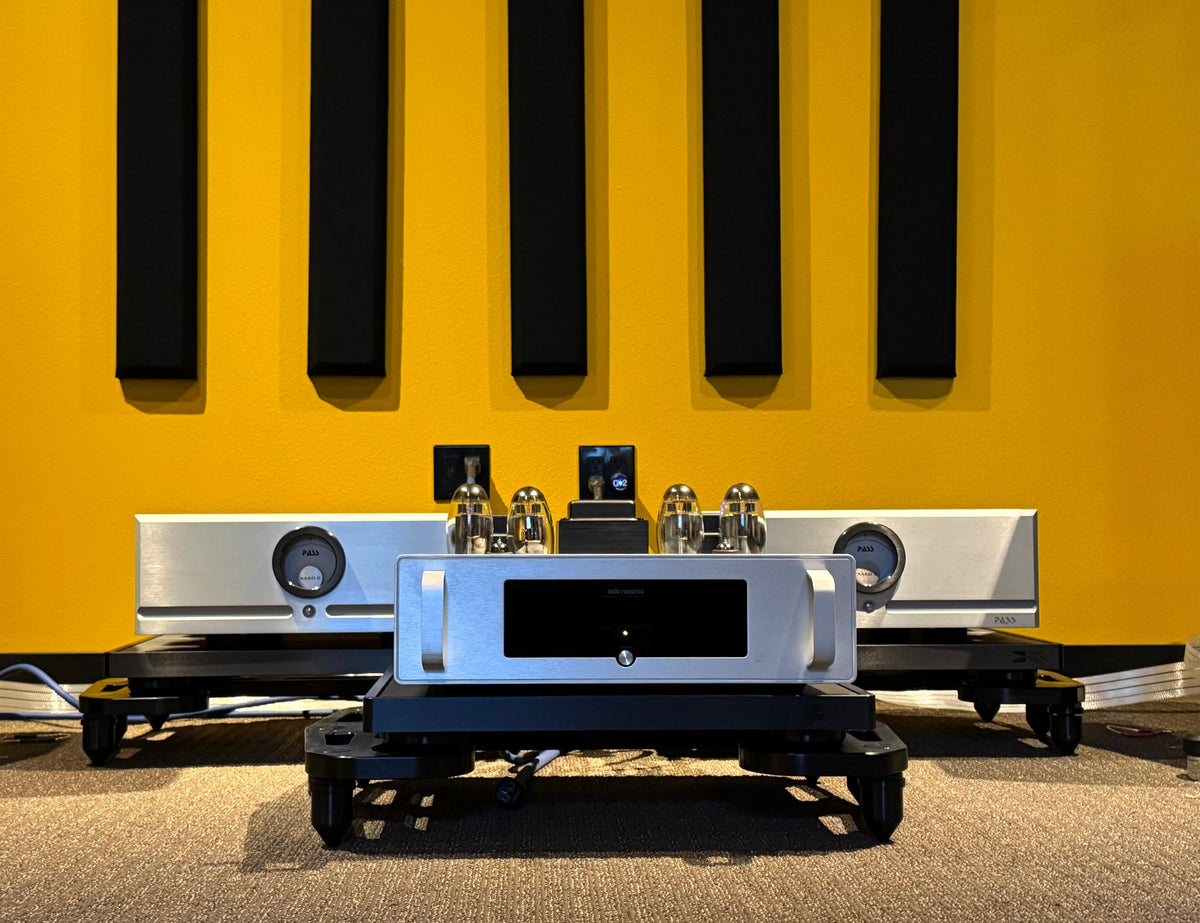
William Zane Johnson learned electronics in the military, opened a radio and television repair shop in Minneapolis, and in 1949 built his first commercial amplifier for a customer with a Klipschorn: three chassis, all triodes, transformer-coupled, with a separate electronically regulated power supply. In 1951 he founded Electronic Industries, a repair shop, hi-fi retailer and custom amplifier builder, and spent the 1950s and 1960s improving on the Dynaco designs of the day one amplifier at a time, convinced that power supplies and transformers deserved more care than the industry gave them. He tried the first transistors and found them, in his word, horrendous. In 1968 he sold the business, his patents and his files to Peploe, Inc. and became its director of research; in 1970, as he put it, he obtained his freedom from that company and started Audio Research.
He showed the Dual 50 amplifier and the SP-1 and SP-2 preamplifiers at a trade show in Washington in 1970, and an engineer told him he had set the audio industry back twenty years. Two years later the SP-3, eight 12AX7s run at reduced heater voltage and $595, was reviewed by J. Gordon Holt in Stereophile as modifying the input signal less than any other preamplifier available, and The Absolute Sound later called it the single most important debut of the high-end era. Audio Research trademarked the phrase High Definition and has kept it as a guiding principle since. The D-75 and D-76 amplifiers, the 150-watt Dual 150 of 1975, the SP-6 of 1978 and the nineteen-tube D-79 of 1979 followed; the SP-10 of 1982 put the power supply in a second chassis, and the hybrid SP-11 of October 1985, a triode and a FET in every stage, was called the world's best preamplifier by Harry Pearson and sold about three thousand units.
The Reference series began in 1995 and 1996 with the Reference 1 line stage and the Reference 600 monoblocks, and the Reference 2 Mk II brought in the 6H30 triode that has been the heart of every Audio Research preamplifier since. The Reference 3 of 2004 was fully balanced, class A and feedback-free; the Reference 5 and Reference Phono 2 arrived in 2009, the two-chassis Reference Anniversary in 2010 for the fortieth year, and the Reference 250 and 750 amplifiers in 2011 with the KT120 tube. In 2008 Johnson, then 81, sold the company to Quadrivio, the Italian group that had bought Sonus faber the year before and would add Sumiko, Wadia and McIntosh to form Fine Sounds, later the McIntosh Group. He died on December 10, 2011, at 85.
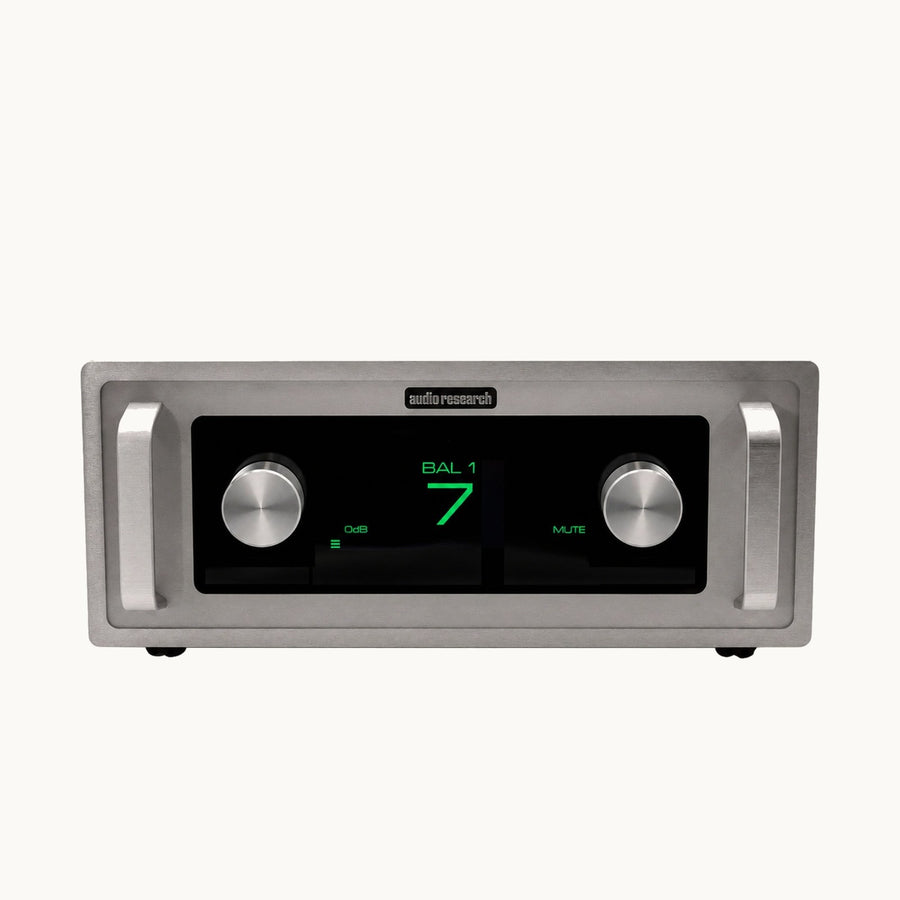
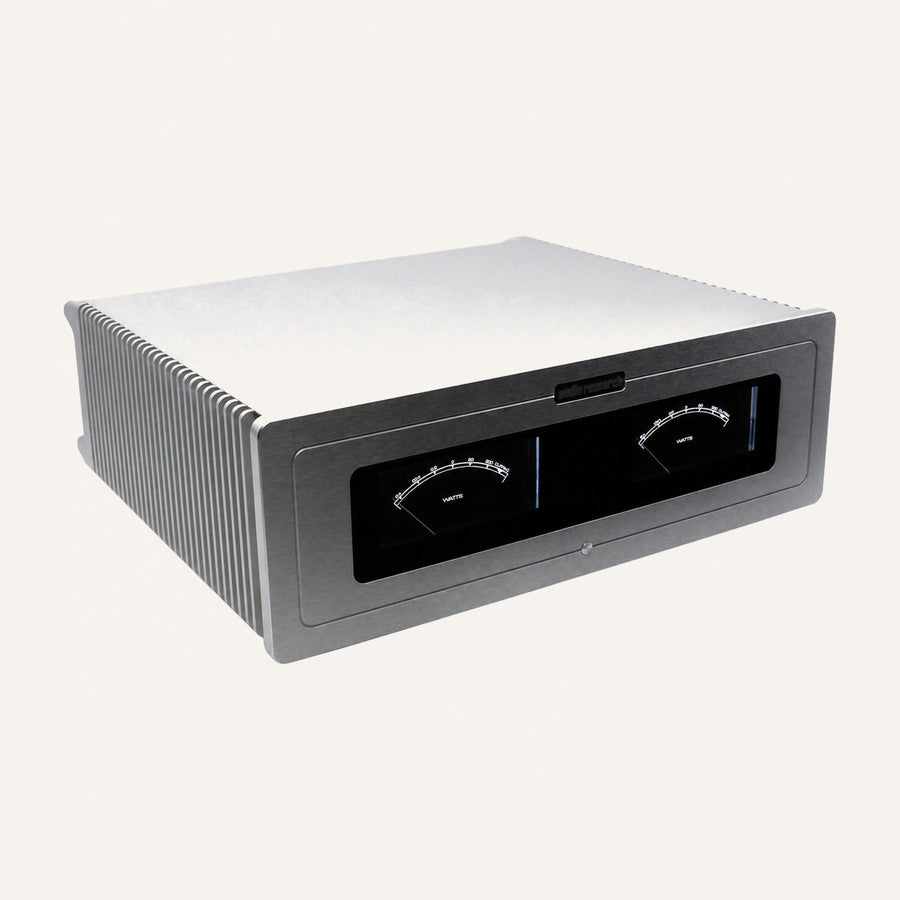
Under the group the company's look changed and its engineering continued. The G Series of 2014 removed the handles and brought the KT150 tube, which went into the Reference SE amplifiers the same year; the Reference 6 followed in 2015, the Foundation series of 2017, the LS28, PH9 and DAC9, was styled by Livio Cucuzza, and the VT80 introduced the company's first auto-bias circuit. The Reference 160M of 2018, with auto-bias, the GhostMeter faceplate and transformers reaching 110 kHz, was described by its designer as the apex of the Audio Research design language; the Reference 160S came in 2019. In August 2018 the company moved from Plymouth to a 20,000-square-foot facility in Maple Grove, Minnesota, where it still is. For the fiftieth anniversary in 2020 came the Reference 6SE, the Reference Phono 3SE, Ken Kessler's history Making the Music Glow, and, in August, a sale: the McIntosh Group sold Audio Research to Trent Suggs, its former North American sales manager, who said he had no bank note, no debt and no partners. The I/50 of 2021, in six colors, was built to bring a new generation to the brand.
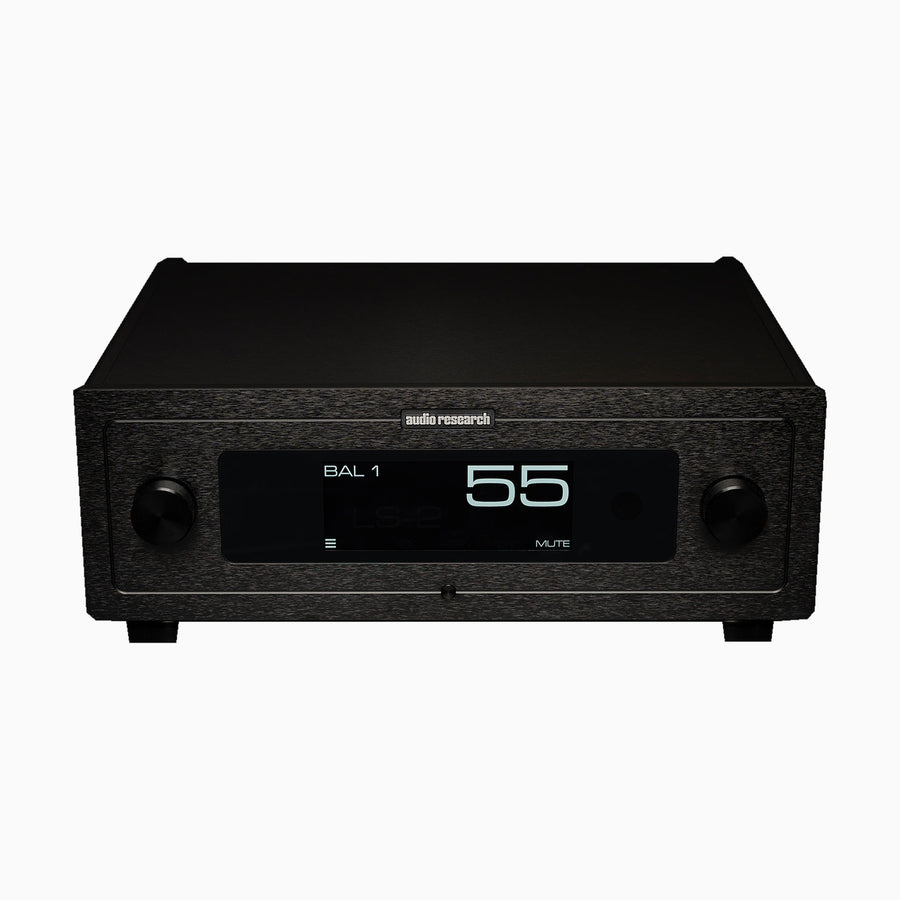
The independence was short. In April 2023 the company entered an assignment for the benefit of creditors in Minnesota, and on June 20 a judge approved its sale to a new corporation, AR Tube Audio, led by Valerio Cora of Acora Acoustics, with the staff kept on; the difficulties, Michael Fremer reported, were not caused by poor sales or waning interest. What followed was the largest burst of new products in the company's history. The Reference 330M monoblocks, six KT170s a side for 330 watts, debuted at Munich in May 2024 from a team of newly hired engineers; six core products, the I/70, LS-2, LS-3, S-100, S-200 and D-80, arrived in 2025; and at AXPONA in April 2026 the Reference 20 preamplifier, the first new flagship line stage since 2012, the Reference 7 and the Reference 80X were premiered, the Reference 20 winning hi-fi+'s award for the best debut of the show. In July 2026 Cora stepped back from day-to-day leadership, with the company's financial backer providing oversight and two general managers running Maple Grove; Audio Research's operations, development, dealer support and service continue independently.
Fifty-six years on, the method is Johnson's. Every product is built by hand to order, tested twice, burned in, and listened to by Warren Gehl, the company's sonic evaluator for about thirty years, before it ships; the output tubes are burned in and matched on the company's own fixtures; nearly everything built since the 1970s can still be restored from a secured room of original parts. The tubes are common, long-lived types, the circuits are balanced and class A, the power supplies are regulated, and the transformers are the company's own. Johnson's test was that if it measures badly it is not going to sound good, and his bet was that with an all-out design effort vacuum tubes would win. The Reference 330M and Reference 20 are the current evidence.