(503) 222-25991038 NW Johnson St, Portland · Mon–Sat 10–5:30
The
Audio Research story
High Definition since 1970: American tube amplification, balanced and class A, hand-built and listened to in Minnesota.
Founded 1970 in Minneapolis, Minnesota; built by hand in Maple Grove, Minnesota since 2018 by William Z. Johnson ·
audioresearch.com ↗
The history and technologies of Audio Research of Minnesota, and what Pearl Audio keeps on the floor.
William Zane Johnson learned electronics in the military, opened a radio and television repair shop in Minneapolis, and in 1949 built his first commercial amplifier for a customer with a Klipschorn: three chassis, all triodes, transformer-coupled, with a separate electronically regulated power supply. In 1951 he founded Electronic Industries, a repair shop, hi-fi retailer and custom amplifier builder, and spent the 1950s and 1960s improving on the Dynaco designs of the day one amplifier at a time, convinced that power supplies and transformers deserved more care than the industry gave them. He tried the first transistors and found them, in his word, horrendous. In 1968 he sold the business, his patents and his files to Peploe, Inc. and became its director of research; in 1970, as he put it, he obtained his freedom from that company and started Audio Research.
He showed the Dual 50 amplifier and the SP-1 and SP-2 preamplifiers at a trade show in Washington in 1970, and an engineer told him he had set the audio industry back twenty years. Two years later the SP-3, eight 12AX7s run at reduced heater voltage and $595, was reviewed by J. Gordon Holt in Stereophile as modifying the input signal less than any other preamplifier available, and The Absolute Sound later called it the single most important debut of the high-end era. Audio Research trademarked the phrase High Definition and has kept it as a guiding principle since. The D-75 and D-76 amplifiers, the 150-watt Dual 150 of 1975, the SP-6 of 1978 and the nineteen-tube D-79 of 1979 followed; the SP-10 of 1982 put the power supply in a second chassis, and the hybrid SP-11 of October 1985, a triode and a FET in every stage, was called the world's best preamplifier by Harry Pearson and sold about three thousand units.
The Reference series began in 1995 and 1996 with the Reference 1 line stage and the Reference 600 monoblocks, and the Reference 2 Mk II brought in the 6H30 triode that has been the heart of every Audio Research preamplifier since. The Reference 3 of 2004 was fully balanced, class A and feedback-free; the Reference 5 and Reference Phono 2 arrived in 2009, the two-chassis Reference Anniversary in 2010 for the fortieth year, and the Reference 250 and 750 amplifiers in 2011 with the KT120 tube. In 2008 Johnson, then 81, sold the company to Quadrivio, the Italian group that had bought Sonus faber the year before and would add Sumiko, Wadia and McIntosh to form Fine Sounds, later the McIntosh Group. He died on December 10, 2011, at 85.
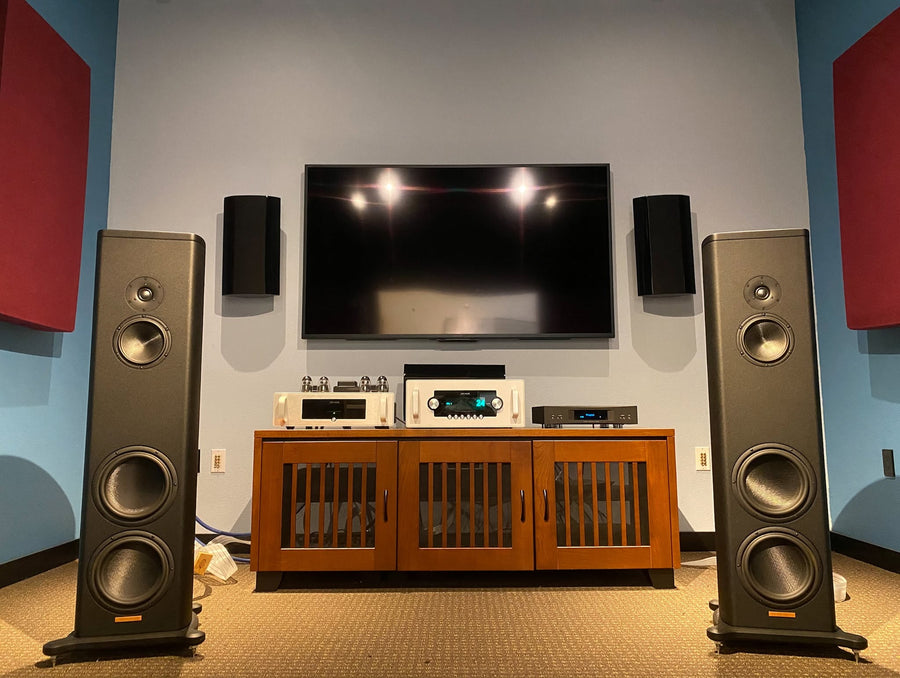
Audio Research with Magico and Linn in our theater room, 2021. Photo: Pearl Audio.
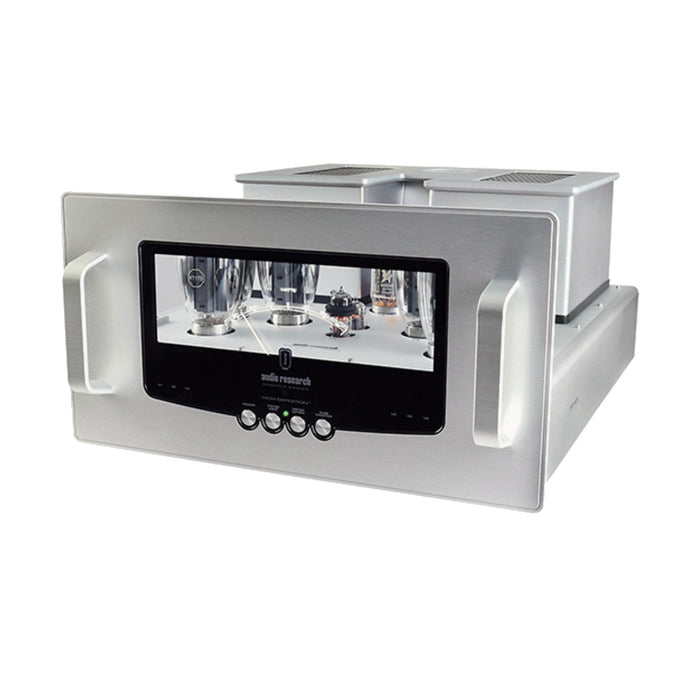
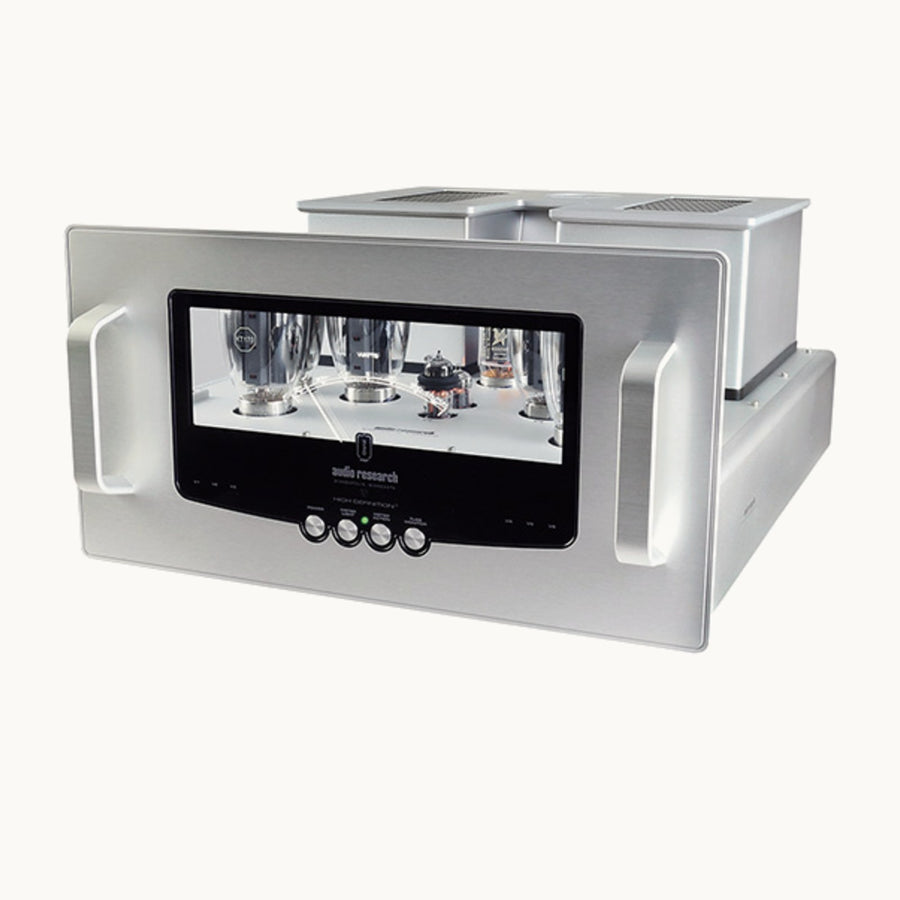
Under the group the company's look changed and its engineering continued. The G Series of 2014 removed the handles and brought the KT150 tube, which went into the Reference SE amplifiers the same year; the Reference 6 followed in 2015, the Foundation series of 2017, the LS28, PH9 and DAC9, was styled by Livio Cucuzza, and the VT80 introduced the company's first auto-bias circuit. The Reference 160M of 2018, with auto-bias, the GhostMeter faceplate and transformers reaching 110 kHz, was described by its designer as the apex of the Audio Research design language; the Reference 160S came in 2019. In August 2018 the company moved from Plymouth to a 20,000-square-foot facility in Maple Grove, Minnesota, where it still is. For the fiftieth anniversary in 2020 came the Reference 6SE, the Reference Phono 3SE, Ken Kessler's history Making the Music Glow, and, in August, a sale: the McIntosh Group sold Audio Research to Trent Suggs, its former North American sales manager, who said he had no bank note, no debt and no partners. The I/50 of 2021, in six colors, was built to bring a new generation to the brand.
The independence was short. In April 2023 the company entered an assignment for the benefit of creditors in Minnesota, and on June 20 a judge approved its sale to a new corporation, AR Tube Audio, led by Valerio Cora of Acora Acoustics, with the staff kept on; the difficulties, Michael Fremer reported, were not caused by poor sales or waning interest. What followed was the largest burst of new products in the company's history. The Reference 330M monoblocks, six KT170s a side for 330 watts, debuted at Munich in May 2024 from a team of newly hired engineers; six core products, the I/70, LS-2, LS-3, S-100, S-200 and D-80, arrived in 2025; and at AXPONA in April 2026 the Reference 20 preamplifier, the first new flagship line stage since 2012, the Reference 7 and the Reference 80X were premiered, the Reference 20 winning hi-fi+'s award for the best debut of the show. In July 2026 Cora stepped back from day-to-day leadership, with the company's financial backer providing oversight and two general managers running Maple Grove; Audio Research's operations, development, dealer support and service continue independently.
The VT80SE, predecessor of the D-80, in our Small Room, 2024. Photo: Pearl Audio.
The D-80
→
Fifty-six years on, the method is Johnson's. Every product is built by hand to order, tested twice, burned in, and listened to by Warren Gehl, the company's sonic evaluator for about thirty years, before it ships; the output tubes are burned in and matched on the company's own fixtures; nearly everything built since the 1970s can still be restored from a secured room of original parts. The tubes are common, long-lived types, the circuits are balanced and class A, the power supplies are regulated, and the transformers are the company's own. Johnson's test was that if it measures badly it is not going to sound good, and his bet was that with an all-out design effort vacuum tubes would win. The Reference 330M and Reference 20 are the current evidence.
MilestonesScroll →
1949The first amplifierWilliam Z. Johnson builds a three-chassis, all-triode, transformer-coupled amplifier with a regulated power supply for a customer with a Klipschorn. In 1951 he founds Electronic Industries in Minneapolis.
1970Audio Research foundedFree of Peploe, the company that had bought Electronic Industries in 1968, Johnson starts Audio Research in Minneapolis and shows the Dual 50, SP-1 and SP-2. An engineer tells him he has set audio back twenty years.
1972SP-3Eight 12AX7s and $595. J. Gordon Holt finds it modifies the signal less than any other preamplifier available; The Absolute Sound later calls it the most important debut of the high-end era. High Definition becomes the company's trademark.
1979D-79The High Definition Power Amplifier D-79: nineteen tubes, ninety pounds, after the D-75, D-76 and the 150-watt Dual 150 of 1975. The SP-6 preamplifier had arrived in 1978.
1985SP-11After the two-chassis SP-10 of 1982, the hybrid SP-11 puts a triode and a FET in every stage. Harry Pearson calls it the world's best preamplifier; about three thousand are built.
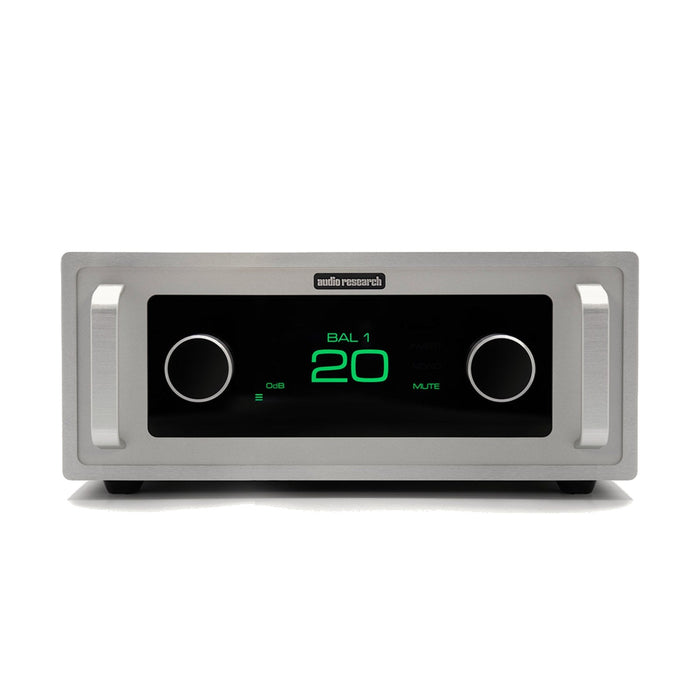
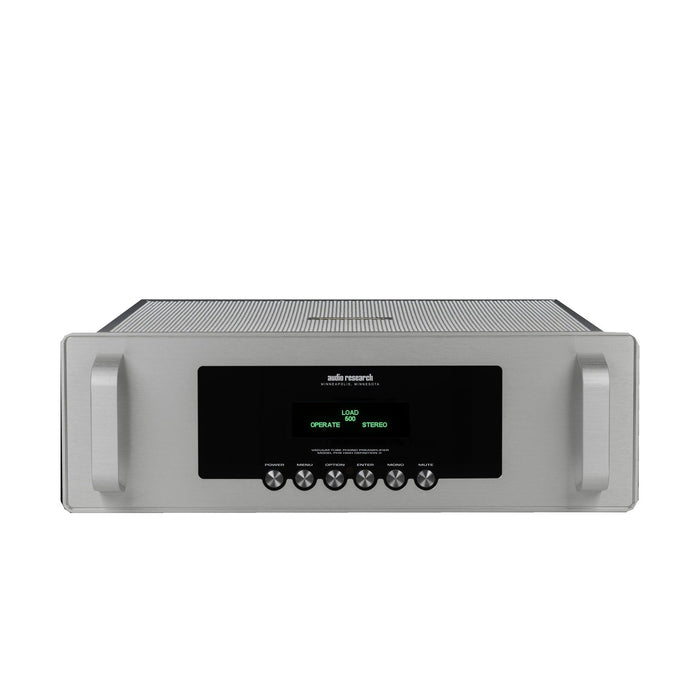
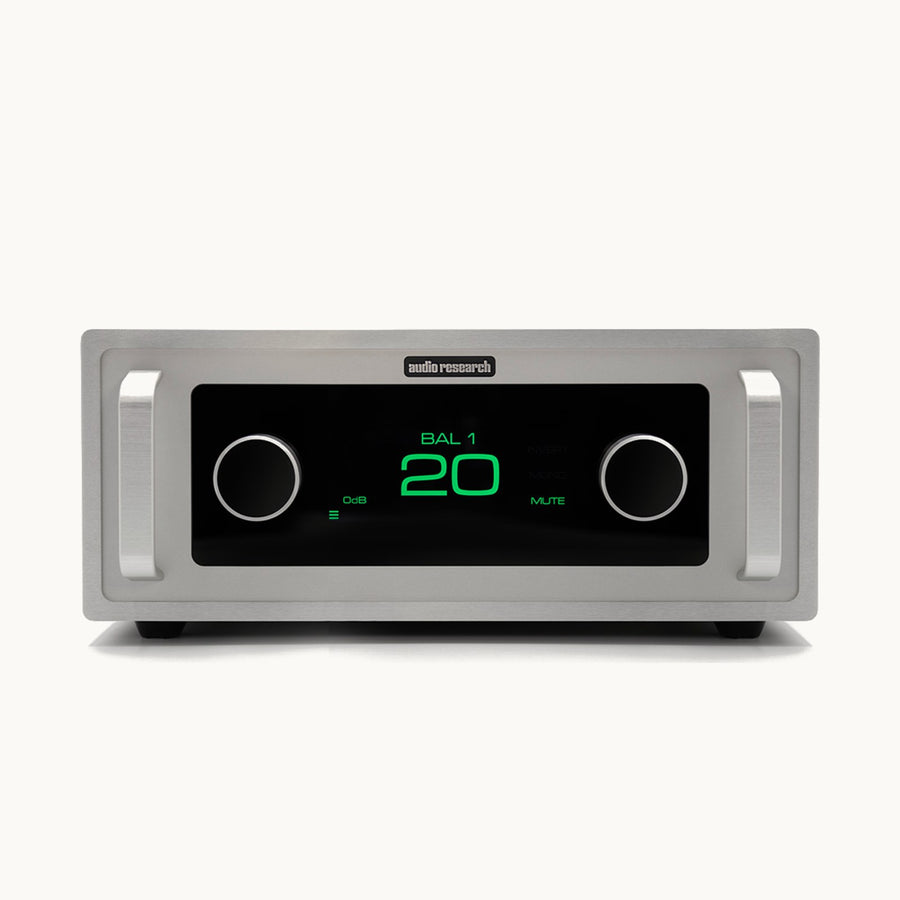
1995The Reference seriesThe Reference 1 line stage and Reference 600 monoblocks begin the flagship line. The Reference 2 Mk II introduces the 6H30 triode; the fully balanced Reference 3 follows in 2004.Audio Research Reference 20 Preamplifier
→
2008Quadrivio and Fine SoundsJohnson, 81, sells to the Italian group that owns Sonus faber; it adds Sumiko, Wadia and McIntosh and becomes the McIntosh Group in 2016. The Reference 5 and Reference Phono 2 arrive in 2009.
2010Reference AnniversaryA two-chassis preamplifier for the fortieth year. In 2011 the Reference 250 and 750 amplifiers bring the KT120 tube; William Z. Johnson dies on December 10, 2011, at 85.
2014The G Series and the KT150Handles gone, a restyled look, and the KT150 output tube, which goes into the Reference 75SE, 150SE and 250SE with about 3,000 hours of life.
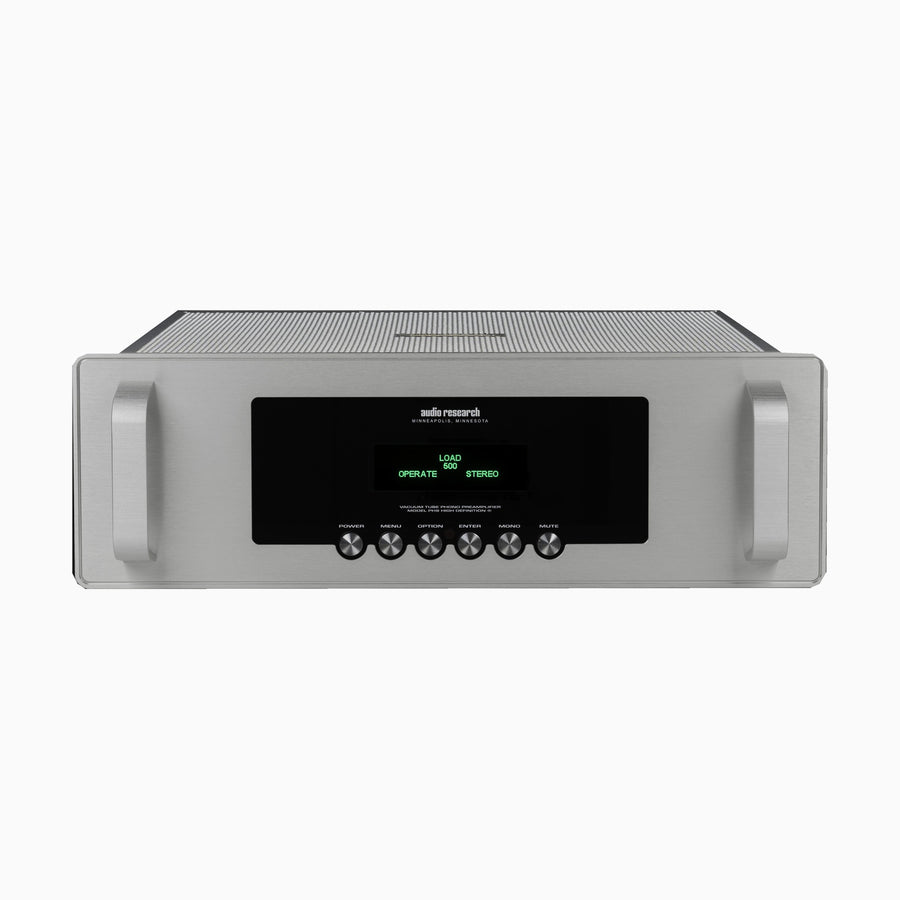
2017Foundation series and auto-biasThe LS28, PH9 and DAC9, styled by Livio Cucuzza; the VT80 carries the company's first auto-bias circuit.Audio Research PH9 Phono Stage
→
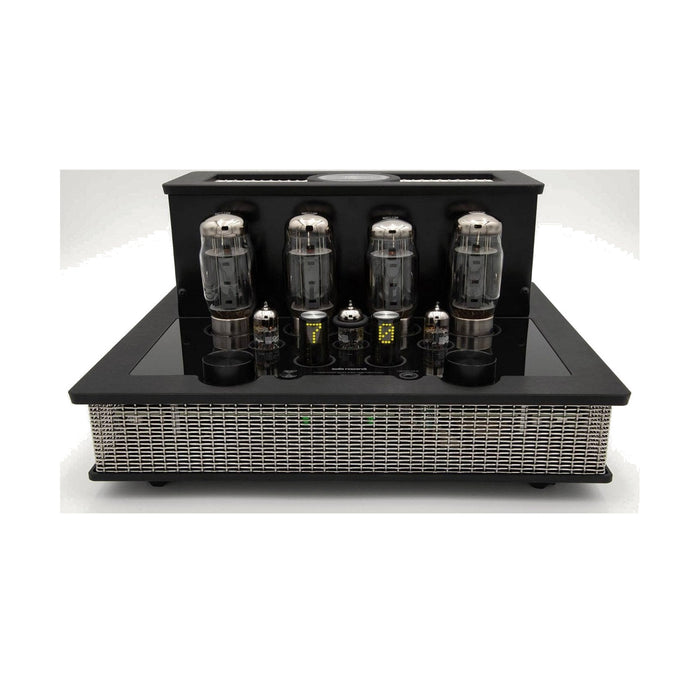
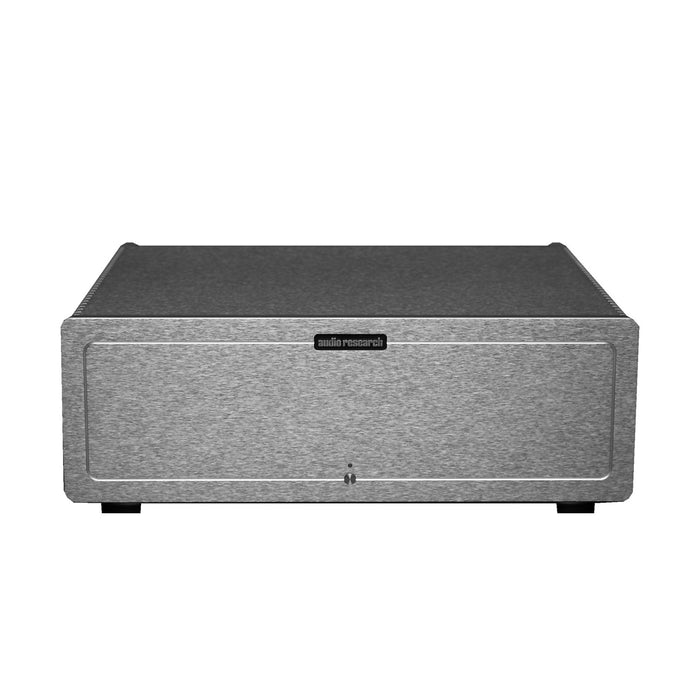
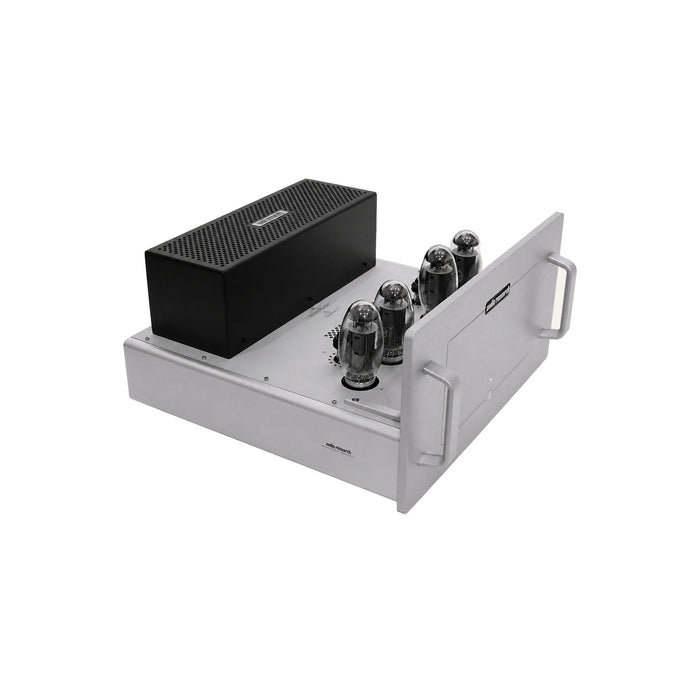
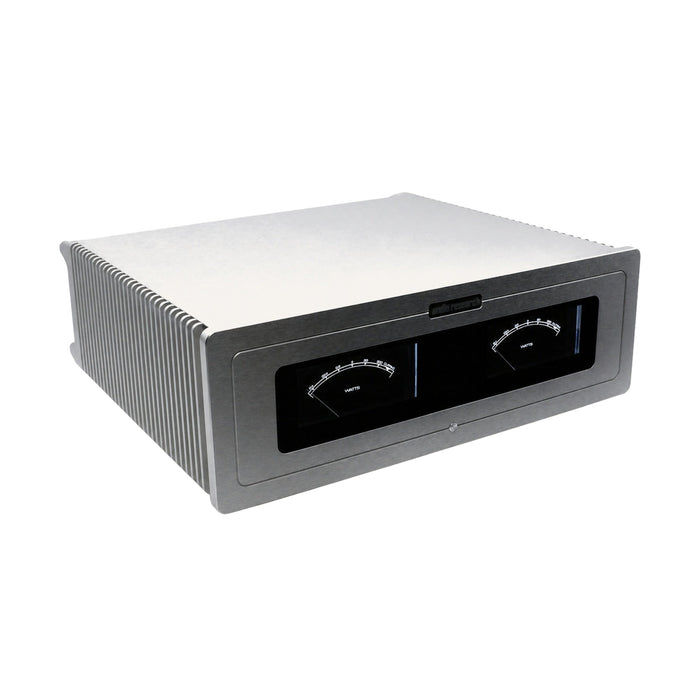
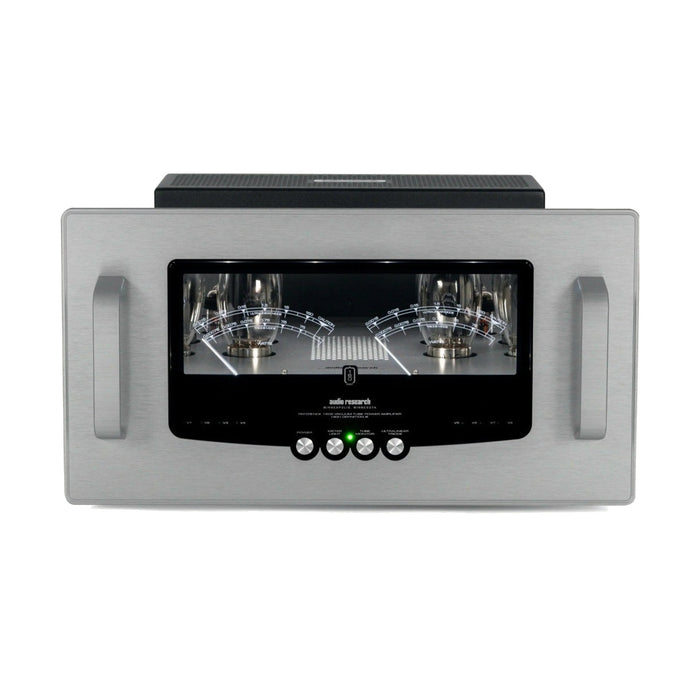
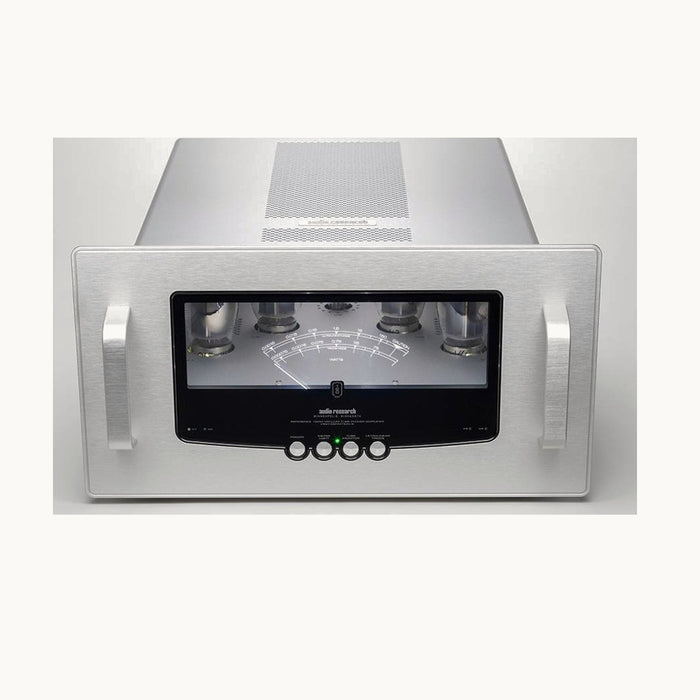
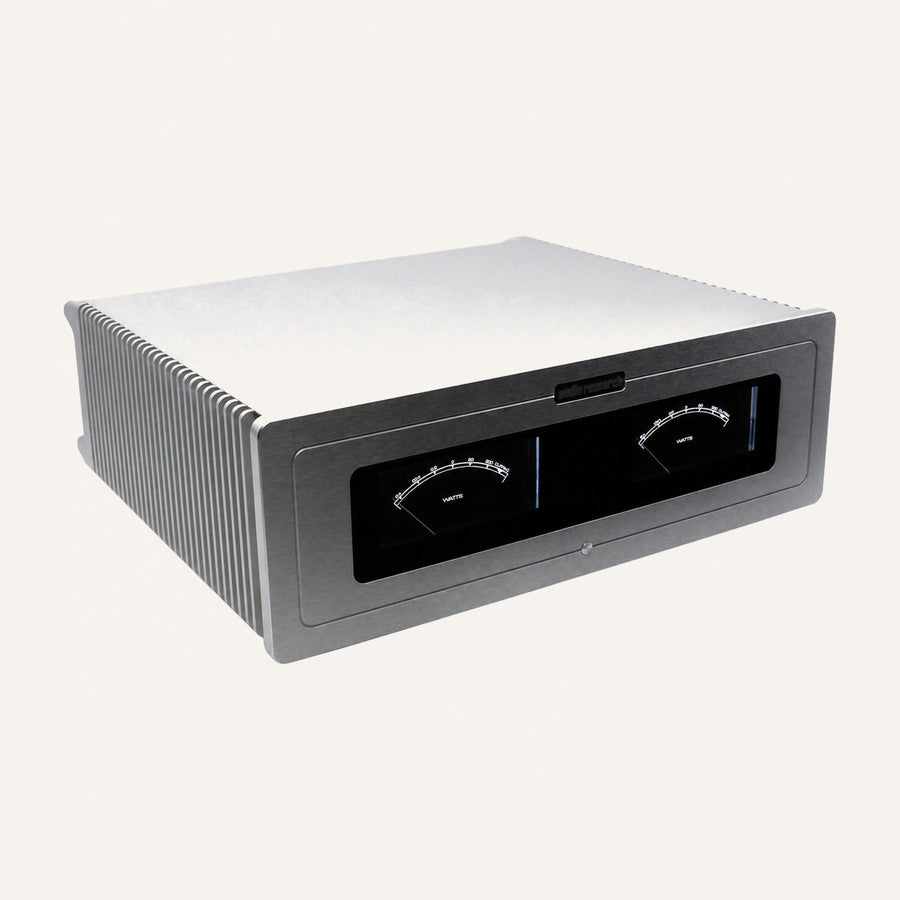
2018Reference 160M; Maple GroveAuto-bias comes to the Reference line with the GhostMeter faceplate and 110 kHz transformers; the company moves to Maple Grove, Minnesota in August. The Reference 160S follows in 2019.Audio Research REF160M MkII Amplifier
→
2020Fifty years; sold to Trent SuggsThe Reference 6SE and Phono 3SE, Ken Kessler's Making the Music Glow, and in August a sale by the McIntosh Group to the company's former sales manager. The I/50 arrives in 2021.
2023AR Tube Audio CorporationAfter an assignment for the benefit of creditors in April, the company is sold in June to a new corporation led by Valerio Cora of Acora Acoustics, staff intact. The Reference 160M MkII had arrived in March.
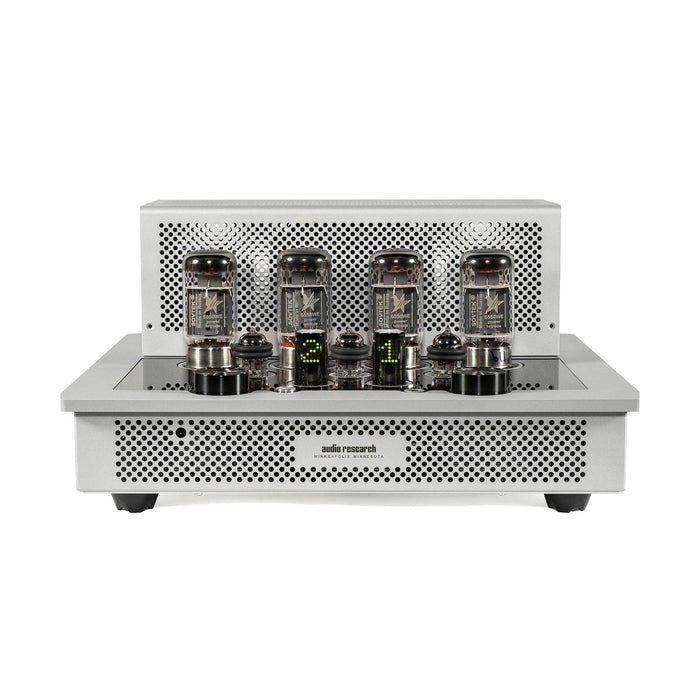
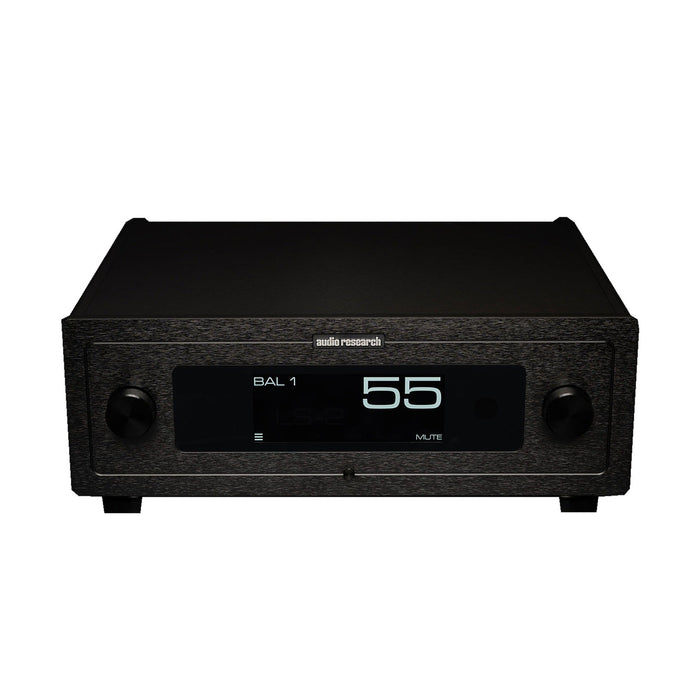
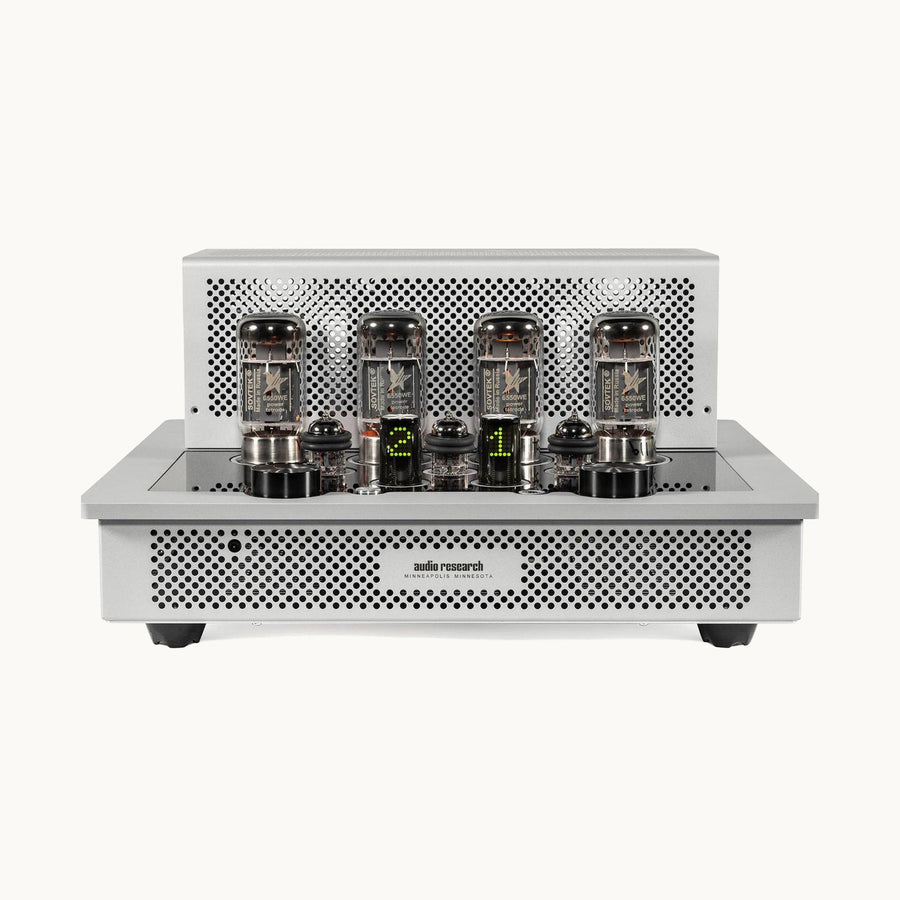
2025Six core productsThe I/70 integrated, LS-2 and LS-3 line stages, S-100 and S-200 solid-state amplifiers and the D-80: the largest introduction in the company's history. The I/55 succeeds the I/50.Audio Research I/70 Integrated Amplifier
→
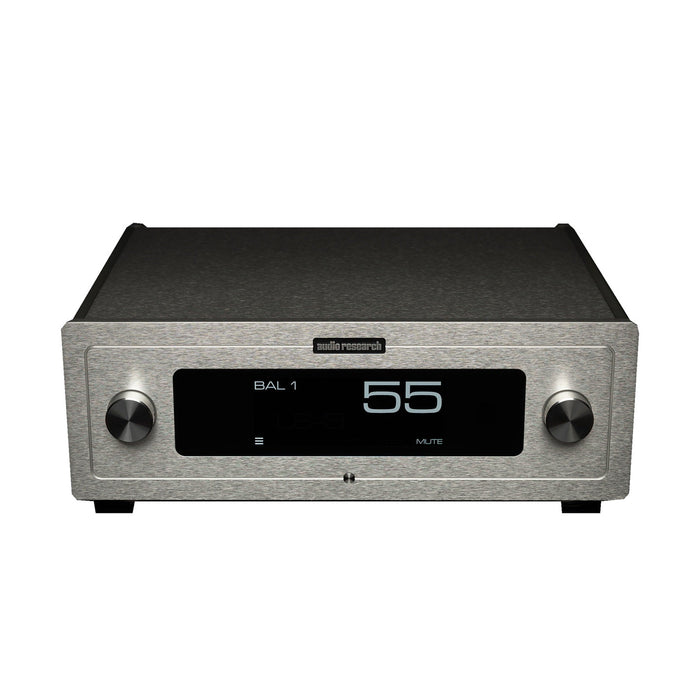
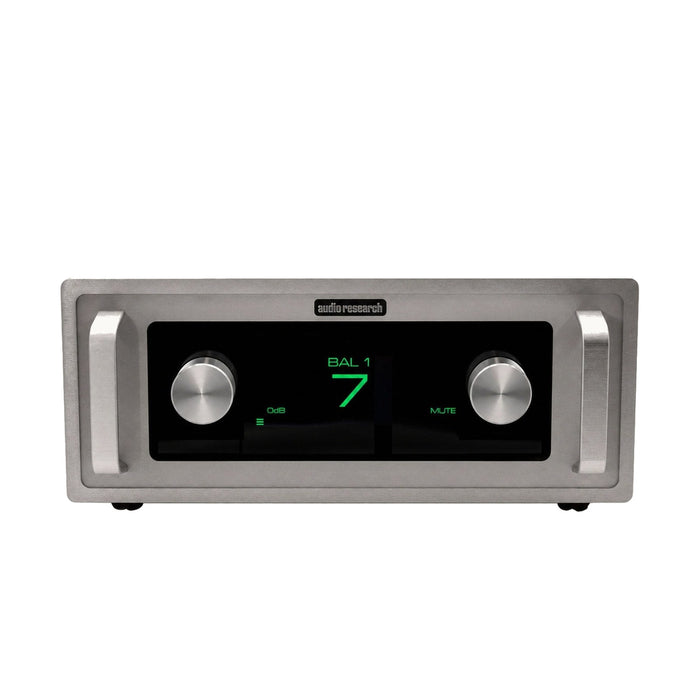
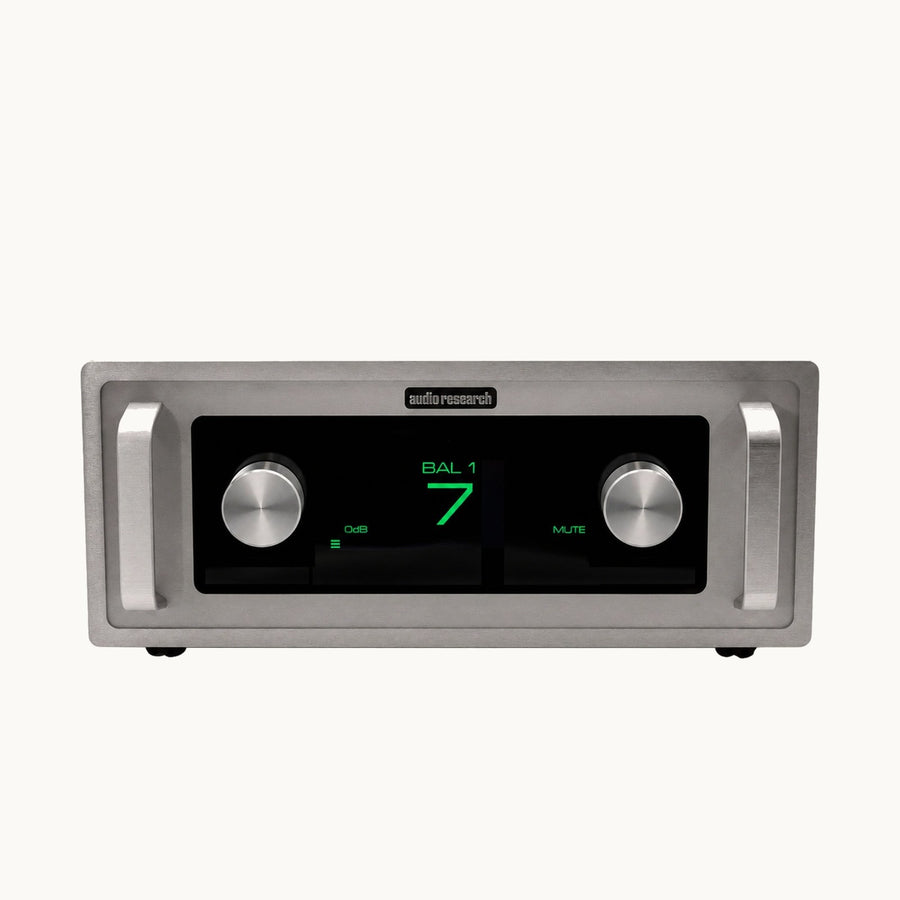
2026Reference 20, Reference 7 and 80XAt AXPONA in April, the first new flagship line stage since 2012 wins hi-fi+'s best debut of the show. In July the company's leadership changes; operations and service continue independently in Maple Grove.Audio Research Reference 7 Preamplifier
→
Audio Research at Pearl Audio
Pearl Audio is an authorized Audio Research dealer in Portland. We keep Audio Research tube amplification on the floor, from the I/70 and I/55 integrateds through the LS-2, D-80 and Reference 160 series, and the Reference 20, Reference 7, Reference 330M and the solid-state LS-3, S-100 and S-200 are available to hear and to order. We bias and match tubes on our own bench for the older models that need it, keep replacement KT150 and 6H30 sets in stock, and handle service through the Maple Grove factory, which can restore nearly every Audio Research product of the last forty-five years.
Audio Research gives its technologies names because each one solves a specific problem. Here is what each does, where it came from, why it matters in a system, and what you may hear.
With an all-out design effort, tubes will winSince 1970
Vacuum tubes, KT150 and KT170
Audio Research has amplified with vacuum tubes since 1970 because its founder concluded that, designed without compromise, they sound better. Its output tubes have moved from the 6550 to the KT120, the KT150 in 2014 and, in the Reference 330M, the KT170, each chosen for more headroom and longer life.Read the deep diveClose
What it does
William Z. Johnson built his first commercial amplifier in 1949, tried the first transistors and found them terrible, and founded Audio Research in 1970 at a moment when the industry had decided tubes were finished; an engineer at his first trade show told him he had set audio back twenty years. His position was never dogmatic, and the company has built solid-state and hybrid products from 1976 on, but its Reference line has stayed with glass. Johnson used common, long-lived tube types, the 6550, 6L6 and 12AX7, rather than exotic ones, and that practice continues: the KT120 replaced the 6550 for more resolution and dynamics, the KT150 arrived in the GS150 and the Reference SE amplifiers of 2014 with about 3,000 hours of life, half again as long, and the Reference 330M of 2024 uses six KT170s per channel, with more plate-voltage margin and dissipation, to make 330 watts. Every current amplifier carries a tube-hour meter and individually fused output tubes.
Why it matters in a system
A tube amplifier's behavior at the edge of clipping, and the way it interacts with a loudspeaker's impedance, are what owners describe as its ease and dimensionality; Audio Research's engineering is aimed at keeping those qualities while removing the softness and noise that tubes were once excused for. Johnson's other rule was that if it measures badly it will not sound good.
What you may hear
Hi-Fi News, measuring over 400 watts from the Reference 330M: valve amps slow, lush and lazy? There goes another myth. Enjoy the Music on the I/70: it paints musical reality more accurately than anything its reviewer owned.
The working essence of every Reference preamplifierSince 1999
The 6H30 triode
Every Audio Research line stage and phono stage since the Reference 2 Mk II is built around the 6H30, a Russian nine-pin dual triode that can swing far more current than the 12AX7 and 6922 the company used for its first thirty years, run in pure class A with no feedback.Read the deep diveClose
What it does
A preamplifier tube has to drive the cable and the amplifier's input without strain, and the 6H30 does it with a reserve the older miniature triodes never had: Warren Gehl, who has evaluated every Audio Research design for about thirty years, describes it as having the most robust gain and drive capability of any nine-pin miniature tube, chosen after extended listening for current swing, dynamics and lower noise and distortion. The Reference 1 of 1996 used eight 6922s; the Reference 2 Mk II brought in six 6H30s, the Reference 3 of 2004 ran four in a zero-feedback class-A circuit, and the count has been a measure of ambition since: four in the Reference 5 and the new Reference 7, six in the Reference 6 and the Reference 20 of 2026, eight in the two-chassis Reference 10, three in the PH9 phono stage and two in the LS-2. The power supplies are regulated with a further 6H30 and a 6550.
Why it matters in a system
The line stage sets the noise floor and the dynamic reach of everything behind it, and a triode with current to spare, running in class A with no feedback, is why Audio Research preamplifiers are described in terms of depth and air rather than tube warmth. It is the single most consistent element of the company's sound since the late 1990s.
What you may hear
Michael Fremer on the six-6H30 Reference 20: a superbly balanced, exceptionally transparent, dynamically powerful, nuanced preamplifier that lets you see so far into the soundstage.
Dual differential, end to endSince 2004
Fully balanced circuitry
Audio Research's Reference preamplifiers and power amplifiers, and the new D-80, S-100 and S-200, are fully balanced: each channel is amplified as two mirror-image halves, so noise common to both cancels and the signal travels by XLR from the preamplifier to the output tubes.Read the deep diveClose
What it does
The Reference 3 of 2004 was the first Audio Research line stage built as a fully balanced, zero-feedback class-A circuit with a long-tailed-pair input, and the Reference 10 of 2012 described itself as fully balanced, all tube, pure class A, dual mono with zero feedback. The practice runs through the current range: the Reference 20 and 7 are balanced throughout, the D-80 of 2025 feeds a pair of KT150s per channel from a fully balanced differential path and offers XLR inputs only, the S-100 and S-200 are fully balanced solid-state amplifiers with dual toroidal transformers, and even the LS-3, the company's solid-state line stage, has a fully balanced differential JFET input stage. Asked whether the Reference 20 had transistors at its input, the company's answer was no: fully balanced, dual differential, all tubes.
Why it matters in a system
Balanced operation cancels the noise picked up between boxes and doubles the signal swing available to the output stage, and in an all-Audio Research system it means the music is never converted from single-ended to balanced and back. The LS-2's inverting single-ended path is the deliberate exception, for owners who prefer the simplest circuit.
What you may hear
A black background behind the music and a wide, deep soundstage, the qualities for which the Reference series has been reviewed for twenty years.
A tube amplifier that does not need fiddlingSince 2017
Auto-bias
Since the Reference 160M of 2018, Audio Research power amplifiers set the idle current of every output tube continuously, compensating for line voltage and tube aging, so the owner never touches a bias adjustment and can choose among several output tube types.Read the deep diveClose
What it does
A push-pull tube amplifier needs each output tube held at the right idle current, and for most of Audio Research's history that meant a technician with a meter after every tube change. The company resisted automatic biasing for decades because the circuits it tried degraded the sound; Warren Gehl and the late chief engineer Ward Fiebiger developed one that did not, first used on the Foundation VT80 of 2017 and then on the Reference 160M, the first Reference amplifier to carry it. The circuit works constantly, adjusting for wear, and accepts 6550, KT88, KT120 and KT150 tubes in the 160M MkII. It is now on every amplifier the company makes with tubes: the Reference 330M, 160M MkII, 160S, 80S and 80X, the D-80, and the I/70 and I/55 integrateds, which the I/50 before them did not have.
Why it matters in a system
Correct bias is the difference between an amplifier that sounds as it did on the day it was auditioned and one that drifts; it also protects the tubes. For an owner it means a Reference amplifier is as easy to live with as a solid-state one, with tube life of around 3,000 hours shown on a meter.
What you may hear
Hi-fi+ on the Reference 160M, the amplifier that introduced it to the Reference line: music of all kinds breathes through it; a rare jewel, one of the best ever.
Designed in Minnesota for one amplifierSince 1970
Proprietary transformers and parts
The output transformer couples a tube amplifier to the loudspeaker and sets its bandwidth, and Audio Research designs its own, along with many of the capacitors, resistors and wiring in its products. The Reference 160M's transformers reach from 0.5 Hz to 110 kHz; the I/70 shares its output transformers with the Reference 75SE.Read the deep diveClose
What it does
Johnson's first amplifier of 1949 was transformer-coupled with a separate, electronically regulated power supply, and the transformer has been treated as part of the circuit ever since; in 1983 he claimed a flat response from about 15 Hz to 40 kHz from Audio Research's power transformers alone. The current output transformers are designed in-house and wound to Audio Research's specification by American subcontractors; the pair in the Reference 160M are E-core designs that account for most of the amplifier's weight and pass 0.5 Hz to 110 kHz, and the 160M MkII added a new high-energy-capacity transformer. Many of the capacitors, resistors and signal wires are also made to the company's design, some for a single model: the Reference 6SE upgraded eighteen proprietary capacitors and fourteen wiring runs over the Reference 6, and the Reference 20 introduced next-generation film capacitors in its supply.
Why it matters in a system
A wideband output transformer is what lets a tube amplifier produce deep, controlled bass and open treble; a narrow one is where the old reputation for softness came from. Parts made to the company's own specification are also why its products from different decades sound related and why nearly every one built in the last forty-five years can still be restored.
What you may hear
Bass and extension that reviewers do not associate with tubes. Jonathan Valin gave the Reference 160M his highest recommendation; Hi-Fi News found the Reference 160S almost too good.
The supply is in series with the musicSince 1949
Regulated power supplies
Audio Research treats the power supply as part of the signal path, because, as Johnson put it, it is in series with the audio signal whether we like it or not. Its preamplifiers regulate their supplies electronically, often with a 6H30 and a 6550 doing the regulating, so the audio circuit sees a clean, constant voltage.Read the deep diveClose
What it does
Johnson's first amplifier had an electronically regulated supply in 1949, and the SP-10 of 1982 put the supply in its own chassis, a layout the Reference Anniversary and Reference 10 kept. In the current range the PH9 phono stage regulates its supplies with a 6550WE and a 6H30P to better than 0.01 percent line regulation; the Reference 20 of 2026 redesigned its supply with new film capacitors and reduced noise on the regulated rails by an order of magnitude; the Reference 7 uses solid-state regulation of the same platform; and the LS-3 is dual mono with separate power transformers and linear supplies. The power amplifiers store energy on the same principle: the Reference 160M holds 622 joules, and the Reference 250 of 2011 had fifty percent more capacitance than its predecessor.
Why it matters in a system
Every note an amplifier plays is drawn from its power supply, so noise and sag in the supply become noise and compression in the music. Regulation is the reason Audio Research preamplifiers have the black backgrounds and the dynamic reach that reviewers remark on, and why the company's two-chassis designs put the supply in a separate box.
What you may hear
Quiet backgrounds and dynamics that do not flatten at volume. Michael Fremer on the Reference 20: dynamically powerful, with a soundstage you can see far into.
A meter that floats in front of the tubesSince 2018
The GhostMeter
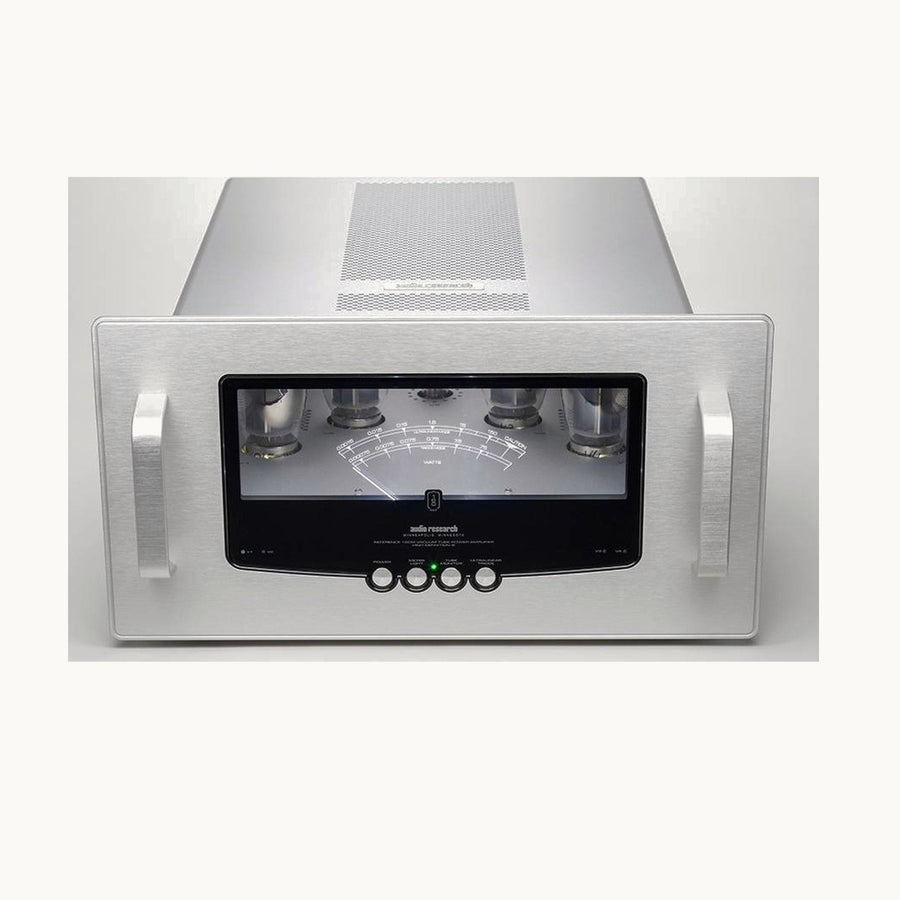
The Reference amplifiers' power meters are etched into the rear pane of a two-layer transparent faceplate and lit by hidden LEDs, so the needle and scale appear to float in front of the glowing output tubes. The lighting is adjustable, and can be switched off.Read the deep diveClose
What it does
The GhostMeter arrived with the Reference 160M of 2018, the first product of a new design language from Livio Cucuzza, then the McIntosh Group's chief design officer, who had also styled the Foundation series, the Reference 6 and the Reference Phono 3. Two acrylic panes sandwich a needle and two LEDs, with the dial etched into the rear pane; the result is a power meter with no bezel and nothing between the owner and the tubes. The Reference 160S has a pair of them floating in front of its eight KT150s, the 330M, 80S and 80X carry them, and the 160M MkII describes its meter as a window to the output tubes. The S-200's meters sit on a solid black background instead, and the LS-2 and LS-3 touch displays use the same typeface. The D-80 and the integrateds do without a glass front; the I/50, I/55 and I/70 use illuminated LexieTube displays.
Why it matters in a system
It is the detail that makes a Reference amplifier recognizable across a room, and it is the one part of the design an owner may want to adjust: Jonathan Valin found that lighting the scales darkened the sound slightly, so the brightness can be turned down or off.
What you may hear
A meter that reads the music and a chassis that shows what is making it.
Maple Grove, MinnesotaSince 1970
Hand-built, twice tested, auditioned
Every Audio Research product is assembled by hand in Maple Grove, Minnesota, built to order one at a time, bench-tested twice, burned in, and then listened to by the company's sonic evaluator before it ships. The output tubes are burned in for 48 hours and matched on the company's own fixtures.Read the deep diveClose
What it does
The boards are stuffed and soldered by hand; a computer-controlled soldering machine was sold because the boards it made did not sound as good. Each unit carries a production card signed by the technicians who built it, which the customer receives. Power tubes are burned in for 48 hours and matched for transconductance and plate current, and the yield is demanding: around 300 KT150s might be processed to find the 32 for a pair of Reference 750 SEs. Finished units are burned in for two days, tested on the bench twice, and then auditioned one by one in the company's listening room on Magnepan 20.7 loudspeakers by Warren Gehl, who has been chief sonic evaluator for about thirty years and approves every new design as well as every unit; if the listener does not sign off, the unit does not leave the factory. The company moved from Plymouth to a 20,000-square-foot facility in Maple Grove in August 2018, keeps a secured room of original parts going back to the early 1970s, and can restore nearly every product of the last forty-five years.
Why it matters in a system
A product that has been listened to before it is boxed is a product whose sound is known, and an amplifier that can be serviced for decades is one worth buying for decades. Johnson's rule was that the product should be serviceable or capable of being returned to a serviceable condition.
What you may hear
Consistency between the review sample and the one in your rack, and a reason that forty-year-old Audio Research preamplifiers are still in use.
Not married to vacuum tubesSince 2025
The solid-state line: LS-3, S-100 and S-200
Audio Research has built solid-state products since 1976, and in 2025 a newly formed solid-state engineering team produced the LS-3 line stage and the S-100 and S-200 power amplifiers: fully balanced, dual-mono, bipolar rather than MOSFET, in the same machined chassis as their tube siblings.Read the deep diveClose
What it does
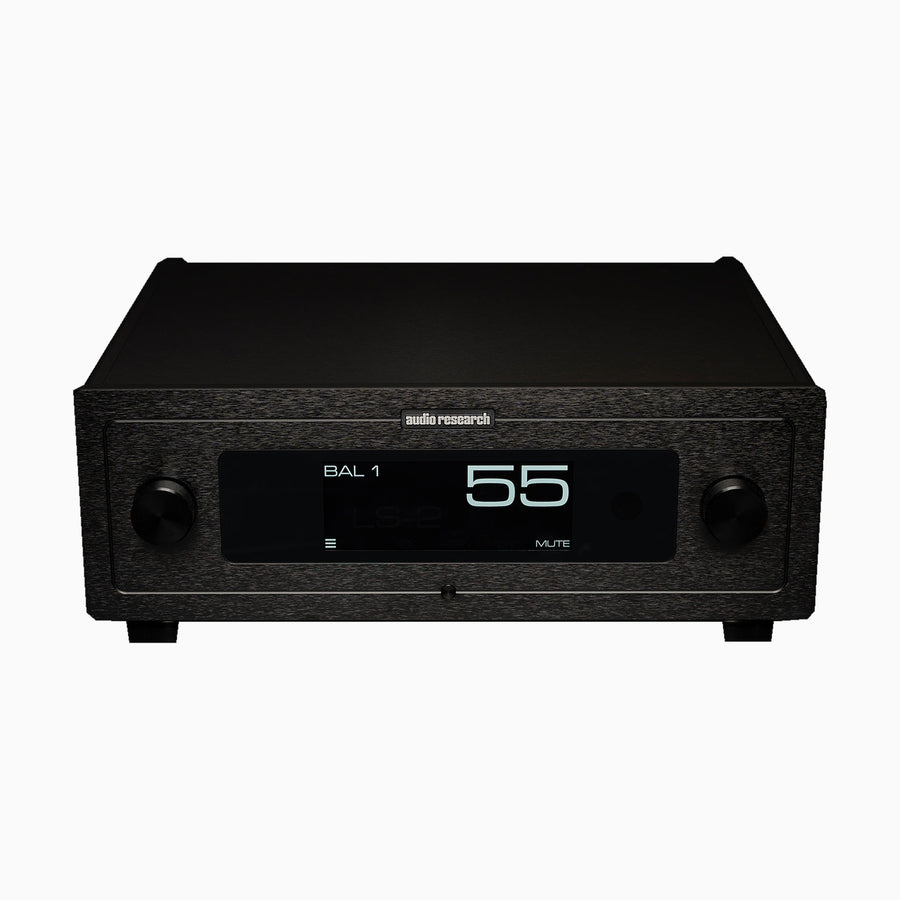
Johnson said the company was not married to vacuum tubes, and its history includes the hybrid SP-11 of 1985, with a triode and a FET in every stage, and the hybrid Reference 1 of 1996. The 2025 products are the first all-solid-state line in years. The LS-3 has a fully balanced differential JFET input, a bipolar voltage amplifier and a class-A output, dual mono with separate power transformers, 20 dB of gain and a touch screen, in the all-aluminum chassis it shares with the LS-2, and takes the same DAC and phono cards. The S-100 and S-200 are fully balanced class A/B amplifiers with bipolar outputs chosen for purity, transparency and dynamics, 100 and 200 watts into 8 ohms and double into 4, with dual toroidal transformers, in a machined aluminum chassis with no visible fasteners. The Reference 330M and Reference 7 use solid-state regulation and driver stages in otherwise tube designs.
Why it matters in a system
They give an owner the Audio Research balance and build without tubes to replace, for a second system, a theater, or a loudspeaker that wants damping factor; and the LS-3 with an S-200 is the company's most affordable balanced pre-power pair.
What you may hear
The Absolute Sound included the S-100 and LS-3 in its series on the best amplifiers under ten thousand dollars.
A Reference amplifier in one boxSince 2021
The I/70 and I/55 integrateds
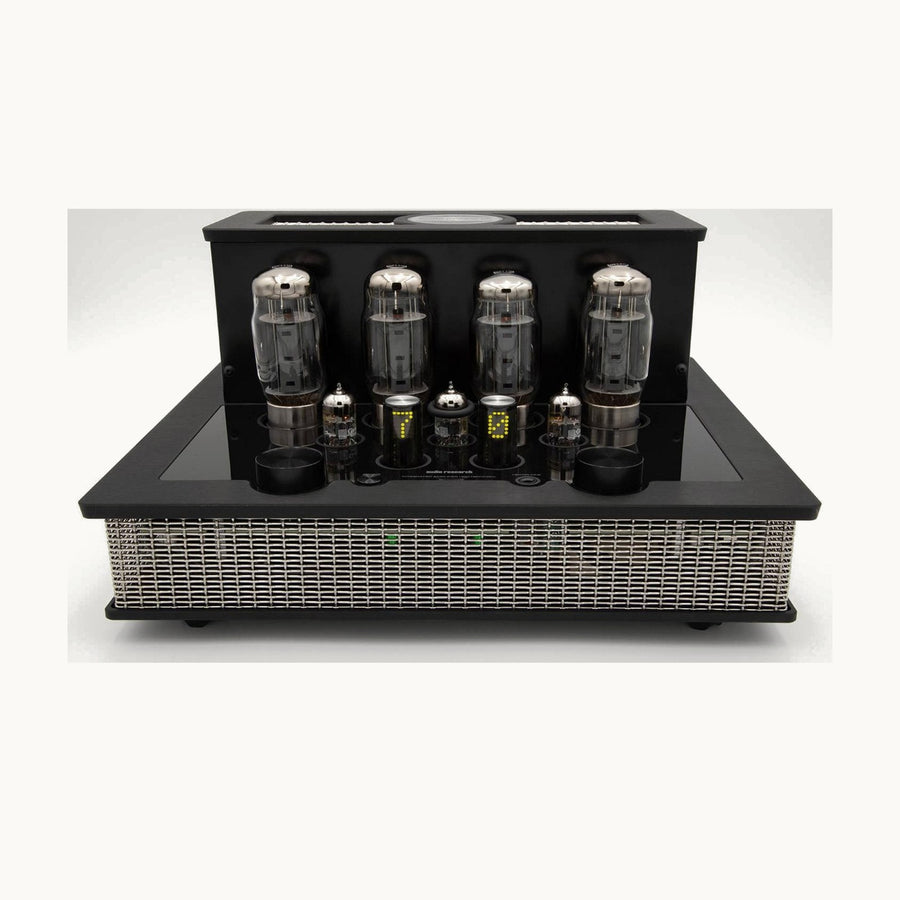
The I/70 and I/55 put an Audio Research tube preamplifier and power amplifier in one chassis with optional DAC and phono cards, a headphone output driven by the output tubes, auto-bias and the company's LexieTube displays. The I/70 uses two pairs of KT120 for 70 watts and shares its output transformers with the Reference 75SE.Read the deep diveClose
What it does
The I/50 of 2021, in six Cerakote colors applied in-house, was the product meant to bring a new generation to the brand. The I/70 of 2025 is its larger successor: two matched pairs of KT120 and three 6922s, auto-bias that also accepts 6550, KT88 and KT90, 4 and 8 ohm taps, balanced and three single-ended inputs, a 75-step volume control, preamplifier outputs, a headphone output driven by the KT120s, and slots for an AKM-based DAC card with USB, optical, coaxial and Bluetooth and a moving-magnet and moving-coil phono card with adjustable loading. Its machined aluminum, mesh and badging follow the Reference 330M. The I/55 keeps the I/50's look and its two pairs of 6550WE for 50 watts, and adds the auto-bias and the active tube preamplifier section of the I/70, so the owner no longer needs a technician after a tube change.
Why it matters in a system
An integrated with the Reference amplifiers' transformers and tubes is the simplest way into the Audio Research sound, and the cards mean a complete system is one box plus a turntable or a streamer. The I/70 is the one we recommend for loudspeakers of ordinary sensitivity; the I/55 for the smaller room.
What you may hear
Enjoy the Music on the I/70: it paints musical reality more accurately than anything its reviewer owned. Audio Research's own line is that the I/70 sounds like a big amp.
Three 6H30s and a regulated supplySince 2017
Phono stages
Audio Research's phono stages apply the Reference preamplifier recipe to the smallest signal in the system. The PH9 uses three 6H30 triodes in a short, clear path, with 58 dB of gain, five cartridge loadings switchable from the remote, RIAA accurate to 0.2 dB and a supply regulated by a 6550WE and a 6H30P.Read the deep diveClose
What it does
Johnson used moving-coil cartridges exclusively for a decade before 1983, and the SP-3's phono stage was what J. Gordon Holt praised in 1973 for modifying the signal less than any other preamplifier available. The PH9 of 2017, from the Foundation series, is the current single-chassis design: a trio of 6H30 dual triodes, 58 dB of gain suitable for most moving-coil cartridges, loadings of 47k, 1,000, 500, 200 and 100 ohms chosen from the remote so they can be compared from the chair, and an electronically regulated supply with line regulation better than 0.01 percent. Above it sit the Reference Phono 3SE, upgraded in 2020 with the parts and wiring of the Reference 6SE, and the two-chassis Reference Phono 10. The I/70 and I/55 take a moving-magnet and moving-coil phono card with adjustable loading.
Why it matters in a system
The phono stage adds the most gain of anything in the system, so its noise and its power supply matter more than anywhere else; a tube phono stage with a regulated supply is where Audio Research's approach pays off most audibly. We match loadings to the cartridge on our bench before a PH9 goes home.
What you may hear
A quiet, open presentation of records with the dynamics of the Reference line. The PH9 has been listed in Stereophile's Recommended Components.