By John Loranger, Pearl Audio
When Tara and I toured the Simaudio factory in Boucherville, Québec (Tara wrote about the visit in Proudly Made in Canada: A Factory Tour of Simaudio), the phono stages sorted themselves into steps, and so do MOON's network players. The phono tour climbed four rungs; this one climbs four more: the 491, the 681, the 791 and the 891. The 371 and the 491 were in the smaller room, and the larger room had the 761 and 861 power amplifiers.

As with the phono stages, what separates the rungs is not what you can do with them. Every one streams from the same app, to the same services, and every one is a MOON from the same factory. What changes is what happens to the signal after it arrives: how it is clocked, how it is converted, how it is powered, and how the volume is controlled.


Reading the model numbers
Simaudio's numbering tells you what a component is before you read a word about it. The first digit is the collection level: 3 and 4 for Compass, 6, 7 and 8 for North. The last digit is the kind of product. A 1 is an amplifier or power amplifier, a 7 is a network player with an amplifier in the same box, an 8 is a streaming DAC without a volume control, and a 9 is a network player and preamplifier together: a preamplifier with a DAC and a streamer built in. That is the 491, the 791 and the 891, and the 681 is the streaming DAC.
Analog preamplifiers with serious streaming inside
The 491, the 791 and the 891 are, first of all, analog preamplifiers. Each has balanced and single-ended inputs, a phono stage for moving-magnet and moving-coil cartridges, and a volume control that Simaudio has spent years refining. The streaming is built into them.
That is an unusual decision. When a good analog preamplifier offers digital at all, it is usually a simple DAC card, added so the box has a digital input. Here a significant part of the engineering, and of the money, went into the digital side: the converter, the clock, the re-clocking and the dedicated power regulation. These are not preamplifiers with a streamer bolted on. They are two serious components in one chassis, sharing a volume control and a power supply. The 681 is the exception: it has no analog preamplifier section, because it is made to sit in front of a preamplifier or integrated amplifier such as the 641.
The balanced connections are real, too. In a MOON, an XLR connector means there is balanced circuitry behind it, which Simaudio puts in from the 491 upward.
One streaming module, upgradable
All four use the same MiND 2 module. It handles the network side: the MiND Controller app, Roon Ready, Qobuz Connect, TIDAL Connect, Spotify Connect, AirPlay and UPnP, gapless playback and multi-room playback. Because it is the same module throughout, moving up never means learning a new app or losing a service.
It is also the part of the design that Simaudio expects to change. The technologies that may change in the future, from a hardware point of view, are gathered in this module, so it can be upgraded without replacing the component around it. MiND 2 is software-based, so new features arrive as updates, and Simaudio has upgraded many earlier MiND components to MiND 2. There are three pieces of software at work: the app on your phone or tablet, the firmware of the MiND module itself, and the firmware of the component it sits in, and each is updated on its own.

The app is part of the reason the platform is easy to live with. Reviewers describe it as quick to connect, stable over long sessions and easy to use; What Hi-Fi? found MiND 2 slick and impressively stable, and a Stereophile reviewer preferred music played through the MiND app to the same music through Roon on the 891.
491: the Compass front end

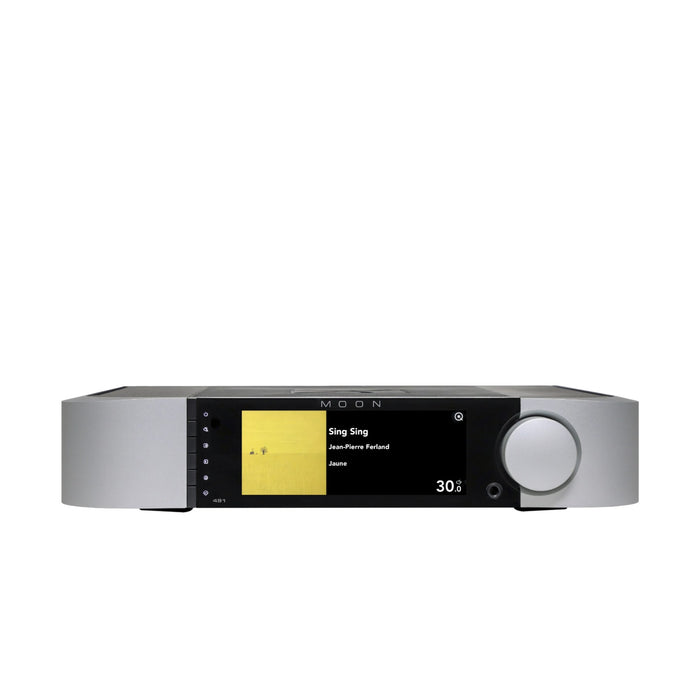
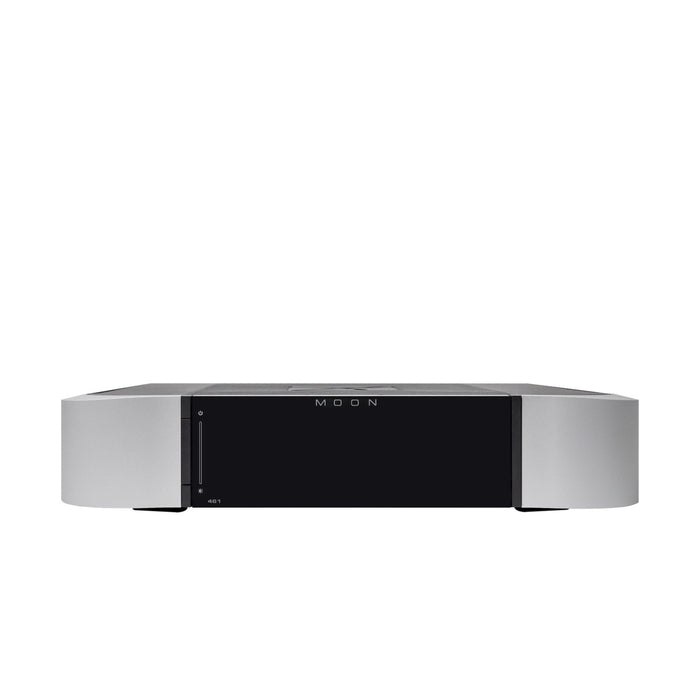
The 491 is the streaming heart of the Compass Collection and the partner of the 461 power amplifier. Its converter is a dual-mono pair of ESS ES9039Q2M chips with a precision clock, one converter per channel, and its power comes from MHP, the MOON Hybrid Power supply, which blends linear and switch-mode circuits and runs beyond the audio band to keep noise out of the audio circuits. Alongside the preamplifier are an adjustable MM and MC phono stage, a headphone amplifier, and a full set of digital inputs: HDMI ARC, AES/EBU, optical and coaxial, with USB-C for attached storage. Its converter is a clear step up from the 371's.
How reviewers describe it. Smooth, refined, clean and coherent. What Hi-Fi? heard the lows as “taut and agile” with texture left intact, voices clear and the rhythm moving. Others note a dark, quiet background and fast, controlled bass. One reviewer finds the tight, neutral balance can lean bright on poor recordings.

681: MOON's own digital engine

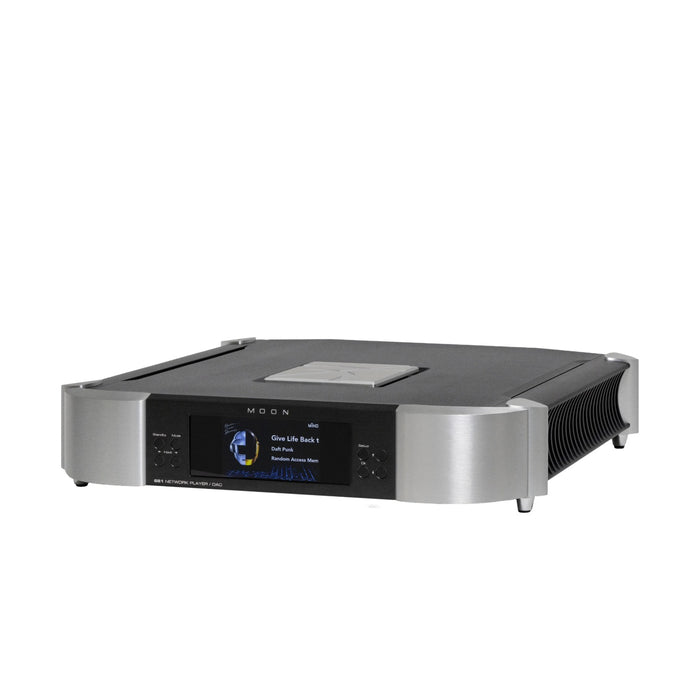
The 681 is the first of the North Collection and it is a source only: no analog preamplifier and no phono stage, so it works with the preamplifier or integrated amplifier you have, or with a 641. The digital section is MDE-1, the MOON Digital Engine. An in-house FPGA does more than pass the signal along: it re-times the incoming digital stream against a picosecond-class clock and reshapes the signal so it reaches the converter as cleanly as possible. The converter is an ESS ES9028Pro running fully balanced with four outputs per channel, summed to lower noise and distortion. It has six digital inputs including HDMI ARC, MHP power and the MHV hybrid volume control, so with its variable output switched on it can drive a power amplifier directly in a digital-only system; used with a 641, MOONLink makes the pair behave as one component. The optional 820S external power supply can serve it.
How reviewers describe it. Transparent, fluid, dynamic and detailed, with palpable images and a wide, deep stage; solid and fast in rhythm, never lean or harsh. Alan Sircom of hi-fi+ heard it as “quicksilver, detailed, dynamic and highly coherent.” Reviewers also write of solid bass and an ease that invites long listening.

791: the preamplifier at the center

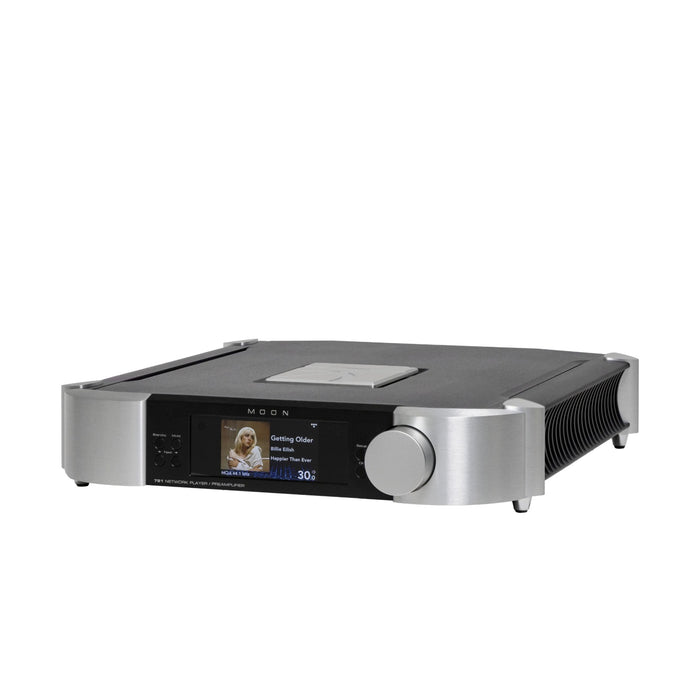
The 791 was Simaudio's first preamplifier of this level to bring streaming and phono into the same box, and its designers were openly surprised by how much better its converter is than the 681's. Its MDE-2 digital engine uses the same FPGA re-clocking and picosecond-class clock, with a fully balanced ES9038Pro converter and four outputs per channel. Simaudio's team described the gain over the 681 as significant: more depth, more detail and a greater sense of being absorbed in the music. Volume is M-VOL3, MOON's third-generation analog gain control, and the whole circuit is fully balanced with MHP power. It has six digital inputs including HDMI ARC and three analog inputs, and the phono input can be switched to a line input, so the phono section can be turned off if you do not use it. With MOONLink it can send a firmware update on to a 761 power amplifier. The 820S external supply can serve it. SoundStage! Hi-Fi's reviewer found it so quiet and neutral that it “asserted no sound, coloration, or character of its own.”
How reviewers describe it. Transparent, quiet, clean and pure, with fine detail and an immediate, unfatiguing presentation. Others add coherent, deft in the dynamics, with well-controlled bass and a roomy stage. Alan Sircom called it a step change in performance for MOON.

891: the reference

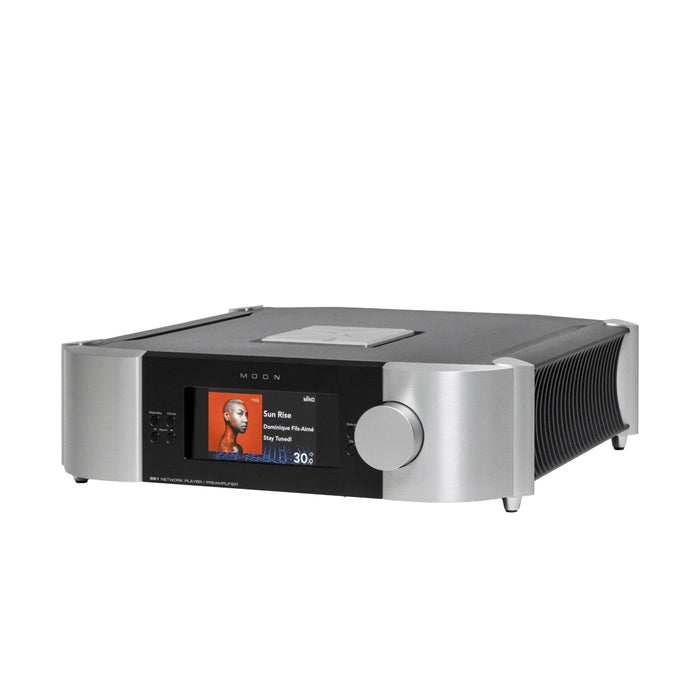
The 891 carries MOON's highest grade of everything. Its MDE-3 digital engine pairs the same kind of in-house FPGA re-clocking with a femtosecond clock, a thousand times finer than the picosecond clock below it. There is a separate ES9038Pro converter for each channel, each tuned against the other at the factory so the two match, and each using eight balanced outputs, summed. Because the outputs are averaged, noise and distortion fall; Simaudio goes further, using the FPGA so that the same ones and zeros are not switching on all eight at once, which improves the chips' own performance. Volume is M-RAY2, a resistor-ladder control with a choice of 140 or 620 steps: in the finer setting, 1 dB steps up to 20 and 0.1 dB steps above, though the default is 0.5 dB because it is easier to live with. The circuit boards sit on MDB, the MOON Damping Base, a gel suspension that keeps vibration from reaching them and helps the semiconductors run at an even temperature, so they stay matched. The phono stage rides on it. The 820S external supply is available for it.
How reviewers describe it. Quiet, controlled, detailed and natural, with dense, well-focused images and deep, tightly held bass. StereoNET found it captivating through “delicacy, depth and detail,” and SoundStage! Ultra's reviewer judged it the quietest preamplifier he had evaluated. Other reviewers write of an even-handed, unforced and unfatiguing presentation. In one comparison against a much costlier reference, that reference had more air and scale, and the 891 more control.

The phono stages inside
The three preamplifiers each carry a phono stage, and Simaudio is straightforward about where they sit among the stand-alone ones on our phono tour. The 491's is good, but the 310LP is still the better phono stage. The 791's lands between the 310LP and the 610LP, and the 891's comes closer still to the 610LP without passing it. The 791 and 891 circuits are very nearly the same; the difference is the MDB base under the 891's.
Side by side
| 491 | 681 | 791 | 891 | |
|---|---|---|---|---|
| Collection | Compass | North | North | North |
| What it is | Network player and preamplifier | Network player and DAC | Network player and preamplifier | Network player and preamplifier |
| Converter | Two ESS ES9039Q2M, dual-mono | ES9028Pro, balanced, 4 outputs per channel | ES9038Pro, balanced, 4 outputs per channel | Two ES9038Pro, one per channel, 8 outputs per channel |
| Re-clocking and clock | Precision clock | FPGA, picosecond-class clock | FPGA, picosecond-class clock | FPGA, femtosecond clock |
| Volume control | Analog preamplifier | MHV hybrid | M-VOL3 | M-RAY2, 140 or 620 steps |
| Phono stage | MM and MC | None | MM and MC | MM and MC, on the MDB |
| Power | MHP | MHP; 820S available | MHP; 820S available | MHP; 820S available |
| Streaming | The same MiND 2 module in all four | |||
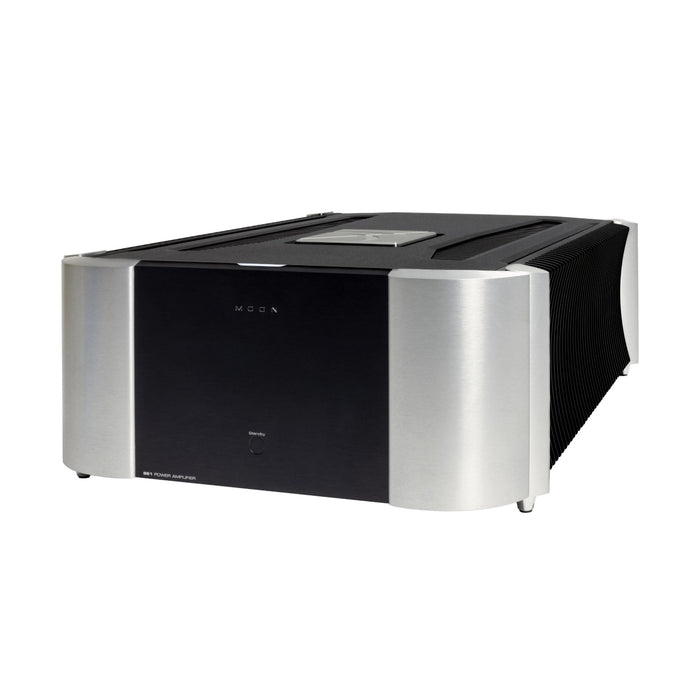
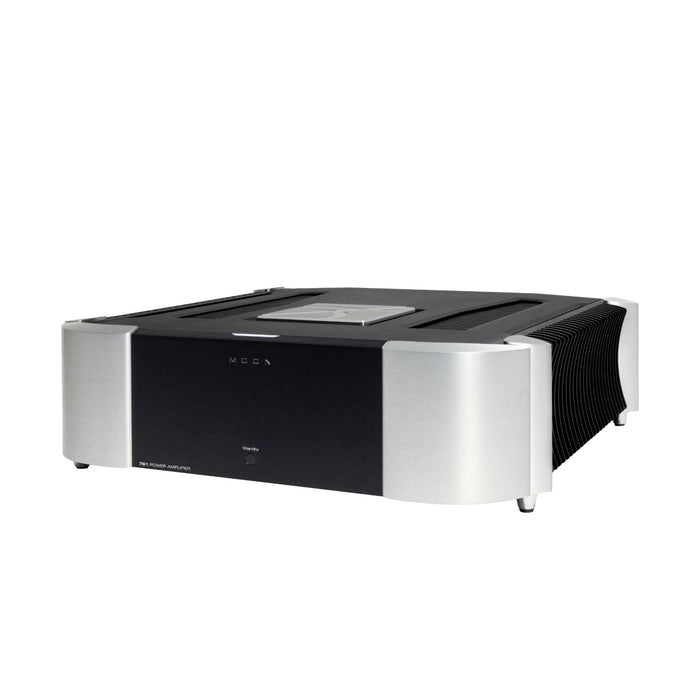
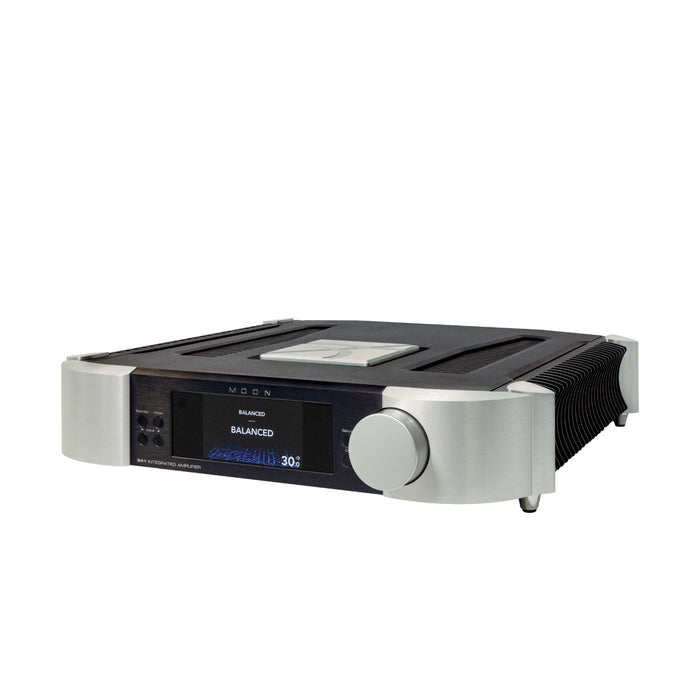
| Natural partner | 461 power amplifier | 641 integrated amplifier | 761 power amplifier | 861 power amplifier |
Moving up
Simaudio's own order for the converters, by sound, runs from the 371's, to the 491's, the 681's, the 791's and the 891's. Because the streaming is the same throughout, and the module can be upgraded, each step up is about the converter, the clock, the volume control and the power, not about the interface. These are MOON components, so the one you buy can be traded toward a higher model within two years. The matched pairs are set out on our MOON systems page.
Hear the steps yourself. Tell us what you own and how you listen, and we will bring the network players that interest you into a listening room. Call (503) 222-2599 or arrange an audition.
Sources
- Simaudio: 491, 681, 791, 891
- What Hi-Fi?: Moon 491 and 461 first impressions
- hi-fi+: MOON 641 and 681
- Secrets of Home Theater and High Fidelity: MOON 681 and 641
- SoundStage! Hi-Fi: Simaudio Moon 791
- The Ear: Moon North 791 and 761
- SoundStage! Ultra: Simaudio Moon 891
- StereoNET: MOON 891 and 861
- Stereophile: Moon 891 follow-up