
← Back to your LP12 build

Cardas · Iridium

Cardas Audio Iridium Phono

From $205

Signature technologiesThe Cardas Audio story

Not currently in our rooms. For a serious buyer we will often bring a piece in from the manufacturer for a private session — tell us about your system and what you are weighing it against, and we will advise.

Cardas · Iridium

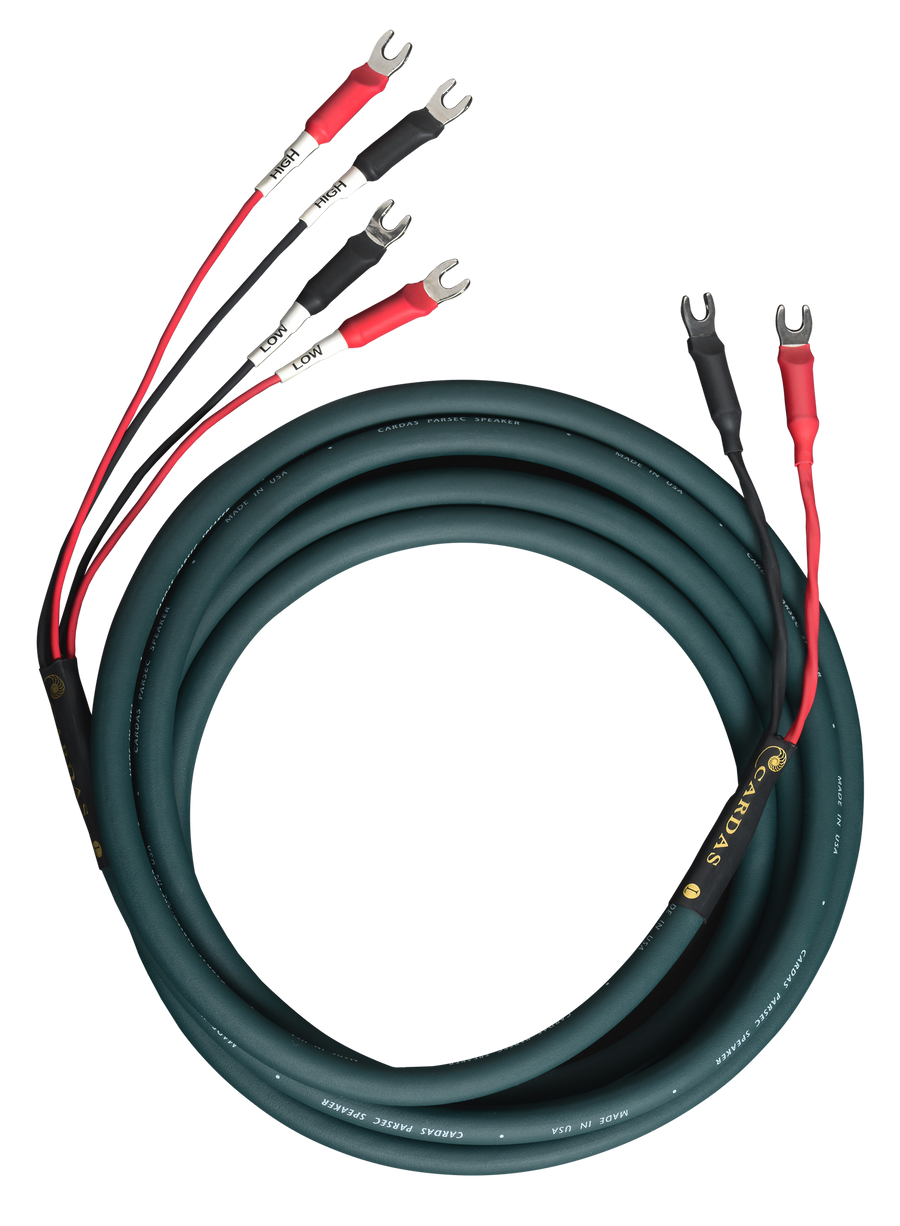
A rich, non-fatiguing phono cable at the entry to the Cardas range: a shielded star quad of Golden Ratio copper with the classic warm analog balance.

Price is for one complete phono cable, both channels, at the shortest length shown. Choose length and ends in the selector.

4 × 24.5 AWG
Cardas Litz conductors, Golden Ratio stranding
Hybrid
spiral copper and carbon-tape shield
7.6 mm
outside diameter
0.5–2.75 m
standard lengths, any length to order
Options and pricing

Authorized Cardas dealer · Delivery and installation by Pearl Audio · Trade-ins welcome

The story

Iridium Phono arranges four 24.5 AWG Cardas Litz conductors with Golden Ratio stranding and FEP insulation as a star quad bound in PTFE tape, with a hybrid shield of spiral tin-plated copper and carbon-impregnated PTFE tape under a soft TPR jacket.

Cardas describes classic analog sound — warmth and richness without sacrificing balance and detail — for systems that do not want to spend a fortune on the phono cable. Standard terminations are a Cardas S-DIN-E to Cardas RCAs or RCA to RCA.

Check your tonearm: most have a 5-pin DIN socket under the arm base (straight DIN), some exit sideways and need a 90° DIN, and others have RCA sockets on the plinth. Cardas builds a 90° R-DIN or SME-style 90° DIN to order at no extra charge in most cases; tell us the arm model and we will specify it. 1 m to 1.25 m suits a phono stage on the same shelf; measure the real path to a stage on another rack and round up to the next quarter meter.

George Cardas ran a record label from 1990 to 1992, producing audiophile LPs with his own microphones and cables, and phono cables have been part of the range ever since. Iridium arrived for the company's 30th anniversary in 2017, bringing the same Grade 1 copper and Golden Ratio stranding as the Clear range to the entry of the line, and every Cardas phono cable is terminated by hand in Bandon, Oregon. Read the Cardas story →

Key technologies

  • Ultra Pure Cardas Copper. Grade 1, 99.9999% pure oxygen-free copper, drawn and annealed slowly through silver dies, then given a single poly-nylon coat to prevent oxidation and crosstalk between strands.
  • Golden Ratio scaled Litz conductors. Multi-stranded conductors in which each layer of strands steps up in size by 1:1.618 from the center outward, a Cardas patent that controls strand resonance.
  • Shielded star quad. Four conductors bound in PTFE tape with a hybrid shield of spiral tin-plated copper and carbon-impregnated PTFE tape.
  • Quad Eutectic solder. Hand soldered to a Cardas S-DIN-E or RCAs with Cardas Quad Eutectic solder at the Bandon factory.
  • Made in Bandon, Oregon. Every Cardas cable is built and hand terminated at the Cardas factory on the southern Oregon coast and carries the Cardas lifetime cable warranty.

The Clear Cygnus Phono is the step up; the Iridium Interconnect is its partner.

Specifications
Type Phono (tonearm) cable, both channels
Conductors 4 × 24.5 AWG; Grade 1 OFHC Litz with Golden Ratio stranding, FEP insulation
Geometry Shielded star-quad, four conductors bound in PTFE tape; hybrid shield of spiral tin-plated copper and carbon-impregnated PTFE tape
Outside diameter 0.300 in (7.6 mm)
Tonearm end Straight 5-pin DIN (Cardas S-DIN-E) or RCA pair (turntable with RCA outputs); Cardas R-DIN (90°) and SME 90° DIN to order
Phono stage end RCA pair — Cardas RCA
Lengths 0.5 m to 2.75 m standard (see selector); any length to order
Sold as Single cable
Warranty Cardas lifetime cable warranty
Made in Bandon, Oregon, USA

Cardas Iridium Phono product page and specifications Specifications from cardas.com and the Cardas 2025 Dealer Catalog (Spring 2025 Retail). Lengths are metric; Cardas builds any length to order.

Where it sits in the range

Cardas phono cables run from Iridium to Clear Beyond Phono X2, built with a straight 5-pin DIN or RCAs at the tonearm and Cardas RCAs at the phono stage; R-DIN (90°) and SME 90° DIN to order.

Plan your Cardas system with Pearl Audio

Pearl Audio is an authorized Cardas dealer. Tell us your tonearm and phono stage and we will specify the DIN or RCA ends, order custom lengths, and arrange an audition in our Portland showroom. Call (503) 222-2599 or email sales@pearlaudio.com.

Signature technologies

The engineering behind the Cardas Audio Iridium Phono

Cardas Audio gives its technologies names because each one solves a specific problem. Here is what each does, where it came from, why it matters in a system, and what you may hear.

Strands sized at 1:1.618, patented 1986 and 1990Since 1983

Golden Section stranding

Every Cardas conductor is a bundle of individually insulated strands in concentric layers, each layer's strands larger than the layer inside by the Golden Ratio, 1:1.618. Because no two strand sizes share a resonant frequency, the mechanical vibration set up by current cannot build up coherently, and the larger outer strands damp the smaller inner ones. George Cardas built the first machinery for it in 1983 and patented it in 1986 and 1990. Read the deep diveClose

What it does

Alternating current makes the strands of a cable vibrate, and Cardas's own explanation compares each strand to a guitar string with its own resonance. If every strand is the same size, they all resonate at the same frequency and reinforce one another. George Cardas, who had applied Golden Ratio proportions to racing engines and exhausts before he applied them to wire, arranged the strands so that each concentric layer steps up in size by 1.618, the limit of the Fibonacci sequence. No two sizes share a resonance, so the vibration has nowhere to add up, and the heavier outer strands hold the finer inner ones still. The first patent, US 4,628,151 for a multi-strand conductor with strands sized according to the golden section, was filed on December 30, 1985 and granted on December 9, 1986; the second, US 4,980,517 of December 1990, covers the arrangement of larger strands outside and smaller strands inside in an irrational progression. Cardas describes the result as a micro resonance control technique that gives all its cables a constant Q, and it is present in every cable and chassis wire the company makes, from Crosslink and 101 to Clear Beyond, the Ground Cable and the solid-core wiring inside the Nautilus power strip.

Why it matters in a system

A cable cannot add anything useful to a signal; the best it can do is avoid storing energy and releasing it late. Strand resonance is one of the ways a cable stores energy, and it is proportional to current, so it matters most in speaker and power cables. Golden Section stranding is Cardas's mechanical answer, and it is the reason the company's cables have had a recognizably consistent character across four decades of designs.

What you may hear

George Cardas described the problem he set out to solve in 1996 as conductor glare, which he heard as harmonic resonance. Brian Von Bork of Cardas has said a guitar string wound in the Cardas pattern would be completely dead and would not ring; what listeners describe is a lack of brightness or edge without any loss of detail.

Slow-drawn and hydrogen-annealed to George Cardas's process at a US millSince 1988

Cardas copper

Cardas does not smelt or draw its own copper. A year or two after the company was founded, George Cardas found the last US producer able to make ultra-pure fine copper wire to his specification, promised it a steady stream of orders, and had rod drawn slowly through diamond dies and annealed in a hydrogen atmosphere. That Grade 1 copper goes into every Cardas cable from Iridium up. Read the deep diveClose

What it does

In the late 1980s recycling laws and high-speed drawing had filled the market with copper that was fine for house wiring and poor for audio. George Cardas's answer was to control the drawing rather than the mining. Cardas copper is mined in the American Southwest and processed in the Northeast at a mill that was close to closing when Cardas partnered with it; the company has kept it in business with orders ever since, using a method George Cardas developed more than 35 years ago. The rod is drawn slowly through diamond dies and annealed in an oxygen-scavenging hydrogen atmosphere, which avoids both the crystal damage caused by fast drawing and the copper-oxide impurities that come with it. Two non-audio customers, a low-thermal DC measurement cable and detector chips for a cyclotron whose commercial copper lost thermal conductivity near 40 kelvin, showed that noise correlated with drawing damage and oxide, and that slow oxygen-free drawing cured it. Cardas describes the result as smooth from the surface to the core and says it exceeds OFHC and OCC copper in conductivity. Grade 1 copper is used from Iridium to Clear Beyond; a more affordable Grade 2 goes into Crosslink and 101. Cardas also sells its strand by the pound and chassis wire by the foot to other manufacturers.

Why it matters in a system

Every Cardas technology sits on top of the metal. The Golden Section strands, the Litz enamel and the Matched Propagation twist all assume a conductor with a consistent crystal structure and no oxide inclusions, and Cardas has said its goal was the most grain-free copper ever produced for audio. It is also why so much other high-end equipment carries Cardas wire inside: Angela Cardas Meredith has said that even if it does not have the Cardas name on it there is a good chance they made it.

What you may hear

A lack of grain or texture on sustained tones, and the quiet background that reviewers of the Clear series return to. Herb Reichert, writing in Stereophile about Clear Beyond, heard a sublime quiet and a grand spaciousness.

The same copper and stranding, below ClearSince 2017

Parsec, Iridium and the entry lines

Below the Clear range Cardas builds Parsec, Iridium, Crosslink and 101. Parsec descends from the Quadlink star quad of the mid-1980s and uses Grade 1 copper with a Kevlar core; Iridium, introduced for the 30th anniversary in 2017, replaced Microtwin and Twinlink with simpler, more flexible Grade 1 cables; Crosslink and 101 use Grade 2 copper. Read the deep diveClose

What it does

Parsec is the successor to Quadlink, which had been in production since the mid-1980s and was discontinued when Parsec was released. The Parsec speaker cable is a star quad of four 15.5 AWG conductors around a braided Kevlar core, on PTFE air tubes with FEP tape, terminated with Cardas CGMS spades or CABE bananas; the interconnect is a shielded 23.5 AWG twisted pair on poly-e air tubes, which Cardas lists among its Matched Propagation designs. Parsec Power borrows its 14 AWG conductors from Clear Cygnus, Parsec Digital is a 20.5 AWG 75-ohm coax, and the Parsec Headphone cable is a shielded star quad similar to a Cardas headphone cable from 2003. Iridium arrived in 2017 at $250 a meter for the interconnect and $320 for 1.5 meters of speaker cable, replacing Microtwin and Twinlink: a 24.5 AWG star-quad interconnect, an 11.5 AWG twisted-pair speaker cable with cotton filler that is not bi-wirable, a power cord with a toroidal filter and 3455R plugs, and a phono cable hand-soldered in Bandon. Brian Von Bork of Cardas said far better flexibility was the key to the new line. Below Iridium, Crosslink and 101 use Cardas's Grade 2 copper with the same Golden Section stranding; they are the only current Cardas cables not made from Grade 1 copper.

Why it matters in a system

A system does not need its least important run of cable to be its most expensive. Parsec and Iridium give a Cardas system the same copper, stranding and connectors as the Clear range in a form that costs a fraction as much, and Cardas's trade-in program accepts Parsec toward Clear Sky X4, Cygnus, Reflection, Clear and Clear Beyond when the time comes to move up.

What you may hear

Cardas's own description of the Parsec speaker cable is a superb balance of characteristics, and of Iridium speaker cable that it performs like a product costing much more. The family sound is the same lack of edge, with less of the Clear range's resolution and air.

Billet copper, silver, a flash of rhodium, and no solder on the big cablesSince 1996

Cardas connectors, die-forging and plating

Cardas makes its own connectors because, in the company's early days, George Cardas found none good enough for his cables. They are machined from copper or brass, heavily silver-plated and flashed with rhodium so the silver cannot tarnish. On the four upper speaker cables the conductor and the billet-copper spade or banana are fused in a die at 10,000 psi with no solder at all; everywhere else Cardas uses its own Quad Eutectic solder. Read the deep diveClose

What it does

Cardas rejects the nickel-under-gold plating most connectors use, because the nickel layer makes the connector inferior, and bare copper, which oxidizes quickly. Its own method is heavy silver over machined copper or brass with a rhodium flash on top, a plating sequence it calls tried and true. The families cover the whole system: GRMO and GRCM RCAs, the SRCA used on Clear and Clear Beyond and the all-copper SRCA-CU on Clear Reflection, CG and CE XLRs, CGMS and GRS spades, CABE and CABD bananas, S-DIN and R-DIN phono plugs, the E-5 and 3455R power plugs with solid-copper contacts, and the 4181US outlets in the Nautilus strip. Some are machined at a Bandon machine shop. For the Clear Cygnus, Clear Reflection, Clear and Clear Beyond speaker cables, Cardas uses compression die forging, introduced with Clear in 2010: the copper of the conductor and the billet-copper spade or banana are pressed together at 10,000 psi until they fuse as one, with no solder joint between them. Where solder is used, it is Quad Eutectic, a proprietary blend of silver, copper, tin and lead developed when Cardas found silver solders were not up to terminating its cables, applied with Cardas rosin flux by staff in Bandon. Jeff Rowland's components carry Cardas chassis-mount XLRs.

Why it matters in a system

A cable has at least two joints, and a joint that oxidizes, loosens or adds a dissimilar metal adds resistance and noise that no conductor can remove. Forging takes the solder out of the current path on the speaker cables that carry the most current, and silver under rhodium keeps a contact the same for decades, which is part of why Cardas can put a lifetime warranty on its cables.

What you may hear

Alan Sircom of hi-fi+ described the Clear Reflection terminations as cold-welded and pressure-crimped. Robert H. Levi of Positive Feedback found the Clear Beyond copper connectors snap on and off easily, though he noted the XLRs have no locking mechanism.

Braided, suspended, forged and terminated on the Oregon coastSince 1992

The Bandon factory

Cardas has been built in Bandon, Oregon since 1992, when George and Darcy Cardas moved the company and most of its staff from Southern California to a town of about 3,300 on the south coast. About 14 or 15 people braid the conductors, assemble the air tubes, forge and solder the terminations and hand-assemble the Nautilus strip there, and every cable carries a lifetime warranty. Read the deep diveClose

What it does

When the lease on the Upland, California facility came up in 1992, George and Darcy Cardas chose Bandon, in Coos County, about an hour and a half north of the California border; most of the staff moved with them, and Colleen Cardas, the middle daughter, became the Bandon manager. The Golden Section conductors are braided on machines Cardas modified from designs more than a hundred years old; the air-tube suspensions are built up around them; the upper speaker cables are compression-forged and everything else is terminated by hand with Quad Eutectic solder; wire guides and joiners are 3D-printed and some connectors machined locally; and the Nautilus power strip is hand-assembled with its kilogram copper earth plate. The copper itself is not drawn in Bandon but at a US mill in the Northeast to Cardas's process. hi-fi+ counted about 15 staff on a visit in 2019; Angela Cardas Meredith, who returned around 2014 and manages the company, puts the usual number at about 14. The Absolute Sound reported in 2015 that OEM wire, strand and connectors for other manufacturers had become the company's largest business; EAT, YG Acoustics, Joseph Audio, Avalon and Jeff Rowland are among the published names. John Darko's 2022 film American Made followed a Clear Beyond speaker cable through the building.

Why it matters in a system

A cable made by fourteen people in one building, by a company run by its founder's daughter with the founder as head designer, is built by people who will still be there when it needs re-terminating. Cardas's lifetime warranty on cables, and a trade-in program that credits Parsec through Clear toward the tier above, are consequences of that continuity, and a reason to buy a Cardas cable as a long-term component rather than an accessory.

What you may hear

Pete Collingwood-Trewin of hi-fi+, after visiting Bandon, wrote that he was enamored by the passion in all they do. Angela Cardas Meredith's own summary is that cables are a component too.

All Cardas Audio technologies

The Cardas Audio story

Golden Ratio stranding, Matched Propagation copper and hand termination on the Oregon coast since 1992.

Founded 1987 in Southern California; in Bandon, on the southern Oregon coast, since 1992 by George Cardas · cardas.com

Milestones

  1. 1986 The Golden Section patent George Cardas patents a multi-strand conductor with its strands sized by the Golden Ratio, so no two strand sizes share a resonance.
  2. 1987 Cardas Audio is founded The company begins in Southern California, with Hexlink and Golden Cross as its early flagship cables.
  3. 1992 The move to Bandon, Oregon Cardas relocates to Bandon, on the southern Oregon coast, and most of the staff move with it. Every Cardas cable has been built there since.
  4. 2005 Golden Reference Golden Reference succeeds Golden Cross at the top of the range, with 816 conductors in twelve bundles and rhodium-plated connectors.
  5. 2008 Matched Propagation A second patent is filed: the twist of each strand layer is set so that signal speed in the copper matches the surrounding dielectric.
  6. 2010 Clear The Clear line launches with speaker cables and interconnects built on Matched Propagation conductors and forged terminations.Cardas Audio Clear Interconnect
  7. 2015 Clear Reflection and Parsec Clear Reflection replaces Golden Cross and Golden Reference, and Parsec takes over from Quadlink.Cardas Audio Clear Reflection Interconnect
  8. 2017 30th anniversary The Clear Beyond interconnect arrives, with Iridium and Clear Cygnus joining the range.Cardas Audio Clear Beyond Interconnect
  9. 2022 American Made A film follows a Clear Beyond speaker cable being braided, suspended and forged in the Bandon workshop.Cardas Audio Clear Beyond Speaker Cable
Read the Cardas Audio story
Cardas Clear Beyond Speaker Cable

George Cardas was a telephone-company engineer who worked on transmission lines, and he brought that training to audio cable. His founding idea was simple: when every strand in a conductor is the same size, every strand rings at the same frequency, and the ear hears it as glare. He wound the strands in concentric layers, each stepped in size by the Golden Ratio, patented the design in 1986, and founded Cardas Audio the following year in Southern California.

In 1992 the company moved north to Bandon, a small town on the southern Oregon coast known for its cranberry bogs. The family chose it as a place where the business could grow and the people who worked there could afford homes, and most of the staff made the move with them. Cardas has been an Oregon company ever since. It is one of Bandon's larger employers, and people who came north in 1992 work beside people who grew up in town.

Every Cardas cable is built in Bandon. About fourteen people braid the Golden Section conductors on machines adapted from century-old designs, forge the terminations on the upper speaker cables, and finish each cable by hand. The copper is American, drawn to George Cardas's own process. A 2022 film, American Made, followed a Clear Beyond speaker cable through the Bandon workshop from braiding to forged connector. Every cable carries a lifetime warranty.

The company's second defining idea arrived in 2008 with Matched Propagation, a patented conductor in which the twist of each strand layer is set so that the signal moves through the copper at the same speed as through the insulation around it. It became the basis of the Clear line, introduced in 2010, which today runs from Clear Sky through Clear Cygnus, Clear Reflection and Clear to Clear Beyond.

Cardas remains a family business. Angela Cardas Meredith, George's daughter, manages the company, and George Cardas is still its head designer. Pearl Audio has been a Cardas dealer for more than twenty years, since our founding years. Cardas is a fellow Oregon company, a few hours down the coast from Portland, and we know the people who build these cables by name.

The complete Cardas Audio story and technology library

Cardas Audio at Pearl Audio

Pearl Audio has been a Cardas dealer for more than twenty years. Cardas was one of the brands of our founding years, and it is an Oregon company, built in Bandon a few hours down the coast.

It began at a hi-fi show in Silverdale, Washington, when the store was about eight months old. Setting up the day before the show, John Loranger broke the only two-meter balanced interconnect he had brought, and walked down the hall to the Cardas room to ask for help. Brian Von Bork handed him a complete set of Golden Reference cables for the weekend. By Sunday John had asked to become a Cardas dealer and written a check for the cables, which served as the store's reference set for years. Brian is still at Cardas, and we are still a Cardas dealer.

We carry the range from Iridium and Parsec through Clear Sky, Clear Cygnus, Clear Reflection and Clear to Clear Beyond, with the phono, digital and power cables, and we can order any length, termination or internal bi-wire configuration Cardas builds. We help match the tier to the system, so the money goes where it is audible, and we handle the Cardas trade-in program when it is time to move up a tier. Cardas cables are built to order and carry a lifetime warranty, and we can arrange re-termination or repair through Bandon.

The Pearl Audio experience

How we work with you

A system at this level should be heard, thoughtfully matched, and properly set up. From the first audition to long-term ownership, you work with the same people, in person.

  1. 01

    Listen first

    The Iridium Phono is not in our rooms at present. When it is the right piece for a client we arrange a demonstration unit from the manufacturer and set it up for a private session.

  2. 02

    Delivery and installation

    We deliver and install throughout the Portland area, taking care of placement, connections, ventilation and system configuration ourselves.

  3. 03

    Support for as long as you own it

    We support everything we sell for as long as you own it, whether the answer comes by phone, in your home, or through factory service.

  4. 04

    A path for what comes next

    Trade-in assistance and qualifying 100% Trade-Up options give you flexibility when your listening priorities or your system change.

Search