
← Back to your LP12 build

Technics · Grand Class

Technics SL-1200GR2 Single-rotor

$2,500

The Technics story

Not currently in our rooms. For a serious buyer we will often bring a piece in from the manufacturer for a private session — tell us about your system and what you are weighing it against, and we will advise.

Technics · Grand Class

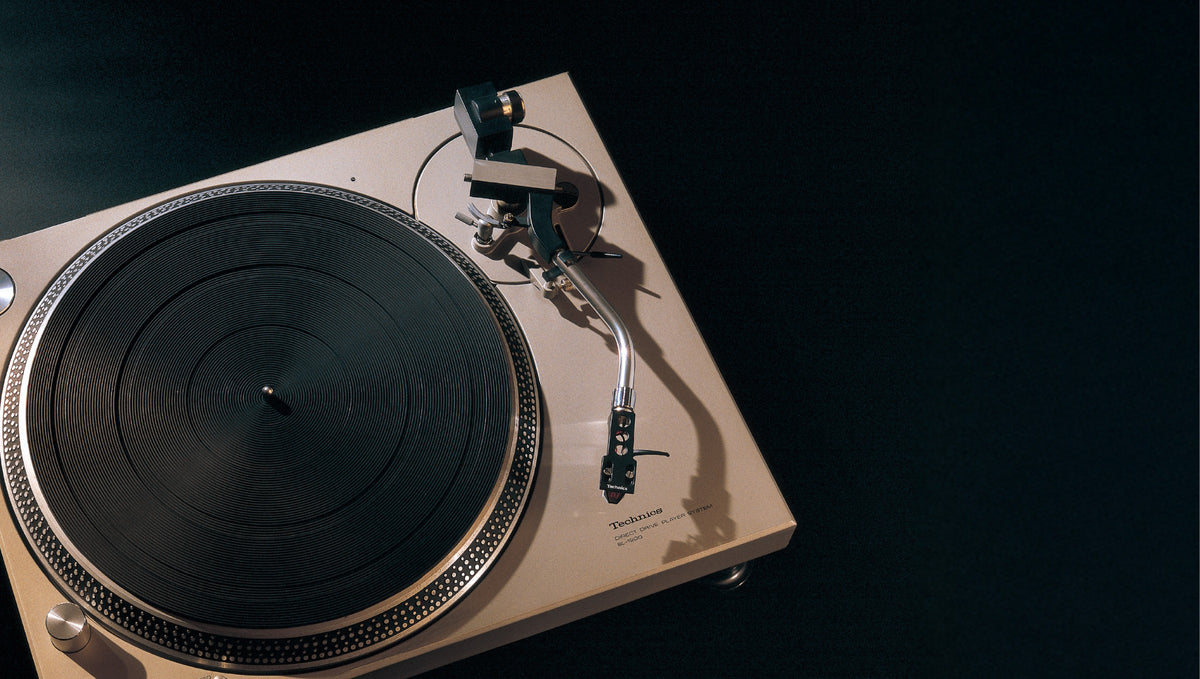
The second-generation Grand Class SL-1200: a single-rotor coreless direct-drive motor under Technics' new ΔΣ-Drive, a switching power supply with active noise cancelling, and the SL-1200 tonearm and cabinet, in silver.

Silver finish (SL-1200GR2-S). The SL-1210GR2 is the same turntable in black.

0.025%
wow and flutter (W.R.M.S.)
2.2 kg·cm
starting torque; 0.7 s to 33⅓ rpm
2.5 kg
two-layer die-cast platter
25.4 lb
weight (11.5 kg)

Authorized Technics dealer · Delivery and installation by Pearl Audio · Trade-ins welcome

The story

The GR2 replaced the SL-1200GR in 2023 and keeps the single-rotor coreless motor that made the GR a different turntable from the old SL-1200MK series: no iron core in the stator, so no cogging, and torque of 2.2 kg·cm that brings the 2.5 kg platter to speed in 0.7 seconds. What is new is the drive electronics. ΔΣ-Drive applies delta-sigma processing to the PWM signal that drives the motor coils, which reduces the high-frequency harmonics in the drive waveform and with them the small vibrations the motor transmits to the platter. The technique came from Technics' SU-R1000 amplifier, and the company says it gives smoother rotation than the GR achieved.

The power supply changed too. The GR used a conventional transformer; the GR2 uses a low-noise switching supply running above 100 kHz with active noise cancelling, the multi-stage silent power supply from the SL-1000R, which removes the transformer's magnetic field from the chassis and lowers the noise floor. The platter is two-layer, die-cast aluminum with a damping rubber sheet bonded underneath, and the cabinet is a BMC (bulk molding compound) layer over a die-cast aluminum chassis, with high-damping silicone insulator feet.

The arm is the SL-1200 arm: S-shaped, static-balance, gimbal-suspended, 230 mm effective length, with 0 to 6 mm height adjustment, direct-reading stylus pressure from 0 to 4 g and a two-stage auxiliary weight system covering cartridges from 5.6 to 16.4 g. Pitch control runs ±8% or ±16%, there is an electronic brake and a strobe, and the controls are where SL-1200 owners expect them. Ken Micallef reviewed the GR2 for Stereophile in April 2024; What Hi-Fi? called its sound "very clean and solid" with "punch too".

The SL-1200GR2 is the silver version; the SL-1210GR2 is identical in black. Below it, the SL-1500C adds a built-in phono stage and a fitted cartridge at a lower price; above it, the SL-1200G and SL-1210G move to the twin-rotor motor, a three-layer brass-and-aluminum platter and a magnesium arm.

Key technologies

  • ΔΣ-Drive. Delta-sigma processing of the PWM motor drive signal reduces high-frequency harmonics and motor vibration.
  • Single-rotor coreless motor. No iron core in the stator, so no cogging; 2.2 kg·cm starting torque.
  • Multi-stage silent power supply. Low-noise switching supply above 100 kHz with active noise cancelling, replacing the transformer.
  • Two-layer platter. Die-cast aluminum with a bonded damping rubber sheet, 2.5 kg.
  • Two-layer cabinet. BMC over a die-cast aluminum chassis, on high-damping silicone insulators.
  • SL-1200 tonearm. S-shaped static-balance arm with gimbal suspension, 0 – 6 mm height adjustment and auxiliary weight.
Specifications
Type Direct-drive turntable; single-rotor coreless motor with ΔΣ-Drive
Speeds 33⅓, 45 and 78 rpm; pitch ±8% or ±16%; electronic brake
Starting torque / build-up 2.2 kg·cm; 0.7 s from standstill to 33⅓ rpm
Wow and flutter 0.025% W.R.M.S.
Platter Aluminum die-cast, two-layer, 332 mm diameter, approx. 2.5 kg including mat
Tonearm Universal static-balance S-shape; 230 mm effective length; 15 mm overhang; 22° offset
Tracking error Within 2° 32' (outer groove) to 0° 32' (inner groove)
Arm height / stylus pressure 0 – 6 mm; 0 – 4 g direct reading
Cartridge weight range 5.6 – 12.0 g (14.3 – 20.7 g with headshell); 10.0 – 16.4 g with auxiliary weight
Output PHONO (RCA) and earth terminal
Power consumption 11 W; approx. 0.3 W standby
Dimensions (W × H × D) 453 × 173 × 372 mm (17.8 × 6.8 × 14.6 in)
Weight Approx. 11.5 kg (25.4 lb)
Finish Silver
Supplied Mat, dust cover, EP adaptor, balance and auxiliary weights, headshell, overhang gauge, cartridge screws, phono cable and earth lead, power cord; no cartridge

Technics SL-1200GR2 product page and specifications

Where it sits in the range

The current Grand Class SL-1200, in two finishes.

  • Technics SL-1500C: Premium Class, single-rotor coreless motor, built-in phono stage, Ortofon 2M Red, $1,499.99
  • Technics SL-1200GR2 (this model)
  • Technics SL-1210GR2: Grand Class, single-rotor coreless motor, ΔΣ-Drive, black, $2,499.99
  • Technics SL-1200G: Grand Class, twin-rotor coreless motor, magnesium arm, silver, $4,999.99
  • Technics SL-1210G: Grand Class, twin-rotor coreless motor, magnesium arm, black, $4,999.99
  • Technics SP-10RE: Reference Class motor unit with control unit, no plinth or arm, $14,199.99
  • Technics SL-1000RE: Reference Class complete turntable with ten-inch arm, $24,699.99

Reviews

Plan your Technics system with Pearl Audio

Pearl Audio is an authorized Technics dealer. We set up every turntable we sell, including cartridge alignment, and can arrange an audition in our Portland showroom. Call (503) 222-2599 or email sales@pearlaudio.com.

The Technics story

The direct-drive turntable, from the broadcast studio and the DJ booth to the listening room, since 1970.

Founded 1965 in Osaka, Japan; built today in Utsunomiya, Japan, and in Malaysia by Matsushita Electric, now Panasonic · technics.com

Milestones

  1. 1965 Technics 1 Matsushita Electric, now Panasonic, gives the name Technics to its finest loudspeaker. The name comes from the word technology.
  2. 1970 SP-10 The first direct-drive turntable. Broadcasters around the world adopt it, the BBC among them.
  3. 1971 SL-1100 Direct drive for the home, with the tonearm built in. It is the turntable DJ Kool Herc goes on to use at block parties in the Bronx.
  4. 1972 SL-1200 A more compact direct-drive record player, and the start of a series that runs to this day.
  5. 1973 The Bronx In August, DJ Kool Herc uses a pair of Technics direct-drive turntables to extend the drum breaks on his records. Technics calls it the beginning of hip-hop.
  6. 1975 SP-10MK2 Quartz-locked speed control and a separate power supply. It becomes a standard in broadcast and mastering studios.
  7. 1979 SL-1200MK2 and SL-10 The MK2 is the first turntable developed specifically for DJs. The same year the record-jacket-sized SL-10 appears; it later enters the collection of the Museum of Modern Art.
  8. 2010 Production ends After nearly four decades the SL-1200 goes out of production, its tooling worn out, and the Technics name is retired.
  9. 2014 Technics returns Panasonic brings the name back, with a new generation of engineers led by Michiko Ogawa.
  10. 2016 SL-1200G A new SL-1200 for listening at home: every part newly tooled, a coreless motor that removes cogging, and a platter of brass, aluminum and rubber.Technics SL-1200G Twin-rotor
  11. 2018 SP-10R and SL-1000R The first new SP-10 in almost forty years, hand-built in Japan, and the complete SL-1000R built around it.Technics SL-1000RE-S
  12. 2019 SL-1200MK7 and SL-1500C The DJ turntable returns in its seventh generation, and the SL-1500C arrives for home listening, with a phono stage built in.Technics SL-1500C-K
  13. 2023 SL-1200GR2 A new digital method of driving the motor, taken from Technics' reference amplifier, for smoother rotation.
Read the Technics story
The original Technics SL-1200 of 1972. Image: Technics

Technics began in 1965 as the name Matsushita Electric, the company now called Panasonic, gave to its finest loudspeaker, the Technics 1. The name comes from the word technology, and for sixty years it has stood for the part of the company where engineers are asked to build for music first. Amplifiers, tape decks, loudspeakers and early CD players followed, but one invention made the name known wherever records are played.

Direct drive

In 1970 Technics introduced the SP-10, the first direct-drive turntable. In place of a belt or an idler wheel, the platter sat directly on a slow-turning motor, which gave steady speed, quick starts and very little to wear out. Broadcasters around the world adopted it, the BBC among them. The SP-10MK2 of 1975 added quartz-locked speed control and became a studio standard, and a pair of them turn the cutting lathes at Bernie Grundman Mastering, where many of today's audiophile LPs are cut. The SL-1100 of 1971 brought direct drive to the home, and the SL-1200 followed in 1972.

The SL-1200 and the DJ

What happened next was not in anyone's plan. In the Bronx in August 1973, DJ Kool Herc used a pair of Technics direct-drive turntables at a party for his sister, isolating the drum breaks on his records to keep the dance floor moving. Technics itself calls that the beginning of hip-hop. The turntables suited the job because they were strong, came up to speed at once and held it, and DJs such as Afrika Bambaataa and Grandmaster Flash carried the idea into the mainstream.

Technics listened. The SL-1200MK2 of 1979 was the first turntable developed specifically for DJs, with a sliding pitch control and the other features they had asked for. Through the 1980s demand grew enormously and the SL-1200 became the standard in clubs around the world; a DJ with two of them and a mixer could fill the rooms where bands used to play. In the 1990s scratching and turntablism made it a musical instrument in its own right. By Technics' own count, 3.5 million SL-1200s were sold in the first 35 years, and no other turntable has been so widely used.

At home

Technics never stopped building turntables for listening at home. Through the 1970s and 1980s a direct-drive Technics was the first serious record player in a great many American households, and the record-jacket-sized SL-10 of 1979 entered the collection of the Museum of Modern Art. The qualities DJs prized are the ones a listener benefits from too: accurate speed, quiet running, easy setup, and a machine built to work for decades.

Silence, and a return

In October 2010 the SL-1200 went out of production; after nearly four decades the tooling had worn out, and the Technics name itself was retired. It returned in 2014, led by Michiko Ogawa, an engineer who is also a pianist, and in 2016 came a new SL-1200. It looks like the old one, but every part was newly tooled, and at its center is a new motor with no iron core. That removes the faint unevenness in rotation, known as cogging, for which direct drive had long been criticized. This time the turntable was designed for listening at home.

The line of the SP-10 returned in 2018 with the SP-10R and the complete SL-1000R, the first new SP-10 in almost forty years. The SL-1500C followed for listeners who want a simple, complete record player with a phono stage built in. The SL-1200GR2 of 2023 added a new digital method of driving the motor, taken from Technics' reference amplifier, for smoother rotation still.

What they weigh, and why

Technics turntables are heavy on purpose, because mass and damping keep vibration away from the stylus. The SL-1500C weighs about 22 pounds and the SL-1200GR2 about 25. The SL-1200G weighs nearly 40, and its platter of brass, aluminum and rubber accounts for almost 8 of them. The SL-1000R weighs 88.7 pounds before its separate control unit is counted, and its platter, brass on aluminum with tungsten weights set into the rim, weighs about 17.5. The platters of the SL-1200G and SL-1000R are balanced one at a time at the factory.

Where they are built

The SL-1200G and SL-1000R are built in Utsunomiya, about 80 miles north of Tokyo, in a small corner of a large Panasonic plant. A magazine that visited found a team of eleven people building them by hand. Each turntable is assembled from start to finish by one person, who has passed a course and tests of dexterity and accuracy before being allowed to do so; an SL-1000R has about 150 parts and takes around an hour and a half. Every unit is then measured for speed stability, listened to with records, and inspected under bright light before it is packed. The more affordable models, the SL-1200GR2 among them, are built at Panasonic's plant in Malaysia.

How they sound

Reviewers use much the same words for the current Technics turntables whatever the model: drive, timing and rhythmic authority; deep, solid bass; quiet backgrounds and stable images; and a clear, neutral view of the record. Of the SL-1000R they add a rich, generous midrange and a smooth sound free of grain.

The complete Technics story and technology library

Technics at Pearl Audio

At Pearl Audio we carry Technics for its turntables. The SL-1200 in its current versions and the SL-1500C are staples in the store, and we have carried and built the SL-1000R. We like them as a classic turntable that looks right beside heavily built systems, such as McIntosh amplifiers with Bowers & Wilkins loudspeakers.

On demonstration in Portland now

The Pearl Audio experience

How we work with you

A system at this level should be heard, thoughtfully matched, and properly set up. From the first audition to long-term ownership, you work with the same people, in person.

  1. 01

    Listen first

    The SL-1200GR2 Single-rotor is not in our rooms at present. When it is the right piece for a client we arrange a demonstration unit from the manufacturer and set it up for a private session.

  2. 02

    Delivery and installation

    We deliver and install throughout the Portland area, taking care of placement, connections, ventilation and system configuration ourselves.

  3. 03

    Support for as long as you own it

    We support everything we sell for as long as you own it, whether the answer comes by phone, in your home, or through factory service.

  4. 04

    A path for what comes next

    Trade-in assistance and qualifying 100% Trade-Up options give you flexibility when your listening priorities or your system change.

Search