McIntosh engineering, explained
Power Guard Screen Grid Sensor®
Power Guard SGS monitors current in the screen grids of the output tubes. If that current becomes excessive, it reduces input drive in real time.

The control loop
Watch the current. Ease the drive.
Sense
A screen grid is an electrode inside the output tube. SGS monitors the current flowing in that grid while the amplifier plays.
Respond
If screen-grid current becomes excessive, the circuit reduces the input signal driving the tube stage in real time.
Protect
Reducing drive helps keep the output tubes within safe operating conditions and helps prevent premature tube failure.
In your listening room
Protection when the music asks for more.
Keeping screen-grid current under control helps protect the output tubes and prevent premature tube failure when the amplifier is pushed hard. The screen grid is part of the structure inside each output tube, not a screen outside the glass. SGS monitors the current flowing through this internal electrode and responds when it becomes excessive. Its purpose is to help the tubes remain within safe operating conditions as the demands of the music change.
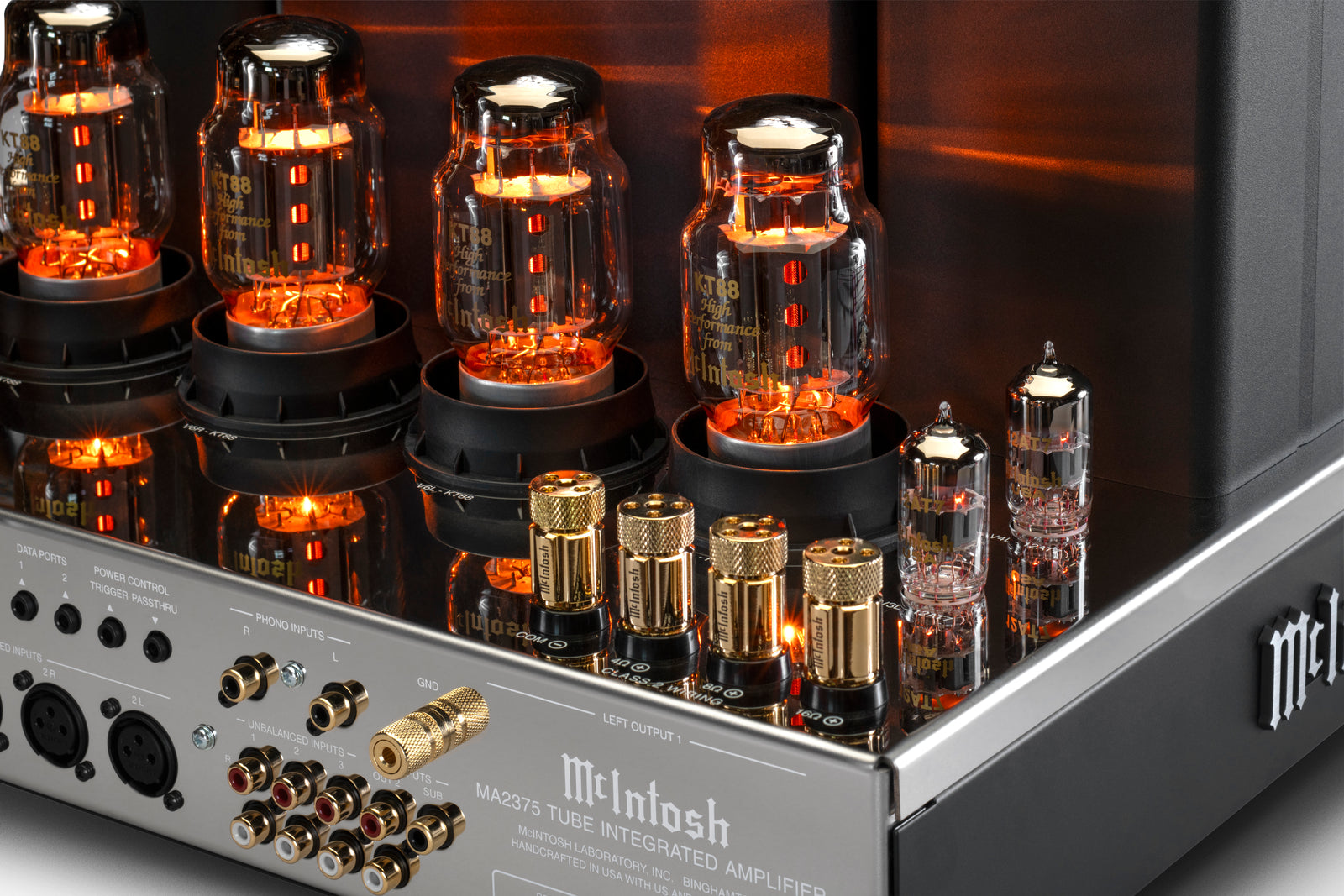
The glowing KT88 photograph gives you a close look at the real tube assembly. Our diagram uses a simplified cutaway to distinguish the screen grid from the surrounding parts: the gold surrounding wire structure inside each illustrated tube corresponds to the enlarged grid below it. The gauge represents the separate SGS monitoring circuitry. The photo and drawing serve different purposes—the photo shows the equipment, while the illustration makes the internal relationship easier to understand.
When screen-grid current rises too far, SGS reduces the input signal driving the tube stage in real time. This reduces the demand on the output tubes. It does not increase the amplifier’s rated power, and the tube’s visible glow is not an SGS activity indicator. The protection display on the amplifier provides that information. A close-up photograph of glowing tubes alone cannot tell you whether SGS is engaged or how much screen-grid current is flowing.
If the protection indicator engages frequently during playback, reduce the listening level and let Pearl Audio help assess the amplifier and speaker pairing. SGS is one part of the amplifier’s protection system; it works alongside the separate Sentry Monitor circuitry. Correct speaker connections and adequate ventilation still matter. Our goal is a system with enough usable power for your room and listening habits, so you can enjoy musical peaks without regularly asking the amplifier to operate at its limits.

A closer look
Power Guard and Power Guard SGS: what is different?
Both respond by reducing input drive, but they monitor different conditions. Standard Power Guard compares signal waveforms to control clipping. Power Guard SGS monitors screen-grid current to protect output tubes. A model with SGS should not be assumed to contain standard Power Guard as well.
Does this replace Sentry Monitor?
No. Power Guard manages drive under demanding conditions. Sentry Monitor is a separate protection system for excessive output current. The protections included depend on the particular model.
Why did McIntosh develop a tube-specific version?
The screen grid creates a protection requirement specific to certain output tubes. McIntosh introduced SGS on the tube section of the MC901, which also uses standard Power Guard on its solid-state section. The two systems address the needs of their respective amplifier stages.
MC275 vs. MA2375: protection and practical differences
The current MC275 does not include Power Guard SGS or standard Power Guard. It does include Sentry Monitor tube-protection circuitry. The MA2375 includes both Power Guard SGS and Sentry Monitor. These are different protection systems, even though both amplifiers use KT88 output tubes and Unity Coupled output transformers.
What SGS adds on the MA2375
SGS monitors the output tubes’ screen-grid current and reduces input drive when that current becomes excessive. This gives the MA2375 an additional way to manage tube stress during demanding playback. Sentry Monitor addresses potentially damaging current conditions, including shorts and tube faults. Having SGS does not increase the amplifier’s rated power or eliminate the need for suitable speakers, ventilation, and sensible listening levels.
Models using Power Guard SGS